
- Release Year: 2006
- Platforms: PlayStation 2, Windows
- Publisher: RTL Enterprises GmbH
- Developer: 49Games GmbH
- Genre: Sports
- Perspective: 3rd-person
- Game Mode: Hotseat, Single-player
- Gameplay: Button pressing, Fatigue management, Missions, Rhythm game, Shooting, Steering, Tactical, Tournaments
- Setting: Olympics, Winter
- Average Score: 70/100
Description
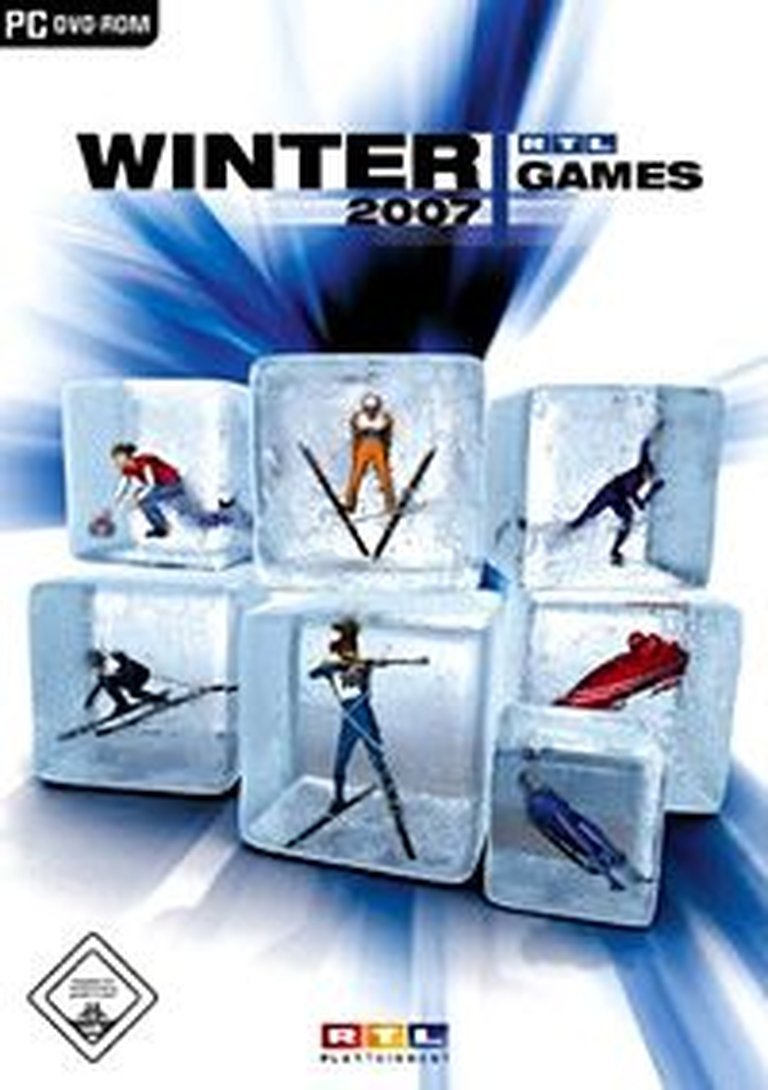
RTL Winter Games 2007 is a sports simulation game that focuses on winter Olympic events, featuring 13 disciplines across alpine skiing, ski jumping, sled, biathlon, ice skating, and curling. It offers accessible controls for all players, with tactical elements in events like biathlon and curling, and includes various modes such as tournaments, custom competitions, and 43 mission-based challenges.
Gameplay Videos
RTL Winter Games 2007 Reviews & Reception
gamepressure.com (70/100): The devs focused on the accessibility and simplicity of the game, not paying very much attention to the simulation as such.
retro-replay.com : Right from the start, the game strikes a balance between accessibility and depth, offering simple steering and timing mechanics for most events while subtly introducing strategic layers in the more tactical disciplines.
RTL Winter Games 2007: The Frosty Facade of Accessibility
Introduction: A Snowy Staple in a Niche Library
In the mid-2000s, the sports video game landscape was dominated by two titans: the hyper-realistic, franchise-building simulations like EA Sports‘ offerings, and the vibrant, minigame-driven party collections such as Mario & Sonic at the Olympic Games. Nestled between these poles, almost forgotten in the annals of regional publishing, was a quiet European dynasty: the RTL Winter Sports series. RTL Winter Games 2007, developed by 49Games GmbH and published by RTL Enterprises, stands not as a revolutionary landmark but as a deliberate, pragmatic consolidation. It is the successor to Torino 2006, a compilation of 13 events across seven winter disciplines, with the significant addition of curling. My thesis is this: RTL Winter Games 2007 is a fascinating case study in efficient, accessible game design that prioritizes broad, immediate fun over lasting simulation depth. It succeeds brilliantly as a social “party game” for novices and families but falters as a serious sports simulation, revealing the inherent tension in trying to be all things to all players—a tension that ultimately defined its middling reception and niche legacy.
Development History & Context: The Engine of Reuse
The game emerges from a specific studio and era deeply intertwined with licensed sports games. 49Games GmbH was, by 2006, a veteran of the winter sports genre, having built a robust pipeline of titles under the RTL brand, including RTL Biathlon 2007, RTL Ski Jumping 2007, and Alpine Ski Racing 2007: Bode Miller vs. Hermann Maier. The credits list 103 individuals, from Managing Director Holger Strecker to a 32-person “Thanks” list, indicating a small-to-mid-sized, dedicated team operating under a clear product management structure led by Ronald Kaulbach, Nicole Paierhuber, and Oliver Henneken.
The technological constraint was the mid-2000s PC and PlayStation 2 hardware. The game utilizes a “modern, fully three-dimensional graphic engine” as per GamePressure, but the reviews consistently peg its visuals as competent at best, lackluster at worst. The engine was almost certainly an iterative, in-house refinement of the technology used in its direct predecessors (Torino 2006 and the standalone 2007 titles). This reuse was both a strength—ensuring technical stability and a consistent feel across disciplines—and a critical weakness, as reviewers constantly noted the lack of visual spectacle and the feeling of a recycled experience.
The gaming landscape of late 2006 was one of burgeoning online play and a strong market for accessible multiplayer experiences. RTL Winter Games 2007 directly targeted this with its 1-4 player local “Hot Seat” and split-screen support, and rudimentary online leaderboards. It was not competing with SSX or 1080° Avalanche for the action sports crowd, nor with Ski or Die for arcade nostalgia. Instead, it aimed for the lucrative, family-oriented European market that consumed winter sports biannually during the Olympic cycles, offering a safe, easy-to-pick-up alternative. Its direct competitor was, as many reviews stated, its own immediate predecessor, Torino 2006.
Narrative & Thematic Deep Dive: The Unspoken Story of the Athlete
As a pure sports simulation, RTL Winter Games 2007 possesses no traditional narrative. There are no cutscenes, no character arcs, no scripted drama. Its “story” is entirely emergent, procedural, and born from the player’s interaction with its systems—a “story of the self” common to sports games.
The primary thematic driver is the ritual of the multi-discipline athlete. The player is not a named protagonist with a backstory but an abstract “you,” a competitor navigating the varied physical and mental demands of a winter sports festival. The Olympic theme is pure veneer—no official licenses, no real athletes, no national anthems—but it provides the structural “story” of progression from local tournament to grand championship. The 43 “small missions” are the game’s most explicit narrative devices. Each one is a micro-drama: “Go from 25th to 1st in the final 500m,” “Land a ski jump with a K-Point score of 120+.” They create bite-sized objectives, personal challenges that break the monotony of random tournament draws and provide clear, satisfying narrative milestones. A player’s history with the game is written in the medal tables and mission completions.
The underlying theme is accessibility through abstraction. The sport is not simulated; it is translated. The complexity of biathlon’s shooting stance, the subtle weight-shifts in curling, the aerodynamic tuck in ski jumping—all are reduced to intuitive, often rhythmic, button presses. This creates a thematic dissonance: the game presents the iconography of elite winter sport (snow, ice, timber jumps, colorful uniforms) but strips away the verisimilitude of the athletic endeavor. The “story” becomes one of mastering simple inputs rather than understanding a sport, which is both its greatest strength for newcomers and its chief criticism from enthusiasts.
Gameplay Mechanics & Systems: A Patchwork of Simplicity and Strategy
The core design philosophy is disciplined heterogeneity. Each of the seven disciplines (Alpine Skiing, Ski Jumping, Sled/Bobsleigh, Biathlon, Ice Skating, and new addition Curling) feels like a distinct mini-game bound by a common tournament shell.
- The Common Core: For downhill skiing, ski jumping, and sled events, control is brutally simple: steer the athlete (via keyboard or mouse) along a predefined optimal line and press a single button at a designated moment (e.g., for a jump or to brake). Success hinges almost entirely on perfect timing and memorizing the track layout. This is accessible but shallow.
- The Notable Exceptions:
- Biathlon: Cleverly splits into two distinct phases. The skiing phase uses the common core, but introduces a tactical fatigue management system. The faster you ski, the more your stamina depletes, making your shooting cursor wobble violently. You must balance speed for time with conserving steady hands for the shooting range. The shooting phase is a test of precision under pressure, requiring you to steady a mouse-controlled crosshair over targets. This single discipline contains the game’s deepest systemic interplay.
- Ice Skating: This is a pure rhythm game transplant. Arrows scroll across the screen in time with music, requiring precise button presses. It’s completely disconnected from the steering-focused norm, creating a jarring but fun shift in gameplay.
- Curling: The other pure tactical game. Here, you set power, direction, and curl for each stone, trying to land it in the house or knock opponents’ stones out. It’s chess-like, slow-paced, and relies entirely on prediction and strategy, a fascinating outlier in a package otherwise focused on reflex and timing.
- The Help System: A major new feature, the “help functions” are a GUI crutch. They can display the ideal racing line (a ghost path) and button-press prompts. This is a double-edged sword: it democratizes the game for total beginners but removes any incentive to learn tracks organically, undermining long-term engagement for those seeking mastery.
- Progression & Structure: The single-player mode is robust in quantity but variable in quality. The randomly assembled tournaments (7 or 15 events) provide variety but lack a cohesive “career” narrative. The 43 missions are the saving grace for solo play, offering focused challenges. Most critically, there is no character or skill progression. You cannot upgrade your athlete’s stamina, technique, or equipment. The only “progression” is the player’s own skill improvement and the completion of missions. This was a major point of criticism in reviews like PC Games‘s, which lamented the absence of the f “Karrieremodus” (career mode) found in the more focused standalone titles like RTL Ski Jumping 2007.
- Multiplayer: This is where the game shines. The simplicity of controls makes it a perfect party game. The friction of hot-seat play, the shared-screen banter during a curling match, the simple joy of a four-player bobsleigh race—these moments elevate the package. The AI, however, is noted as inconsistent and sometimes exploitable, further encouraging human competition.
World-Building, Art & Sound: A Serviceable, Soulless Winter
The game’s atmosphere is one of clean, corporately-sanctioned winter sport. The visual presentation is functional and clear, but rarely awe-inspiring.
- Visual Direction: The 3D engine renders snowy mountains, ice rinks, and jump hills with adequate detail. Snow effects (kicked-up powder) and reflective ice surfaces are noted positives. However, critics repeatedly cite technical weaknesses: “not spectacular” graphics, “pop-in” of distant objects, and a general lack of the “Gänsehaut-Atmosphäre” (goosebump atmosphere) of a real event. The art style is generic, avoiding any distinct visual identity. The athlete models are simple, and animations, while smooth, lack the weight and impact of higher-budget titles.
- UI & Presentation: The HUDs are discipline-specific and clear, showing speed, distance, stamina, and rhythm arrows without clutter. The help overlays integrate seamlessly. Menus are straightforward but lack flair. This utilitarian approach prioritizes function over form, aligning with the game’s accessible goals.
- Sound Design: The soundtrack is forgettable ambient music. The saving grace is the diegetic sound effects: the crunch of snow, the scrape of skates on ice, the roar of the crowd, the thwack of a curling stone. These are crisp and effective. The commentary, however, is panned as repetitive and jarring—a “Witz” (joke) that spouts the same limited lines, breaking immersion rather than building it. The audio design successfully simulates the environment of a winter sports event but fails to capture its spectacle.
Reception & Legacy: The Middle Child of a Franchise
Upon release in late 2006 (Windows) and early 2007 (PS2), RTL Winter Games 2007 received a mixed-to-positive critical reception, averaging 64% on MobyGames from 16 critics. The scores paint a clear picture:
* PlayStation 2 version generally fared better (average ~74%), likely due to a more typical living-room, party-game context.
* Windows version averaged a lower ~61%, perhaps suffering more from comparison to PC-specific sims and technical scrutiny.
The critical consensus was remarkably consistent:
* Praised: Unparalleled accessibility and “easy-to-learn” controls perfect for families and parties. The variety of disciplines was a major plus. The multiplayer/local fun factor was frequently highlighted as the game’s core strength. The addition of curling was seen as a smart, strategic inclusion.
* Criticized: A profound lack of innovation over Torino 2006. It was often dismissed as a “Stückwerk” (piecework/jumble) of repackaged previous games. The campaign/mission mode’s difficulty was reportedly punishing and at odds with the casual target audience. The absence of deep simulation, character progression, and career mode was a major failing for sports enthusiasts. The technical presentation (graphics, sound, commentary) was seen as dated and uninspired.
Its commercial performance appears to have been modest, fitting its status as a regional, mid-tier sports title. It did not achieve widespread recognition outside German-speaking Europe.
Legacy-wise, it is a cul-de-sac. The RTL Winter Sports series continued (with titles like RTL Biathlon 2009), but Winter Games 2007 represents the peak of the “compilation” approach. The franchise did not significantly influence the broader industry. Its model—of aggregating several decent-but-not-great sports mini-games into one package—was already being perfected by Nintendo’s Mario & Sonic series, which offered vastly more polish, production value, and iconic branding. RTL Winter Games 2007 is remembered, if at all, as a competent, forgettable regional alternative for those who wanted Olympic-style gameplay without Nintendo’s sheen. It is a snapshot of a specific European development strategy: leveraging a known TV brand (RTL) to produce annualized sports compilations with low barriers to entry and even lower long-term aspirations.
Conclusion: The Verdict on the Frosty Podium
RTL Winter Games 2007 is not a lost masterpiece, nor is it a catastrophic failure. It is a hyper-competent, deeply conventional product that knows its audience and executes its brief with workmanlike efficiency. Its genius lies in its democratization of complexity—turning the nuanced physicality of biathlon or curling into understandable, enjoyable button presses for a child or grandparent. Its fatal flaw is the resulting shallowness; for anyone seeking the thrill of feeling like an Olympic athlete, the game offers only the hollow satisfaction of button-mashing success.
Historically, it is a fascinating artifact of a bygone publishing model. It showcases a studio comfortable within a niche, releasing yearly iterations with incremental changes (the inclusion of curling being the standout). It prioritizes quantity of content (13 events, 43 missions) and social accessibility over qualitative leaps in simulation or presentation. In the grand canon of sports games, it occupies a space perhaps below the “cult classic” threshold—it is simply too generic, too regionally confined, and too intellectually unambitious to inspire fervent devotion.
Its definitive place is as a well-executed piece of functional entertainment. For a casual gaming night in a cold December, with a group of non-gamers, RTL Winter Games 2007 would likely deliver exactly what it promises: an hour or two of simple, competitive fun wrapped in a winter-themed package. For the historian, it is a clear lesson in the costs and benefits of accessibility-first design. It proves you can make a game everyone can play, but without deeper systems, memorable aesthetics, or a compelling reason to return, you cannot make one that everyone will remember. It wins no gold medals in innovation, but it scrapes by with a bronze in basic competence.