
- Release Year: 2006
- Platforms: PlayStation 2, Windows, Xbox
- Publisher: Hip Interactive Europe, Ubisoft Entertainment SA
- Developer: Swordfish Studios Limited
- Genre: Sports
- Game Mode: Single-player
- Gameplay: Business simulation, Managerial, rugby simulation
- Average Score: 65/100
Description
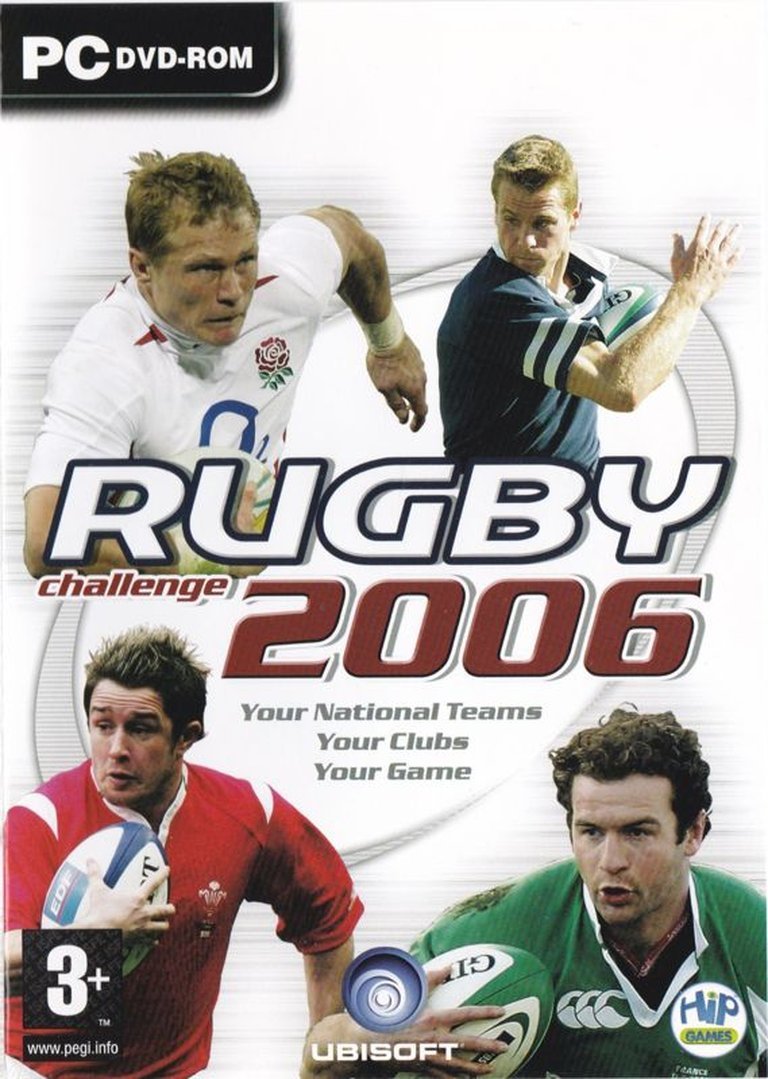
Rugby Challenge 2006 is a single-player sports game that merges realistic rugby simulation with in-depth managerial elements. Players can engage in various modes, including friendly matches, competitive tournaments like the World Championship and RBS 6 Nations, a career mode for team management from lower divisions, and unique challenges such as reenacting classic historical matches, Hot Potato, and customizable leagues and cups, all with adjustable settings for duration, weather, and difficulty.
Gameplay Videos
Rugby Challenge 2006 Cracks & Fixes
Rugby Challenge 2006 Reviews & Reception
everygamegoing.com (65/100): Unlike a Kiwi prop, this is pretty lightweight stuff.
therugbyforum.com (65/100): Most probably, but it lacks depth, real depth.
Rugby Challenge 2006 Cheats & Codes
PlayStation 2
| Code | Effect |
|---|---|
| L1 L2 X 0 R2 TRIANGLE AND THEN R3 | THIS WILL GIVE YOU BIGGER MATCH WINNINGS AND END OF SEASON BONUSES |
Rugby Challenge 2006: A Flawed but Ambitious Sprint in the Rugby Gaming Ruck
In the mid-2000s, the virtual playing field for rugby union video games was a contested territory dominated by one giant: EA Sports’ annual Rugby series. Enter Rugby Challenge 2006, a title from Swordfish Studios and publishers Hip Interactive (with Ubisoft handling distribution) that sought to challenge this hegemony not through graphical spectacle, but through unprecedented scope and a dual focus on both on-pitch action and off-pitch management. It arrived with the promise of comprehensive licensing for Europe’s top club competitions—a long-standing fan request—and a suite of modes designed to cater to every temperament, from the hardcore simulator to the casual challenger. This review will dissect whether Rugby Challenge 2006 successfully executed its ambitious game plan or fumbled into obscurity, a mere footnote in the history of a niche sports genre.
Development History & Context: Building on a Foundation, Amidst Publisher Turmoil
Rugby Challenge 2006 did not emerge from a vacuum. Its primary developer, Swordfish Studios, was the Birmingham-based team behind the critically acclaimed World Championship Rugby (2004), a game lauded for its fast, accessible take on the sport. That prior success provided a solid gameplay foundation, but RC2006 represented a significant escalation in scope and ambition. The studio’s vision was clear: to create the most comprehensive rugby union package on the market, merging the arcade-style immediacy of its predecessor with a deep, persistent career mode and exhaustive tournament lists.
This ambition, however, was forged under significant constraint. The game was developed for the PlayStation 2, Xbox, and Windows PC—the tail end of the sixth-generation console era. These platforms had well-understood limitations in terms of processing power and memory, which directly impacted the game’s visual fidelity and AI complexity. More pressingly, the game’s publishing journey was rocky. Its primary publisher, Hip Interactive, was a Canadian company plunging into financial chaos during RC2006’s development and release, as noted in IGN’s news archives. This instability risked marketing support and potential ports, though Ubisoft’s involvement as a co-publisher in Europe provided a crucial lifeline. The game arrived in a crowded field, directly competing with EA Canada’s Rugby 06, which had refined a more physically nuanced simulation model. Swordfish’s task was to differentiate itself through breadth of content and accessibility, a strategy that defined both its greatest strength and its most glaring weakness.
Narrative & Thematic Deep Dive: Crafting Stories from History and Management
Sports games, particularly those of this era, rarely feature a traditional narrative plot with scripted characters. Instead, Rugby Challenge 2006 constructs its narrative framework through game modes that simulate stories of legacy, rivalry, and progression.
The most explicit narrative device is the Classic Matches challenge mode. Here, the game directly references and invites the player to rewrite history. The opening scenario—preventing New Zealand’s 1956 defeat of a historically undefeated South Africa—is not merely a gameplay variant but a participatory historical “what-if.” Unlocking the subsequent nine classic fixtures (e.g., Scotland vs. England, British Isles vs. New Zealand) layers a pantheon of rugby’s most famous rivalries and upsets, framing each match as a chapter in a larger sporting saga. This mode successfully taps into the fan’s desire for mythic engagement with the sport’s past.
The thematic core, however, resides in the Career Mode. Tasking the player with guiding a team from the basement “Division Four” of a “mythical league” to championship glory creates a classic underdog narrative. The management systems—player trading, training, financial oversight, and coach appointment—are the tools for writing this story. The theme here is institution-building and legacy creation. It’s a narrative of incremental progress, of nurturing young talent and making shrewd signings, all culminating in a triumphant promotion or title win. This mirrors the real-world aspirations of club supporters and embodies a deeper engagement with rugby as a community and business, not just a game.
Conversely, the Challenge Modes like “Hot Potato” (3-second ball-holding limit) or “Old Time Rugby” (no points for tries) explore thematic variations on the sport’s rules, highlighting how small changes can fundamentally alter strategy and spectacle. These are playful, almost experimental narratives about the nature of rugby itself. Yet, the game’s overarching narrative struggle is one of identity versus simulation. It attempts to tell the story of rugby’s depth and history but is hampered by a gameplay engine that often reduces the sport to a repetitive, arcade-like pattern, undermining the very complexity its modes seek to celebrate.
Gameplay Mechanics & Systems: Speed Over Substance, Breadth Over Depth
The heart of Rugby Challenge 2006 is a fascinating study in competing design philosophies, reflecting its dual nature as both a simulation and an arcade title.
Core Match Play: The on-pitch action is unequivocally geared towards speed and fluidity. As Official Xbox Magazine’s Mark Robins observed, the optimal strategy is a near-obsessive cycle of “get possession, sprint towards the line and keep recycling the ball out to the wings.” The passing is immediate and trigger-button activated, promoting a rapid, lateral spreading of the ball. This creates a frantic, easy-to-learn experience that prioritizes flowing movement over set-piece complexity. Set-pieces are dramatically streamlined:
* Scrums and Mauls are resolved via a “simple repeating reaction test,” a timing-based mini-game rather than a complex physics or positioning battle.
* Rucks use a “add players” system where pressing a button funnels additional forwards into the contest. A visual bar indicates dominance; the team with more (or faster-arriving) bodies typically wins. This system was divisive among forum users at the time, with some praising its clarity (“the fairest and most usable”) and others decrying the “button bashing” required to win key turnovers, especially when playing as a weaker team against a powerhouse. The mechanic creates a clear, if simplistic, tactical risk-reward: commit more men to the ruck to secure ball, but risk leaving defenders outnumbered elsewhere.
* Kicking and Offloading are functional but limited. Offloads, in particular, were cited by a Rugby Forum user as occurring infrequently (“around 4/5 in a whole game”) and often poorly executed, going to ground instead of finding a teammate’s hands.
This core loop is wrapped in three difficulty settings—”Fun,” “Normal,” and “Intensive Care”—that primarily adjust AI aggression and error rates, but not the fundamental strategic patterns. Matches can be shortened (3, 5, 7, 15 minutes), played under day/night cycles, and in varying weather, adding superficial variety.
Game Modes as Systems: The exhaustive list of modes is the game’s most significant feature:
1. Competition Mode: The headline act. It includes officially licensed tournaments like the RBS 6 Nations, Guinness Premiership (England), Top 14 (France), Celtic League (featuring Irish, Welsh, Scottish, and Italian teams), and the Southern League (New Zealand, Australia, South Africa). This was a monumental coup for the time, finally granting British club fans the ability to play with their domestic sides—a void left by EA’s games. Custom league and cup creation options further extend its life.
2. Career Mode: A fully-fledged management sim. Players take control of a team in a “mythical” fourth division, handling squad development through trades and training, managing a budget, hiring/firing coaches, and striving for promotion. OXM favorably compared it to Pro Evolution Soccer 5’s Master League, noting it was “perfectly playable,” though it lacked the deep scouting and financial intricacy of dedicated management titles.
3. Challenge Modes: The five variants (Classic, Try Survival, Hot Potato, Old Time Rugby, Superstars) are clever, self-contained systems that twist the core rules. “Superstars,” where only one player can score, forces a complete tactical rethink. These modes are excellent for longevity and skill refinement.
4. Training Mode: Highlighted as a strength, it goes beyond basic tutorials to include “innovative little training games” that effectively teach mechanics like passing, tackling, and rucking through curated scenarios.
Innovation vs. Flaw: The innovation lies in the sheer volume and variety of officially licensed content and the clever challenge modes. The fatal flaw is the homogeneity of the core match engine. As OXM brutally stated, while it improved over World Championship Rugby in “content and options, it plays virtually the same.” The lack of a deeper physics system for mauls, the repetitive meta-game, and the inability to execute complex, pre-planned moves meant that after the initial novelty wore off, matches felt strategically identical. Furthermore, the game famously launched without any online multiplayer—a glaring omission in 2006—relying on 4-player local split-screen, a point of criticism from every review.
World-Building, Art & Sound: Licensed Authenticity Clashes with Technical Limitations
Rugby Challenge 2006 presents a curious dichotomy: immense authentic licensing paired with technically rudimentary presentation.
Visuals & Atmosphere: The game’s greatest visual strength is its stadiums. It features authentically modeled versions of iconic grounds like Twickenham, Murrayfield, Lansdowne Road, and the Millennium Stadium. This instantly grounds the player in the real world of rugby. The pitch texture and crowd models are decent for the hardware, with the crowd being noted as “well detailed” by one forum user. However, the player models are where the game’s age and budget constraints become painfully apparent. OXM’sassessment was merciless: “even the Elephant Man would gag at some of the monstrosities representing the Six Nations’ finest.” The models are blocky, with minimal facial detail and stiff animations outside of motion-captured running and passing cycles. The physics engine also produces bizarre artifacts, such as the rugby ball bending unnaturally in flight during kicks and passes, breaking the illusion of realism. The game supports weather effects (rain, presumably) and day/night cycles, but these are cosmetic layer changes rather than dynamic systems affecting gameplay.
Sound Design: The audio experience is a mixed bag. The inclusion of real BBC and Sky Sport commentators—John Inverdale and Dewi Morris—is a major licensing coup. In practice, OXM called their commentary “very weak,” likely due to limited line recordings that become repetitive and fail to capture the dynamic ebb and flow of a match. The crowd noise is exceptionally sparse; as one reviewer noted, you might hear “one chant, half a version of swing low.” This failure to create a vibrant, reactive stadium atmosphere is a significant blow to immersion, making matches feel oddly silent and sterile despite the on-field action.
The overall artistic direction prioritizes functional clarity over aesthetic splendor. Player jerseys are accurate, stadiums are recognizable, but the lack of polish in player likenesses and the anaemic soundscape prevent the game from achieving a truly “next-gen” feel, even on the Xbox and PS2.
Reception & Legacy: A Respectable Also-Ran in a Two-Horse Race
Rugby Challenge 2006’s reception was respectable but unspectacular, defined almost entirely in relation to its primary competitor.
Critical Reception: Reviews were middling. Official Xbox Magazine awarded the Xbox version a 65%, summarizing it perfectly: “Simple, easy to pick up and play, but lacks that all-important depth factor.” The strengths—the massive inclusion of British club teams, the improved training mode, the sheer volume of licensed competitions—were universally acknowledged. The weaknesses—shallow tactics, poor graphics (especially player models), weak commentary, and no online play—were equally panned. Metacritic shows no aggregated critic scores, but the context is clear: it was reviewed as a solid, niche option but not a must-buy. Rugby 06 from EA Sports typically scored in the mid-70s, with reviewers praising its deeper physical simulation (momentum-based mauls, advanced passing) and more polished presentation. RC2006 was consistently positioned as the more accessible, content-rich, but technically inferior alternative.
Fan Reception: Community forums like The Rugby Forum reveal a deeply split audience. Passionate fans who prioritized having their local Premiership or Celtic League club licensed were elated. As one user euphorically stated, “At last! All the top British club sides have been included!” For them, this single feature outweighed other flaws. However, others, particularly those coming from Jonah Lomu Rugby or EA’s titles, were frustrated by the persistent “old annoyances,” notably the perceived difficulty of winning rucks with weaker teams and the dominance of the wing-passing meta-game. The ruck system, while praised by some as “fair,” was a constant source of debate, highlighting how a single mechanic can define a game’s feel for different player archetypes.
Legacy and Influence: In the grand timeline of rugby video games, Rugby Challenge 2006 is a minor, transitional figure. It failed to dethrone EA’s annual juggernaut and did not spawn an immediate yearly sequel (a 2007 version was planned but never materialized under that name). Its direct legacy is the Rugby Challenge series itself, which was revived years later by a different developer (Sidhe Interactive, then Wicked Witch Software) with Rugby Challenge 3 (2016) and Rugby Challenge 4 (2020). These later entries learned from the 2006 missteps, offering more refined simulations and, eventually, online play. The 2006 game’s true influence is as a proof of concept for exhaustive club licensing. Its struggle to balance simulation depth with arcade accessibility, and its ultimate defeat by a more polished competitor, mirrors the challenges of many sports games in crowded markets. It remains a cult favorite for a specific subset of fans who value that unique, licensed club roster above all else, but it is not remembered as a genre-defining masterpiece.
Conclusion: A Game of Two Halves, Ultimately Losing the Contest
Rugby Challenge 2006 is a game defined by what it could have been and what it unfortunately was. It possesses a remarkably robust framework: a vast array of officially licensed teams and tournaments spanning the globe, a surprisingly deep and engaging career mode, and a collection of creative challenge modes that extend its lifespan. It succeeded in areas fans had begged for—most notably, the inclusion of the English Premiership and Celtic League clubs—and offered an accessible, fast-playing on-field experience that was easy for newcomers to pick up.
However, this breadth came at the severe cost of depth and polish. The core match engine, inherited and minimally refined from World Championship Rugby, grew computationally and tactically stale. The repetition of the wing-passing strategy, the rudimentary set-piece mechanics, the problematic ruck debates, and the universally panned player graphics and commentary created a ceiling on its quality that EA’s Rugby 06 easily surpassed. Launched into a market with a stronger, more refined competitor and hampered by its publisher’s financial woes and the technological limits of its time, it could not achieve more than a respectable second-place finish.
Its place in video game history is that of a noble, ambitious also-ran. It was the game that finally gave British club fans their digital representation, a feature so demanded it eventually became standard. But as a holistic rugby simulation, it is a product of its era—a game that prioritized the checklist of content over the crucible of interactive authenticity. For historians, it is a fascinating case study in scope versus execution; for players, it remains a deeply flawed but occasionally brilliant love letter to the sport, remembered more for what it included than for how well it played. The final whistle blows on Rugby Challenge 2006 not with a triumphant try, but with the knowledge that it was a promising sprint that tripped just before the line.