
- Release Year: 1996
- Platforms: Windows
- Publisher: Buka Entertainment
- Developer: Logos
- Genre: Action
- Perspective: 1st-person
- Game Mode: Single-player
- Gameplay: Shooter
- Setting: Futuristic, Sci-fi
- Average Score: 66/100
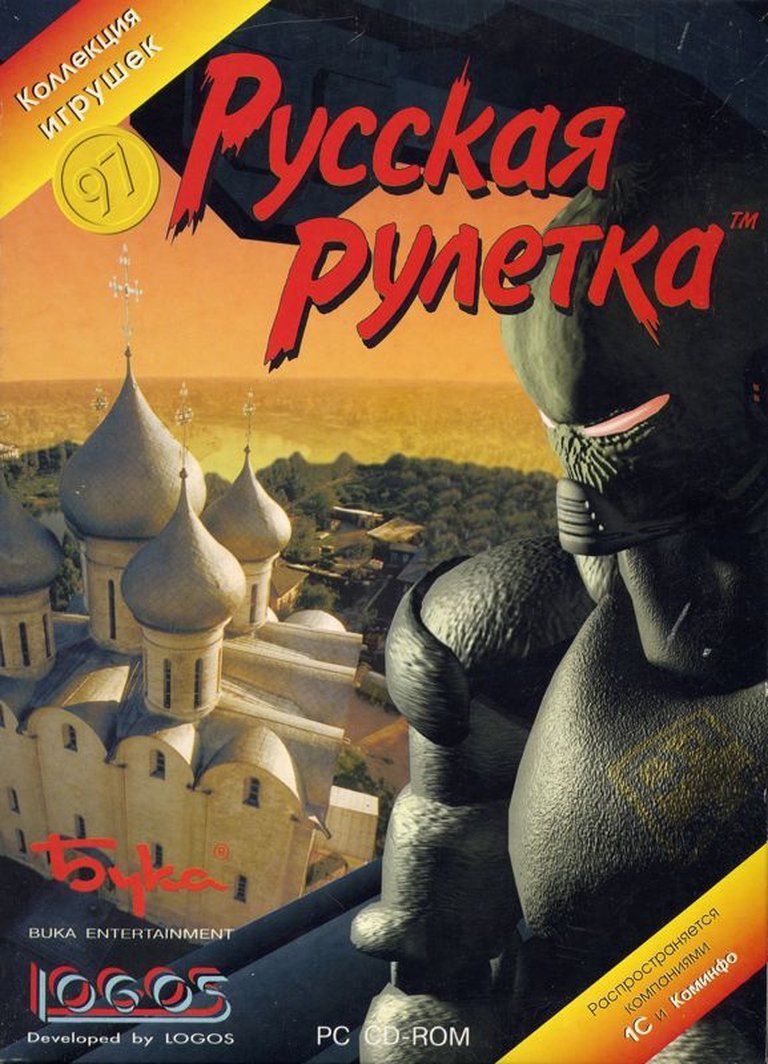
Description
Russian Roulette is a 3D action game set in a sci-fi universe where a ring of devastated planets, connected by disassembled galactic portals, has been lost in space. As the player, you must recover the missing portal parts by battling enemies or completing tasks for local authorities. The game features vehicle-based combat, with turrets that can rotate independently, and includes NPC companions to guide you through certain levels. Developed by Logos and published by Buka Entertainment, it was one of the first titles released by the latter, marking their transition from distributor to publisher.
Gameplay Videos
Where to Buy Russian Roulette
Russian Roulette Cracks & Fixes
Russian Roulette Patches & Updates
Russian Roulette Reviews & Reception
mobygames.com (72/100): A ring of planets, connected by galactic portals has become lost in space. The planets are devastated and the portals have been disassembled.
thegamer.com : Russian roulette is one of those timeless games that transcends genres and mediums.
flashmuseum.org (60/100): In the style of the classic gun-gambling game, players choose a dropzone to stand on while they ‘spin the chamber’ of lights in hopes that it doesn’t land where you stand.
reddit.com : A game about competitively shooting yourself in the head.
Russian Roulette (1996): A Forgotten Relic of the 90s Shooter Era
Introduction: A Game Lost in Time
Russian Roulette (1996) is a curious artifact of mid-90s PC gaming—a title that emerged from the fledgling Russian game industry, blending ambitious sci-fi world-building with clunky execution. Developed by Logos and published by Buka Entertainment (then a newcomer to game development), it arrived at a time when Doom clones dominated the market, yet it dared to offer something different: a first-person shooter with vehicle combat, non-linear exploration, and a bizarrely existential premise. Though largely overlooked outside Eastern Europe, Russian Roulette deserves examination as a historical footnote—a game that tried to innovate but ultimately succumbed to the limitations of its era.
Development History & Context: The Birth of Buka Entertainment
The Studio Behind the Game
Buka Entertainment, now a well-known publisher in Russia, began as a distributor before venturing into game development. Russian Roulette was their inaugural title, marking a bold but flawed entry into the industry. The game was developed by Logos, a studio with little prior recognition, and its creation coincided with Russia’s post-Soviet gaming boom—a period when developers experimented with Western genres while grappling with technical and financial constraints.
Technological Constraints & Design Ambitions
Released in 1996, Russian Roulette was built using an early 3D engine that struggled to compete with contemporaries like Quake or Duke Nukem 3D. The game’s most notable feature was its vehicle mechanics, allowing players to enter and exit vehicles mid-mission, a rarity in shooters of the time. However, the execution was marred by:
– Clunky controls (keyboard-only, with no mouse support in some versions).
– Primitive AI (enemies often behaved erratically).
– Repetitive level design (despite the sci-fi premise, environments felt sterile).
The Gaming Landscape of 1996
The mid-90s were dominated by Doom clones and early 3D accelerators. Russian Roulette arrived just as Quake redefined first-person shooters, making its technical shortcomings even more glaring. Yet, its attempt at blending shooting with vehicle combat foreshadowed later titles like Halo’s Warthog segments.
Narrative & Thematic Deep Dive: A Sci-Fi Odyssey with Existential Undertones
Plot Summary
The game’s premise is as bizarre as it is ambitious:
– A ring of planets, once connected by galactic portals, has been lost in space.
– The player must recover the scattered portal parts to restore interstellar travel.
– Along the way, they battle hostile factions, complete odd jobs for local authorities, and navigate a fragmented universe.
Themes & Symbolism
While the story is thin, the game’s title—Russian Roulette—hints at deeper themes:
– Fate vs. Agency: The protagonist’s mission is a gamble, much like the game’s namesake.
– Isolation & Desperation: The shattered planets mirror post-Soviet Russia’s economic and social fragmentation.
– Absurdism: The game’s tone oscillates between serious sci-fi and unintentional comedy, reflecting the chaotic creativity of early Russian game development.
Characters & Dialogue
The game features minimal NPC interaction, with most “dialogue” consisting of terse mission briefings. The lone companion (an NPC guide in some levels) is forgettable, reinforcing the game’s isolating atmosphere.
Gameplay Mechanics & Systems: A Flawed but Innovative Design
Core Gameplay Loop
- Shooting & Exploration: Standard FPS mechanics, but with a focus on scavenging for portal parts.
- Vehicle Combat: Players can hijack and pilot vehicles, some with rotating turrets—a novel idea poorly implemented.
- Non-Linear Progression: Levels branch unpredictably, though the lack of clear objectives often leads to confusion.
Combat & Progression
- Weapons: A mix of sci-fi guns and generic firearms, none particularly memorable.
- Enemies: Mostly faceless soldiers with little variation in behavior.
- Difficulty: Brutally punishing due to imprecise controls and sparse checkpoints.
UI & Technical Issues
- The HUD is functional but ugly, with health and ammo displays that blend into the environment.
- The lack of mouse support in early versions made aiming a chore.
World-Building, Art & Sound: A Mixed Bag of Sci-Fi Aesthetics
Visual Design
- The game’s sci-fi setting is underwhelming, with repetitive textures and blocky geometry.
- Vehicle designs are the standout feature, offering a glimpse of what could have been with better technology.
Sound & Atmosphere
- The soundtrack is forgettable, consisting of generic synth tracks.
- Sound effects are minimal, with gunfire and explosions lacking impact.
Reception & Legacy: A Game That Time Forgot
Critical & Commercial Reception
- Critics: The lone review from Hacker magazine (72%) praised its ambition but criticized its execution.
- Players: A cult following in Russia, but largely unknown elsewhere.
Influence & Historical Significance
- Russian Roulette was a stepping stone for Buka Entertainment, which later published more polished titles.
- Its vehicle mechanics, while flawed, prefigured later shooters that blended FPS and vehicular combat.
Conclusion: A Flawed but Fascinating Relic
Russian Roulette is not a good game by modern standards, but it is a fascinating one—a product of its time and place. It represents the raw, unpolished creativity of early Russian game development, where ambition often outpaced technical prowess. While it lacks the polish of its Western contemporaries, its attempt at innovation makes it worthy of historical note.
Final Verdict: A curiosity for retro gaming enthusiasts and historians, but not a lost classic. 5/10—playable only for its historical value.
Would you like additional sections on modding communities, speedrunning, or comparisons to other Eastern European shooters of the era?