
- Release Year: 2015
- Platforms: Macintosh, Windows
- Publisher: CINEMAX, s.r.o.
- Developer: CINEMAX, s.r.o.
- Genre: Simulation
- Perspective: Audio game
- Gameplay: Music, rhythm
- Average Score: 81/100
Description
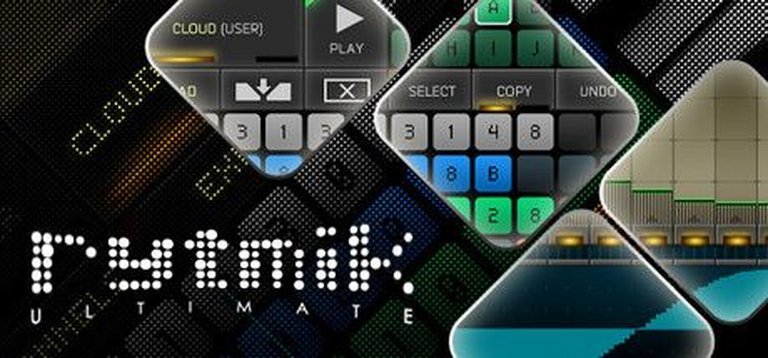
Rytmik Ultimate is a music creation and simulation game that empowers players to compose, shape, and share original tracks using a vast library of over 750 instruments and advanced editing tools. Designed for both novices and experienced musicians, the game features wavetable synthesizers, customizable waveforms, and effects like ADSR envelopes, digital delay, and vibrato. Users can collaborate via Rytmik Cloud, export songs in WAV format, and explore a versatile interface to craft everything from chiptunes to dubstep, making it a dynamic platform for on-the-go music production.
Gameplay Videos
Where to Buy Rytmik Ultimate
PC
Rytmik Ultimate Free Download
Rytmik Ultimate Guides & Walkthroughs
Rytmik Ultimate Reviews & Reception
steambase.io (88/100): A powerful music station allowing you not only to play with samples and musical instruments but also to mix them together, shape them and create music clips or tracks for your Friday night set-list.
metacritic.com (70/100): Rytmik Ultimate offers a very powerful interface for electronic music composition, combining a generous amount of samples with a refreshingly useful collection of editing tools to good effect.
store.steampowered.com (87/100): A powerful music station allowing you not only to play with samples and musical instruments but also to mix them together, shape them and create music clips or whole songs for your Friday night set-list.
Rytmik Ultimate: Review
The Unsung Synthesizer of Gaming’s Digital Orchestra
Introduction
In the crescendo of 2015’s blockbuster releases—a year defined by The Witcher 3: Wild Hunt’s narrative grandeur and Fallout 4’s post-apocalyptic sprawl—Rytmik Ultimate emerged as a quiet revolution. Developed by Czech studio CINEMAX, s.r.o., this niche music-creation suite defied the era’s AAA bombast, offering a sandbox for sonic architects. Much like a modular synthesizer in a world of pre-packaged beats, Rytmik Ultimate carved a space for patient creators amid gaming’s rhythm-action hegemony. This review posits that the game stands as a masterclass in democratized music production—flawed yet foundational, overlooked yet influential—for those willing to decode its oscillating heart.
Development History & Context
Studio Vision and Technological Constraints
CINEMAX, s.r.o., though not a household name, had cultivated a reputation through the Rytmik series (2010–2015), which evolved from DSiWare curiosities into full-fledged DAW-like tools. Rytmik Ultimate represented the apex of this journey, releasing December 10, 2015, for Windows and macOS. The studio’s vision was clear: to create an accessible yet deep music-creation tool that leveraged gaming interfaces to lower barriers to entry.
In 2015, gaming hardware was both a constraint and a catalyst. MIDI peripherals were niche, and real-time audio processing demanded optimization for consumer-grade CPUs. The studio sidestepped these limitations by embracing a grid-based sequencer (reminiscent of Fruity Loops’ early iterations) and prioritizing lightweight, sample-based synthesis. This allowed Rytmik Ultimate to run smoothly on modest systems while still offering professional-grade WAV export—a critical feature for bedroom producers.
The gaming landscape offered few parallels. While Rocksmith 2014 and Guitar Hero Live dominated the rhythm genre, they focused on performance, not creation. Indie experiments like Crypt of the NecroDancer hybridized rhythm and roguelikes but lacked Rytmik’s utilitarian focus. CINEMAX’s gamble was to treat gameplay as secondary to creativity—a risk that insulated it from mainstream attention but cemented its cult appeal.
Narrative & Thematic Deep Dive
The Silent Symphony of Systems
Rytmik Ultimate forgoes traditional narrative, instead weaving its themes through mechanics. It is a game about agency: the player as composer, sound designer, and curator. The absence of guided objectives or characters is deliberate, framing creativity as an open-ended journey rather than a structured quest.
Thematically, it champions democratization. With 750+ instruments spanning genres (dubstep kicks, chiptune oscillators, world-music textures), it dissolves barriers between “high” and “low” art. A drawable waveform synth module literalizes this ethos, enabling players to craft sounds from scratch—a rarity even in professional DAWs. The inclusion of cloud sharing (“Rytmik Cloud”) fosters community, framing music as collaborative dialogue rather than solitary expression.
Yet this freedom carries existential weight. Unlike narrative-driven games, Rytmik Ultimate offers no extrinsic rewards. Its “story” is the player’s growth from tentative beatmaker to confident producer—a journey mirrored in the gradual mastery of its systems.
Gameplay Mechanics & Systems
The Sequencer as Strategic Core
At Rytmik Ultimate’s core lies a 16-step sequencer, a grid where players assign samples, loops, and effects across tracks. This UI echoes Ableton Live’s session view but simplifies workflows via gamepad or mouse input. Each “track” functions as an instrument lane, with parameters like tempo, swing, and quantization adjustable in real-time.
Innovations:
– Modulatable Effects: Parameters like ADSR envelopes, digital delays, and portamento can be automated per step, enabling dynamic soundscapes.
– Waveform Drafter: A standout feature allowing users to draw custom waveforms as oscillators—effectively turning the game into a wavetable synth.
– Sample Manipulation: Tools like loop-point editing and noise shaping permit granular tweaking, bridging the gap between preset-driven tools and bespoke sound design.
Flaws:
– UI Clutter: The fixed-screen layout crams menus and parameters into a dense interface. Newcomers face a steep learning curve, with tooltips often inadequate.
– Limited Polyphony: Complex projects risk audio glitches due to channel limitations, a reminder of its gaming roots.
– Lack of Tutorialization: Unlike contemporaries (FL Studio, GarageBand), Rytmik assumes familiarity with synthesis concepts, leaving beginners adrift.
Progression & Reward:
There’s no XP system or unlocks—progression is measured in auditory experimentation. The thrill lies in discovering how a distorted bassline interacts with a delay-soaked arpeggio, or how a hand-drawn waveform morphs across octaves.
World-Building, Art & Sound
Aesthetic Minimalism as a Canvas
Rytmik Ultimate’s visual design is utilitarian: a dark grid-based workspace accented by neon track colors. This minimalism serves a purpose—distractions fade, focusing attention on waveform visualizers and频谱 analyzers. While lacking the polish of Audiosurf’s kaleidoscopic lanes or Rez’s cyber-organic vistas, it prioritizes功能 over flair.
Sound design is the true star. The 750+ sample library amalgamates prior Rytmik titles (Retrobits, Hiphop King, World Music) into a cohesive toolkit. Standouts include:
– Dubstep Tools: Sub-basses with controllable wobble LFOs.
– Chiptune Emulation: Pulse and sawtooth waves perfect for NES-era homage.
– Acoustic Foundations: Guitars, pianos, and ethnic instruments (sitars, kalimbas) for hybrid genres.
Reverb and delay effects feel studio-grade, though the absence of third-party VST support reminds users this is a closed ecosystem. Still, for a $19.99 package, the depth astonishes.
Reception & Legacy
Cult Status in a Noisy Year
Rytmik Ultimate launched to minimal fanfare, overshadowed by 2015’s juggernauts. No critic reviews graced Metacritic or MobyGames at launch—a fate common to niche tools. Player impressions, however, praised its affordability and depth, contrasting it with pricier DAWs like Ableton or Logic Pro. Steam user reviews settled at “Mostly Positive,” highlighting its value for musicians but lamenting its opacity for casual players.
Its legacy is subtle but significant. Modern music-game hybrids (Soundstage VR, Korg Gadget) owe a debt to Rytmik’s philosophy of merging play and production. The “Rytmik Cloud” presaged SoundCloud-integrated games like Dreams, fostering creator communities years ahead of trends.
Yet its influence remains indirect. CINEMAX never iterated further, leaving Ultimate as a time capsule of mid-2010s indie ambition—a testament to what happens when games prioritize utility over virality.
Conclusion
The Unfinished Symphony
Rytmik Ultimate is not for everyone. It lacks the hand-holding of Rock Band’s plastic peripherals or the instant gratification of Thumper’s rhythmic onslaught. But for those who see games as tools—as spaces to tinker, create, and share—it remains indispensable.
As both a game and a instrument, it stumbles: its UI frustrates, its tutorials underwhelm, and its hardware limitations echo an era of lesser CPUs. Yet in its imperfections lies charm. Like a battered Moog synth in a pawn shop, it rewards those willing to coax beauty from its circuitry.
In video game history’s orchestra, Rytmik Ultimate is the theremin: enigmatic, niche, and capable of otherworldly sounds in the right hands. It deserves no plaques, no awards—just a quiet acknowledgment that some masterpieces resonate beyond the mainstream’s frequency.
Final Verdict:
A flawed magnum opus for musical mavericks. ★★★★☆ (4/5) — Essential for creators, inessential for crowds.