
- Release Year: 2009
- Platforms: Windows
- Publisher: bitComposer Games GmbH
- Game Mode: Single-player
Description
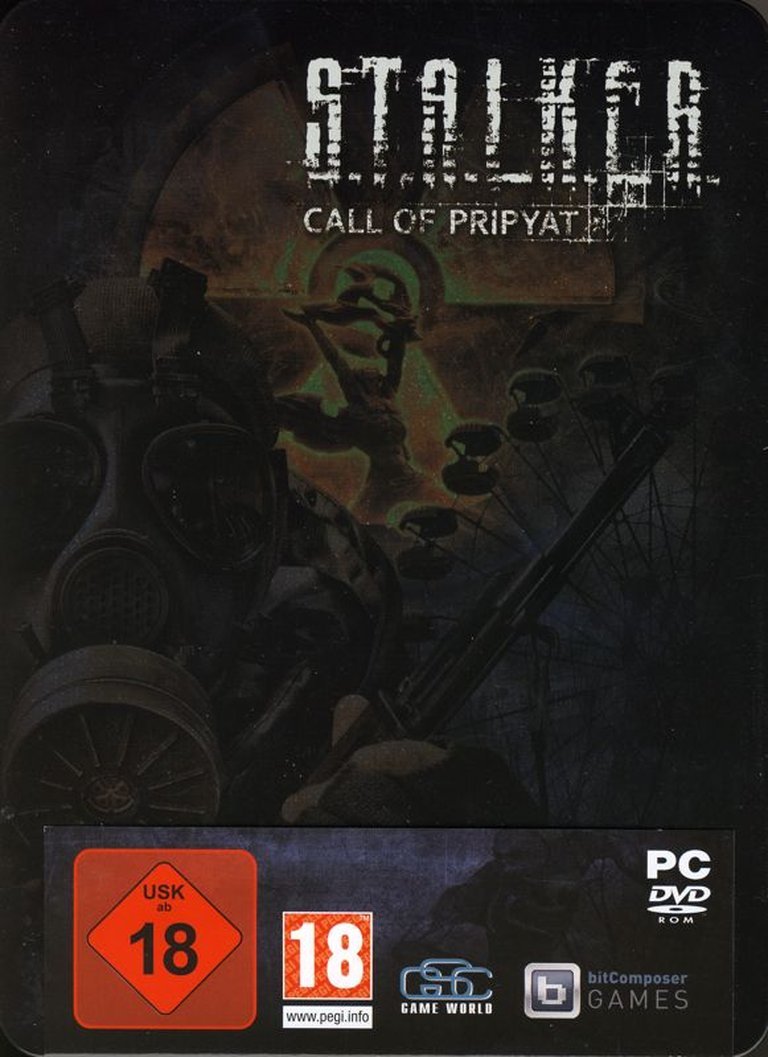
S.T.A.L.K.E.R.: Call of Pripyat (Special Edition) is an immersive first-person shooter set in the post-apocalyptic landscape of the Chernobyl Exclusion Zone. Players take on the role of Major Degtyarev, a special service agent tasked with investigating the mysterious disappearance of a group of Stalkers. The game is renowned for its atmospheric storytelling, realistic survival elements, and the eerie beauty of its post-apocalyptic setting, making it a standout in the S.T.A.L.K.E.R. series.
Where to Buy S.T.A.L.K.E.R.: Call of Pripyat (Special Edition)
PC
S.T.A.L.K.E.R.: Call of Pripyat (Special Edition) Guides & Walkthroughs
S.T.A.L.K.E.R.: Call of Pripyat (Special Edition): Review
Introduction
In the shadow of Chernobyl’s ruins, where irradiated anomalies warp reality and mutated horrors lurk, S.T.A.L.K.E.R.: Call of Pripyat (Special Edition) stands as a masterclass in atmospheric survival horror. Released in 2009 by Ukrainian studio GSC Game World, this third installment in the cult-favorite series refined the franchise’s signature blend of open-world exploration, faction-driven storytelling, and brutal survival mechanics. This review dissects why Call of Pripyat remains a landmark title—a haunting love letter to the Zone’s nihilistic beauty and a testament to the power of player-driven immersion.
Development History & Context
Studio Vision & Challenges
GSC Game World, founded in 1995, aimed to create a game that melded the existential dread of Andrei Tarkovsky’s Stalker with the anarchic freedom of Roadside Picnic. The studio’s proprietary X-Ray Engine 1.6, built to support DirectX 11 features like real-time GPU tessellation, pushed technological boundaries while grappling with the limitations of 2009-era hardware. The result was a game that balanced cutting-edge visuals with accessibility for older systems, a compromise that allowed its haunting atmosphere to shine.
The Gaming Landscape of 2009
Released amidst a wave of linear shooters like Modern Warfare 2, Call of Pripyat defied convention with its systemic sandbox. Its open-ended design and emergent gameplay echoed contemporaries like Fallout 3 but distinguished itself through a uniquely Eastern European lens—one steeped in post-Soviet decay and philosophical bleakness.
Narrative & Thematic Deep Dive
Plot & Perspective
Players assume the role of Major Alexander Degtyarev, an SBU agent investigating the catastrophic failure of Operation Fairway—a military expedition into the Zone’s heart. The narrative eschews hand-holding, instead offering a web of factional conflicts, moral ambiguity, and environmental storytelling. Key characters like the enigmatic Strelok (Shadow of Chernobyl’s protagonist) and the pragmatic technician Cardan enrich the lore, while side quests—such as negotiating peace between Duty and Freedom factions—allow players to shape the Zone’s fragile balance.
Themes & Subtext
Call of Pripyat wrestles with themes of futility and obsession. The Zone, a character in its own right, punishes greed and rewards caution. Its anomalies—scars of human hubris—serve as metaphors for Chernobyl’s real-world trauma. The game’s seven endings, determined by player choices and survival rates of NPCs, reinforce its core thesis: control is an illusion in a world governed by chaos.
Gameplay Mechanics & Systems
Core Loops & Survival
The game’s DNA lies in its tension between exploration and survival. Players scavenge for artifacts (invisible without detectors), repair weapons, and manage radiation exposure. The “emission” mechanic—sudden psychic storms that force players to seek shelter—keeps tension high, while the A-Life system ensures NPCs and mutants behave dynamically, creating unpredictable encounters.
Combat & Progression
Gunplay is deliberately unforgiving, with weapons jamming and enemies employing flanking tactics. The upgrade system, streamlined from Clear Sky, allows for three-tier modifications using toolkits scavenged from the environment. Armor customization and artifact loadouts further deepen strategic play, though the lack of faction warfare—a cut feature—slightly narrows scope.
UI & Flaws
While the HUD’s detector-based artifact hunting is immersive, the inventory system feels clunky by modern standards. The enemy AI occasionally cheats (notably in nighttime accuracy), yet these flaws are overshadowed by the game’s systemic strengths.
World-Building, Art & Sound
Visual Design
The Zone’s three maps—Zaton’s marshes, Jupiter’s industrial sprawl, and Pripyat’s ghostly urban decay—are rendered with oppressive realism. The Enhanced Edition’s upgrades (God Rays, dynamic reflections) enhance but respect the original’s grimy aesthetic. The European Special Edition’s physical extras—a bandana, flare matches, and faction patches—complement the game’s tactile immersion.
Atmosphere & Sound
Sound design here is unparalleled: distant mutant screeches, the creak of abandoned buildings, and the oppressive silence before an emission build unease. Composer Alexey Omelchuk’s ambient score, blending electronic drones with folk motifs, underscores the Zone’s melancholy.
Reception & Legacy
Launch & Longevity
Call of Pripyat earned an 80/100 on Metacritic, praised for its stability and depth compared to its buggy predecessors. While sales were modest initially, its reputation soared via mods like Misery and Anomaly, which expanded its systems and difficulty.
Industry Influence
The game’s DNA is evident in Metro Exodus and Chernobylite, while its legacy is cemented by the 2024 release of S.T.A.L.K.E.R. 2: Heart of Chornobyl. The 2025 Enhanced Edition—featuring 4K textures and modernized controls—demonstrates its enduring appeal.
Conclusion
S.T.A.L.K.E.R.: Call of Pripyat (Special Edition) is a triumph of atmosphere and systemic design—a game that demands patience but rewards with unparalleled immersion. Its blend of survival horror, RPG depth, and existential storytelling secures its place as a cult classic and a high-water mark for Eastern European game development. For those willing to brave its horrors, the Zone offers an experience as unforgettable as it is unforgiving.
Final Verdict: A haunting masterpiece that redefines the boundaries of survival horror. Essential for genre devotees and a compelling artifact of gaming history.