
- Release Year: 2007
- Platforms: OnLive, Windows
- Publisher: ak tronic Software & Services GmbH, GSC Game World, THQ Inc.
- Developer: GSC Game World
- Genre: Action
- Perspective: 1st-person
- Game Mode: Online PVP, Single-player
- Gameplay: Direct control, RPG elements, Shooter
- Setting: Europe, Post-apocalyptic
- Average Score: 80/100
Description
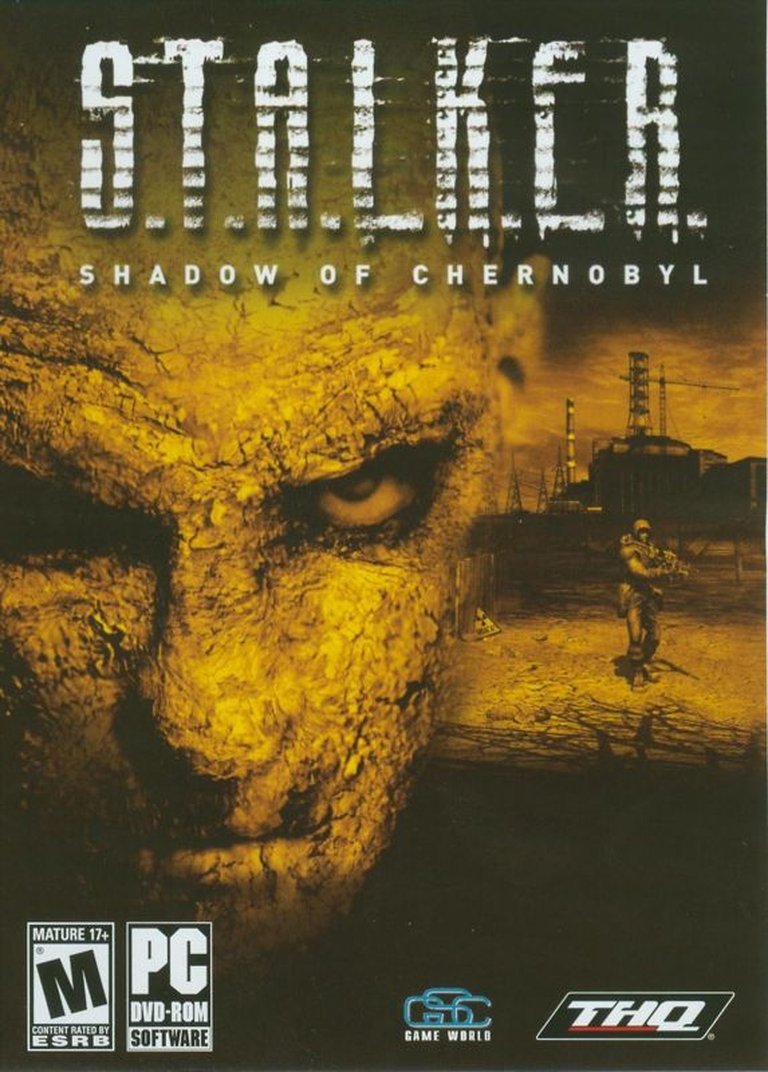
S.T.A.L.K.E.R.: Shadow of Chernobyl is a first-person shooter set in the hazardous Chernobyl Exclusion Zone, known as the ‘Zone’, which has become a dangerous and mysterious place filled with mutated creatures, bandits, and deadly anomalies. Players take on the role of a stalker who has lost his memory and must navigate this treacherous environment to uncover the truth behind a mysterious note instructing him to kill someone named ‘Strelok’. The game features an open-ended world, RPG elements, and a unique blend of exploration, combat, and survival mechanics.
Gameplay Videos
Where to Buy S.T.A.L.K.E.R.: Shadow of Chernobyl
PC
S.T.A.L.K.E.R.: Shadow of Chernobyl Free Download
S.T.A.L.K.E.R.: Shadow of Chernobyl Cracks & Fixes
S.T.A.L.K.E.R.: Shadow of Chernobyl Patches & Updates
S.T.A.L.K.E.R.: Shadow of Chernobyl Mods
S.T.A.L.K.E.R.: Shadow of Chernobyl Guides & Walkthroughs
S.T.A.L.K.E.R.: Shadow of Chernobyl Reviews & Reception
ign.com (80/100): The game offers significantly more content than any other FPS out there, but struggles a little when it comes to the open world.
S.T.A.L.K.E.R.: Shadow of Chernobyl Cheats & Codes
PC
Press ~ during gameplay to display the console window and enter the following commands.
| Code | Effect |
|---|---|
| g_god on | Activates God Mode (invulnerability) |
| g_god off | Disables God Mode |
| g_always_run 1 | Enables permanent running |
| g_always_run 0 | Disables permanent running |
| g_allow_run | Allows running without holding the shift key |
| g_allow_run off | Disables running without holding the shift key |
| actor_set_health 100 | Sets health to 100 |
| actor_set_hunger 0 | Sets hunger level to 0 |
| actor_set_thirst 0 | Sets thirst level to 0 |
| help | Lists all available console commands |
PC (Limited Edition)
Go to ‘Setup-bp’ in the main S.T.A.L.K.E.R. directory, select a language, and enter the following passwords.
| Code | Effect |
|---|---|
| pseudodog | Unlocks multiplayer map Pool and UK/US military multiplayer skins |
| snork | Unlocks multiplayer map Dark Valley and French/German military multiplayer skins |
S.T.A.L.K.E.R.: Shadow of Chernobyl: A Radiant Beast of Ambition and Atmosphere
Introduction
Few games haunt players like S.T.A.L.K.E.R.: Shadow of Chernobyl. Released in 2007 after a turbulent six-year development cycle, GSC Game World’s opus carved a jagged niche into gaming history with its oppressive atmosphere, nihilistic storytelling, and genre-blurring systems. Set in the radioactive ruins of an alternate Chernobyl Exclusion Zone, the game merges survival-horror, RPG mechanics, and brutal first-person shooting into a flawed but unforgettable experience. This review argues that S.T.A.L.K.E.R., despite its technical shortcomings and unrealized ambitions, redefined immersion through its reactive world and remains a benchmark for atmospheric storytelling.
Development History & Context
Studio Vision & Turbulent Birth
Developed by Ukrainian studio GSC Game World, S.T.A.L.K.E.R. was conceived as a revolutionary fusion of open-world exploration, emergent AI, and survival mechanics. Inspired by the Strugatsky brothers’ novel Roadside Picnic and Tarkovsky’s film Stalker, the project aimed to simulate a living, breathing ecosystem where factions, mutants, and environmental hazards interacted dynamically.
The game’s protracted development (2001–2007) became legendary, marred by engine overhauls, feature cuts (like the scrapped Oblivion Lost concept), and publisher THQ’s pressure to ship. The proprietary X-Ray engine, while innovative with its HDR lighting and dynamic weather, struggled with optimization, resulting in notorious performance issues at launch.
2007’s Gaming Landscape
S.T.A.L.K.E.R. debuted in a year dominated by polished shooters like BioShock and Call of Duty 4. Its janky systems and Eurojank aesthetic alienated mainstream audiences, but its uncompromising vision resonated with niche players craving depth over polish.
Narrative & Thematic Deep Dive
A Descent into the Zone
Players embody the Marked One, an amnesiac stalker tasked with assassinating the mysterious Strelok. The plot unfolds through environmental clues, fractured dialogues, and surreal visions, steeped in Soviet existential dread. The Zone itself—a 30 km² wasteland of irradiated anomalies, warring factions, and mutated horrors—is the true protagonist.
Factions & Philosophy
– Duty: Authoritarian militarists seeking to purge the Zone.
– Freedom: Anarchists defending it as a land of opportunity.
– Bandits, Loners, and Monolith: Opportunists and zealotslocked in a Darwinian struggle.
The narrative critiques human greed and futility, echoing Roadside Picnic’s themes of obsession and unintended consequences. The seven endings range from cynical (wealth, oblivion) to hauntingly ambiguous, with the “true” ending revealing a psychic hive-mind controlling the Zone.
Characters & Dialogue
NPCs speak in thick Ukrainian/Russian accents, lending authenticity but often feeling wooden. Quests—often fetch-oriented—are elevated by the Zone’s unpredictability: a routine job might lead to ambushes by bloodsuckers or sudden emissions wiping out entire camps.
Gameplay Mechanics & Systems
Survival as Core Loop
S.T.A.L.K.E.R. rejects hand-holding. Key systems include:
– Ballistic Realism: Guns jam, degrade, and handle with brutal authenticity. Headshots kill; cover is mandatory.
– Anomalies & Artifacts: Invisible death traps (vortexes, lightning fields) hide artifacts that buff stats at a cost (e.g., radiation).
– Hunger, Fatigue, & Radiation: Constant micromanagement of food, sleep, and anti-rad drugs.
– Weight Limits: Inventory Tetris forces prioritization—ammo vs. loot vs. medical supplies.
AI & Emergence
The A-Life system lets factions raid bases, mutants hunt prey, and stalkers dynamically react to weather/time. A patrol wiped out at dawn might trigger retaliatory raids by afternoon. While buggy, these systems created legendary “stories” unscripted by devs.
Flaws & Frustrations
– Quest Bugs: Broken triggers, respawning enemies, and cryptic objectives.
– UI Clunk: Inventory management is cumbersome, and the PDA map is finicky.
– Balance Issues: Early-game scarcity gives way to late-game overpowered gear.
World-Building, Art & Sound
The Zone: A Character of Rot and Beauty
GSC’s artists rendered Chernobyl’s corpse in haunting detail: rusted factories, overgrown villages, and phosphorescent anomalies humming with menace. Nightfall transforms the Zone into a pitch-black nightmare, punctuated by mutant growls and distant gunfire.
Sound Design
– Ambience: Wind whispers through hollow structures; Geiger counters crackle near radiation.
– Music: Alexey Omelchuk’s score melds melancholic guitars with eerie synths, amplifying the desolation.
– Combat Audio: Guns roar with visceral weight, while bloodsuckers’ cloaking screams induce panic.
Visual Tech
The X-Ray engine’s HDR lighting and dynamic shadows were cutting-edge for 2007, though texture pop-in and frame drops plagued mid-tier PCs.
Reception & Legacy
Launch Reception
Critics praised the atmosphere but slammed the bugs (Metacritic: 82/100). PC Gamer called it “the most ambitious FPS ever,” while IGN noted its “unparalleled immersion when it works.”
Post-Launch Redemption
Fan patches (e.g., Zone Reclamation Project) and mods (STALKER Complete) fixed bugs and expanded content, cementing a cult following.
Industry Influence
S.T.A.L.K.E.R.’s DNA echoes in Metro 2033, Escape from Tarkov, and Death Stranding. Its “emergent storytelling” mantra inspired indie darlings like Kenshi and Project Zomboid.
Conclusion
S.T.A.L.K.E.R.: Shadow of Chernobyl is a contradictory masterpiece—a broken, beautiful ode to hopelessness. Its systems are unruly, its plot fragmented, and its combat unforgiving. Yet no game since has replicated the Zone’s oppressive magic, where every shadow hides annihilation or revelation. Like the Chernobyl ruins it mythologizes, S.T.A.L.K.E.R. is a monument to ambition, flawed and radiant in equal measure. For those willing to brave its jagged edges, it remains a pinnacle of atmospheric storytelling—a radioactive relic that refuses to decay.
Final Verdict: A flawed titan of immersive sim design, essential for its ambition and unmatched atmosphere.
“Forget all those games that guide you along the same path each time. S.T.A.L.K.E.R. will become the new obsession.”
— Spartan_234, MobyGames reviewer