
- Release Year: 2001
- Platforms: Windows
- Publisher: Focus Multimedia Ltd., THQ Inc.
- Developer: KnowWonder, Inc.
- Genre: Action, Card, Labyrinth, Light cycle, Maze, Tile game
- Perspective: 1st-person
- Game Mode: Single-player
- Gameplay: Arcade, Puzzle elements, Shooter
- Setting: Ancient Egypt, Ancient Japan, Ancient Rome, Future City, Wild West
- Average Score: 19/100
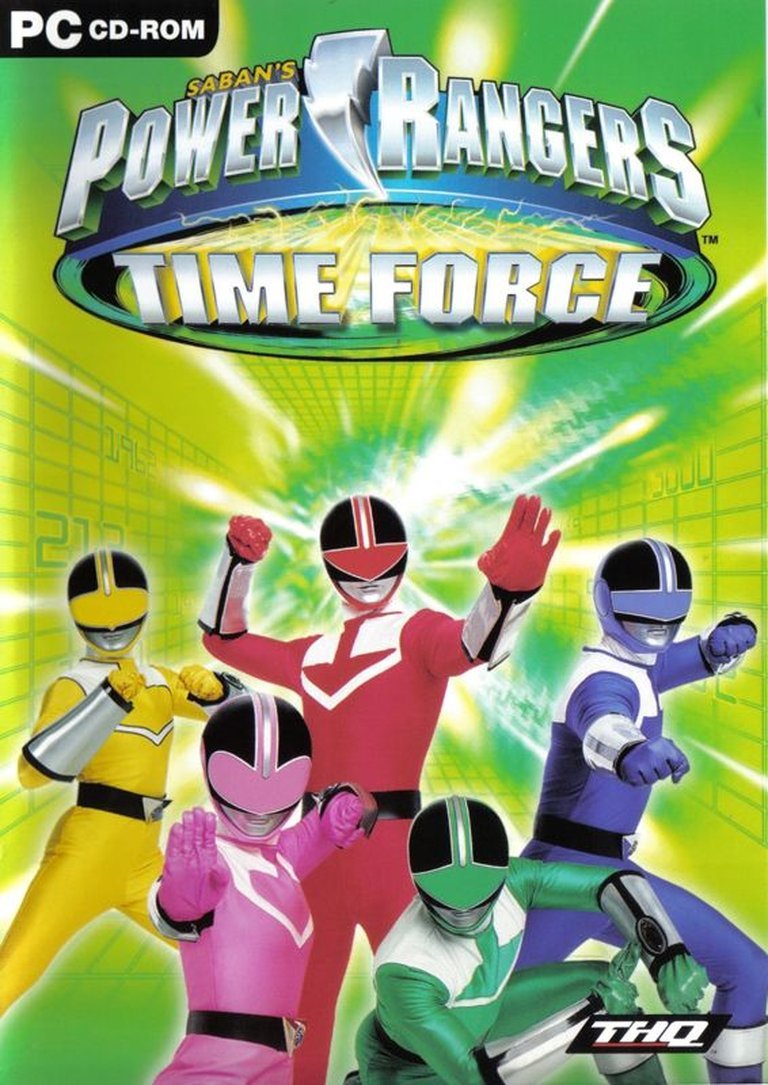
Description
In Saban’s Power Rangers: Time Force, the Power Rangers must travel through different time periods to stop evil forces from looting Earth’s historical treasures. Each of the five Rangers faces unique challenges in distinct eras, from ancient Japan and Rome to the Wild West and futuristic cities, through a variety of mini-games like light cycle battles, tile-matching puzzles, and shooter showdowns. The game features multiple difficulty levels and a mix of arcade-style gameplay tailored to each Ranger’s mission.
Gameplay Videos
Where to Buy Saban’s Power Rangers: Time Force
PC
Saban’s Power Rangers: Time Force Free Download
Saban’s Power Rangers: Time Force Guides & Walkthroughs
Saban’s Power Rangers: Time Force Reviews & Reception
mobygames.com (19/100): Critics 19% (4)
Saban’s Power Rangers: Time Force Cheats & Codes
PlayStation (PSX)
Enter codes using GameShark or Action Replay devices.
| Code | Effect |
|---|---|
| 800C9B1E 02C5 | Infinite Time |
| 800C9B1E 0FFF | Infinite Time |
| 800919C6 2400 | Infinite Lives |
| 80091960 0001 | Extra Lives |
| 8009C616 2400 | Infinite Special |
| 80095AD0 00FF 80095AD2 2402 80095AD4 00BC 80095AD6 A482 |
Infinite Health |
Game Boy Advance (GBA)
Enter passwords at the password screen.
| Code | Effect |
|---|---|
| 8QSD | Start At Final Boss |
| HBLD | Access Level 0 |
| KD4Q | Access Level 1 |
| CNGF | Access Level 2 |
| FLLF | Access Level 3 |
| HDSF | Access Level 4 |
| KGNF | Access Level 5 |
| DBBR | Access Level 2 |
| GCB5 | Access Level 3 |
| HCB9 | Access Level 4 |
| 0VGD | Level 0 (with 1 continue) |
| 2X0Q | Level 1 (with 1 continue) |
| W5QB | Level 2 (with 4 continues) |
| 23BC | Level 3 (with 9 continues) |
| WXNF | Level 4 (with 12 continues) |
| 2ZNC | Level 5 (with 15 continues) |
| 07NC | Level 6 (with 15 continues) |
Game Boy Color (GBC)
Enter passwords at the password screen.
| Code | Effect |
|---|---|
| DBBL | Chapter 2 – Three Eyes or Evil Merman |
| GBBV | Chapter 3 – Gluto & Nadira (Evil Merman captured) |
| GCBZ | Chapter 3 – Gluto & Nadira (Three Eyes captured) |
| HBBZ | Chapter 4 – Gluto (Evil Merman captured) |
| HCB4 | Chapter 4 – Gluto (Three Eyes captured) |
| JJLG | Chapter 4 – Nadira (Evil Merman captured) |
| JKLL | Chapter 4 – Nadira (Three Eyes captured) |
| KFLL | Chapter 5 – Evil Merman or Frax or Armor Ghost |
| LDLL | Chapter 5 – Three Eyes or Frax or Armor Ghost |
| LDM4 | Chapter 6 – Frax or Armor Ghost |
| LDNL | Chapter 6 – Three Eyes or Armor Ghost |
| LDQL | Chapter 6 – Three Eyes or Frax |
| LDP4 | Chapter 7 – Armor Ghost |
| LDR4 | Chapter 7 – Frax |
| LDSL | Chapter 7 – Three Eyes |
| PD3G | Chapter 8 – Ransik |
| QD3L | Credits |
| DBBX | Chapter 2 – Three Eyes or Evil Merman |
| GBB6 | Chapter 3 – Gluto & Nadira (Evil Merman captured) |
| GCB0 | Chapter 3 – Gluto & Nadira (Three Eyes captured) |
| HBB0 | Chapter 4 – Gluto (Evil Merman captured) |
| HCLD | Chapter 4 – Gluto (Three Eyes captured) |
| JJLS | Chapter 4 – Nadira (Evil Merman captured) |
| JKLX | Chapter 4 – Nadira (Three Eyes captured) |
| KFLX | Chapter 5 – Evil Merman or Frax or Armor Ghost |
| LDLX | Chapter 5 – Three Eyes or Frax or Armor Ghost |
| LDWD | Chapter 6 – Frax or Armor Ghost |
| LDNX | Chapter 6 – Three Eyes or Armor Ghost |
| LDQX | Chapter 6 – Three Eyes or Frax |
| LDYD | Chapter 7 – Armor Ghost |
| LD1D | Chapter 7 – Frax |
| LDSX | Chapter 7 – Three Eyes |
| PD3S | Chapter 8 – Ransik |
| QD3X | Credits |
| QD3R | Credits |
| DBBR | Level 2 – Three eyes or Evil Merman |
| GBB1 | Level 3 – Gluto & Nadira |
| JJLM | Level 4 – Nadira |
| LDLR | Level 5 – Three Eyes |
| LDM9 | Level 6 – Frax |
| LDP9 | Level 7 – Armor Ghost |
| PD3M | Level 8 – Ransik |
Saban’s Power Rangers: Time Force: A Time-Traveling Misadventure
Introduction
In the annals of licensed video games, few titles are as bafflingly misguided as Saban’s Power Rangers: Time Force (2001). Released at the height of the Power Rangers franchise’s cultural dominance, this PC adaptation of the beloved Time Force season promised an epic, time-spanning adventure. Instead, it delivered a disjointed collection of mini-games so shallow and uninspired that they barely qualify as “games” at all. Developed by KnowWonder and published by THQ, Time Force is a cautionary tale of how even the most beloved intellectual properties can be squandered by half-hearted design, rushed development, and a fundamental misunderstanding of what makes its source material compelling.
This review will dissect Saban’s Power Rangers: Time Force in exhaustive detail, exploring its development history, narrative (or lack thereof), gameplay mechanics, artistic presentation, critical reception, and lasting legacy. By the end, it will become clear why this game is remembered—not as a triumph of licensed gaming, but as a forgotten relic of an era when tie-in games were often little more than cynical cash grabs.
Development History & Context
The Studio and the Vision
Saban’s Power Rangers: Time Force was developed by KnowWonder, Inc., a studio primarily known for educational software and children’s games. Founded in 1996, KnowWonder had a portfolio that included titles like Disney’s Activity Center and Barbie: Magic Genie Adventure. Their expertise lay in creating simple, accessible experiences for young audiences—hardly the pedigree one would expect for an action-packed Power Rangers game.
The game was published by THQ, a company that had already established itself as a major player in the licensed game market. THQ had previously released Power Rangers titles like Lightspeed Rescue (2000) and Lost Galaxy (1999), but Time Force marked a departure from the beat-’em-up and platforming formulas of its predecessors. Instead, it embraced a mini-game compilation structure, a decision that would prove disastrous.
Technological Constraints and Design Choices
The early 2000s were a transitional period for PC gaming. While 3D acceleration was becoming standard, many developers still relied on 2D sprites and simple mechanics to ensure broad compatibility. Time Force was no exception. The game’s five mini-games were designed to run on modest hardware, with minimal graphical demands. This technical conservatism, however, came at the cost of depth and innovation.
The development team, led by Creative Director Phillip Trumbo and Director of Design Kris Summers, opted for a structure where each of the five Power Rangers (Red, Blue, Green, Pink, and Yellow) was assigned a distinct mini-game set in a different historical period. This approach was likely intended to mirror the time-traveling premise of the Time Force TV series, but in practice, it resulted in a fragmented experience with no cohesive gameplay loop.
The Gaming Landscape of 2001
2001 was a year of remarkable diversity in gaming. On PC, titles like Max Payne, Serious Sam: The First Encounter, and Operation Flashpoint pushed the boundaries of action and immersion. Meanwhile, the Power Rangers franchise was still riding high on the success of its TV series, which had just concluded its eighth season, Time Force, to strong ratings.
In this context, Saban’s Power Rangers: Time Force was positioned as a family-friendly title aimed at younger audiences. However, even by the standards of children’s games, it was woefully inadequate. Competitors like Disney’s Tarzan (1999) and SpongeBob SquarePants: SuperSponge (2001) offered far more engaging gameplay, proving that licensed games could be both accessible and fun. Time Force, by contrast, felt like an afterthought—a game made not out of passion, but obligation.
Narrative & Thematic Deep Dive
The Plot: A Thin Veneer of Storytelling
The game’s premise is lifted directly from the Time Force TV series: the villainous Ransik and his mutants have traveled back in time to plunder Earth’s historical treasures, and the Power Rangers must pursue them across different eras to stop their schemes. This setup, while serviceable for a children’s show, is barely explored in the game.
There is no overarching narrative, no character development, and no meaningful interaction between the Rangers. Instead, the game presents each mini-game as a self-contained challenge, with only a brief text blurb explaining the context. For example:
– Blue Ranger (Ancient Japan): “The Blue Ranger travels back in time to ancient Japan. In a light cycle game called Cyclobot Roundup, the player must drive their Vector Cycle around the Cyclobot baddies.”
– Pink Ranger (Ancient Rome): “The Pink Ranger travels to ancient Rome where Gluto is causing earthquakes. Treasures are hidden beneath piles of rubble and must be uncovered in Roman Tile Match, a Mahjong-style game.”
These descriptions are functional but utterly devoid of personality. The Time Force TV series was celebrated for its deeper character arcs, particularly the dynamic between Wes Collins (the Red Ranger) and Jen Scotts (the Pink Ranger), as well as the tragic backstory of Ransik and his daughter Nadira. None of this emotional weight is present in the game. The Rangers are reduced to avatars for mechanical tasks, and the villains are little more than obstacles to overcome.
Characters: Hollow Shells of Their TV Counterparts
The game features the five main Time Force Rangers:
1. Wes Collins (Red Ranger): The reluctant hero who grows into his role as a leader.
2. Jen Scotts (Pink Ranger): The disciplined and determined leader from the future.
3. Lucas Kendall (Blue Ranger): The laid-back, street-smart mechanic.
4. Trip (Green Ranger): The gentle, empathetic alien with psychic abilities.
5. Katie Walker (Yellow Ranger): The energetic and optimistic fighter.
In the TV series, these characters are richly developed, with distinct personalities, motivations, and arcs. In the game, they are stripped of all depth. There are no cutscenes, no dialogue (beyond the occasional text prompt), and no interactions between them. Each Ranger is confined to their own mini-game, with no opportunity for collaboration or teamwork—a glaring omission for a franchise built on the idea of unity and cooperation.
The villains fare no better:
– Ransik: The mutant warlord with a tragic past and a complex relationship with his daughter.
– Nadira: Ransik’s conflicted daughter, torn between loyalty to her father and her growing empathy for humans.
– Frax: The robotic henchman with a hidden human identity.
– Gluto: The bumbling, gluttonous mutant.
In the game, these characters are reduced to static enemies or environmental hazards. Ransik appears only in the Red Ranger’s “Laser Showdown” mini-game as a boss, while Nadira and Frax are mere obstacles in the Green Ranger’s “Time Jet Challenge.” Gluto is relegated to a background role in the Pink Ranger’s “Roman Tile Match.” The game squanders the rich lore and emotional stakes of the Time Force season, offering instead a sterile, mechanical experience.
Themes: A Missed Opportunity
The Time Force TV series explored themes of destiny, free will, redemption, and the consequences of time travel. Wes Collins’ journey from a spoiled rich kid to a selfless hero, Jen’s struggle to balance duty with emotion, and Ransik’s tragic fall from grace were all central to the show’s appeal. The game, however, ignores these themes entirely.
The closest the game comes to engaging with its source material is in its time-traveling premise, but even this is handled in a perfunctory manner. The mini-games are set in different historical periods (Ancient Japan, Ancient Rome, the Wild West, Ancient Egypt, and a futuristic city), but these settings are little more than backdrops. There is no exploration of how the Rangers’ actions might alter history, no moral dilemmas, and no sense of urgency or stakes. The game treats time travel as a gimmick rather than a narrative device, robbing it of any thematic resonance.
Gameplay Mechanics & Systems
The Mini-Game Structure: A Fractured Experience
Saban’s Power Rangers: Time Force is not a single game but a compilation of five distinct mini-games, each assigned to a different Ranger and set in a different time period. This structure is the game’s defining—and most damaging—feature. Instead of a cohesive experience, players are presented with a disjointed collection of shallow challenges that bear little resemblance to the action-packed combat of the Power Rangers franchise.
The five mini-games are as follows:
-
Cyclobot Roundup (Blue Ranger, Ancient Japan)
- Gameplay: A Tron-style light cycle game where the player controls the Blue Ranger’s Vector Cycle, attempting to encircle and eliminate Cyclobot enemies.
- Controls: Keyboard (arrow keys for movement).
- Analysis: This is the most engaging of the mini-games, offering a simple but functional take on the light cycle genre. The objective is to trap Cyclobots within the trails left by the Vector Cycle, causing them to disappear. However, the game lacks depth—there are no power-ups, no variations in enemy behavior, and no progression beyond increasing the number of Cyclobots. The three difficulty levels merely adjust the speed and number of enemies, doing little to enhance the experience.
-
Roman Tile Match (Pink Ranger, Ancient Rome)
- Gameplay: A Mahjong-style tile-matching puzzle where the player must uncover and match hidden treasures beneath rubble.
- Controls: Keyboard (arrow keys for selection, Enter to confirm).
- Analysis: This mini-game is a blatant clone of Mahjong Solitaire, with the added twist of an earthquake mechanic that occasionally shuffles the tiles. The gameplay is slow and repetitive, with no sense of urgency or excitement. The Pink Ranger’s role is reduced to that of a passive observer, clicking tiles until the level is complete. The inclusion of a puzzle game in a Power Rangers title is baffling, as it bears no resemblance to the action-oriented gameplay fans would expect.
-
Laser Showdown (Red Ranger, Wild West)
- Gameplay: A Moorhuhn (Crazy Chicken)-style shooter where the player clicks on enemies as they appear from windows, doors, and behind obstacles.
- Controls: Mouse (point and click).
- Analysis: This is the only mini-game that attempts to replicate the combat of the Power Rangers series, albeit in the most simplistic way possible. The Red Ranger stands in a fixed position, shooting at enemies that pop up in predictable patterns. The game is over almost as soon as it begins, with no challenge or variety. The boss fight against Ransik is equally underwhelming, consisting of little more than clicking on him until his health bar depletes.
-
Time Jet Challenge (Green Ranger, Futuristic City)
- Gameplay: A Defender-style side-scrolling shooter where the player pilots the Time Jet, rescuing civilians from rooftops while avoiding Cyclobots.
- Controls: Keyboard (arrow keys for movement, Space to fire).
- Analysis: This mini-game is the most ambitious of the bunch, attempting to replicate the fast-paced action of classic arcade shooters. However, it is hampered by clunky controls, repetitive level design, and a lack of enemy variety. The Green Ranger’s mission to rescue civilians is a noble concept, but the execution is sluggish and uninspired. The game’s futuristic setting is wasted, with no sense of speed or excitement.
-
Miles of Nile (Yellow Ranger, Ancient Egypt)
- Gameplay: A Pac-Man-style maze game where the player navigates a labyrinth, rescuing tomb workers while avoiding mummy Cyclobots.
- Controls: Keyboard (arrow keys for movement).
- Analysis: This mini-game is the most egregious of the bunch, offering a barebones maze experience with no innovation or challenge. The Yellow Ranger moves through a series of identical-looking corridors, collecting workers and avoiding enemies. There are no power-ups, no variations in level design, and no sense of progression. The game feels like a half-hearted attempt to pad out the mini-game count, with no regard for player engagement.
The Lack of Progression and Replayability
One of the most glaring flaws of Saban’s Power Rangers: Time Force is its complete lack of progression systems. There are no unlockables, no upgrades, and no persistent rewards for completing the mini-games. Each mini-game offers three difficulty levels (Easy, Medium, Hard), but these amount to little more than minor adjustments to enemy speed or quantity.
There is no overarching campaign or narrative thread tying the mini-games together. Players can select any mini-game from the main menu, with no requirement to complete them in order. This lack of structure makes the game feel like a loose collection of demos rather than a cohesive experience.
The absence of multiplayer is another missed opportunity. While the game supports two players in some mini-games (such as Cyclobot Roundup), the experience is not designed for cooperative play. Given the Power Rangers franchise’s emphasis on teamwork, this omission is particularly egregious.
UI and Presentation: Aesthetic Simplicity
The game’s user interface is functional but uninspired. The main menu is a static screen with options to select a mini-game, adjust settings, or view credits. There are no animations, no voice acting, and no dynamic elements to make the experience feel alive.
Each mini-game has its own distinct visual style, but none of them are particularly impressive. The Cyclobot Roundup levels feature a generic cyberpunk aesthetic, while Roman Tile Match uses a bland, earth-toned color palette. Laser Showdown attempts a Wild West theme but fails to capture the vibrancy of the TV series. The lack of visual polish is indicative of the game’s rushed development and low budget.
World-Building, Art & Sound
Settings: Historical Backdrops Without Depth
The game’s five mini-games are set in distinct historical periods, each with its own visual theme:
1. Ancient Japan (Cyclobot Roundup): A neon-lit cyberpunk cityscape, reminiscent of Tron or Akira.
2. Ancient Rome (Roman Tile Match): A crumbling ruin with earthquake effects.
3. Wild West (Laser Showdown): A generic frontier town with saloons and cacti.
4. Futuristic City (Time Jet Challenge): A sprawling metropolis with towering skyscrapers.
5. Ancient Egypt (Miles of Nile): A maze of tombs and corridors.
While these settings are visually distinct, they are devoid of detail or atmosphere. The Ancient Japan levels, for example, could have been an opportunity to explore the cultural and historical context of the setting, but instead, they are reduced to a generic cyberpunk aesthetic. Similarly, the Wild West levels fail to capture the grit and charm of the frontier, instead offering a sterile, repetitive environment.
Art Direction: A Mixed Bag
The game’s art direction is inconsistent, with some mini-games faring better than others. Cyclobot Roundup benefits from its Tron-inspired visuals, with glowing trails and neon enemies creating a sense of speed and energy. Time Jet Challenge, while clunky, at least attempts to evoke the futuristic aesthetic of the Time Force series.
The other mini-games, however, are visually unremarkable. Roman Tile Match and Miles of Nile are particularly dull, with bland color palettes and repetitive environments. The character sprites are simple and lack the dynamic poses and animations seen in the TV series.
Sound Design: A Forgettable Score
The game’s sound design is as underwhelming as its visuals. The music, composed by Mark Yeend, is a forgettable collection of generic synth tracks that fail to capture the energy of the Power Rangers franchise. The Time Force TV series featured a memorable score by Jeremy Sweet and Jasan Radford, with soaring orchestral themes and electronic beats. The game’s soundtrack, by contrast, is a series of repetitive loops that do little to enhance the experience.
Sound effects are equally lackluster. The Rangers’ weapons and vehicles produce generic blasts and hums, while the enemies emit bland, uninspired noises. There is no voice acting, a glaring omission given the TV series’ emphasis on character interaction and dialogue.
Reception & Legacy
Critical Reception: A Universal Panning
Saban’s Power Rangers: Time Force was met with near-universal disdain from critics. The game holds a 19% average score on MobyGames, based on four reviews, making it one of the lowest-rated Power Rangers games of all time.
German gaming publications were particularly harsh:
– Game Captain (41/100): “An extremely primitive arcade collection whose level corresponds to the television template. All in all, it is the purest children’s game to play through the game in one to two hours. Well, apparently the game was developed for toddlers, or for older fans of the television series, whose upper floors consequently cannot cope with difficult tasks.”
– PC Action (15/100): “The Power Rangers in their colorful gym suits will now also rob you of your last nerve on the PC. In five undemanding arcade games, you swing your super hands and feet like Jackie Chan with constipation and thus save the world from evil powers. Despite plenty of tights action, the mini-adventures, which are all clones of well-known classics like Snake and Memory, become boring after the shortest time.”
– PC Games (13/100): “Five mini-games with flashy names and ancient predecessors don’t give the fun a chance. The Snake clone is boring, the Moorhuhn rip-off laughable, and the Pac-Man copy completely pointless—why? Because the things are played through within five minutes. It’s for kids, you might answer. Yes. You could. Wouldn’t help anything. Apart from the fact that the entire game runs in English (at least there is a multilingual manual), you can’t really do this to the dear little ones. They were already punished enough with the series, weren’t they?”
– GameStar (9/100): “The game CD fulfills its purpose best as a gift for April Fool’s Day or as an expensive frisbee; the ‘games’ can be found in much better variants on the shareware or freeware market.”
These reviews highlight the game’s fundamental flaws: its lack of depth, its derivative gameplay, and its failure to capture the spirit of the Power Rangers franchise. Critics were particularly scathing about the game’s brevity, with many noting that it could be completed in under an hour.
Commercial Performance: A Forgotten Failure
While exact sales figures for Saban’s Power Rangers: Time Force are unavailable, its commercial performance was likely lackluster. The game was released in September 2001, a time when the Power Rangers franchise was still popular but beginning to wane in cultural relevance. The lack of marketing and the game’s poor critical reception likely contributed to its obscurity.
Today, Time Force is a rare and largely forgotten title. Copies of the game can be found on eBay for prices ranging from $10.99 (used) to $350.00 (new), indicating that it is more of a collector’s curiosity than a sought-after classic.
Legacy: A Cautionary Tale
Saban’s Power Rangers: Time Force is a cautionary tale about the dangers of licensed game development. It demonstrates how even a beloved franchise can be squandered by a lack of vision, rushed development, and a failure to understand the source material.
The game’s legacy is one of obscurity. It is rarely discussed in retrospectives of the Power Rangers franchise, and it has had no discernible influence on subsequent games. Later Power Rangers titles, such as Power Rangers: Super Legends (2007) and Power Rangers: Battle for the Grid (2019), learned from the mistakes of Time Force, offering deeper gameplay, better storytelling, and more faithful adaptations of the source material.
In the broader context of gaming history, Time Force serves as a reminder of the early 2000s, when licensed games were often little more than cynical cash grabs. It is a relic of an era when developers and publishers assumed that the strength of a brand alone was enough to sell a game, regardless of its quality.
Conclusion: A Time-Traveling Disaster
Saban’s Power Rangers: Time Force is a game that fails on nearly every level. Its narrative is nonexistent, its characters are hollow shells, its gameplay is shallow and derivative, and its presentation is forgettable. It squanders the rich lore and emotional depth of the Time Force TV series, offering instead a disjointed collection of mini-games that feel more like tech demos than fully realized experiences.
The game’s critical and commercial failure is well-deserved. It is a product of its time—a rushed, half-hearted tie-in that prioritized brand recognition over quality. In the pantheon of Power Rangers games, it stands as one of the weakest entries, a forgotten relic of an era when licensed games were often little more than disposable cash grabs.
Final Verdict: 2/10 – A time-traveling misadventure best left in the past.
For fans of the Power Rangers franchise, Time Force is a disappointment. For gamers seeking a compelling action experience, it is a waste of time. And for historians of video games, it is a cautionary tale—a reminder of how even the most beloved properties can be squandered by neglect and indifference.