
- Release Year: 2014
- Platforms: iPhone, Windows
- Publisher: Big Fish Games, Inc
- Developer: Daily Magic Productions Inc.
- Genre: Adventure
- Perspective: 1st-person
- Game Mode: Single-player
- Gameplay: Hidden object, Mini-games, Puzzle elements
- Average Score: 90/100
Description
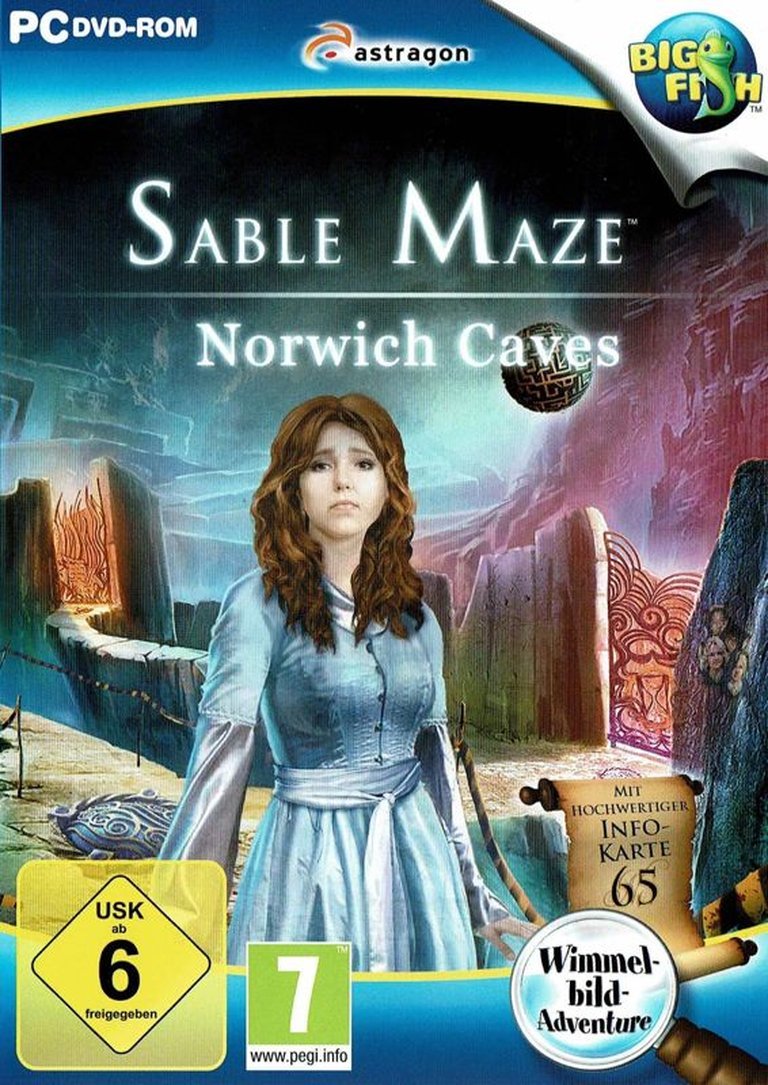
Sable Maze: Norwich Caves is a first-person hidden object adventure game set in the subterranean Norwich Caves beneath a university. Players must investigate the mysterious disappearance of students during an expedition, solving puzzles and finding clues while racing against time as water levels rise in the caves.
Gameplay Videos
Sable Maze: Norwich Caves Free Download
Sable Maze: Norwich Caves Guides & Walkthroughs
Sable Maze: Norwich Caves Reviews & Reception
gamezebo.com (90/100): Sable Maze just hits all the right notes.
Sable Maze: Norwich Caves: A Deep Dive into Academic Adventure
Introduction: The Labyrinth Beneath the Lecture Hall
In the crowded landscape of 2010s casual gaming, few genres were as reliably comforting—or as fiercely competitive—as the Hidden Object Puzzle Adventure (HOPA). It was a formula perfected by pioneers like Big Fish Games: a mysterious premise, beautifully rendered static scenes, a relentless procession of hidden object lists (HOPs), and puzzles that served as gates between them. Amidst this milieu, Daily Magic Productions’ Sable Maze: Norwich Caves (2014) emerged not as a radical innovator but as a masterclass in execution. It is a game that understands the core appeal of its genre and distills it into a tightly woven, atmospheric package. This review argues that Norwich Caves stands as a quintessential, high-water mark for the narrative-driven HOPA, successfully marrying a compelling “academic mystery” plot with an exceptionally well-designed array of gameplay systems that prioritize logical coherence and environmental storytelling over arbitrary busywork. It represents the genre’s peak in terms of polished, self-contained design, even as it foreshadows the coming fatigue that would eventually dilute the market.
Development History & Context: Daily Magic and the Big Fish Ecosystem
To understand Sable Maze: Norwich Caves, one must first understand its creators and its commercial context. The game was developed by Daily Magic Productions Inc., a studio that, alongside companies like Eipix Entertainment, became a workhorse for Big Fish Games’ vast “premium casual” catalog. Unlike the narrative depth of classic point-and-click adventures or the systemic complexity of hardcore titles, the HOPA was a product of specific economic and technological constraints. The business model was straightforward: a low retail price (often $15-$20 for a standard edition) for a downloadable product with a playtime of 6-10 hours, supported by a steady stream of sequels and “Collector’s Editions.”
Technologically, the game is a snapshot of its time. It uses a fixed/flip-screen perspective with pre-rendered, highly detailed 2D backgrounds. This was not a limitation born of lack of ambition but a design choice that optimized for clarity and artistic control. The “slideshow” navigation required minimal system resources (as seen in its Mac/Windows specs: 2.5 GHz CPU, 1GB RAM), ensuring accessibility on a wide range of household PCs in the early 2010s. The visual style is “illustrated realism”—a hyper-realistic, almost painterly aesthetic that aimed for a cinematic storybook feel. This was the era before physics-based interaction and fully 3D environments became standard even in casual titles, and Norwich Caves works within these parameters with impressive artistry.
The game’s context within Big Fish Games’ portfolio is crucial. Big Fish was the dominant marketplace for this genre, acting as both publisher and digital storefront. Norwich Caves was part of the Sable Maze series, which itself was a flagship franchise alongside Dark Dimensions and Ominous Objects. The series’ success lay in its consistent branding: a mysterious, often supernatural, core mystery, a recurring aesthetic tone, and a reliable gameplay loop. Norwich Caves was the second entry in the Sable Maze series (following Sullivan River), released in April 2014 for Windows, with an iPad port and a Collector’s Edition following in 2015. This cycle of standard and enhanced releases was the industry standard, with the Collector’s Edition offering bonus chapters, concept art, and other digital trinkets to entice franchise loyalists.
Narrative & Thematic Deep Dive: Professors, Puzzles, and Peril
The premise, as delivered in the game’s ad blurbs, is elegantly simple: “Congratulations, Professor Edwards! You’ve joined the faculty of the oldest and most-respected university in the world… Four of your students have gone missing while exploring the dangerous caverns under the campus!” This immediately establishes the core thematic tension: the ordered world of academia versus the chaotic, ancient unknown. The university, a symbol of accumulated knowledge and rational thought, literally hides a labyrinthine underworld that defies its own principles—a place with “abnormal physics in the water” and legends of a mythical maze.
Characters are archetypal but serviceable. Professor Edwards is the player-insert, a silent protagonist whose role is to react and investigate. The students are largely ciphers, their personalities defined by their roles in the plot (the curious one, the cautious one). More memorable are the supporting cast: the obsessed archaeologist Professor Buildson, whose discovery of the caves’ entrance sets the plot in motion; the administrative Diana, who provides the initial brief and occasional updates; and the various campus personnel encountered in different wings (the stadium manager, the lab technician). The dialogue is functional, advancing puzzles and plot without deep characterization, which is typical for the genre’s focus on environmental storytelling over character drama.
The plot structure is a classic escalation. It begins as a missing-persons investigation at Norwich University, but through the discovery of artifacts, tiles, and cryptic notes, it evolves into a quest to navigate a series of elementally-themed chambers (Fire, Earth, Water) and astrological puzzles (the Zodiac symbols collected in Chapter 7). The central mystery—the “Labyrinth” and the cause of the flooding—coalesces around the idea of an ancient, physics-defying mechanism deep underground, tied to alchemical or hermetic principles (hence the need for specific tiles, symbols, and measurements). The narrative’s urgency is maintained by the ever-present rain and rising water, a tangible timer that justifies the protagonist’s frantic backtracking and puzzle-solving pace.
Thematically, the game explores several ideas:
1. The Limits of Knowledge: The university, a temple of learning, is helpless against the subterranean mystery. Professor Edwards must apply practical, almost archaeological, skills (cataloging tiles, matching symbols) to solve a problem theoretical physics cannot.
2. Legacy and Discovery: Buildson’s ambition to uncover the past has dire consequences. The game suggests that some knowledge is buried for a reason, and that the pursuit of it must be tempered with caution.
3. Order from Chaos: The gameplay itself is a metaphor. The player imposes order on the chaotic, flooded caves by solving puzzles, placing tiles, and following precise sequences. The final act of assembling the star map and activating the mechanism is the ultimate act of restoring logical, cosmic order to a disordered space.
The narrative is not profound, but it is cohesive and thematically consistent. Every puzzle, from arranging class schedules (Chapter 1) to aligning laser beams (Chapter 5) to matching butterfly wings (Chapter 7), feels connected to the core idea of deciphering an ancient, systematic design. There are even subtle echoes of the Harry Potter-esque “hidden magical world within a school” trope, as the source material notes, but the game grounds itself more in pseudo-science and archaeology than pure fantasy.
Gameplay Mechanics & Systems: The Engine of Engagement
Sable Maze: Norwich Caves is a masterclass in * HOPA game design, where every mechanic serves the twin goals of progression and player satisfaction. The core loop is:
1. *Explore a static scene in first-person perspective.
2. Identify interactive zones (sparkling, outlined, or indicated by cursor change).
3. Engage in a Hidden Object Puzzle (HOP) or a standalone logic/mini-game to obtain a key item or piece of a larger puzzle.
4. Use the item in a previously visited or new location to unlock the next scene or puzzle gate.
5. Repeat, with the map (introduced early) serving as a critical navigation tool to manage the extensive backtracking.
1. Hidden Object Puzzles (HOPs): These are the genre’s bread and butter, and Norwich Caves refines them. Unlike simple “find the list” scenes, many HOPs are multi-layered and interactive. As the walkthrough details, you often need to:
* Find components to assemble a tool (scissors, a hammer head and handle).
* Use an item from the scene on another object to reveal a target (use a knife on a rope, a yardstick on a bag).
* Complete a sequence where the act of finding one item reveals the need for another.
This design blurs the line between hidden object and adventure puzzle, making each HOP feel like a small, self-contained challenge rather than a chore. The lists are also often contextual to the scene (finding lab equipment in a science classroom, theatrical props in a theater).
2. Puzzle Design & Progression Gates: The game is structured around major puzzle gates that control access to new areas. These are consistently themed and vary in type:
* Tile Collection & Placement: The most prominent system. “Shields” (Mathematics, Literature, Medicine) act as early tiles. Later, “Ornate Tiles,” “Elemental Tiles” (Fire, Earth, Water), and finally seven specific “Butterfly Tiles” must be collected and placed on corresponding doors. Each placement triggers a unique puzzle.
* Logic & Pattern Matching: Class schedule matching, record arrangement (no two alike in row/column), tile-sliding image completion (tower, fountain), wire connection puzzles, and symbol-sequence puzzles (fountain, control panels).
* Inventory-Based Combine-Use: The classic adventure mechanic is present but streamlined. You combine items in the inventory (e.g., String + Needle) or use a specific tool on a hotspot (e.g., Hammer on a vase). The walkthrough reveals a web of interdependent items (e.g., the Face Tokens from Chapter 1 are needed for a cabinet lock in Chapter 2).
* Environmental Navigation: The Labyrinth itself is a recurring location with its own mini-puzzles. Entering it requires Ornate Tiles, and inside, you navigate simple mazes (token-guiding) or rotate medallions to form images.
3. UI and Progression Aids: The interface is clean and purposeful:
* The Map (1) is indispensable. Locations are named and interconnected, and fast travel is essential given the game’s substantial backtracking.
* The Task List (exclamation mark icon) clearly states the current objective, preventing player confusion.
* Collectibles: There are three main tiers: 1) Story-critical items (tiles, keys), 2) Optional collectibles (Student Photos, which assemble into a picture), and 3) Extras in the Collector’s Edition (trophies, concept art). This provides optional completionist goals.
* Hint System: While not detailed in sources, standard HOPA mechanics suggest a refilling hint button that highlights an interactive zone or partially reveals a HOP item.
Strengths & Flaws:
* Strengths: The puzzles are logically integrated into the environment and narrative. Solving the class schedule puzzle makes sense in a university. The crystal connector puzzles (used multiple times for the Diamond Ring) are elegant and visually clear. The game avoids “puzzle for puzzle’s sake”; almost every challenge has a diegetic explanation (a locked door, a broken mechanism, a cryptographic key).
* Flaws: The backtracking can be extensive. Players will traverse the same halls dozens of times. Some item uses are obscure or non-intuitive (as the Gamezebo review notes: “The occasional odd item use can be somewhat off-putting”). For example, using a “Growth Formula” in a well or a “STICK” on star maps on a pool floor require leaps of logic that the game does not always telegraph, relying on player experimentation. The randomized puzzle solutions (like the tile-sliding puzzles) can cause minor frustration if the player struggles with a particular configuration.
World-Building, Art & Sound: The Atmosphere of Scholarly Mystery
The game’s world is its most immediately engaging aspect. The setting is Norwich University, a venerable institution with Gothic architecture, leafy quads, and modern science blocks—all rendered in a warm, detailed illustrative style. The contrast between the sun-drenched, familiar campus and the moody, waterlogged caverns below is the game’s central visual and atmospheric dichotomy.
Art Direction: The pre-rendered backgrounds are highly detailed and atmospheric. Scenes like the flooded cellar, the dimly lit observatory, and the moss-covered labyrinth gates are filled with tiny details that encourage exploration. The use of light is key: shafts of light from above in the caves, the warm glow of desk lamps, the cold fluorescence of lab equipment. The character portraits (seen in dialogue) are well-drawn and expressive enough to convey personality. The fixed perspective allows for careful composition, making each scene feel like a carefully composed painting—a hallmark of the genre’s best entries.
Sound Design: The sources are sparse on specifics, but the Gamezebo review explicitly praises it: “The voice acting is flawless, as well.” This suggests professional, clear voice acting for all characters (Professor Edwards, Diana, Buildson, etc.), which is critical for immersion in a narrative-heavy game. The soundtrack is likely ambient and atmospheric—mysterious, dulcimer-toned melodies for exploration, and more tense, rhythmic cues for puzzle-solving or moments of peril. The sound of dripping water is a constant auditory motif, reinforcing the flooding threat.
These elements combine to create a 强大 sense of place and urgency. You are not just solving abstract puzzles; you are navigating a physical space that feels alive (if spooky), with a palpable threat (the rising water) and a deep history (the ancient tiles, the founders’ statues). The art makes the university feel old and weighty; the sound makes the caves feel damp and claustrophobic.
Reception & Legacy: A Solid Pillar in a Crowded Genre
Critical Reception for Sable Maze: Norwich Caves was limited but positive. The most substantial critique comes from Gamezebo, which awarded it a 90/100. Their review praises its “excellent blending of puzzle and hidden object elements,” its “captivating story,” and its “gorgeous visuals, music and voices.” The single criticism noted is the “occasional odd item use.” This aligns with the general sentiment for well-made HOPAs of the era: they were reviewed as competent, enjoyable experiences within their niche but rarely given deep analysis by mainstream outlets. Metacritic shows no aggregated critic scores for the PC version, and MobyGames has no approved critic reviews, reflecting the genre’s marginalization in core games journalism. Player reviews on these aggregators are also scarce, indicating a game played and enjoyed by a dedicated but quiet audience.
Commercial Performance must be inferred. Its release by Big Fish Games, the genre’s giant, guaranteed it significant exposure to its target audience. The fact that it spawned a Collector’s Edition (2015) and was followed by multiple sequels in the Sable Maze series (Forbidden Garden, Twelve Fears, Sullivan River) and a 2018 collection indicates it was successful enough to sustain a franchise. It was a reliable product in Big Fish’s subscription-based catalog and app.
Legacy & Influence:
Sable Maze: Norwich Caves does not represent a paradigm shift, but it is a refinement of established HOPA conventions. Its legacy is in demonstrating how to execute the formula with exceptional polish:
1. Puzzle-Narrative Integration: It moved beyond “find key, use door” to puzzles that felt integral to uncovering an ancient mystery (e.g., the elemental tile alignment, the zodiac star chart).
2. Interactive HOPs: The multi-step hidden object scenes raised the bar for interactivity within the genre, a feature that became more common in later HOPAs.
3. Atmospheric Cohesion: The game’s consistent aesthetic and tonal commitment (academic mystery with a supernatural edge) gave it a stronger identity than many compartmentalized HOPAs.
4. Series Template: The structure—a contained mystery with a distinct setting (university caves), a collectible-driven puzzle system, and a clear trilogy of acts (investigation, deeper labyrinth, final confrontation)—became a template for subsequent Sable Maze entries and similar series from Daily Magic (like Ominous Objects).
However, its legacy is also that of a genre at its peak and on the cusp of saturation. The mechanics it perfected—extensive backtracking, item chains, recycled puzzle types—would later be critiqued as padding when overused. Norwich Caves avoids this by keeping its world relatively compact and its puzzles purposeful, but it cannot escape the inherent repetitiveness of the format. It stands as a high point from which the subsequent decline of the traditional HOPA’s popularity in the late 2010s is all the more noticeable.
Conclusion: A Worthy Expedition into the Depths
Sable Maze: Norwich Caves is not a hidden gem—it is a well-polished cornerstone of the casual adventure genre. It succeeds because it respects the player’s intelligence within its own framework. The mystery is coherent, the puzzles are cleverly varied and thematically appropriate, and the world is beautifully constructed. Its flaws are the genre’s flaws: occasional obtuse item combinations and mandatory backtracking that tests patience. Yet, these are mitigated by a superb UI (the map, task list) and a reward structure that constantly unveils new, visually distinct areas.
In the grand tapestry of video game history, its place is specific: it is a definitive example of the 2010s narrative HOPA. It showcases the genre’s potential for atmospheric storytelling and gentle intellectualChallenge when crafted with care. For historians, it is a primary source for understanding the design aesthetics and player expectations of the casual digital download era. For players, it remains a highly enjoyable, lengthy, and satisfying mystery that efficiently delivers on its promise: to dig deep and keep your head above water. It may not redefine adventure gaming, but within its own deep, well-lit caverns, it is a triumph.
Final Verdict: 8.5/10 – A meticulously crafted and engaging hidden object puzzle adventure that exemplifies the best of its genre, hampered only by the inherent limitations of its own design template. An essential play for HOPA enthusiasts and a testament to Daily Magic Productions’ skill within the Big Fish ecosystem.