
- Release Year: 2005
- Platforms: Windows
- Publisher: Ubisoft Entertainment SA
- Developer: Lexis Numérique SA
- Genre: Simulation, Sports
- Perspective: 3rd-person (Other)
- Game Mode: Single-player
- Gameplay: Horse riding, Puzzle elements
- Setting: Farm
- Average Score: 67/100
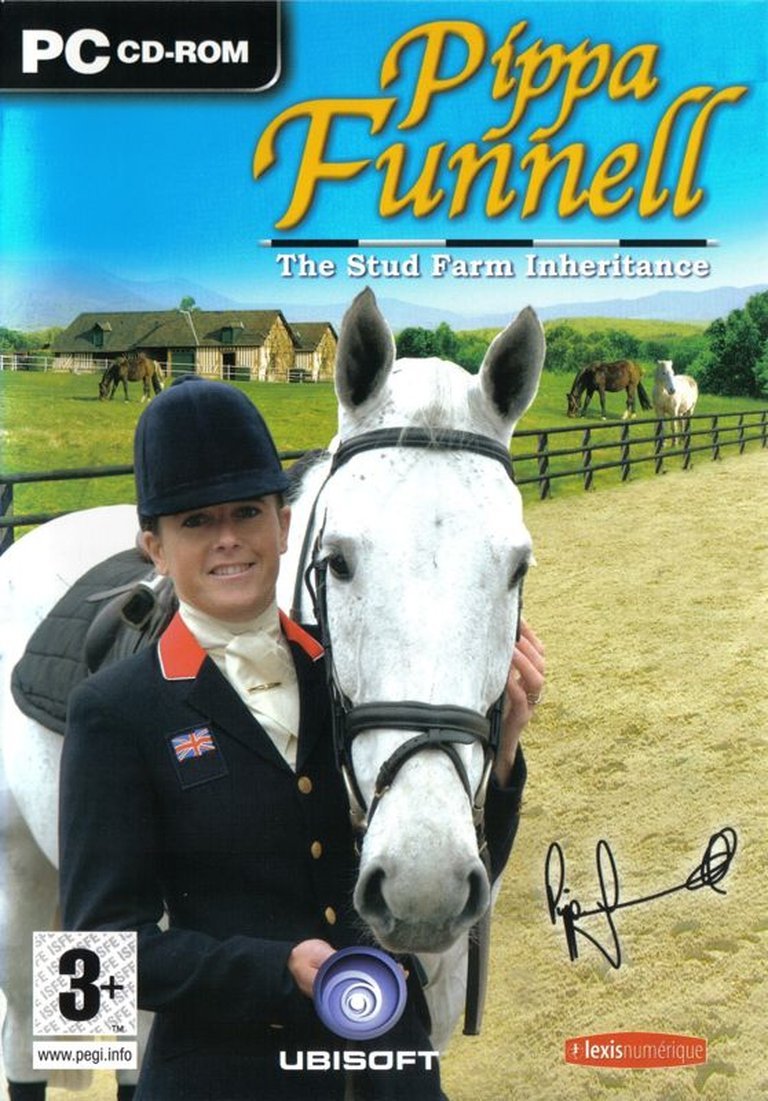
Description
In Saddle Up with Pippa Funnell: Champion Equestrian, players embody Estelle Beaumont, who inherits a stud farm in the quaint village of Appleton from her great aunt Patricia. Guided by farmhand Davy, Estelle learns to groom, train, and ride her horse in dressage and showjumping events, earning experience to improve skills and unlock farm upgrades like new courses and better horses, all while unraveling a mystery involving rivals who covet the property, with equestrian star Pippa Funnell offering advice via phone and appearing in the final competition.
Gameplay Videos
Saddle Up with Pippa Funnell: Champion Equestrian Cracks & Fixes
Saddle Up with Pippa Funnell: Champion Equestrian Reviews & Reception
myabandonware.com (67/100): Sad, tried to relive a big part of my childhood.
Saddle Up with Pippa Funnell: Champion Equestrian: Review
Introduction
Imagine inheriting a dilapidated stud farm in the idyllic English countryside, armed only with a passion for horses, a mobile phone, and the ghostly guidance of an Olympic equestrian legend—welcome to the whimsical world of Saddle Up with Pippa Funnell: Champion Equestrian (2005), a game that gallops straight into the hearts of horse-loving players. Released amid the mid-2000s boom in accessible simulation titles targeted at young audiences, particularly girls, this Windows-exclusive gem from Lexis Numérique SA and Ubisoft blends farm management, equestrian sports simulation, and a dash of detective mystery. As the fifth installment in the enduring Alexandra Ledermann/Pippa Funnell series—known internationally under various regional guises like Abenteuer auf dem Reiterhof 3: Das Erbe der Gräfin or Alexandra Ledermann 5: L’Héritage du Haras—it builds on a legacy of equine adventures that had already captivated over a million players by the end of the decade. My thesis: Saddle Up stands as a quintessential “cozy sim” of its era, masterfully fusing progression-driven horse training with narrative intrigue, though hampered by dated controls and technical quirks, it endures as a nostalgic touchstone for the horse game genre’s golden age of accessibility and empowerment.
Development History & Context
Developed by the French studio Lexis Numérique SA, a specialist in animal simulation games with a penchant for horse-themed titles, Saddle Up emerged from a creative team boasting 72 credited contributors, including artistic director Olivier Derouetteau, lead developer Willy Delcloy, and a cadre of 3D modelers like Clément Choblet and Jérôme Pelissier. Lexis Numérique’s vision, rooted in the Alexandra Ledermann series launched in 1999, was to democratize equestrian sports for home computers, licensing real-world champions like British eventer Pippa Funnell to lend authenticity and star power. Published by Ubisoft Entertainment SA, the game hit shelves in 2005 as a CD-ROM title, pegged at a PEGI 3 rating and aimed squarely at children and preteens, capitalizing on the “girls’ games” niche popularized by titles like Barbie Horse Adventures.
The technological constraints of 2005 PC gaming shaped its DNA: built for Windows 98/XP era hardware, it employs straightforward 3D graphics via keyboard-mouse hybrid controls, eschewing the physics-heavy simulations of later titles like Red Dead Redemption for approachable, low-spec 3D models. The gaming landscape was fertile for such fare—The Sims had normalized life sims, while horse games filled a void in sports sims beyond mainstream fare like FIFA. As part of Ubisoft’s budget-friendly lineup (later bundled in Hits Essentiels: Collection 2005/2006), it reflected a post-Grand Theft Auto: San Andreas world where niche sims thrived on emotional engagement over graphical spectacle. Series contextually, it follows Saddle Up: Time to Ride (2003) and precedes Champion Dreams: First to Ride (2006), with team overlaps evident in credits linking to future Petz: Horsez entries. This era’s emphasis on single-player, story-driven experiences for offline solo play (1 player only) positioned Saddle Up as educational escapism, teaching real equestrian disciplines amid a mystery plot.
Narrative & Thematic Deep Dive
At its core, Saddle Up weaves a heartfelt coming-of-age tale laced with inheritance drama and light mystery, starring protagonist Estelle Beaumont, a young woman thrust into rural responsibility. The plot kicks off with Estelle arriving in the quaint village of Appleton to claim her great-aunt Patricia Beaumont’s stud farm via family solicitor Mr. Scrivener. This setup immediately evokes themes of legacy and proving one’s worth—Patricia’s will imposes horse-loving “conditions,” turning inheritance into a merit-based quest. Estelle meets Davy, the farm’s steadfast caretaker, and his kid sister Rose, who enjoy perpetual residency rights, forming a surrogate family dynamic that underscores themes of community and mentorship.
Dialogue is sparse but functional, delivered through keyboard selections during solicitor chats or Davy-led tutorials, emphasizing encouragement: Davy teaches grooming, riding, and care, while Estelle’s mobile phone buzzes with task updates and journal reminders. The narrative escalates via progression unlocks—master dressage to greenlight show-jumping or cross-country courses; renovate fences and stables; acquire superior horses. Interwoven is a detective/mystery thread: as Estelle excels, rival characters covet the farm, introducing sabotage and intrigue, culminating in Pippa Funnell’s cameo calls offering advice and her appearance in the finale. Themes abound: empowerment through skill-building (Estelle evolves from novice to champion), animal stewardship (horse XP ties to emotional bonds), and resilience against adversity (repeatable failures foster perseverance). Pacing masterfully blends slice-of-life farm life with escalating stakes, critiquing greed via antagonists while celebrating equestrian purity. For a kids’ game, it’s surprisingly layered, mirroring real eventing careers while empowering a female lead in a male-dominated sports sim space.
Gameplay Mechanics & Systems
Saddle Up‘s core loop is a satisfying cocktail of simulation, progression, and sports, viewed in forgiving 3rd-person perspective. Players navigate Estelle via arrow keys (mounted or on foot), with dedicated keys for jumping, saluting, leading—intuitive for era standards. Mouse handles tactile tasks: grooming (brushing, washing, shoe cleaning), stable mopping, and menu selections. The game opens with naming and grooming the farm’s lone horse, taught by Davy, before dressage tutorials yielding XP for upgrades: endurance, speed (sic in sources), jumping height, or new skills.
Progression is gated brilliantly—succeed in beginner events to unlock farm developments via Mr. Scrivener (e.g., advanced courses, renovations, horse purchases up to 14 breeds like Friesian, Palomino, Andalusian). Competitions ramp up: dressage precision tests, show-jumping timing, cross-country endurance, with repeatable retries eliminating frustration. No combat, but puzzle elements emerge in mystery-solving and task management via phone/journal. UI is clean: mobile for quests, journal for recaps, unlocking riding gear/clothes as rewards. Flaws include clunky keyboard horse controls (no analog precision) and no multiplayer, but innovations like XP-shared growth (Estelle and horse level together) and conditional unlocks create addictive loops. Modern play reveals compatibility woes (e.g., “Lexis Common Player” crashes on Win11, per abandonware forums), fixable via XP VMs or Archive.org ISOs.
World-Building, Art & Sound
The game’s world is a pastoral idyll: Appleton’s village and Beaumont Stud Farm evoke cozy British countryside, with expandable facilities from ramshackle stables to pristine arenas. Atmosphere thrives on progression—initial decay yields to vibrant renovations, fostering ownership. Visuals, era-appropriate 3D, feature detailed horse models (breeds shine in motion) and simple environments; course designs by Clément Choblet et al. impress with varied obstacles, though textures pop less on modern displays. Pippa’s likeness adds realism, her calls injecting star appeal.
Sound design leans functional: clip-clopping hooves, whinnies, and ambient farm chirps build immersion, with upbeat, folksy MIDI-esque tracks suiting tutorials and triumphs. No voice acting, but text dialogue suffices; event cheers amplify competition highs. These elements coalesce into a therapeutic vibe—grooming’s ASMR-like mouse drags, wind-swept gallops—making the farm a lived-in sanctuary that elevates sim drudgery to joyful routine.
Reception & Legacy
Launch reception is ghostly scarce—no MobyGames critic/player reviews, no Metacritic aggregate—suggesting niche appeal in a blockbuster-dominated 2005 (think GTA: San Andreas, Resident Evil 4). Commercially, it rode the series’ wave (million+ sales by 2009), bundled affordably, with eBay rarities now fetching $40-50 sealed. Modern nostalgia fuels abandonware demand (MyAbandonware 3.33/5 from 24 votes), though Win11 bugs plague downloads.
Legacy shines in horse sim evolution: precursor to Petz: Horsez/Imagine series, influencing Star Stable and Howrse with story-driven training/mystery. It pioneered female-led equestrian empowerment, spawning DS ports and tying into Ubisoft’s Petz empire. Cult status persists via GirlsHorseClub walkthroughs and Archive.org preservation, emblematic of “chick clicks” genre sustaining mid-2000s PC gaming.
Conclusion
Saddle Up with Pippa Funnell: Champion Equestrian masterfully saddles simulation depth, narrative charm, and accessible sports into a 2005 time capsule, empowering players to inherit, nurture, and conquer amid mystery. While dated tech and sparse polish limit replayability, its progression loops, thematic resonance, and series context cement it as a pivotal horse game milestone—accessible joy for equestrian dreamers. Verdict: 8/10. Essential for genre historians; a heartfelt trot through gaming’s pastoral underbelly, proving even pixel ponies can leave lasting hoofprints.