
- Release Year: 1997
- Platforms: Macintosh, Windows
- Publisher: DreamCatcher Interactive Inc., GT Interactive Software Corp., Octagon Entertainment, Inc.
- Developer: Daydream Software AB
- Genre: Puzzle
- Perspective: 1st-person
- Game Mode: Single-player
- Gameplay: Exploration, Logic puzzles, Puzzle solving
- Setting: Contemporary
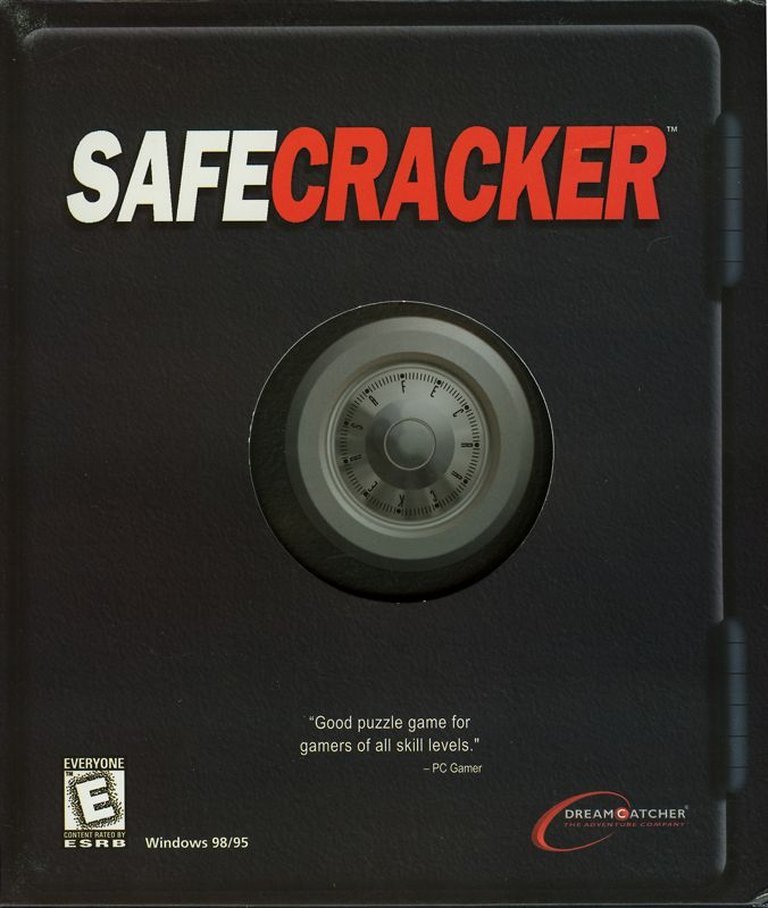
Description
In ‘Safecracker’, you step into the role of an applicant for the position of Security Development Chief in an eccentric millionaire’s luxurious mansion. Your mission is to locate and crack open all 35 safes hidden throughout the estate without being detected by security. This puzzle game challenges your logic and deduction skills as you navigate through mind-bending puzzles in a first-person perspective.
Gameplay Videos
Where to Buy Safecracker
Safecracker Free Download
Safecracker Cracks & Fixes
Safecracker Patches & Updates
Safecracker Guides & Walkthroughs
Safecracker Reviews & Reception
balmoralsoftware.com : Safecracker will be a pleasure to play by any puzzle game enthusiast.
Safecracker Cheats & Codes
PC
| Code | Effect |
|---|---|
| Press the ALT-key and click on the handle | to open the safe |
Safecracker: The Ultimate Puzzle Odyssey – A Retrospective Review
Introduction
In the shadowy corridors of late ’90s puzzle adventures, Safecracker (1997) carved out a niche as a bold experiment in pure cerebral gameplay. Developed by Sweden’s Daydream Software and published by GT Interactive, this first-person puzzler dared to ask: What if a game were just safes… and nothing else? While lacking the narrative depth of contemporaries like Myst, Safecracker became a cult classic by focusing relentlessly on its titular mechanic, offering a gauntlet of 35 fiendishly designed safes hidden within a labyrinthine mansion. This review dissects its legacy, interrogates its design, and unpacks why it remains a benchmark for puzzle purists—and a cautionary tale of studio ambition.
Development History & Context
The Studio and Vision
Daydream Software, founded in 1994 by Nigel Papworth and Jörgen Isaksson, was among Sweden’s earliest game studios. Inspired by Myst’s success, they sought to create a puzzle-centric adventure stripped of traditional storytelling. The concept emerged from a Mastermind board game adaptation, evolving into a mansion filled with safes, each a standalone puzzle.
Technological Ambitions
Leveraging QuickTime VR and Macromedia Director, Daydream aimed for immersive 360° exploration, a novelty in 1997. Silicon Graphics workstations, funded by Warner Interactive, enabled detailed pre-rendered environments. However, corporate chaos ensued when Warner dissolved, and GT Interactive acquired the project, delaying its release and undercutting marketing.
The 1997 Puzzle Landscape
Released amidst a wave of Myst clones, Safecracker stood out by rejecting ambient storytelling. Its focus on discrete puzzles mirrored board-game logic, appealing to players weary of overwrought narratives. Yet its lack of characters or stakes alienated mainstream audiences, confining it to niche status.
Narrative & Thematic Deep Dive
Plot as Pretext
The premise is skeletal: As an applicant for Crabb & Sons’ “Security Development Chief,” you infiltrate their mansion to crack safes, proving your worth. There’s no antagonist, no dialogue, and no stakes beyond a 12-hour time limit. The closest to narrative is Jerry Crabb’s eccentric persona, inferred through environmental details like cheeky memos and surreal safe designs.
Themes of Isolation and Mastery
Safecracker’s mansion is a cold, empty space—no NPCs, no life. This intentional sterility frames the player as an interloper, mirroring the solitude of puzzle-solving. Thematically, it celebrates intellectual conquest: Each safe is a self-contained trophy, demanding logic, patience, and occasionally, brute-force trial-and-error.
Gameplay Mechanics & Systems
Core Loop: Lockpicking as Sport
The game’s non-linear structure lets players tackle safes in any order, though progress gates require specific items (e.g., keys found in earlier puzzles). The 35 safes span:
– Sliding tile puzzles (a callback to 15 Puzzle classics)
– Cryptographic challenges (anagrams, braille conversions)
– Audio-logic tests (matching musical notes)
– Mechanical riddles (weighing keys, aligning gears)
UI and Interaction
The first-person interface uses a point-and-click system with a minimal HUD. Inventory items are examined in rotatable 3D—a novelty at the time. However, clunky navigation (stiff 360° pans) and an unforgiving save system drew criticism.
Innovations and Flaws
- Strengths: Puzzle diversity and non-linear progression. The final “T-1001” safe, requiring synthesized clues from earlier puzzles, is a masterclass in payoff.
- Weaknesses: Over-reliance on trial-and-error (e.g., a voice-recognition safe with obtuse clues) and dated UI. The absence of hints frustrated casual players.
World-Building, Art & Sound
A Mansion of Eccentricity
Crabb & Sons’ headquarters masquerade as a Victorian estate fused with corporate absurdity. Offices feature Macintosh computers beside oil paintings, while a Birth of Venus parody hides a safe. Each room’s theme dictates its puzzles: A music room’s jukebox safe, a library’s concealed bookcase passage.
Visual Design
Pre-rendered environments, crafted on Silicon Graphics workstations, hold up as period-appropriate eye candy. However, static backgrounds and limited animation clash with the era’s shift toward real-time 3D.
Soundscape
Swedish duo Rob ‘n’ Raz composed ambient tracks that oscillate between eerie (a dissonant organ in the lobby) and whimsical (a funk riff in the medical bay). Sound effects—creaking floors, clinking keys—heighten the mansion’s eerie solitude.
Reception & Legacy
Critical Divide
Reviews were polarized:
– Praise: Just Adventure (83%) lauded its “mind-bending puzzles”; Adventure Gamers called it “a felicitous combination of Jewels of the Oracle and The Cassandra Galleries.”
– Pans: IGN (5.2/10) derided its “crimes against the brain,” while PC Zone mocked it as “the sort of thing that impresses Macintosh owners.”
Commercial Cult Status
Despite GT Interactive’s botched launch, Safecracker sold 650,000 copies via budget re-releases, notably at Walmart. Its durability lies in word-of-mouth among puzzle devotees.
Industry Influence
The game’s legacy is twofold:
1. It inspired Kheops Studio’s spiritual successor, Safecracker: The Ultimate Puzzle Adventure (2006).
2. Daydream’s collapse (due to mismanaged IPO funds) became a cautionary tale about indie studios scaling too quickly.
Conclusion
Safecracker is a paradox: a game simultaneously lauded for its purity and damned for its austerity. Its relentless focus on puzzles—untethered from narrative or character—makes it a time capsule of ’90s ambition, when “edutainment” and hardcore challenges coexisted. For modern players, it’s a demanding relic, best appreciated by those who fetishize the click of a lock yielding to logic. In the pantheon of puzzle games, Safecracker isn’t just a safe bet—it’s a vault of forgotten brilliance.
Final Verdict: A flawed gem for genre purists, Safecracker earns its place in history as the Dark Souls of lockpicking simulators—uncompromising, obsessive, and unforgettable.