
- Release Year: 2023
- Platforms: Macintosh, Nintendo Switch, Windows
- Publisher: Mama Morin, LLC, Yangyang Mobile
- Developer: Yangyang Mobile
- Genre: Adventure
- Perspective: 1st-person
- Game Mode: Single-player
- Gameplay: Visual novel
- Setting: Horror, Psychological thriller
Description
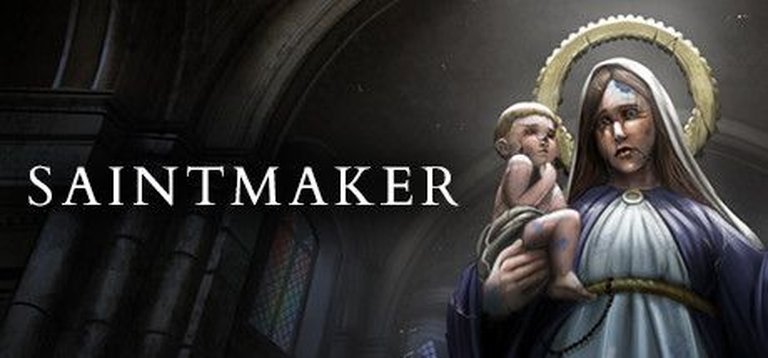
Saint Maker is a horror visual novel set in an old convent with a dark past, immersing players in a chilling first-person perspective. The game explores the haunting trials of becoming a saint through supernatural encounters with singing voices, moving statues, and eerie ambiance, enhanced by atmospheric visuals and voice-acting within a concise six-hour narrative.
Gameplay Videos
Where to Buy Saint Maker
PC
Saint Maker Guides & Walkthroughs
Saint Maker Reviews & Reception
metacritic.com : Saint Maker is certainly more tragedy than horror, and it shows. While it is well-made, I think players will enjoy the story more than the actual gameplay.
store.steampowered.com : Saint Maker is an incredible visual novel that explores several deep themes. It’s not going to scare hardcore horror fans in the traditional sense, but it will chill you to the bone with its messages. Don’t miss out on this gem of a game.
uppercutcrit.com : Saint Maker leaves you with a bone-chilling reminder that faith can be destructive when taken to the extremes, not only to others in your vicinity but to yourself, most especially.
thegamingoutsider.com : Saint Maker is an incredible visual novel that explores several deep themes. The story and characters are still haunting my thoughts, and its relatively short length of six hours makes this a perfect choice to play on a rainy day.
Saint Maker: Review
Introduction
In the saturated landscape of indie horror games, few manage to leave a lasting impression that transcends mere jump scares and visceral gore. Saint Maker, the 2023 psychological horror visual novel from Filipino studio Yangyang Mobile, stands as a haunting exception. Released to critical acclaim for its unflinching exploration of religious trauma and its masterful synthesis of narrative and atmosphere, Saint Maker has carved a unique legacy. It is not merely a game; it is a visceral, cathartic experience that weaponizes vulnerability and silence to dissect the insidious nature of indoctrination and abuse. This review argues that Saint Maker represents a watershed moment for the visual novel genre and horror as a whole, using its deceptively linear structure and short runtime to deliver a profound, unforgettable meditation on identity, faith, and the enduring scars of trauma.
Development History & Context
The Filipino Vision and Personal Pain
Developed by Yangyang Mobile, a studio based in the Philippines—a country where 78.8% of the population identifies as Roman Catholic—Saint Maker is deeply rooted in the cultural and spiritual landscape of its creators. Lead writer Carlos Valdes explicitly stated that the game was born from lived experiences: “Growing up Catholic, I’ve known people who have experienced abuse by religious parents or religious adults… I tried my best to channel these experiences into the game’s story.” This raw authenticity permeates every pixel of the game. The studio, best known for the acclaimed horror visual novel The Letter (2017), approached Saint Maker with a focused vision: to create a short, intense story (60,000 words, 4-6 hours) that eschews genre conventions in favor of thematic depth. The release date—February 22, 2023 for PC and March 22 for Switch—coincided with the Christian observance of Lent, a timing that felt both serendipitous and provocatively confrontational given the game’s subject matter.
Technological Craftsmanship
Built on the Unity engine, Saint Maker demonstrates remarkable technical polish for an indie title. The decision to invest in full English voice acting, with performances by talents like Bryn Apprill (Holly), Elsie Lovelock (Adira), and Risa Mei (Gabby), elevated accessibility and immersion. The Unity framework allowed for dynamic backgrounds with subtle environmental animations—floating dust motes, birds in flight, rustling leaves—adding layers of realism and unease. The development team of 98 people, including dedicated artists, composers (Aisa TwT, Carl Canelas), and sound engineers, created a cohesive audiovisual experience that belies the game’s modest scale. This was a deliberate choice: to refine execution over bloated content, ensuring every moment served the narrative’s psychological punch. The gaming landscape in 2023, seeing a surge in indie horror and narrative-driven games, provided fertile ground for Saint Maker’s unique blend of psychological terror and social commentary.
Narrative & Thematic Deep Dive
A Convent of Whispered Sins and Statues
The narrative follows Holly Bertram, a teenage girl haunted by the suicide of her twin sister Liana, sent to Saint Idelora’s Convent for a religious “recollection.” What begins as a stifling, oppressive environment quickly descends into a waking nightmare. Holly and her roommate, the cynical Gabby, encounter a hostile nun, Sister Adira, and experience supernatural horrors: statues with cracked faces staring from the shadows, ghostly chanting in the dead of night, and a pervasive sense of being watched. The plot unfolds chronologically but masterfully weaves past trauma—flashbacks to Holly’s abusive, fanatically religious parents and Liana’s suffering—with the convent’s grim present. The central revelation is monstrously cruel: the nuns “seal” girls deemed “lost causes” (e.g., those who read fantasy novels, exhibit queerness, or resist indoctrination) inside hollow saint statues, condemning them to a slow, suffocating death. This ritualistic abuse is the physical manifestation of the Order’s twisted theology.
Characters: Mirrors of Trauma and Resilience
The characters are Saint Maker’s beating heart, each a vessel for complex, relatable trauma:
* Holly Bertram: The player’s primary lens, Holly embodies the paralyzing fear and guilt inflicted by religious abuse. Her internal monologue reveals a girl who prays out of terror, not faith, and whose memories are self-serving shields against unbearable truths. Her journey is one of confronting her complicity in her sister’s fate and reclaiming her agency.
* Gabriella (Gabby): Holly’s foil and potential savior. Gabby, openly critical of the convent and implied to be queer, represents resistance and hope. Her offer for Holly to move in with her and her mother provides a lifeline, grounding the horror in the possibility of healing and found family.
* Sister Adira: The most nuanced antagonist. Initially a stern, terrifying enforcer of the Order’s rules, Adira is revealed as a tragic figure herself—a former young nun (Idelora) broken by the murder of a child named Cornelia under her watch. Her descent into fanaticism and cruelty is a harrowing study in how systems corrupt individuals, and her ultimate breakdown, confronted by Cornelia’s ghost, is a devastating moment of remorse.
* Cornelia: The ghostly catalyst. Her mutilated unicorn doll and faceless spirit embody the innocence crushed by the convent. Her presence drives the climax, symbolizing the unresolved trauma demanding justice.
Themes: The Horror of the Human Construct
Saint Maker transcends simple religious horror to explore universal themes:
* Religious Trauma as Erasure: The Order’s process of “sanding away impurities” and “sealing cracks” is a potent metaphor for how extreme faith suppresses identity—Holly’s love of fantasy, Gabby’s queerness, Adira’s lost compassion. The statues are not just objects; they are tombs of erased selves.
* The Illusion of Choice and Agency: The game’s dialogue choices are deliberately deceptive. While some alter minor details or unlock a secret scene, most are ignored by the narrative, leading to outcomes Holly/Adira resist. This brilliantly mirrors the helplessness of victims of abuse—feeling choice exists when none truly does.
* Cycle of Abuse and the Possibility of Breaking It: Holly’s parents, Adira, and the Order perpetuate violence. The climax, where the convent burns and the trapped spirits are freed, symbolizes the necessary destruction of abusive systems. Gabby and Holly’s escape offers hope for breaking the cycle.
* The True Horror is Human: While statues whisper and move, the most profound terrors are the nuns’ cruelty, Holly’s parents’ fanaticism, and the systemic dehumanization enabled by dogma. As one critic noted, “People are hell.”
Gameplay Mechanics & Systems
Linear Dread and the Illusion of Choice
Saint Maker presents itself as a traditional visual novel with branching paths, but this is a carefully constructed facade. The core gameplay revolves around dialogue choices. However, these choices often feel hollow or are actively subverted. For example, if the player chooses for Holly to stand up to Adira, the narrative might have her back down immediately, with a line like, “Why did I even try?” This “illusion of choice” is not a flaw but the game’s most innovative mechanic. It immerses the player in Holly’s psychological prison—her voice of intrusive self-doubt overriding her desires—and creates profound frustration that mirrors her reality.
Character Switches and Secret Endings
The player alternates control between Holly and Adira at key moments. Playing as Adira offers chilling insight into her rationalization of abuse (“It’s for their own salvation”) and her crumbling mental state. While there is only one primary ending, specific choices during pivotal scenes (e.g., how Holly responds to Gabby’s support) unlock a brief, poignant secret bonus scene, offering a slightly more hopeful coda without altering the core narrative. This encourages replays while maintaining the story’s focused impact.
UI and Presentation
The interface is clean and functional, prioritizing readability and immersion. Text is presented clearly over rich backgrounds, and choice menus are unobtrusive. The lack of traditional “gameplay” stats or inventory keeps the focus entirely on character interaction and environmental discovery. The fixed/flip-screen perspective, reminiscent of classic adventure games, enhances the sense of claustrophobia within the convent’s oppressive architecture. While some reviewers noted the lack of narration during action sequences left interpretation slightly ambiguous, this ambiguity often heightened the psychological horror, forcing the player to imagine the violence based on sound design (shattering glass, thuds) and character reactions.
World-Building, Art & Sound
Converting Oppression into Atmosphere
Saint Idelora’s Convent is a masterclass in environmental storytelling. The world-building is dense with oppressive religious iconography: decaying frescoes, stern saint statues, flickering candles casting long shadows, and sterile, echoing corridors. The convent is less a physical location and more a character—a manifestation of the toxic faith it represents. The contrast between the sun-drenched, hopeful flashbacks to Holly’s childhood and the perpetually dim, candlelit present convent underscores the theme of lost innocence. The “Idelorian Order” and its specific rituals (sealing statues, enforced prayer, confiscation of “worldly” items like Cornelia’s unicorn doll) feel chillingly authentic, drawing directly from the game’s thematic well.
Visuals: Static Terrors and Animated Souls
The art direction by Marty Sy and Henry Bustamante is a blend of haunting beauty and grotesquerie. Character sprites are expressive, with subtle animations—trembling hands, tears welling, shifting stances—that convey volumes of emotion without words. Backgrounds are meticulously detailed, with the subtle environmental animations mentioned earlier adding life and unease. The horror, however, lies in the stillness: the statues. Their cracked, decaying faces, sometimes glimpsed in impossible angles, are the game’s primary visual dread. The CGs (Character Graphics), particularly those depicting the climax or moments of intense emotional confrontation, are stunningly effective, often incorporating motion (e.g., flickering flames, swirling dust) that elevates them beyond static images. The art avoids excessive gore, relying on implication (a glimpse of a statue’s interior, a shadow’s outline) and facial horror (the faceless ghost) for its impact.
Sound Design: A Symphony of Dread
The sound design is arguably Saint Maker’s greatest achievement. It operates on multiple terrifying levels:
* Ambience: The constant, low-level dread of the convent—distant chanting, the creak of ancient wood, the rustle of a habit, the oppressive silence broken only by Holly’s breathing—is masterfully layered.
* Supernatural Elements: The sharp, unnatural snap of a statue moving, the faint, ethereal whispering of the dead, the ghostly singing of the nuns—all are impeccably mixed to feel both otherworldly and intimately close.
* Original Score: Composed by Aisa TwT and Carl Canelas, the soundtrack oscillates between melancholic piano melodies evoking Holly’s sorrow and dissonant, unsettling strings that underscore the horror. The use of silence is as powerful as any note, creating unbearable tension during key moments.
* Voice Acting: The full English dub is exceptional. Bryn Apprill captures Holly’s fragile terror and simmering rage; Elsie Lovelock masterfully navigates Adira’s terrifying shifts between icy control and raw anguish; Risa Mei injects Gabby with weary defiance. The vocal performances, particularly the screams of terror, are bloodcurdling and emotionally resonant. This accessibility through voice acting is a significant strength, lowering the barrier for newcomers to visual novels while deepening immersion.
Reception & Legacy
Critical Acclaim and Nuanced Criticism
Upon release, Saint Maker garnered a generally positive reception, holding a critic score of 77% on Metacritic (based on 5 reviews) and a “Very Positive” user rating of 85% on Steam (199 reviews). Praise was overwhelmingly directed at its mature themes, compelling characters, exceptional voice acting, and potent atmosphere. The Gaming Outsider awarded it a perfect 10/10, calling it “an incredible visual novel that explores several deep themes” and “a gem of a game.” Fuwanovel hailed it as “easily the best original English visual novel I’ve ever read,” while Rice Digital praised its “design, themes and especially characters.” However, criticism was not absent. Some reviewers, like GameGrin, noted that “the choices can be frustrating” and the terminology confusing, while GameCritics.com felt it was “more psychological thriller than horror” and lacking in replay value due to its linearity. A common point of contention was the “illusion of choice,” with some finding it narratively potent and others feeling it undermined the genre’s traditional appeal. Destructoid acknowledged the linear nature but lauded the “intricately stacked its themes and characters,” noting “it has a lot to say, and it says it well.”
Enduring Legacy and Cultural Impact
Saint Maker’s legacy is multifaceted. It stands as a landmark title in the horror visual novel genre, praised for its unflinching examination of religious abuse—a topic rarely tackled with such nuance and authenticity in games, especially from a Filipino perspective. It has been lauded for elevating the medium, demonstrating that original English language visual novels can stand alongside Japanese classics in both thematic depth and production quality. The game’s success has bolstered Yangyang Mobile’s reputation, cementing them as a studio willing to take risks on mature, challenging content. Critically, it’s often cited as a benchmark for psychological horror that prioritizes character and atmosphere over cheap scares. Its influence is seen in the growing discussion around representation (LGBTQ+ themes, diverse cultural perspectives) and the potential of games to explore complex real-world traumas. It’s not just a game people play; it’s one they discuss in terms of its emotional weight and societal relevance, proving its place as a significant work in contemporary video game history.
Conclusion
Saint Maker is far more than a short horror visual novel; it is a meticulously crafted, emotionally devastating work of interactive fiction. Yangyang Mobile, drawing from profound personal and cultural wellspring of pain, has created an experience that feels both intimately specific and universally resonant. The game’s genius lies in its constraints: its linear narrative and illusion of choice are not limitations but deliberate tools to immerse the player in the suffocating reality of its characters. Holly’s struggle, Gabby’s defiance, and Adira’s tragic collapse are rendered with such authenticity that they linger long after the credits roll. The art, sound, and voice acting collaborate to build an atmosphere of dread that is psychological and deeply unsettling, proving that the most profound horrors often reside in the human heart and the systems we create. While its linearity might deter those seeking endless replayability, its focused intensity ensures every moment lands with devastating impact. Saint Maker solidifies its place as a modern classic of the genre—a landmark achievement that pushes the boundaries of what games can say and feel. It is not just recommended; it is essential viewing for anyone interested in the power of interactive storytelling to confront uncomfortable truths and offer a glimmer of catharsis in the darkness.