
- Release Year: 2015
- Platforms: PlayStation 3, PlayStation 4, PS Vita, Windows
- Publisher: Koei Tecmo America Corp., Koei Tecmo Games Co., Ltd.
- Developer: Omega Force
- Genre: Action
- Perspective: Behind view
- Game Mode: Co-op, Online Co-op, Single-player
- Gameplay: Hack and Slash
- Setting: Fantasy
- Average Score: 74/100
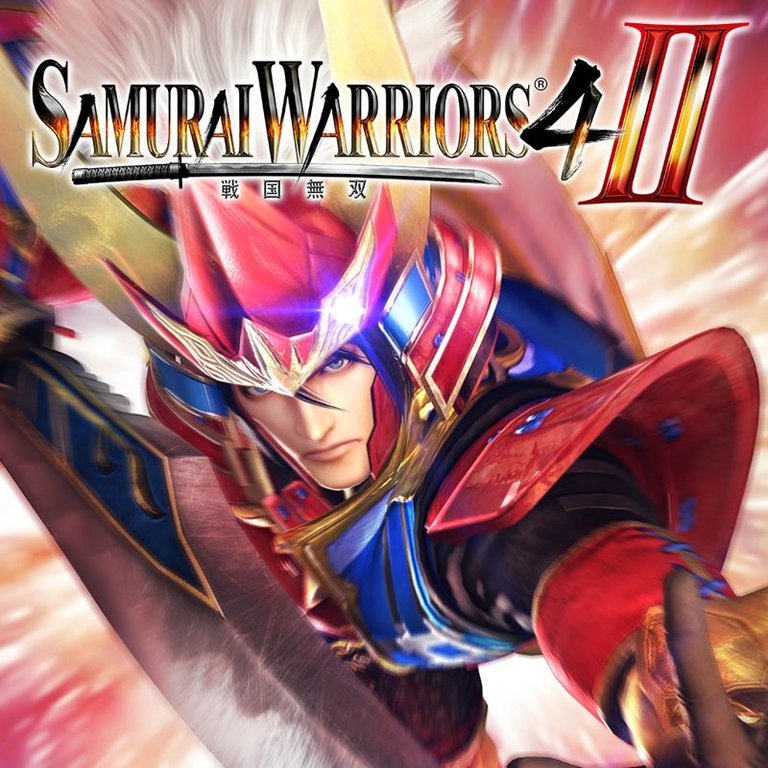
Description
Set in feudal Japan with a blend of historical and fantastical elements, Samurai Warriors 4-II is a hack-and-slash action game that expands upon its predecessor with enhanced character-focused storylines, including new narratives for warriors like Musashi. Players engage in large-scale battles against armies, utilizing flashy combat techniques and dynamic new modes such as Survival, while exploring revised content from Samurai Warriors 4.
Gameplay Videos
Where to Buy Samurai Warriors 4-II
PC
Samurai Warriors 4-II Free Download
Samurai Warriors 4-II Cracks & Fixes
Samurai Warriors 4-II Mods
Samurai Warriors 4-II Guides & Walkthroughs
Samurai Warriors 4-II Reviews & Reception
gamingnexus.com : it’s a surprisingly mindless refresher, with a colorful cast of characters, enough political intrigue to make your head spin, and oh so many faceless and nameless peons for me to mow through
gamerevolution.com : Prepare yourself for endless slaughter and achy fingers!
Samurai Warriors 4-II: A Blade Sharpened, Yet Familiar
Introduction
In the pantheon of Omega Force’s Musō titles, Samurai Warriors 4-II stands as a curious artifact: neither a full sequel nor a traditional expansion, but a reforged iteration of 2014’s Samurai Warriors 4. Released in 2015 to commemorate the series’ 10th anniversary, this hack-and-slash epic refocuses on the personal sagas of feudal Japan’s warlords, delivering a more intimate—if uneven—experience. While critics praised its refined combat and character-driven narratives, 4-II also drew skepticism for its incremental upgrades and lack of innovation. This review dissects its legacy, mechanics, and place in the ever-evolving Warriors franchise.
Development History & Context
Omega Force, Koei Tecmo’s flagship studio for the Musō genre, envisioned Samurai Warriors 4-II as a complementary piece to SW4 rather than a replacement. The game emerged during a transitional era for the series, straddling the PlayStation 3 and PlayStation 4 generations, and aimed to address fan feedback by shifting from SW4’s regional storytelling to character-centric arcs. However, its development cycle was notably short, and the absence of SW4’s Chronicle Mode frustrated some players.
Technologically, 4-II leveraged the PS4’s horsepower for smoother framerates and larger enemy crowds, though the PC port—based on the PS3 build—lacked visual polish. The game’s release also coincided with Omega Force’s experimentation with licensed Musō titles (Hyrule Warriors, Dragon Quest Heroes), which may have diverted resources from deeper innovation in 4-II.
Narrative & Thematic Deep Dive
Samurai Warriors 4-II replaces SW4’s clan-based campaigns with 13 character-driven stories, each spanning five stages. These narratives explore figures like Mitsunari Ishida and the newly playable Naomasa Ii, delving into their motivations and rivalries. For example, Naomasa’s arc highlights his loyalty to the Tokugawa and his rivalry with Toyohisa Shimazu, adding emotional depth to battles like Sekigahara.
The writing leans into operatic melodrama, blending historical events with mythic flair—a Musō staple. While the Japanese-only voice acting enhances authenticity, the absence of an English dub limits accessibility. Thematically, 4-II emphasizes the human cost of war, with cutscenes focusing on camaraderie and betrayal, though its fragmented structure sacrifices the broader political scope of SW4.
Gameplay Mechanics & Systems
At its core, 4-II retains the series’ cathodic combat loop: mowing down hundreds of foes with flashy combos. New additions include:
– Hyper Attacks: Dash-centric moves for crowd control, ineffective against officers.
– Rage Mode: Temporary invincibility and empowered Musou attacks.
– Survival Mode: A roguelike trek through an endless castle, rewarding players with rare loot.
Character progression features a skill grid system and weapon fusion, allowing for deeper customization. However, the combat’s repetitive nature wears thin, especially during lengthy battles with frequent objective interruptions. Co-op play (local and online) alleviates the grind, but the loss of SW4’s Chronicle Mode—replaced by a forgettable Survival Mode—left fans wanting.
Technically, the PS4 version maintains a stable 60 FPS, but the PC port suffers from controller compatibility issues and underwhelming graphical upgrades.
World-Building, Art & Sound
Samurai Warriors 4-II’s aesthetic is a mix of vibrant anime-inspired character designs and bland, flat environments. While flagship warriors like Yukimura Sanada and Nobuyuki Sanada boast detailed models, battlefields often feel sterile, prioritizing performance over visual splendor.
The soundtrack, composed by Masako Otsuka and others, blends traditional Japanese instruments with energetic rock anthems, though few tracks stand out. Sound design shines in combat, with satisfying steel clashes and rallying war cries, but the lack of environmental ambiance undercuts immersion.
Reception & Legacy
Critics praised 4-II’s refined combat and character focus (Digitally Downloaded awarded it 100%), but many questioned its value as a standalone product (Metacritic: 73/100). Reviewers like Hardcore Gamer noted it “should’ve been DLC,” while fans appreciated its niche appeal. Commercially, it underperformed compared to SW4, selling ~90,000 units in Japan across platforms.
Despite its flaws, 4-II influenced later Musō titles by proving the viability of character-driven narratives, a approach expanded in Samurai Warriors 5. Its Survival Mode also laid groundwork for Warriors Orochi 4’s post-game content.
Conclusion
Samurai Warriors 4-II is a paradoxical gem: a polished iteration of SW4 that struggles to justify its existence. Its character-centric storytelling and refined combat will delight Musō devotees, but repetitive gameplay and minimal innovation make it a harder sell for newcomers. As a footnote in the Warriors saga, it exemplifies both the series’ strengths (spectacle, customization) and weaknesses (repetition, incrementalism). For completionists and lore enthusiasts, 4-II remains a worthy blade in the arsenal—but for others, Samurai Warriors 4 or 5 may offer sharper thrills.
Final Verdict: A solid, if non-essential, chapter in the Samurai Warriors saga. Best suited for existing fans craving more feudal carnage.