
- Release Year: 2013
- Platforms: Linux, Macintosh, PlayStation 3, Windows, Xbox 360
- Publisher: Coffee Stain Studios AB, D3Publisher of America, Inc., Reverb Publishing
- Developer: Coffee Stain Studios AB
- Genre: Action, Strategy, Tactics
- Perspective: 1st-person
- Game Mode: Online Co-op, Single-player
- Gameplay: Base building, Character progression, Resource Management, Shooter, Tower defense
- Setting: Futuristic, Sci-fi
- Average Score: 83/100
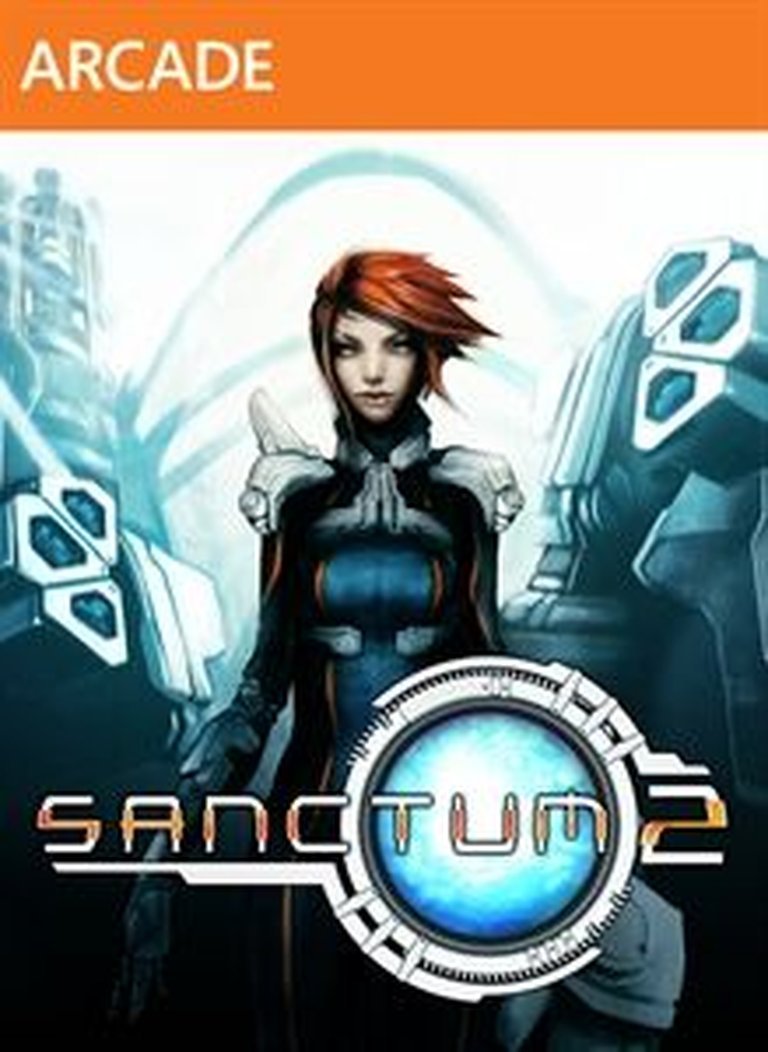
Description
Sanctum 2 is a hybrid first-person shooter and tower defense game set in a sci-fi world where players must defend against waves of alien invaders. Before each mission, players strategically place towers and walls to fend off enemies with unique abilities, while also engaging in direct combat using one of four distinct characters, each with specialized weapons. The game features a single-player campaign with 15 missions, co-op multiplayer for up to four players, and a survival mode where the goal is to endure as long as possible against relentless enemy waves. Players earn experience points to unlock perks, new towers, and secondary weapons, balancing tower defense tactics with active shooting for success.
Gameplay Videos
Where to Buy Sanctum 2
PC
Sanctum 2 Cracks & Fixes
Sanctum 2 Patches & Updates
Sanctum 2 Mods
Sanctum 2 Guides & Walkthroughs
Sanctum 2 Reviews & Reception
ign.com : Sanctum 2 improves on the first Sanctum in almost every way, including its robust leveling system and perks, its improved turret management, its visual style, and its customization.
metacritic.com (77/100): While Sanctum 2 is still a tough game, it’s tough in smart substantive ways that add up. Opting for this instead of the punitive approach that Sanctum was built on has made for a far superior product in the form of Sanctum 2.
forbes.com (80/100): Sanctum 2 is an intense, fun gaming experience to enjoy with others – There’s nothing quite like taking on impossible swarms of aliens as a team.
steamcommunity.com (85/100): Sanctum 2 improves on the first Sanctum in almost every way, including its robust leveling system and perks, its improved turret management, its visual style, and its customization.
steambase.io (90/100): Sanctum 2 has earned a Player Score of 90 / 100. This score is calculated from 14,328 total reviews which give it a rating of Very Positive.
Sanctum 2 Cheats & Codes
PC
Enter codes at http://www.elysianarchive.com
| Code | Effect |
|---|---|
| J542FD56 | Unlocks Park archive |
| 6XK56SD8 | Unlocks Biolab archive |
| 52DG7DF2 | Unlocks Construction Site archive |
| JF58FTR5 | Unlocks Com Tower archive |
| DJ53454H | Unlocks Cliff Lodge archive |
| DF56SFD4 | Unlocks Outpost archive |
| F4JG54GH | Unlocks Train Station archive |
| 546DKKD4 | Unlocks Roadworks archive |
Sanctum 2: A Masterclass in Hybrid Gameplay and Cooperative Strategy
Introduction
In the pantheon of genre-blending experiments, few titles have dared to fuse the cerebral rigor of tower defense with the visceral thrill of first-person shooters as boldly as Sanctum 2. Released in 2013 by Coffee Stain Studios, this sequel to the cult-favorite Sanctum (2011) didn’t just refine its predecessor’s formula—it redefined what a hybrid experience could achieve. With its vibrant cel-shaded aesthetics, deep strategic layers, and a cooperative multiplayer mode that demanded both individual skill and teamwork, Sanctum 2 carved out a niche that remains unmatched nearly a decade later.
This review dissects Sanctum 2 with surgical precision, exploring its development journey, narrative ambitions, mechanical innovations, and enduring legacy. Through critical analysis, player feedback, and historical context, we’ll uncover why this game remains a touchstone for fans of unconventional gameplay—and why its flaws only make its triumphs more compelling.
Development History & Context
The Rise of Coffee Stain Studios
Coffee Stain Studios emerged from the indie scene in 2010, founded by a group of students from the University of Skövde in Sweden. Their debut title, Sanctum, released in April 2011, was a modest but ambitious experiment: a first-person shooter where players alternated between building defensive mazes and blasting alien invaders. The game’s success on Steam—bolstered by its unique premise and accessible multiplayer—provided the financial and creative foundation for Sanctum 2.
Announced in February 2012, Sanctum 2 was positioned as a ground-up rebuild rather than a simple iteration. The development team, led by co-founder Johannes Aspeby, expanded from a handful of developers to a core group of 16, with additional support from contractors. The studio’s ethos was deeply rooted in community engagement; beta tests in early 2013 incorporated player feedback to refine mechanics like resource distribution and tower balancing.
Technological and Design Challenges
The game was built using Unreal Engine 3, a choice that facilitated cross-platform development across Windows, macOS, Linux, PlayStation 3, and Xbox 360. However, this ambition came with hurdles. Console certification processes, particularly for the Xbox 360 and PlayStation 3, required extensive optimization to maintain performance during the game’s demanding hybrid phases. Enemy counts, draw distances, and particle effects were meticulously adjusted to meet platform requirements without sacrificing the game’s frenetic pace.
One of the most significant design pivots occurred mid-development. The team initially prototyped a “free mazing” system, allowing players to build defenses anywhere on the map. After six months of testing, this approach was scrapped due to pathfinding issues and exploitative player strategies. The final design restricted tower placement to predefined build pads, a compromise that preserved strategic depth while ensuring enemy AI behaved predictably.
The Gaming Landscape of 2013
Sanctum 2 launched into a market dominated by established franchises and a burgeoning indie renaissance. Tower defense games like Plants vs. Zombies and Orcs Must Die! had proven the genre’s appeal, while first-person shooters remained a staple of competitive gaming. Hybrid titles were rare, and Sanctum 2’s blend of genres was a gamble.
The game’s release on May 15, 2013, coincided with a period of experimentation in indie development. Titles like Gone Home and The Stanley Parable were redefining narrative-driven experiences, while Payday 2 and Chivalry: Medieval Warfare showcased the potential of cooperative multiplayer. Sanctum 2’s emphasis on teamwork and strategic planning positioned it as a bridge between these trends, offering a structured yet dynamic experience that rewarded both individual skill and collective coordination.
Narrative & Thematic Deep Dive
A Planet on the Brink
Sanctum 2 unfolds on Loek-III, a hostile alien world where humanity’s survival hinges on massive energy spheres known as Cores. These structures convert the planet’s nitrogen-rich atmosphere into breathable oxygen while purging toxic spores linked to the native Lumes, a diverse and aggressive alien species. The game’s setting is a stark juxtaposition of human ingenuity and ecological hubris: the Cores are both lifelines and provocations, their very existence inciting the Lumes to relentless attacks.
The narrative is framed through comic-book-style cutscenes, a stylistic choice that reinforces the game’s pulpy, sci-fi aesthetic. These interludes are brief but effective, conveying mission objectives and character dynamics with a blend of humor and tension. The writing, while not Shakespearean, avoids the pitfalls of many indie narratives by focusing on environmental storytelling—lore is embedded in the world itself, from the ruins of the fallen settlement Brightholme to the oppressive corporate rule of the Britech Foundation.
Characters: The Core Guardians
Players assume the role of one of four Core Guardians, each with distinct personalities, weapons, and abilities:
- Skye Autumn: The veteran leader, wielding an assault rifle and a Sadist passive that rewards consecutive hits with escalating damage. Skye’s double jump and aggressive playstyle make her a versatile frontline fighter.
- Sweet Autumn: Skye’s younger sister, armed with the REX launcher (a grenade-firing shotgun) and an Incendiary Rounds passive that sets enemies ablaze. Sweet’s high jumps and air control suit her for hit-and-run tactics.
- Haigen Hawkins: A former slum dweller from Brightholme, Haigen’s shotgun and Brawler passive (bonus damage at close range) make him a tanky bruiser. His 50% health boost (225 HP) and crowd-control prowess are invaluable in tight corridors.
- SiMo: A robotic sniper with a Steady Grip passive that amplifies weakspot damage. SiMo’s precision and 60% accuracy bonus make him ideal for long-range engagements, though his lack of mobility can be a liability in chaotic battles.
The Road to Elysion DLC introduced TSYGAN, a rogue hacker with a ballista and an Underdog passive that amplifies the final shot in a magazine. TSYGAN’s backstory—revealed through an Alternate Reality Game (ARG) involving hacked social media accounts and the Elysian Archives website—adds depth to the game’s lore. She is revealed to be Charlotte Wray, a revolutionary opposing the Britech Foundation’s oppressive regime.
Themes: Ecological Collapse and Corporate Exploitation
At its core, Sanctum 2 is a meditation on humanity’s destructive relationship with nature. The Lumes are not mindless invaders but the planet’s immune response to the Cores’ ecological disruption. The Britech Foundation, a corporate entity with near-governmental power, prioritizes profit and control over the well-being of both its citizens and the planet. This theme is underscored by the Tsygan faction, a resistance movement fighting against Britech’s exploitation.
The game’s climax—where a colossal Lume Titan emerges to destroy Elysion-1—serves as a literal and metaphorical reckoning. The Titan’s relentless advance, shrugging off the city’s defenses, mirrors the inevitability of ecological collapse when humanity refuses to adapt. The open-ended conclusion, with the fate of the colony left uncertain, reinforces the game’s bleak but thought-provoking narrative.
Storytelling Strengths and Weaknesses
While Sanctum 2’s narrative is ambitious, it is not without flaws. The comic panels, though visually striking, suffer from clunky translations and occasional tonal whiplash. The dialogue, while serviceable, rarely rises above functional, and the voice acting—though competent—lacks the polish of AAA titles.
However, the game’s environmental storytelling compensates for these shortcomings. Maps like Brightholme’s ruins and the swamp caverns are rich with lore, from abandoned labs hinting at Britech’s experiments to the eerie presence of spore-infected humans in the DLC. The Elysian Archives, accessible via hidden codes, provide additional context, revealing the darker implications of Britech’s actions and the desperation of the Tsygan resistance.
Gameplay Mechanics & Systems
The Hybrid Loop: Strategy Meets Action
Sanctum 2’s gameplay is a meticulously balanced dance between build phases and combat phases. Each mission begins with a planning stage, where players survey the map and the upcoming enemy waves. This information is crucial: Lumes vary in behavior, from Runners (fast, weak grunts) to Hoverers (flying units vulnerable only from behind) and Walker Patriarchs (hulking bosses that smash through defenses).
During the build phase, players construct towers on predefined pads, using resources earned from killing enemies. Towers are divided into categories:
- Offensive: Gatling guns, cannons, and lightning towers for direct damage.
- Defensive: Slow fields, mines, and shield generators to control enemy movement.
- Utility: Amp Spires (boost nearby towers), Range Spires (extend tower range), and Mind Control Spires (turn enemies against each other).
The tower cap—initially set at 15—forces players to prioritize efficiency over sheer firepower. Upgrades are incremental, with each resource invested providing small boosts to damage, range, or firing speed. This system encourages strategic resource management, as players must decide whether to reinforce existing towers or expand their defenses.
Combat: Weakspots, Perks, and Teamwork
When the combat phase begins, the perspective shifts to first-person, and players must engage enemies directly. Weakspot mechanics are central to the combat: most enemies have glowing vulnerabilities that, when targeted, deal significantly more damage. This design ensures that players cannot rely solely on towers; active participation is essential, especially against armored foes like Bobble Heads (invulnerable except for their heads) and Heavy Walkers (vulnerable only from behind).
The perk system is where Sanctum 2 truly shines. With over 60 perks to unlock, players can customize their loadouts to suit their playstyle. Perks are divided into categories:
- Offensive: Hollowpoint Rounds (bonus damage every third hit), Marksman (weakspot damage boost).
- Defensive: Resilient Core (core counterattacks), Phoenix (instant respawn).
- Utility: Adrenaline Rush (speed boost on consecutive hits), Tactical Juxtaposition (damage bonus based on movement).
Perks can be mixed and matched to create synergistic builds. For example, pairing Sweet’s Incendiary Rounds with Biological Warfare (damage-over-time effects) turns her into a walking inferno, while Haigen’s Brawler passive combined with Spiked Armor (damage on melee hits) makes him a close-quarters juggernaut.
Multiplayer: The Heart of the Experience
Sanctum 2 is at its best in cooperative multiplayer, where up to four players can team up to defend Cores. The game scales enemy health based on player count (e.g., 2.25x for two players, 4.75x for four), ensuring that teamwork is essential. Roles naturally emerge: one player might focus on tower placement, another on weakspot sniping, and a third on crowd control with area-of-effect weapons.
However, the multiplayer experience is not without friction. The build phase allows only one or two players to construct towers at a time, leading to downtime for others. This design choice, intended to prevent chaos, can feel restrictive in random groups. The lack of cross-platform play also fragmented the player base, though the PC version remained the most active.
Difficulty and Replayability
The Feats of Strength system allows players to customize difficulty by enabling modifiers such as regenerating enemy health, faster enemy movement, or no respawns. Each feat increases the XP bonus by 20%, incentivizing players to tackle harder challenges. The Insane difficulty (all five feats active) is a brutal test of skill, requiring near-perfect execution and coordination.
Survival Mode offers endless waves of enemies, with leaderboards tracking the highest wave reached. The Sandbox Mode, added in a post-launch update, allows players to customize enemy health, resource rates, and tower limits, providing a playground for experimentation.
World-Building, Art & Sound
A Vibrant, Alien Aesthetic
Sanctum 2’s art direction is a standout feature, blending cel-shaded graphics with a sci-fi comic-book aesthetic. The game’s environments are diverse, from the gleaming Elysion-1 metropolis to the overgrown ruins of Brightholme and the bioluminescent swamps of the later levels. Each zone has a distinct visual identity, reinforced by environmental details like abandoned labs, collapsed bridges, and spore-infested flora.
The character designs are equally striking. Skye’s scarred lip and shorn hair contrast with Sweet’s vibrant blue streak, while Haigen’s rugged appearance and SiMo’s sleek robotic frame reinforce their roles. The Lumes are a menagerie of grotesque yet fascinating creatures, from the spindly Runners to the hulking Walker Patriarchs, each animated with a sense of weight and purpose.
Sound Design: A Symphony of Chaos
The soundtrack, composed by Leonard Hummer, is a dynamic blend of electronic and orchestral elements. Tracks like “The Invasion” and “Crisis Management” ramp up the tension during combat phases, while softer pieces like “Research Facility K3-L” provide a breather during build phases. The music adapts to the gameplay, swelling during boss fights and receding during lulls.
Voice acting is serviceable, with Michelle Sparks (Skye) and Adam Verner (Haigen) delivering the most memorable performances. The sound effects—from the crack of SiMo’s sniper rifle to the thud of a Walker Patriarch’s footsteps—are crisp and immersive, enhancing the game’s tactile feedback.
Reception & Legacy
Critical Acclaim and Player Feedback
Sanctum 2 received generally positive reviews, with critics praising its innovative hybrid gameplay, cooperative depth, and visual style. IGN awarded it an 8.5/10, highlighting the improved turret management and engaging multiplayer. GameStar (Germany) scored it 78/100, noting the game’s evolution from its predecessor and the developer’s responsiveness to community feedback.
However, criticisms were not absent. 4Players.de (75/100) cited repetitive enemy waves and an antiquated visual style as detractors, while Diehard GameFan lamented the short campaign and frustrating multiplayer matchmaking. The PlayStation 3 version fared worse, with a Metacritic user score of 5.0, likely due to technical issues and a smaller player base.
Commercial Performance and Community
Sanctum 2 sold approximately 644,500 copies, generating $3.1 million in revenue, with 95% of sales coming from the PC version. The game’s Steam peak of 13,621 concurrent players in January 2014 underscored its initial popularity, though the player base dwindled over time. As of 2025, it averages 8 daily players, with occasional spikes during community events.
The modding community, while small, has kept the game alive. Though Sanctum 2 lacks Steam Workshop support, players have created custom maps, perk tweaks, and graphical enhancements via configuration files. The r/Sanctum subreddit and Steam forums remain hubs for strategy discussions and co-op matchmaking.
Influence and Legacy
Sanctum 2’s legacy lies in its proof of concept: it demonstrated that tower defense and FPS mechanics could coexist harmoniously. While it did not spawn a flood of imitators, its influence can be seen in games like Orcs Must Die! 3 and Dungeon Defenders, which similarly blend strategy and action.
The game’s post-launch support—including four major DLC packs (Road to Elysion, Ruins of Brightholme, The Pursuit, The Last Stand)—extended its lifespan and added significant content. The Sandbox Mode and Feats of Strength system set a precedent for player-driven difficulty customization, a feature now common in cooperative games.
Conclusion: A Flawed but Brilliant Hybrid
Sanctum 2 is a game of contrasts: a brilliant mechanical foundation paired with narrative rough edges, a vibrant art style juxtaposed with occasional technical jank, and a deeply engaging cooperative experience hampered by multiplayer friction. Yet, its strengths far outweigh its weaknesses.
For fans of strategy games, it offers a tactical depth rarely seen in first-person shooters. For FPS enthusiasts, it provides a refreshing change of pace, where every shot and every tower placement matters. And for cooperative gamers, it remains one of the most rewarding team-based experiences of its era.
Final Verdict: 8.5/10 – A Genre-Defining Masterpiece
Sanctum 2 is not just a great hybrid game—it’s a testament to the power of innovative design. While it may not have achieved mainstream acclaim, its legacy endures in the hearts of those who recognize its ambition and execution. For anyone seeking a unique, challenging, and endlessly replayable experience, Sanctum 2 is an essential play.
Key Takeaways:
– Innovative Hybrid Gameplay: Seamlessly blends tower defense and FPS mechanics.
– Deep Customization: Over 60 perks, 20 towers, and multiple characters allow for diverse playstyles.
– Cooperative Excellence: Multiplayer is where the game shines, demanding teamwork and strategy.
– Narrative Ambition: Explores themes of ecological collapse and corporate exploitation, though execution is uneven.
– Enduring Legacy: Influenced later hybrid games and set a standard for post-launch support.
Sanctum 2 is a rare gem—a game that dared to defy conventions and, in doing so, created something truly special.