
- Release Year: 2008
- Platforms: Windows
- Publisher: ValuSoft, Inc.
- Developer: Sarbakan, Inc.
- Genre: Simulation
- Perspective: Diagonal-down
- Game Mode: Single-player
- Gameplay: Business simulation, Managerial
- Setting: Contemporary
Description
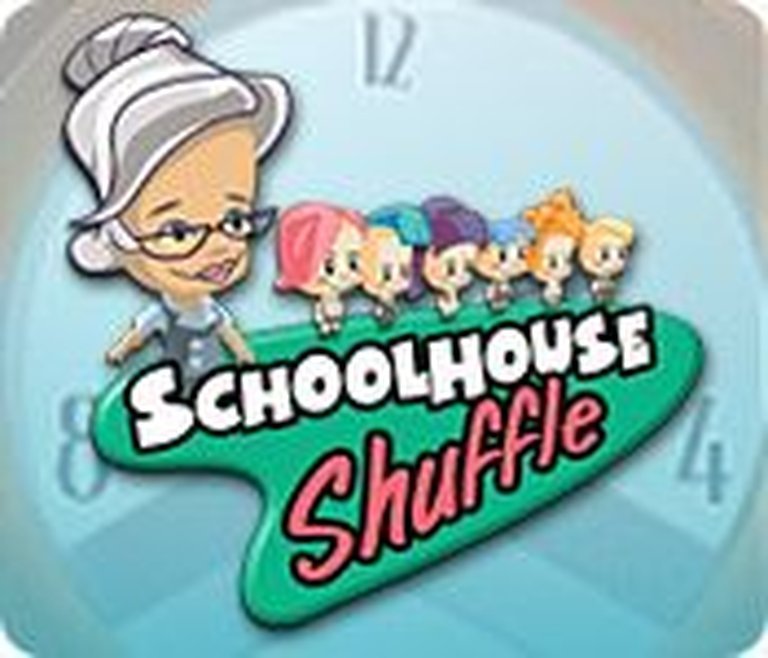
In ‘School House Shuffle’, players take on the role of Principal Victoria Bright, who has established Brainiac Elementary to nurture talented and gifted students. The game is a managerial simulation where you oversee various aspects of school life, from managing classes and training young minds to handling everyday tasks like potty breaks and hallway monitoring. As you progress, you can expand the school’s facilities, hire more staff, and enhance educational offerings to maximize the learning potential of your junior geniuses.
Gameplay Videos
School House Shuffle Free Download
School House Shuffle Guides & Walkthroughs
School House Shuffle Reviews & Reception
gamezebo.com : A smart and sharp-looking spin on the average time management equation, but nowhere near the arresting and addictive escapade one would secretly hope for.
School House Shuffle: A Retro-Futuristic Time Management Oddity
Introduction: The Overlooked Gem of Educational Chaos
In the late 2000s, the casual gaming market was flooded with time management simulators—Diner Dash, Cake Mania, and Farm Frenzy dominated the scene. Amidst this crowded landscape, School House Shuffle (2008) emerged as a quirky, underappreciated entry that dared to blend the mundane realities of school administration with a whimsical, retro-futuristic aesthetic. Developed by Sarbakan and published by ValuSoft, this game tasked players with managing Brainiac Elementary, a school for gifted children, under the watchful eye of Principal Victoria Bright.
At its core, School House Shuffle is a managerial simulation with a diagonal-down, fixed-screen perspective, a rarity in an era dominated by isometric or side-scrolling time management games. It stands out not just for its unique setting but for its ambitious attempt to simulate the chaos of schooling—from herding students to classes to dealing with potty breaks, hallway monitoring, and lazy teachers. Yet, despite its charm and innovation, it remains a cult curiosity, overshadowed by more polished contemporaries.
This review will dissect School House Shuffle in exhaustive detail, examining its development history, narrative quirks, gameplay mechanics, artistic direction, and legacy—or lack thereof. Was it a bold experiment that deserved more attention, or a flawed oddity that faded into obscurity for good reason?
Development History & Context: The Birth of a Niche Experiment
The Studio Behind the Shuffle: Sarbakan’s Casual Gaming Pedigree
Sarbakan, a Canadian developer based in Montreal, was no stranger to the casual gaming scene when School House Shuffle released in September 2008. The studio had already worked on titles like Lazy Raiders (2007) and Little Noir Stories: The Case of the Missing Girl (2008), but School House Shuffle marked one of their most ambitious forays into simulation gameplay.
The game was published by ValuSoft, a budget-focused publisher known for distributing affordable, family-friendly titles—often bundled in compilation packs. This partnership suggests that School House Shuffle was not positioned as a premium experience but rather as a mid-tier casual game aimed at audiences who enjoyed light strategy and management.
The Gaming Landscape of 2008: A Crowded Casual Market
2008 was a pivotal year for casual gaming:
– Time management games were at their peak (Diner Dash 2, Cake Mania 2).
– Hidden object games were rising in popularity (Mystery Case Files).
– Digital distribution (via platforms like Big Fish Games) was becoming the dominant way to sell casual titles.
School House Shuffle entered this highly competitive space with a unique premise—managing a school rather than a restaurant or farm—but its clunky mechanics and niche appeal may have hindered its success.
Technological Constraints & Design Choices
The game’s fixed/flip-screen, diagonal-down perspective was an unusual choice for a time management game. Most competitors used isometric or side-scrolling views, which allowed for smoother navigation. School House Shuffle’s static camera angles made character selection and pathfinding frustrating, a flaw that would later be criticized in reviews.
The system requirements were modest (1.0 GHz CPU, 256 MB RAM), reflecting its budget-friendly development. The art style—retro-futuristic with 1950s cartoon influences—was a bold aesthetic choice, but one that may have alienated players expecting a more realistic or polished look.
Narrative & Thematic Deep Dive: The Whimsy and Woe of Brainiac Elementary
Plot Overview: A School for Gifted Misfits
The game’s premise is simple but charming in its absurdity:
– Victoria Bright, a Super Master’s degree holder, founds Brainiac Elementary to nurture young geniuses.
– Players assume the role of her assistant principal, tasked with managing students, teachers, and school facilities.
– The ultimate goal? Maximize learning potential while dealing with chaotic school life.
The narrative is lighthearted and humorous, with over-the-top scenarios (e.g., giant hamster wheel gyms, glass-dome libraries) that reinforce its retro-futuristic tone. However, the story is minimal—most of the “narrative” comes from level introductions and character interactions rather than a structured plot.
Characters & Dialogue: Cartoonish Archetypes
The game’s cast is deliberately exaggerated:
– Victoria Bright – The hyper-competent but overwhelmed principal.
– Students – Hyperactive, easily distracted geniuses who need constant supervision.
– Teachers & Staff – Lazy, sleepy, or inefficient workers who require micromanagement.
The dialogue is sparse but witty, leaning into 1950s-style slapstick humor. However, the lack of deep characterization means players don’t form emotional attachments—this is a game about systems, not stories.
Underlying Themes: The Satire of Education
Beneath its colorful exterior, School House Shuffle subtly critiques the education system:
– Bureaucracy & Micromanagement – The game satirizes the absurdity of school administration, where even potty breaks become a logistical nightmare.
– The Myth of the “Gifted Child” – The students are supposedly geniuses, yet they constantly wander off, fall asleep, or misbehave, poking fun at the idealized notion of child prodigies.
– Teacher Ineptitude – Many staff members are lazy or incompetent, reflecting real-world frustrations with underfunded schools.
While these themes are never explored in depth, they add a layer of social commentary that elevates the game beyond a mere time-waster.
Gameplay Mechanics & Systems: The Frustration and Fun of School Management
Core Gameplay Loop: Herding Cats (or Children)
School House Shuffle is, at its heart, a time management game with light strategy elements. The primary objective is to guide students to their classes on time while managing random events that disrupt the schedule.
Key Mechanics:
-
Student Management
- Players must click and drag students to their assigned classrooms.
- Groups of students move together, but stragglers require individual attention.
- Hall monitors can be hired to automatically guide lost students, but they’re not always reliable.
-
Class Scheduling & Attendance
- Each level has a scrolling timeline showing when classes start and end.
- Students must be seated before the bell rings to earn attendance points.
- The longer they stay in class, the higher their “learning meter” fills, leading to better grades.
-
Random Events & Crisis Management
- Broken toilets – Require janitors to fix.
- Hungry students – Need to be sent to the cafeteria.
- Sleeping teachers – Must be woken up to resume teaching.
- Wandering students – Will skip class if not monitored.
-
School Upgrades & Progression
- Between levels, players can spend earned money on:
- New classrooms (expanding school capacity).
- Better facilities (faster cafeterias, more efficient bathrooms).
- Additional staff (more hall monitors, janitors, etc.).
- Aesthetic upgrades (decorations, landscaping) are also available but purely cosmetic.
- Between levels, players can spend earned money on:
Combat? No. Chaos? Absolutely.
Unlike most time management games, School House Shuffle does not feature traditional “combat”—but managing the school feels like a battle. The real enemy is entropy:
– Students constantly wander off.
– Teachers fall asleep at the worst times.
– Facilities break down without warning.
The game punishes hesitation—if you don’t act quickly, students miss classes, grades drop, and you fail the level.
UI & Controls: A Study in Frustration
The user interface is functional but clunky:
– Character selection is imprecise—clicking on a student behind a wall often selects the wrong one.
– Pathfinding is unreliable—teachers and students get stuck on objects or take inefficient routes.
– The fixed camera angle makes navigation difficult, especially in later levels with larger school layouts.
These design flaws make the game more frustrating than it needs to be, a common criticism in contemporary reviews.
Innovation vs. Flaws: A Mixed Bag
What Works:
✅ Unique Setting – Managing a school is fresh compared to restaurants or farms.
✅ Retro-Futuristic Aesthetic – The 1950s cartoon style gives it visual charm.
✅ Deep Progression System – Upgrades feel meaningful and impact gameplay.
What Doesn’t Work:
❌ Clunky Controls – Character selection and pathfinding are frustrating.
❌ Repetitive Gameplay – The core loop doesn’t evolve much beyond the early levels.
❌ Lack of Polishing – Bugs and imprecise mechanics hurt the experience.
World-Building, Art & Sound: A Retro-Futuristic Wonderland
Setting & Atmosphere: Brainiac Elementary’s Bizarre Charm
The game’s world is a delightful mashup of 1950s Americana and sci-fi whimsy:
– Giant hamster wheel gyms where students run in circles.
– Glass-domed libraries that look like futuristic greenhouses.
– Pastel-colored hallways with checkerboard floors.
This retro-futuristic aesthetic makes School House Shuffle visually distinct, even if the art style is somewhat dated by modern standards.
Visual Design: A Love Letter to Mid-Century Cartoons
The character designs are exaggerated and expressive:
– Students have oversized heads and tiny bodies, resembling 1950s cartoon kids.
– Teachers are caricatures of lazy bureaucrats, with droopy eyes and slouched postures.
– Animations are fluid, with students bouncing around and teachers dramatically collapsing when asleep.
The color palette is bright and cheerful, reinforcing the lighthearted tone.
Sound Design & Music: A Forgettable but Functional Score
The soundtrack, composed by Samuel Loubier-Demers, Stéphane Arsenault, and Sébastien Dubois, is upbeat and jazzy, fitting the 1950s theme. However, the music is repetitive and lacks memorability.
Sound effects are adequate but unremarkable:
– Bells ring when classes start/end.
– Students giggle when they misbehave.
– Teachers snore when asleep.
The audio design does its job but doesn’t elevate the experience.
Reception & Legacy: The Game That Time Forgot
Critical Reception: A Mixed Bag of Praise and Frustration
School House Shuffle received little mainstream attention, but the few reviews that exist paint a divided picture:
Positive Aspects Highlighted:
✔ Unique premise – Managing a school was fresh in 2008.
✔ Charming art style – The retro-futuristic visuals were praised.
✔ Deep upgrade system – Progression felt rewarding.
Negative Criticisms:
✖ Clunky controls – Character selection and pathfinding were major pain points.
✖ Repetitive gameplay – The core loop grew stale quickly.
✖ Lack of polish – Bugs and imprecise mechanics hurt the experience.
Gamezebo’s review (70/100) summed it up best:
“Unique and exquisitely packaged, the title’s also saddled with clumsy controls and a host of minor niggles.”
Commercial Performance: A Budget Title Lost in the Crowd
Given its lack of major marketing and release on digital platforms like Big Fish Games, School House Shuffle likely sold modestly but never became a breakout hit.
Its absence from Metacritic user reviews and lack of modern re-releases suggest it faded into obscurity—a fate shared by many mid-tier casual games of the era.
Legacy & Influence: Did It Inspire Anything?
School House Shuffle did not spawn a franchise or directly influence later games, but its unique premise can be seen as a precursor to modern school management sims like:
– Two Point Campus (2022) – A more polished, humorous take on school management.
– Academy: School Simulator (2021) – A serious, tycoon-style school sim.
While School House Shuffle wasn’t a trendsetter, it proved there was an audience for school-based management games—even if its execution was flawed.
Conclusion: A Flawed but Fascinating Experiment
School House Shuffle is not a masterpiece, but it is a fascinating artifact of late-2000s casual gaming. It dared to be different in a crowded market, offering a unique blend of school management, retro-futuristic charm, and chaotic gameplay.
Final Verdict: 6.5/10 – A Cult Curiosity Worth Exploring (With Patience)
Pros:
✅ One-of-a-kind premise – Managing a school is still a rare concept in games.
✅ Charming, whimsical art style – The 1950s cartoon aesthetic gives it personality.
✅ Deep upgrade system – Progression feels meaningful.
Cons:
❌ Clunky, frustrating controls – Character selection and pathfinding are a chore.
❌ Repetitive gameplay loop – Lacks variety in later levels.
❌ Lack of polish – Bugs and imprecise mechanics hurt immersion.
Who Should Play It?
- Fans of obscure time management games.
- Those who enjoy retro-futuristic aesthetics.
- Players who don’t mind janky mechanics for the sake of unique experiences.
Who Should Avoid It?
- Anyone expecting polished, modern gameplay.
- Players who dislike repetitive tasks.
- Those who prefer deep narrative or character development.
Final Thoughts: A Game That Deserved a Second Chance
Had School House Shuffle received better controls, more varied gameplay, and a bit more polish, it could have been a classic. Instead, it remains a flawed but intriguing experiment—a game that time forgot, but one that deserves recognition for its bold creativity.
If you stumble upon it in a budget bin or digital store, give it a try—but go in with tempered expectations. It’s not a lost masterpiece, but it’s certainly not boring.
And who knows? Maybe one day, a spiritual successor will emerge—one that finally perfects the chaotic joy of herding gifted children through a retro-futuristic school.
Until then, School House Shuffle stands as a quirky footnote in gaming history—flawed, forgotten, but undeniably fascinating.
Would you like a follow-up analysis on similar obscure management games? Let me know in the comments! 🎮🏫