
- Release Year: 1998
- Platforms: Windows
- Publisher: Cryo Interactive Entertainment, Cryo Networks, France Télécom Multimédia, Ravensburger Interactive Media GmbH
- Developer: Cryo Networks, Ravensburger Interactive Media GmbH
- Genre: Role-playing, Strategy, Tactics
- Perspective: Third-person
- Game Mode: Online PVP, Single-player
- Gameplay: Board game, Conversation, Moral choices, Turn-based combat
- Setting: Detective, London, Mystery
- Average Score: 61/100
Description
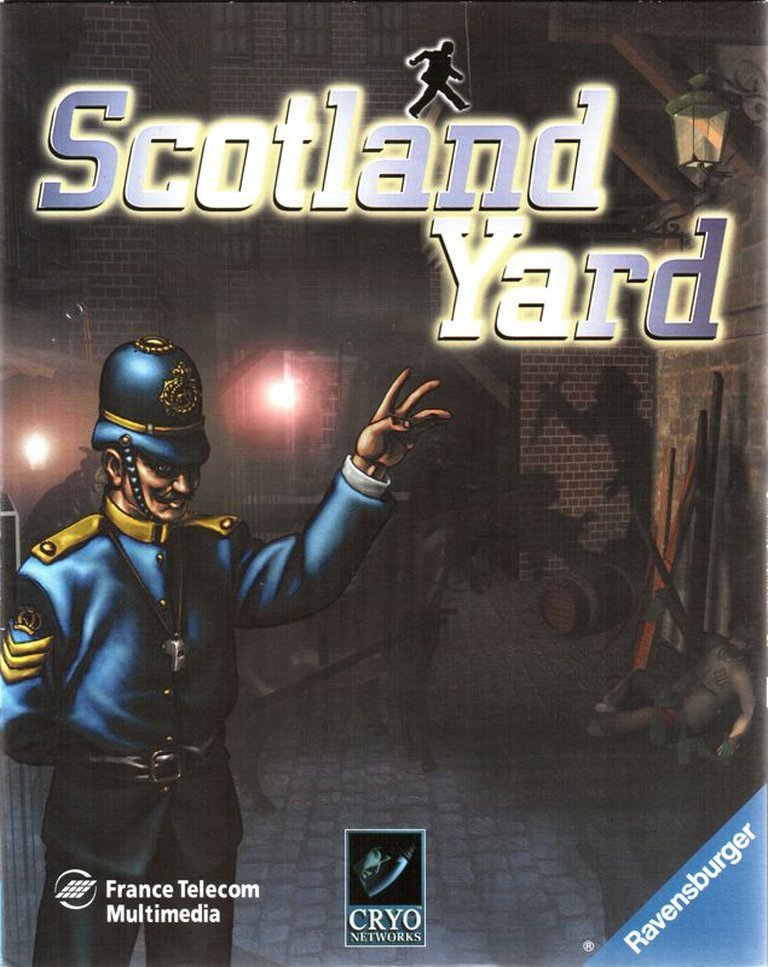
Scotland Yard is a digital adaptation of the classic board game, where one player assumes the role of Mr. X, a fugitive evading capture in London, while other players act as detectives from Scotland Yard. Using transportation tickets for taxis, buses, and the underground, Mr. X navigates the city map leaving minimal clues, while detectives collaborate strategically to corner him before time expires. The game emphasizes deduction and planning, with an optional ‘computer enhanced’ mode introducing RPG elements like money, combat, and interactive locations for both sides. Playable solo against AI or in multiplayer, it blends tactical pursuit with a race against the clock.
Where to Buy Scotland Yard
PC
Scotland Yard Guides & Walkthroughs
Scotland Yard Reviews & Reception
squakenet.com : A great adaptation of the board game.
retro-replay.com : Scotland Yard challenges you to outthink, outmaneuver, and outlast your opponent in a thrilling blend of strategy, role‐playing, and relentless pursuit.
Scotland Yard: Review
In the pantheon of classic board games adapted into digital formats, Scotland Yard stands as a testament to the enduring appeal of strategic deduction and cat-and-mouse gameplay. Developed by Cryo Interactive Entertainment in collaboration with Ravensburger Interactive Media GmbH, this 1998 release brought the beloved board game to life on the PC, offering both a faithful recreation of the original experience and an enhanced version with RPG elements. This review will delve into the game’s development history, narrative depth, gameplay mechanics, world-building, critical reception, and its lasting legacy in the gaming industry.
Development History & Context
Studio and Creators’ Vision
Cryo Interactive Entertainment, known for their adventure and strategy games, teamed up with Ravensburger, the original publisher of the Scotland Yard board game, to create a digital adaptation that would capture the essence of the original while adding modern twists. The creators envisioned a game that would appeal to both board game enthusiasts and computer gamers, blending the strategic depth of the board game with the interactive potential of digital media.
Technological Constraints and Gaming Landscape
Released in 1998, Scotland Yard was developed during a time when CD-ROMs were the primary medium for PC games. The technological constraints of the era meant that the game had to rely on 2D graphics and isometric views, which were common at the time. Despite these limitations, the developers managed to create a visually appealing and functional game that ran smoothly on the hardware of the day.
The gaming landscape in the late 1990s was dominated by adventure games, strategy titles, and early 3D experiments. Scotland Yard stood out by offering a unique blend of strategy and role-playing elements, catering to a niche audience that appreciated both board games and digital experiences.
Narrative & Thematic Deep Dive
Plot and Characters
The narrative of Scotland Yard is straightforward but engaging. Mr. X, a notorious criminal, is on the run in London, and it is up to the Scotland Yard detective team to capture him before time runs out. The game’s strength lies not in its plot but in the tension and strategy that arise from the pursuit.
The characters are archetypal but effective. Mr. X is the elusive fugitive, while the detectives are the relentless pursuers. The game’s success hinges on the dynamic between these two roles, with each turn revealing more about the strategies and deductions of both sides.
Dialogue and Themes
The dialogue in Scotland Yard is functional rather than deep. NPCs provide clues and information, but the conversations are more about advancing the gameplay than exploring character depth. Themes of pursuit, deduction, and strategy are central to the game, reflecting the core mechanics of the board game it is based on.
The game’s atmosphere is enhanced by its setting in Victorian London, a city shrouded in fog and mystery. This setting adds a layer of intrigue and tension, making the pursuit of Mr. X feel more urgent and exciting.
Gameplay Mechanics & Systems
Core Gameplay Loops
The core gameplay loop of Scotland Yard revolves around movement and deduction. Players take turns moving their pieces across a map of London, using different modes of transportation (taxi, bus, underground) that cost tickets. Mr. X leaves clues about his movements, and the detectives must use these clues to deduce his location and plan their routes accordingly.
The game’s strategic depth comes from the limited number of tickets each player has. Once a type of ticket is used up, it cannot be used again, adding a layer of resource management to the gameplay. This mechanic forces players to think carefully about their movements and plan ahead, making each turn a strategic decision.
Combat and Character Progression
The “computer-enhanced” version of the game adds RPG elements, including combat and character progression. Detectives can earn money by capturing criminals, which they can then use to buy information about Mr. X. Mr. X, on the other hand, can rob people or houses to earn money and purchase weapons and other helpful items.
These RPG elements add a layer of complexity to the gameplay, making the pursuit of Mr. X more dynamic and engaging. However, they also introduce new mechanics that can be confusing for players unfamiliar with RPG systems.
UI and Innovative/Flawed Systems
The user interface of Scotland Yard is clean and functional, with clear icons and menus that make it easy to navigate the game’s various systems. The map of London is well-designed, with color-coded stations and routes that make it easy to track movements and plan strategies.
However, the game’s UI can be clunky at times, with slow load times and unresponsive controls. These issues can be frustrating, especially during intense moments of the game.
World-Building, Art & Sound
Setting and Atmosphere
The setting of Scotland Yard is one of its strongest assets. The game’s map of London is meticulously detailed, with 199 stations connected by various modes of transportation. This attention to detail creates a sense of immersion, making the pursuit of Mr. X feel more realistic and exciting.
The game’s atmosphere is enhanced by its use of fog and dim lighting, which add a layer of mystery and tension. The sound design is also effective, with ambient sounds and music that complement the game’s Victorian setting.
Visual Direction
The visual direction of Scotland Yard is a mix of 2D and isometric views. The map of London is presented in a top-down perspective, while interactions with NPCs and other characters are shown in static 2D images. This combination of perspectives works well, creating a cohesive visual style that is both functional and aesthetically pleasing.
The game’s art style is reminiscent of the original board game, with clean lines and simple colors that make it easy to distinguish between different elements of the game. However, the character designs can be somewhat generic, lacking the depth and detail found in more modern games.
Sound Design
The sound design of Scotland Yard is effective in creating the game’s atmosphere. The use of ambient sounds, such as the hum of the city and the distant sound of trains, adds a layer of immersion. The music is also well-chosen, with a mix of classical and modern pieces that complement the game’s setting.
However, the sound effects can be somewhat lacking, with simple and repetitive sounds that do not add much to the gameplay. The voice acting is also limited, with most dialogue presented in text form.
Reception & Legacy
Critical and Commercial Reception
Upon its release, Scotland Yard received mixed reviews from critics. While many praised the game’s faithful adaptation of the board game and its strategic depth, others criticized its clunky controls and lack of innovation. The game’s average critic score was 57%, indicating a lukewarm reception.
Commercially, the game did not achieve significant success. Its niche appeal and the limitations of its technology meant that it did not reach a wide audience. However, it did find a dedicated following among board game enthusiasts and strategy gamers.
Influence on Subsequent Games and the Industry
Despite its mixed reception, Scotland Yard had a lasting influence on the gaming industry. Its blend of strategy and RPG elements paved the way for future games that combined these genres, such as Detective and This War of Mine. The game’s use of a digital map to recreate a board game experience also influenced later adaptations, such as Carcassonne and Ticket to Ride.
The game’s legacy can also be seen in the continued popularity of the Scotland Yard board game, which remains a staple in many gaming collections. The digital adaptation helped to introduce the game to a new audience, ensuring its enduring appeal.
Conclusion
Scotland Yard is a game that embodies the spirit of its board game counterpart while adding modern twists and innovations. Its strategic depth, engaging gameplay mechanics, and immersive world-building make it a standout title in the genre of strategy and deduction games. Despite its mixed reception and commercial performance, the game’s legacy can be seen in the influence it had on subsequent titles and the enduring popularity of the board game it is based on.
In the annals of video game history, Scotland Yard stands as a testament to the power of adaptation and innovation. It is a game that challenges players to think strategically, plan carefully, and outwit their opponents, all while immersing them in a richly detailed and atmospheric world. For fans of strategy and deduction games, Scotland Yard is a must-play title that offers a unique and engaging experience.