
- Release Year: 2005
- Platforms: Windows
- Publisher: TOPOS Verlag GmbH
- Genre: Board game, Strategy, Tactics
- Perspective: 3rd-person
- Game Mode: Hotseat, Single-player
- Gameplay: Turn-based combat
- Setting: Middle Ages, Space
- Average Score: 18/100
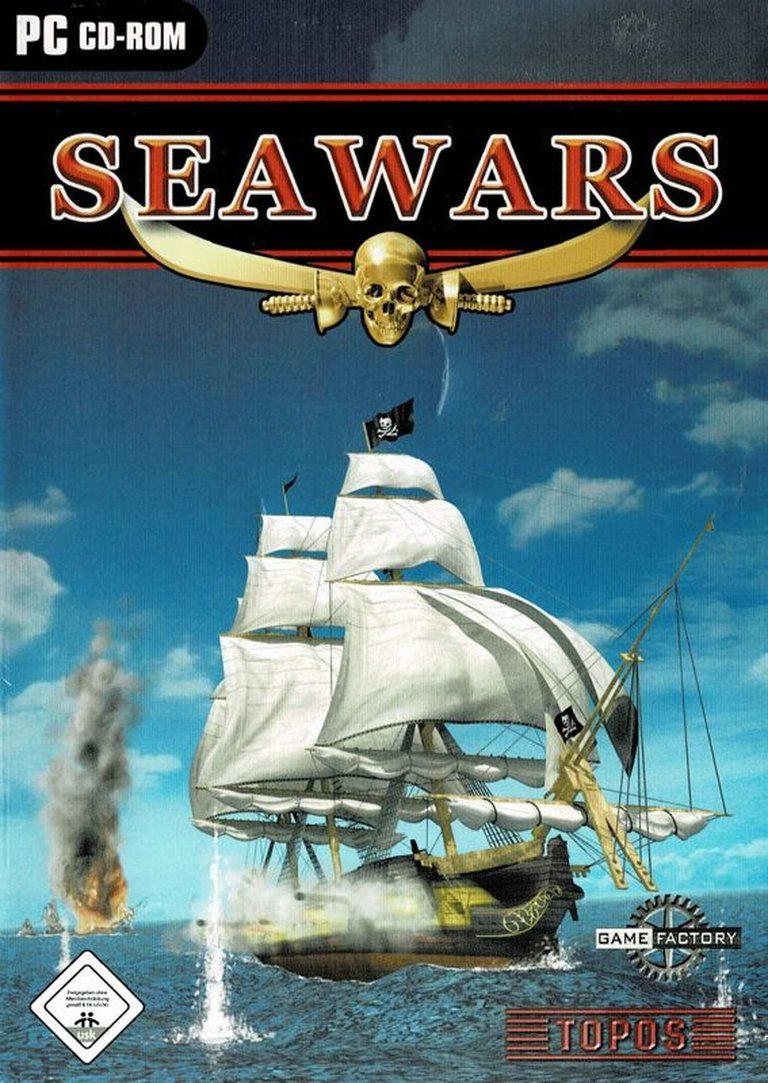
Description
Sea Wars is a digital adaptation of the classic Battleship board game, where two players strategically place ships of varying sizes on a grid-based battlefield. Players take turns guessing coordinates to locate and destroy their opponent’s fleet across four distinct thematic maps, including Middle Ages sailing ships and futuristic space vessels. Released in January 2005 for Windows, the game offers hot-seat multiplayer for 1-2 players but introduces no significant rule changes from the original pen-and-paper format.
Sea Wars: Review
Introduction
In the pantheon of naval strategy games, Sea Wars (2005) stakes its claim as a digital adaptation of the classic board game Battleship. Developed by German studio TOPOS Verlag GmbH, this minimalist title aimed to translate the tactile thrill of sinking fleets into a PC experience. Yet, despite its straightforward premise, Sea Wars garnered little fanfare, criticized for offering little beyond what a pen-and-paper session could provide. This review explores how Sea Wars became a footnote in gaming history—a relic of mid-2000s design constraints and missed opportunities.
Development History & Context
Studio Vision & The Mid-2000s Landscape
TOPOS Verlag GmbH, a publisher known for niche board game adaptations, developed Sea Wars during an era when digital translations of physical games were gaining traction. The mid-2000s saw titles like Axis & Allies and Carcassonne transitioning to PC, but these efforts often prioritized faithfulness over innovation. Sea Wars emerged in this climate, targeting casual players seeking a quick naval duel.
Technological Constraints
Built for Windows, Sea Wars operated within the limitations of early 2000s hardware. Its design eschewed complex 3D graphics for a utilitarian 3rd-person perspective, rendering ships as simplistic sprites on grid-based maps. Hot-seat multiplayer was the sole option, a pragmatic choice given the era’s patchy online infrastructure but one that ignored emerging trends in networked play.
Narrative & Thematic Deep Dive
A Vacuum of Story
As a Battleship clone, Sea Wars lacks narrative depth. There are no characters, dialogue, or overarching conflicts—only the sterile objective of obliterating an opponent’s fleet.
Thematic Flavor as Window Dressing
The game’s four maps inject nominal variety: medieval galleons, sci-fi spacecraft, and generic naval fleets. These themes are purely cosmetic, however, with no mechanical differences or lore to enrich the experience. The result is a game that feels less like a dynamic world and more like a spreadsheet with sprites.
Gameplay Mechanics & Systems
Core Loop: A Faithful (and Flawed) Reproduction
Sea Wars replicates Battleship’s loop: players place ships on a grid, then take turns calling coordinates to strike. Hits chip away at vessels until one fleet is annihilated.
Missing Innovations
Critically, Sea Wars adds nothing to the formula. No AI opponents, no campaign modes, and no rule variants—features that contemporaries like Electronic Arts’ Battleship (2012) later included. The absence of online multiplayer, already standard in 2005 titles like Battlefield 2, further limited its appeal.
UI & Accessibility Woes
The interface is functional but archaic, with clunky menus and no tutorials. Players unfamiliar with Battleship might struggle, as the game assumes prior knowledge.
World-Building, Art & Sound
Aesthetics of Austerity
Sea Wars’ visuals are rudimentary, even for 2005. Ships lack detail, grids are bland, and animations are limited to basic explosions. The thematic maps offer slight visual diversity but fail to immerse.
Sound Design: An Afterthought
Sound effects are sparse—static explosions, generic UI clicks—and there’s no music. The audio experience mirrors the game’s overall lack of polish.
Reception & Legacy
Critical Panning
Sea Wars earned an 18% score from Germany’s GameStar, which lambasted it as a “pen-and-paper experience at a premium price.” Player reviews echoed this, averaging 0.8/5 for its lack of content and innovation.
Commercial Obscurity
The game sold poorly, dwarfed by 2005 heavyweights like God of War and Civilization IV. TOPOS Verlag GmbH quietly moved on, leaving Sea Wars as a cautionary tale of low-effort adaptations.
Industry Impact
While Sea Wars itself left no legacy, its failures underscored the risks of translating board games without reinvention. Later successes like Tabletop Simulator (2015) would prove that digital adaptations thrive on creativity, not mere replication.
Conclusion
Sea Wars is a relic of its time—a barebones Battleship clone that failed to justify its existence as a commercial product. Its minimalism might appeal to purists, but the lack of AI, online play, and thematic depth rendered it obsolete upon release. In a year that gave gamers Shadow of the Colossus and Resident Evil 4, Sea Wars serves as a reminder that not all transitions from tabletop to PC are created equal. For historians, it’s a curious artifact; for players, it’s a lesson in missed potential.