
- Release Year: 2000
- Platforms: Windows
- Publisher: Kama Digital Entertainment, MediaQuest, Saint Hermit Studios Ltd., Soft-World International Corporation
- Developer: Garam & Baram Corp.
- Genre: Role-playing, RPG
- Perspective: 3rd-person
- Game Mode: Single-player
- Gameplay: Combo attacks, Exploration, Magic system, Party-based, Turn-based combat
- Setting: Fantasy
- Average Score: 55/100
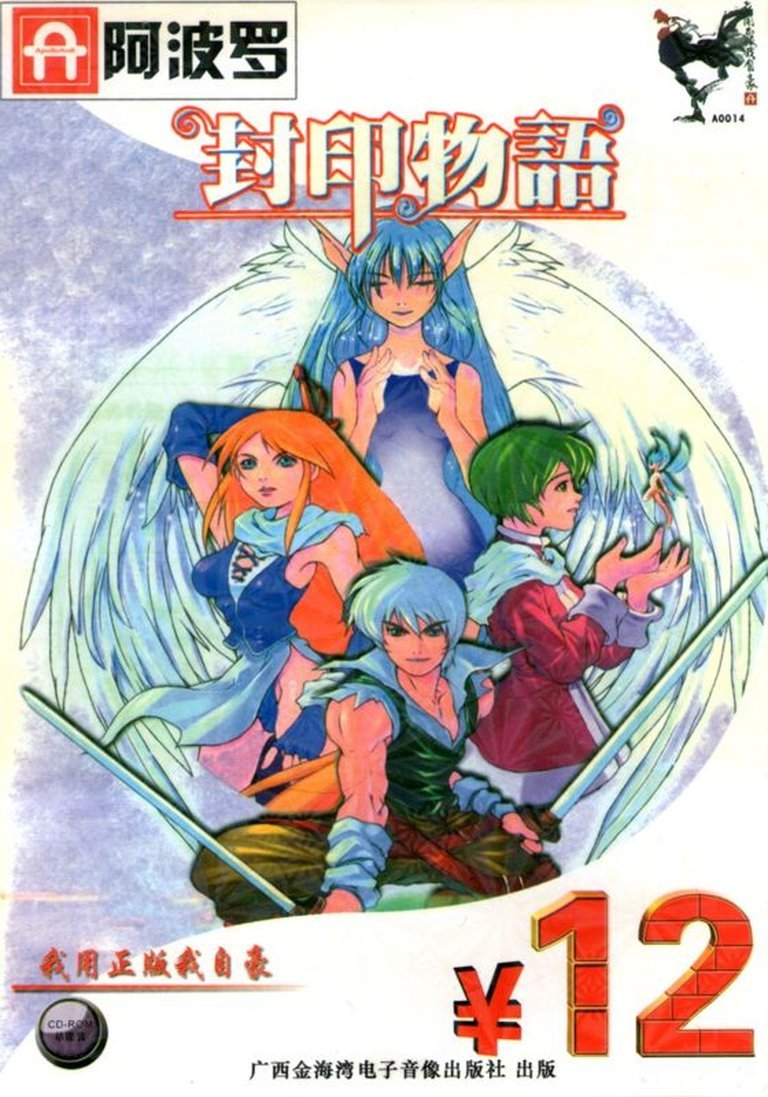
Description
Seal: Travelers of Destiny is a Korean-made fantasy RPG set in the politically divided world of Shiltz, where two major religions—the benevolent Church of Elios and the dark-worshipping Church of Balie—clash after the latter resurrects the sealed god Galadriel of Chaos. Players follow Duran, a vengeful knight, and Baldea, a young thief, as they navigate a linear yet open-ended adventure across towns, dungeons, and wilderness areas. The game features turn-based combat with a timing-based system similar to Grandia, allowing for combo attacks and strategic use of magic and abilities.
Gameplay Videos
Seal: Travelers of Destiny Patches & Updates
Seal: Travelers of Destiny Reviews & Reception
vgtimes.com (55/100): A third-person role-playing game with fantasy elements, featuring turn-based combat and a rich narrative.
Seal: Travelers of Destiny: A Forgotten Masterpiece of Korean RPG History
Introduction
In the annals of RPG history, few games have been as tragically overlooked as Seal: Travelers of Destiny. Released in 2000 by South Korean studio Garam & Baram Corp., this gem emerged during a golden age of Japanese-style RPGs but was overshadowed by its contemporaries. Yet, beneath its modest commercial reception lies a game of remarkable depth—a title that seamlessly blends political intrigue, religious conflict, and a combat system that remains innovative even by modern standards. This review aims to resurrect Seal from the shadows of obscurity, examining its development, narrative brilliance, mechanical ingenuity, and the indelible mark it left on the Korean RPG landscape.
Development History & Context
The Studio and Its Vision
Garam & Baram Corp. was a small but ambitious Korean studio that sought to carve a niche in the RPG market dominated by Japanese giants like Square and Enix. Seal: Travelers of Destiny was their second major release, following Radian (1998), and represented a significant leap in scope and polish. The game was directed by Han JongKoo, with BoYoung Kim serving as both sub-director and writer—a rare dual role that ensured narrative cohesion. The team drew heavily from Japanese RPGs, particularly Grandia and Final Fantasy, but infused their work with Korean cultural and philosophical elements, creating a hybrid that felt both familiar and fresh.
Technological Constraints and Innovations
Developed for Windows in the late 1990s, Seal faced the limitations of its era. The game utilized a top-down, 2D sprite-based engine with 3D character models—a common approach at the time—but optimized it for speed and fluidity. The combat system, inspired by Grandia‘s ATB (Active Time Battle) mechanics, introduced a unique “timing bar” that allowed players to chain attacks for devastating combos. This innovation was a response to the sluggish pacing of traditional turn-based RPGs, offering a faster, more dynamic experience.
The Gaming Landscape of 2000
The year 2000 was a pivotal moment for RPGs. Final Fantasy IX and Chrono Cross had just redefined narrative depth, while Diablo II and Baldur’s Gate II dominated the Western market. In Korea, the industry was still finding its footing, with titles like Genesis and Arcturus garnering critical acclaim. Seal entered this competitive space as an underdog, its Japanese-inspired aesthetics and Korean storytelling creating a cultural bridge that resonated with a niche audience.
Narrative & Thematic Deep Dive
Plot Overview
Seal unfolds in the war-torn world of Shiltz, a land divided by two religious factions: the benevolent Church of Elios and the malevolent Church of Balie, which worships dark gods. The game begins with the resurrection of Galadriel of Chaos, a deity sealed away 300 years prior by the legendary hero Erasnets. Players assume the role of Duran, a knight driven by vengeance against the Balie cultists, who crosses paths with Baldea, a cheerful thief with a knack for trouble. Together, they embark on a quest to decipher an ancient prophecy that could save Shiltz from annihilation.
Characters and Dialogue
The cast of Seal is one of its greatest strengths. Duran is a brooding, revenge-driven protagonist, while Baldea provides much-needed levity with her wit and charm. Supporting characters like Claire, a disciplined knight, and Arus, a mysterious warrior, add layers of complexity to the narrative. The dialogue is sharp and often philosophical, exploring themes of fate, free will, and the cyclical nature of conflict. The writing avoids the melodrama common in JRPGs, opting instead for a more grounded, introspective tone.
Themes: Religion, Power, and Prophecy
At its core, Seal is a meditation on the dangers of dogmatic belief. The Church of Balie’s fanaticism mirrors real-world extremism, while the Church of Elios represents the corrupting influence of institutional power. The prophecy of Erasnets serves as a narrative device to explore predestination versus agency, with characters grappling with whether their actions are truly their own or merely steps in a preordained path. The game’s use of Kabbalistic symbolism—such as the Sephirot tree—adds a layer of esoteric depth rarely seen in RPGs of the era.
Gameplay Mechanics & Systems
Combat: A Masterclass in Timing and Strategy
The combat system in Seal is a standout feature. Battles are turn-based but incorporate a real-time timing bar that fills based on each character’s speed stat. Players must time their attacks precisely to execute combos, a mechanic that rewards skill and planning. The system is reminiscent of Grandia but refined to eliminate downtime, making encounters feel fluid and engaging. Enemies are visible on the overworld, allowing players to avoid unnecessary fights—a welcome departure from the random encounters of traditional JRPGs.
Character Progression and Customization
Character growth in Seal is both traditional and innovative. Experience points are earned not only by defeating enemies but also by landing hits or using abilities, even if the target isn’t killed. This encourages experimentation and rewards players for creative tactics. Each character has a distinct playstyle:
– Duran: A physical powerhouse with high attack and defense.
– Baldea: A nimble thief who excels in speed and evasion.
– Claire: A balanced knight with strong magical abilities.
– Arus: A slow but devastating warrior with high burst damage.
The lack of a traditional job system is compensated by the depth of each character’s unique skill tree, allowing for meaningful customization.
UI and Quality-of-Life Features
The UI is functional but unremarkable, with a straightforward menu system that prioritizes efficiency over aesthetics. One notable feature is “Baldea’s Diary,” a journal that records key story events from Baldea’s perspective. Players can edit this diary, adding a meta-layer of engagement that was ahead of its time.
World-Building, Art & Sound
Setting and Atmosphere
Shiltz is a richly detailed world, divided into interconnected regions that include sprawling wilderness areas, bustling towns, and treacherous dungeons. The game’s linear story structure is offset by the freedom to explore these areas at the player’s leisure, fostering a sense of discovery. The art direction blends Japanese anime aesthetics with darker, more grounded fantasy elements, creating a visual identity that feels distinct from its contemporaries.
Visual Design
The 2D backgrounds are lush and detailed, with a painterly quality that enhances immersion. Character sprites are expressive, and the 3D models used in combat are well-animated, though they show their age by modern standards. The game’s use of color is particularly striking, with vibrant hues in peaceful areas giving way to muted, oppressive tones in dungeons and battlefields.
Sound and Music
The soundtrack of Seal is a standout feature, composed by Kim SeHoon and others. The music ranges from hauntingly beautiful melodies to pulse-pounding battle themes, each track perfectly complementing the game’s tone. However, the frequent shifts in BGM—particularly during dialogue-heavy scenes—can disrupt immersion, a minor but noticeable flaw.
Reception & Legacy
Critical and Commercial Reception
Upon release, Seal was met with modest critical acclaim but struggled commercially. The game’s niche appeal and competition from more high-profile titles limited its reach. However, it developed a cult following in Korea, where it was later regarded as one of the top three Korean RPGs of its era, alongside Genesis and Arcturus. Its reputation grew through word-of-mouth, with players praising its narrative depth and innovative combat.
Influence and Cultural Impact
Seal paved the way for future Korean RPGs, demonstrating that local studios could compete with Japanese developers in both storytelling and gameplay innovation. Its sequel, Seal Online (2003), expanded on its mechanics but failed to capture the same magic. The game’s legacy is also tied to its developer’s tragic history: Kim MuKwang, a key figure in its creation, passed away in 2024, leaving behind a body of work that continues to inspire.
Conclusion
Seal: Travelers of Destiny is a game that deserves to be remembered. It is a masterclass in blending Japanese RPG mechanics with Korean storytelling, offering a narrative that is both philosophically rich and emotionally resonant. Its combat system remains one of the most innovative of its era, and its world-building is a testament to the power of atmospheric design. While it may have been overshadowed by its contemporaries, Seal stands as a testament to the creativity and ambition of its developers.
Final Verdict: A forgotten classic that deserves a place in the RPG pantheon. Seal: Travelers of Destiny is a must-play for fans of narrative-driven RPGs and a shining example of what Korean game development could achieve in the early 2000s.
Score: 9/10 – A masterpiece marred only by its obscurity.