
- Release Year: 2011
- Platforms: PlayStation 3, Windows, Xbox 360
- Publisher: Atari, Inc., TimeGate Studios, Inc.
- Developer: TimeGate Studios, Inc.
- Genre: Action
- Perspective: 1st-person
- Game Mode: Co-op, Online PVP, Single-player
- Gameplay: Dynamic Missions, Equipment purchasing, Mech combat, Open World, Orbital drops, Shooter, Team-based combat, Wave-based defense
- Setting: Futuristic, Sci-fi
- Average Score: 78/100
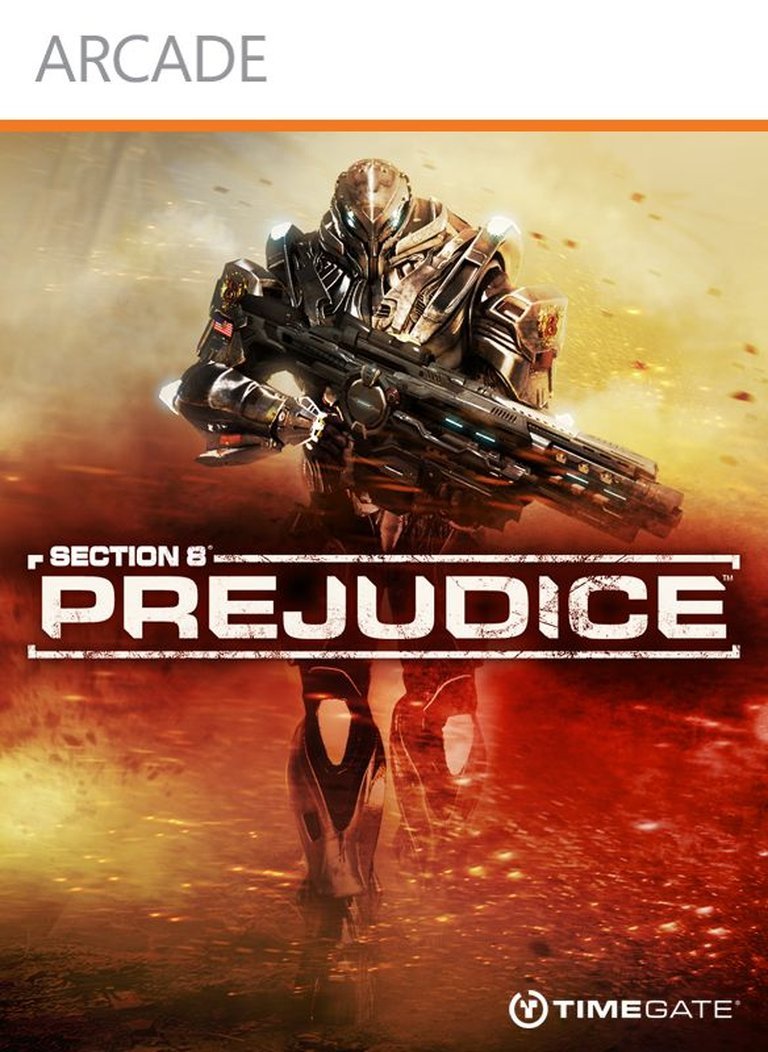
Description
Section 8: Prejudice is a sci-fi first-person shooter that combines a solo campaign with a robust multiplayer experience. Players take on the role of Alex Corde, a member of the elite ‘Section 8’ unit, tasked with stopping a mysterious force from attacking human colonies. The game’s multiplayer modes, including Conquest, Assault, and Swarm, emphasize teamwork and strategy, with players earning points by capturing bases and completing missions rather than just racking up kills. Unique features include parachute-less jumps from planes and a dynamic progression system that unlocks new equipment and abilities.
Gameplay Videos
Section 8: Prejudice Free Download
Section 8: Prejudice Cracks & Fixes
Section 8: Prejudice Mods
Section 8: Prejudice Reviews & Reception
metacritic.com (76/100): Section 8: Prejudice is a must-own XBLA title.
rotorob.com (80/100): There’s no doubt Prejudice provides a lot of BANG for your buck.
gamesradar.com (80/100): It’s got enough solid hooks and interesting tweaks to be a refreshing alternative to some of the tried and tested behemoths.
Section 8: Prejudice Cheats & Codes
PC
Press +, ~, or the key above Tab to open the console, type Enablecheats, then enter one of the following codes:
| Code | Effect |
|---|---|
| GOD | God mode. |
| Allammo | Unlimited ammo and jet repair. |
| Ghost | Walk through walls. |
| Disable | Remove buildings limit and free items. |
| 13374877 | Black Widow auto-pistol. |
| 17013214 | Captain’s armor. |
| 68432181 | Chrome assault rifle. |
Xbox 360
From the main menu select “dropship”, click on the unlock code option, and then enter one of the following codes:
| Code | Effect |
|---|---|
| 68432181 | Assault rifle Decals. |
| 13374877 | Black widow combat pistol. |
| 17013214 | Captains armor. |
Section 8: Prejudice: Review
In the crowded landscape of early 2010s first-person shooters, Section 8: Prejudice stands as a testament to the potential of digital distribution to democratize high-quality gaming experiences. Developed by TimeGate Studios and released in April 2011, this sequel to the 2009 title Section 8 was a bold experiment in blending innovative gameplay mechanics with a budget-friendly price point. Over a decade later, Section 8: Prejudice remains a fascinating case study in the evolution of multiplayer shooters, offering a unique blend of tactical depth and chaotic fun that, while not revolutionary, carved out a niche for itself in the hearts of its dedicated fanbase.
Development History & Context
TimeGate Studios, a Texas-based developer with a track record in titles like F.E.A.R.: Perseus Mandate and Aliens: Colonial Marines, embarked on Section 8: Prejudice with a clear vision: to create a multiplayer-focused shooter that could compete with the giants of the genre without the financial constraints of a traditional retail release. The decision to go digital-only was a calculated risk, allowing the team to price the game at a more accessible $15 (1200 Microsoft Points on Xbox Live) while still delivering a robust package.
The development process spanned approximately 18 months, involving a team of around 80 developers. The game was initially conceived as a full-priced retail title but was pivoted to a digital release to lower the barrier to entry and attract a broader audience. This strategic shift was influenced by the success of downloadable titles like Battlefield 1943 and Modern Combat: Domination, which demonstrated that players were willing to invest in high-quality digital experiences at a lower price point.
Technologically, Section 8: Prejudice leveraged the Unreal Engine 3, a powerful tool at the time that enabled the team to create expansive, visually impressive environments. The art direction was heavily influenced by films like Aliens and Final Fantasy: The Spirits Within, lending the game a cinematic quality that set it apart from its contemporaries. The developers also placed a strong emphasis on addressing the shortcomings of the original Section 8, particularly in terms of gameplay balance and server stability.
Narrative & Thematic Deep Dive
The single-player campaign of Section 8: Prejudice serves as a tutorial for the game’s multiplayer mechanics, but it also weaves a narrative that, while not groundbreaking, provides a compelling backdrop for the action. Players assume the role of Alex Corde, a member of the 8th Armored Infantry Division, as he battles against the Arm of Orion, a faction seeking to dismantle the United States Empire from within. The story is told through a series of objective-based missions that take place across four distinct environments, each offering a unique blend of combat scenarios.
The narrative explores themes of prejudice and discrimination, as hinted by the game’s title. The Arm of Orion is portrayed as a group that has been marginalized and is now seeking revenge, mirroring real-world issues of systemic oppression and the cyclical nature of violence. However, the story is not deeply explored, and the characters are largely one-dimensional. The voice acting, while serviceable, lacks the emotional depth to fully realize the game’s thematic ambitions.
Despite its narrative shortcomings, the campaign serves as a solid introduction to the game’s core mechanics, including the innovative “burn-in” system, which allows players to drop into the battlefield from orbital dropships. This mechanic not only adds a layer of strategy to the gameplay but also creates a sense of immersion and urgency that is often lacking in traditional shooters.
Gameplay Mechanics & Systems
At its core, Section 8: Prejudice is a multiplayer-focused shooter that emphasizes teamwork, strategy, and dynamic combat. The game features four primary multiplayer modes: Conquest, Swarm, Assault, and Skirmish. Each mode offers a unique take on the shooter genre, catering to different playstyles and preferences.
Conquest is the game’s flagship mode, pitting two teams of up to 32 players against each other in a battle to capture and hold control points. The mode is characterized by its fast-paced, chaotic nature, with players constantly on the move, deploying turrets, and engaging in firefights. The dynamic combat missions (DCMs) add an extra layer of strategy, as teams must complete objectives like escorting a VIP or destroying a bridge to gain an advantage.
Swarm is a cooperative mode where up to four players defend a single control point against waves of AI-controlled enemies. This mode is reminiscent of Gears of War‘s Horde mode, but with the added twist of allowing players to purchase and deploy defensive structures like turrets and supply depots. The mode is particularly challenging, as the enemy waves become increasingly difficult over time, requiring players to work together and adapt their strategies.
Assault is a more structured mode where one team defends control points while the other team attempts to capture them. The mode is played in two rounds, with each team taking on the role of defender and attacker. The sudden death mechanic adds a layer of tension, as players must strategize carefully to secure their victories.
Skirmish is a team deathmatch mode that focuses on eliminating enemy players rather than capturing control points. This mode is ideal for players who prefer a more traditional shooter experience, as it emphasizes individual skill and reflexes.
One of the most innovative aspects of Section 8: Prejudice is its “burn-in” system, which replaces traditional spawn points with a dynamic dropping mechanism. Players choose where to drop into the battlefield from orbital dropships, adding a layer of strategy and unpredictability to the gameplay. This system not only eliminates spawn camping but also creates a sense of immersion and urgency, as players must navigate the battlefield while under fire.
The game’s progression system is also noteworthy, as players earn experience points and requisition points through gameplay. These points can be used to unlock new weapons, armor upgrades, and vehicles, allowing players to customize their loadouts and tailor their playstyle. The game’s extensive arsenal includes a variety of weapons, from assault rifles and shotguns to sniper rifles and pulse cannons, each with its own unique characteristics and ammunition types.
World-Building, Art & Sound
Visually, Section 8: Prejudice is a mixed bag. The game’s environments are expansive and detailed, with a futuristic aesthetic that is both impressive and familiar. The art direction draws heavily from films like Aliens and Final Fantasy: The Spirits Within, resulting in a visual style that is both cohesive and derivative. The character models, particularly the powered armor suits, are well-designed and add a sense of weight and presence to the gameplay.
However, the game’s visuals are not without their flaws. The textures can appear blurry at times, and the lighting is not as dynamic as in some of its contemporaries. The game’s use of the Unreal Engine 3 is evident in its technical limitations, but the team has done an admirable job of maximizing the engine’s capabilities to create a visually impressive experience.
The sound design is equally impressive, with a mix of ambient sounds, weapon effects, and voice acting that immerses the player in the game’s world. The voice acting, while not groundbreaking, is serviceable and helps to bring the game’s characters to life. The soundtrack, composed by Cris Velasco and Jason Graves, is a mix of orchestral and electronic elements that complements the game’s futuristic setting.
Reception & Legacy
Upon its release, Section 8: Prejudice received generally favorable reviews from critics, with an average score of 76 on Metacritic for the Xbox 360 version. The game was praised for its innovative gameplay mechanics, extensive arsenal, and dynamic combat. Critics also highlighted the game’s value for money, with many noting that it offered a robust package at a fraction of the cost of a traditional retail release.
However, the game was not without its criticisms. Some reviewers noted that the single-player campaign was underwhelming and felt more like a tutorial than a standalone experience. Others criticized the game’s visuals, noting that they were not as polished as those of its competitors. Despite these criticisms, Section 8: Prejudice was widely regarded as a solid entry in the shooter genre, with a unique blend of mechanics that set it apart from its contemporaries.
Commercially, the game was a success, selling well on all three platforms (Xbox 360, PlayStation 3, and PC). The game’s digital distribution model allowed it to reach a broader audience, and its multiplayer modes ensured that it had a lasting appeal. However, the game’s legacy was ultimately cut short by the closure of TimeGate Studios in 2013. The studio’s bankruptcy and subsequent shutdown resulted in the cancellation of a planned sequel, leaving Section 8: Prejudice as the final entry in the series.
Despite its untimely end, Section 8: Prejudice has left a lasting impact on the shooter genre. Its innovative “burn-in” system and dynamic combat missions have influenced subsequent games, and its emphasis on teamwork and strategy has set a standard for multiplayer shooters. The game’s digital distribution model has also paved the way for other developers to experiment with lower price points and broader accessibility.
Conclusion
Section 8: Prejudice is a game that defies easy categorization. It is not a revolutionary title, nor is it a perfect one. However, it is a game that offers a unique and engaging experience, blending innovative mechanics with a robust multiplayer package. Its legacy is one of experimentation and innovation, a testament to the potential of digital distribution to democratize high-quality gaming experiences.
In the years since its release, Section 8: Prejudice has become something of a cult classic, remembered fondly by those who experienced its chaotic multiplayer battles and dynamic combat. While it may not have achieved the same level of success as its contemporaries, it has carved out a niche for itself in the hearts of its dedicated fanbase. As the gaming industry continues to evolve, Section 8: Prejudice stands as a reminder of the power of innovation and the potential of digital distribution to shape the future of gaming.