
- Release Year: 2010
- Platforms: Windows, Xbox 360
- Publisher: Devolver Digital, Inc., Majesco Entertainment Company
- Developer: Croteam
- Genre: Action
- Perspective: First-person
- Game Mode: Online Co-op, Online PVP, Single-player
- Gameplay: Shooter
- Setting: Ancient Mesopotamia, Medieval Europe, South America
- Average Score: 76/100
Description
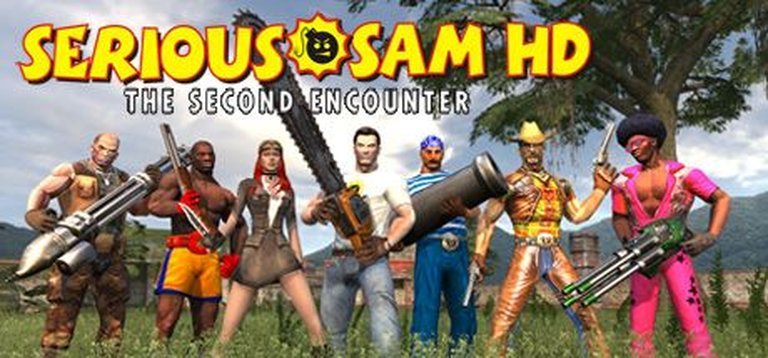
Serious Sam HD: The Second Encounter is a high-definition remake of the classic first-person shooter where players control the indomitable Sam ‘Serious’ Stone as he battles relentless hordes of alien monsters across three distinct scenarios: the lush jungles of South America, the ancient ruins of Mesopotamia, and the medieval landscapes of Europe. Armed with an arsenal of powerful weapons—including three new additions—and various power-ups, Sam navigates linear levels filled with waves of brainless enemies, featuring updated graphics, hidden secrets, and enhanced multiplayer modes like co-op, versus, and survival for up to 16 players.
Gameplay Videos
Where to Buy Serious Sam HD: The Second Encounter
PC
Serious Sam HD: The Second Encounter Free Download
Crack, Patches & Mods
Guides & Walkthroughs
Reviews & Reception
metacritic.com (76/100): The Second Encounter was (and is) arguably the best entry into the Serious Sam series, juggling the right balance between flippant colourful whimsy and pelleting grubby monsters.
ign.com (65/100): Serious Sam HD: The Second Encounter is a relentless string of cheap shots, monster closets, instant deaths, bombastic weapons, and irreverently juvenile humor.
metacritic.com (83/100): I can replay this Game just endless. It never gets boring. Sam is a cool guy.
co-optimus.com (80/100): Serious Sam HD: The Second Encounter continues the story of Sam’s adventures through time, and is a remade version of the original title in the Serious Engine 3.
Serious Sam HD: The Second Encounter: Review
Introduction
Imagine a time when first-person shooters weren’t about tactical cover systems or narrative-driven set pieces, but raw, unadulterated chaos—hordes of grotesque aliens charging at you in waves that could number in the hundreds, your arsenal a symphony of absurdity from chainsaws to laser cannons, and a hero quipping one-liners amid the carnage. This is the world of Serious Sam, a series born in the early 2000s as a love letter to the golden age of FPS gaming, evoking the spirit of Doom and Quake with a side of irreverent humor. Serious Sam HD: The Second Encounter, released in 2010 by Croatian studio Croteam and publishers Devolver Digital and Majesco Entertainment, is a high-definition remake of the 2002 classic Serious Sam: The Second Encounter. It picks up where the inaugural Serious Sam HD: The First Encounter left off, polishing the original’s frenetic action with modern visuals and expanded multiplayer while preserving its unapologetically arcade roots.
As a game journalist and historian, I’ve revisited countless remakes, but this one stands out for its fidelity to the source material amid an era dominated by hyper-realistic blockbusters like Call of Duty: Modern Warfare 2. The thesis here is clear: Serious Sam HD: The Second Encounter isn’t just a nostalgic cash-in; it’s a triumphant resurrection of old-school FPS design, delivering sensory overload and cooperative mayhem that reminds us why we fell in love with the genre, even if its relentless difficulty and repetition test the limits of modern patience.
Development History & Context
Croteam, a small but ambitious studio from Zagreb, Croatia, burst onto the scene in 2001 with Serious Sam: The First Encounter, a budget-friendly FPS that punched above its weight by leveraging the studio’s in-house Serious Engine. Founded in 1993 as a 3D graphics outfit, Croteam had honed its skills on tech demos and ports before partnering with Gathering of Developers (later absorbed by Take-Two Interactive) for the original Serious Sam. The series’ ethos—massive enemy hordes, expansive levels, and zero pretense of realism—was a direct response to the Quake-engine clones flooding the market, aiming to recapture the joy of Doom‘s arena battles but on a grander scale.
By 2002, The Second Encounter (the non-HD original) was in development mere months after the first game’s launch, initially conceived as a mission pack before evolving into a standalone sequel. Under project leader Davor Hunski, technical director Alen Ladavac, and lead programmer Alen Ladavac (yes, two Alens), the team expanded to around 12 members, incorporating new hires like level designer Ivan Mika and programmer Nikola Mosettig. They upgraded the Serious Engine with skeletal animation, Ogg Vorbis audio, enhanced particle systems, and DirectX support, all while iterating based on fan feedback from forums and emails. The Croatian developers faced technological constraints typical of the early 2000s: hardware like the GeForce 3 was cutting-edge, but optimizing for vast outdoor levels without modern tools like Unreal Engine meant clever tricks, such as procedural particles that accidentally doubled frame rates during testing.
The gaming landscape in 2002 was shifting from arena shooters to story-heavy experiences like Half-Life and Unreal Tournament 2003, with multiplayer dominating via LAN parties and emerging broadband. Serious Sam thrived as a “budget gem,” priced at $20, emphasizing single-player spectacle over complexity. Fast-forward to 2010: Croteam, now partnering with indie-friendly Devolver Digital (co-founded by ex-Gathering alumni Mike Wilson and Harry Miller), revisited the sequel amid a remake renaissance (Resident Evil 4 and Bionic Commando had succeeded with HD updates). Budget constraints persisted—Croteam was a modest team of about 20—but Serious Engine 3 (refined from Serious Sam 3: BFE‘s development) allowed for high-res textures, dynamic lighting, and 16-player online co-op without the bloat of AAA titles.
Devolver’s involvement was pivotal; they handled PC digital distribution via Steam, while Majesco managed Xbox Live Arcade. The 2010 release targeted a post-Left 4 Dead audience craving horde shooters, but at $15 (often bundled), it positioned itself as accessible fun amid the rise of free-to-play multiplayer. Technological hurdles like adapting to Xbox 360’s hardware led to compromises, such as 4-player co-op limits on console versus 16 on PC. Vision-wise, Croteam aimed to “modernize without changing the soul,” adding modes like Survival and Beast Hunt while keeping the core loop intact—a deliberate nod to preserving the series’ cult status in an industry chasing realism.
Narrative & Thematic Deep Dive
At its heart, Serious Sam HD: The Second Encounter is a plot of comedic convenience, serving as narrative scaffolding for relentless action rather than a deep saga. Picking up immediately after The First Encounter, the story unfolds via Sam’s NETRICSA (Neurotronically Implanted Combat Situation Analyzer), a sarcastic AI implant voiced with dry wit. Sam’s starship, the SSS Centerprice, is comically sideswiped by a “Croteam crate-bus” (a self-referential gag), crashing him into the Mayan ruins of Central America around 1000 BCE. His quest: locate the Holy Grail, a Sirian artifact that powers time gates, to reach a backup spaceship and continue his journey to Sirius against the alien overlord Mental.
The narrative spans three acts across diverse eras: South America (Mayan temples like Teotihuacan and Palenque, battling wind god Kukulkan); ancient Mesopotamia (ziggurats in Babylonia and Persepolis, facing the Exotech Larva in the Tower of Babel); and medieval Europe (Polish town of Krwawitze in 1138 CE, culminating in a showdown with Mordekai the Summoner in the Church of Sacred Blood). Each segment involves collecting artifacts—like the Tablets of Wisdom or the Book of Wisdom—to unlock time gates, with Sam’s journey framed as a desperate race against Mental’s legions.
Characters are archetypal and sparse, emphasizing Sam’s lone-wolf bravado. Voiced by John J. Dick with a gravelly, pun-laden delivery (“Time to get serious!”), Sam “Serious” Stone is the epitome of the macho anti-hero: a 22nd-century soldier quipping lines like “Groovy!” amid dismemberment. NETRICSA provides exposition and banter, evolving from a mere guide to a comic foil—warning of ambushes or mocking Sam’s recklessness. Enemies, from the screeching Beheaded Kamikazes to hulking Lava Golems, are faceless hordes representing Mental’s anonymous evil, with bosses like the serpentine Kukulkan adding mythic flair. No meaningful allies appear; it’s Sam versus the universe, underscoring themes of isolation and defiance.
Thematically, the game revels in absurdity and escapism, subverting sci-fi tropes with time-travel farce and over-the-top violence. Mental, the unseen puppet-master, symbolizes existential dread, but Sam’s humor deflates it—dialogue is a barrage of puns (“These guys are really starting to bug me!”) and pop-culture nods, critiquing the seriousness of games like Halo. Underlying motifs include cultural homage (Mayan Xibalba underworld, Babylonian Gilgamesh temple) blended with anachronistic chaos, exploring humanity’s resilience against overwhelming odds. Yet, it’s no intellectual treatise; the “plot” is a vehicle for satire, poking fun at FPS clichés while celebrating unbridled joy. In HD, updated cutscenes and voice work amplify this, but the linear progression feels dated, prioritizing spectacle over emotional depth.
Gameplay Mechanics & Systems
Serious Sam HD: The Second Encounter thrives on its core loop: traverse linear-yet-expansive levels, mow down escalating enemy waves, and scavenge for ammo and secrets. Single-player unfolds across 12 levels (fewer but larger than the original), blending open plains, enclosed arenas, and platforming segments. Combat is the star—non-regenerative health (100 points, plus armor) demands constant movement, as enemies like Kleer Skeletons charge en masse while Zorg Mercenaries snipe from afar. Waves build dynamically: early foes are fodder (Gnaars as “health packs”), escalating to 100+ simultaneous attackers, forcing kiting, prioritization, and environmental use (e.g., luring into traps).
The arsenal expands to 14 weapons, adding the P-LAH Chainsaw (melee frenzy), XOP Flamethrower (crowd control for close-quarters horrors), and RAPTOR Sniper Rifle (scoped precision for distant threats) atop staples like the XM214-A Minigun and SBC Cannon. Power-ups—Serious Speed (boosted movement), Serious Damage (weapon buffs), Invulnerability, Invisibility, and the instant-kill Serious Bomb—introduce temporary god-mode highs, rewarding exploration. No progression system exists; Sam’s abilities are static, emphasizing skill over RPG elements. UI is minimalist: a clean HUD shows health/armor, ammo, and a mini-map, with quicksave/load buttons essential for the punishing difficulty (Tourist to Serious modes scale enemy numbers and speed).
Innovations shine in multiplayer: up to 16-player online co-op (4 on Xbox 360) across all levels, plus new modes like Survival (endless waves with time-based medals), Coin-Op Co-Op (limited lives for scoring), Beast Hunt (score competition in co-op), and versus options (Team Deathmatch, Last Man Standing, Capture the Flag on 18 maps, including remixed originals like “Ashes to Ashes”). Steam achievements (70 total) and recordable replays add replayability. Flaws persist: repetition from arena clears feels grindy solo (levels can drag 45+ minutes), AI is predictable (enemies pathfind poorly, leading to cheap deaths), and platforming/jumping puzzles (e.g., slippery ice or gravity flips, partially removed in HD) frustrate without modern controls. The third-person view (PC only) aids navigation but tanks framerates. Overall, it’s a masterclass in arcade purity—flawed by age, but innovative in co-op scale.
World-Building, Art & Sound
The game’s world-building constructs a tapestry of historical pastiche warped by alien invasion, creating immersive backdrops that amplify the chaos. South America’s Mayan ruins evoke Tomb Raider-esque mystery with vine-choked temples and underground Xibalba; Mesopotamia’s ziggurats tower amid lush gardens, blending Prince of Persia geometry with explosive set pieces; medieval Europe’s foggy castles and lava caves nod to Heretic, culminating in a gothic cathedral siege. Levels are vast—some span football fields—fostering exploration for 15 new secrets (health caches, ammo dumps) and dynamic elements like moving platforms or multi-floor arenas. Atmosphere builds tension through escalating hordes, with traps (spikes, acid pits) and environmental hazards (wind gusts in Mayan levels) integrating seamlessly.
Visually, Serious Engine 3 elevates the 2002 original: high-res textures render crumbling stone and alien viscera with detail, dynamic lighting casts dramatic shadows on bosses like the biomechanical Exotech Larva, and particle effects (blood sprays, explosions) deliver visceral feedback. Polygons boost enemy models—Zumb’ul witches now flutter with eerie grace—while lush foliage and weather (rain in Europe) add immersion. At 1080p/60fps, it’s a technical showcase for its budget, though pop-in and texture streaming betray console ports. Art direction retains cartoonish flair: vibrant colors contrast gore, with Sam’s muscular frame a beacon of machismo.
Sound design, however, is a mixed bag. Damjan Mravunac’s orchestral score—pulsing techno-metal for battles, ambient flutes for exploration—evokes epic heroism, available on Spotify/Tidal. SFX are punchy: minigun whirs and chainsaw revs satisfy, but stock effects (e.g., generic screams) feel dated, and enemy audio cues (Kamikaze yells) are crucial yet muddled in hordes. Sam’s voice lines, updated for HD, add levity (“It’s clobberin’ time!”), but repetition grates. Collectively, these elements forge an adrenaline-fueled experience: visuals and music propel the frenzy, while sound grounds the absurdity, making every level a sensory assault that lingers long after the credits.
Reception & Legacy
Upon its 2010 launch, Serious Sam HD: The Second Encounter garnered solid acclaim, earning a 76/100 Metacritic score on PC (72 on Xbox 360) from 20+ critics. Outlets like HEXUS.gaming (92%) and Co-Optimus (90%) hailed its “pure sensory overload” and co-op enhancements, praising the $15 price for delivering “shooter fan’s dream” content. GameSpot (7.5/10) called it “big, dumb fun,” improved over the 2002 original, while Eurogamer (8/10) noted its “silky remake” status for old-school fans. Criticisms focused on repetition—PC Gamer UK (70%) warned of burnout from endless waves—and dated mechanics, with GamesRadar (3.5/5) yearning for “fresh material.” Commercially, it succeeded modestly: bundled in Serious Sam HD: Gold Edition (2010) and The Serious Sam Collection (2013/2020), it sold steadily on Steam ($3.99 sales) and Xbox Live Arcade, bolstered by DLC like Legend of the Beast (2012, adding maps/modes).
Player reception averaged 4.1/5 on MobyGames (23 ratings) and 8.3 on Metacritic (228 users), with praise for co-op (“insane fun with friends”) outweighing solo gripes (“tedious without backup”). Legacy-wise, it solidified Serious Sam‘s cult status, influencing horde shooters like Killing Floor and Deep Rock Galactic with its co-op scale and enemy variety. Ports to Stadia (2020), Switch/PS4/Xbox One (2020), and VR (Serious Sam VR: The Second Encounter, 2017) extended its life, while fan mods (e.g., New Creature Framework on ModDB) and the 2019 Serious Sam Classics: Revolution compilation kept it alive. In industry terms, it bridged old and new FPS eras, proving remakes could thrive digitally amid Duke Nukem Forever‘s shadow. Today, with Serious Sam 4 (2020), it remains a benchmark for chaotic joy, cited in academic discussions (1,000+ MobyGames citations) for preserving 90s FPS DNA.
Conclusion
Serious Sam HD: The Second Encounter distills the essence of arcade FPS gaming into a polished, chaotic package: sprawling levels teeming with foes, an arsenal of gleeful destruction, and multiplayer modes that transform frustration into hilarity with friends. While its narrative is a thin excuse for violence and mechanics show age through repetition and AI quirks, the HD remake’s visual upgrades, expanded co-op, and unyielding difficulty capture the series’ rebellious spirit against modern shooters’ sobriety. Commercially successful and enduringly influential, it earns its place as a mid-tier classic in video game history—not a revolutionary masterpiece like Doom, but a vital torchbearer for the genre’s anarchic roots. For fans of unfiltered action, it’s essential; for casual players, a bold reminder of gaming’s wild past. Verdict: 8.5/10—seriously addictive, if you can handle the hordes.