
- Release Year: 2015
- Platforms: Windows
- Publisher: Admax Game
- Developer: TernGame
- Genre: Strategy, Tactics
- Perspective: Top-down
- Game Mode: Online PVP
- Gameplay: Castle building, Hero management, Magic, Resource Management, RPG elements, Strategy, Treasure hunting, Turn-based combat
- Setting: Fantasy
- Average Score: 32/100
Description
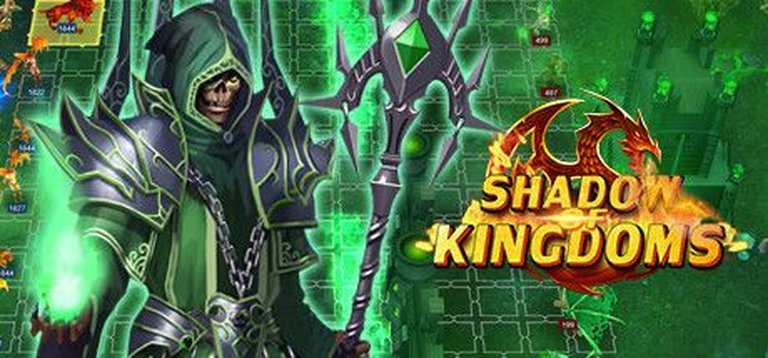
Shadow of Kingdoms is a free-to-play strategy game with RPG elements set in a fantasy world where gods have died battling dragons, and now one dragon has returned, making you the chosen champion to fight it. Choose from four factions (Fortress/Humans, Forest/Elves, Cemetery/Undead, Hell/Demons) and manage your castle to build structures, train units, hire heroes, and research magic. Explore the adventure screen to fight monsters, gather resources, and hunt treasure using maps, then engage in tactical combat using heroes’ magic abilities against monsters and other players’ castles.
Where to Buy Shadow of Kingdoms
PC
Shadow of Kingdoms Guides & Walkthroughs
Shadow of Kingdoms: Review
Introduction
In the annals of digital history, few titles embody the term “ambitious failure” as succinctly as Shadow of Kingdoms. Released in August 2015 by developer TernGame and publisher Admax Game, this free-to-play strategy-RPG promised a fusion of Heroes of Might and Magic tactical depth with kingdom-building grandeur. Its premise—chosen champions battling a resurrected dragon in a post-god apocalypse fantasy world—sounded compelling. Yet, as we dissect its legacy, Shadow of Kingdoms emerges not as a hidden gem but as a cautionary tale of aspiration collapsing under the weight of execution. This review examines how a game with intriguing ideas became synonymous with Steam’s “Mostly Negative” label, leaving behind a trail of shattered expectations and a lesson in the perils of unchecked ambition.
Development History & Context
TernGame, a studio whose prior work remains obscure, spearheaded Shadow of Kingdoms with a vision to dominate the free-to-play strategy genre. Admax Game’s publishing role positioned it for a Steam Greenlight debut in June 2015, culminating in a full release on August 11, 2015. The game’s development occurred during a period where browser-based games were migrating to Steam en masse, often with minimal adaptation for the platform. Shadow of Kingdoms epitomized this trend: it was a Flash-based title shoehorned into a client-driven ecosystem, lacking the optimization or design finesse expected of PC releases. Technologically, it ran on modest specs (Windows XP+, 512MB RAM), but this accessibility masked a brittle foundation. The broader gaming landscape was saturated with polished free-to-play titles (League of Legends, Dota 2), yet Shadow of Kingdoms arrived without the resources or polish to compete, aiming to carve space with its “unique” blend of turn-based tactics and city management—a vision ultimately undone by rushed development and a failure to innovate beyond established formulas.
Narrative & Thematic Deep Dive
Shadow of Kingdoms’ narrative is a patchwork of generic fantasy tropes, stitched together with threadbare coherence. The worldbuilding premise—gods slain in ancient dragon wars, now threatened by a returning dragon—holds potential but is drowned in lore so inelegantly delivered it borders on parody. Players choose one of four faction-aligned heroes (e.g., Holy Paladin, Spirit Wanderer), yet their roles feel interchangeable beyond cosmetic differences. Dialogue is a masterclass in ineptitude, with NPCs like “Gina” delivering lines such as “Gods have disappeared thousand years ago” in a cacophony of broken English. Thematic depth is nonexistent; the conflict between order (Fortress humans) and chaos (Hell demons) is reduced to shallow factional battles, while the promised “mystery” of the kingdom’s destruction remains unexplored. Themes of redemption or heroism are abandoned in favor of repetitive quests to “prevent sad hearts,” reducing the narrative to a checklist of objectives stripped of narrative weight. The game’s attempt at grandeur collapses under the weight of its own poor writing, reducing a potentially epic saga to a farce.
Gameplay Mechanics & Systems
The core gameplay loop of Shadow of Kingdoms is a study in fractured mechanics, each element promising depth but delivering tedium.
-
City Management: Players construct structures (barracks, mines, mage towers) in a linear, prerequisite-based system. However, this masquerades as strategy while functioning as a click-heavy Skinner box. Building upgrades feel inconsequential, as resource management is trivialized by abundant loot and passive income. The “honor and glory” of kingdom-building evaporates when cities become identical, cookie-cutter layouts.
-
Adventure & Exploration: On the adventure map, heroes collect resources and items via a top-down 3D interface. Treasure hunts—triggered by maps requiring obelisk navigation—offer fleeting novelty but devolve into repetitive pathfinding. Dungeons promise “real-time exploration,” yet they are static arenas with no meaningful interaction.
-
Combat: The centerpiece of the experience, combat is a grid-based tactical affair rendered inert by auto-battle. Manual control reveals a hollow shell: units move and attack without terrain advantages, flanking bonuses, or meaningful abilities. Spells function as generic damage-dealers, and heroes lack distinct tactical roles. The game’s most damning flaw is its Fast Battle system, which allows players to skip combat by spending in-game currency (or real money), implicitly admitting that core gameplay is so tedious it must be bypassed. PvP castle raids—promoted as epic showdowns—devolve into demolition contests, where victory hinges on breaking gates and keeps, not strategy.
-
Progression & Monetization: Character growth is minimal, with heroes gaining levels but no meaningful customization. The free-to-play model aggressively gates content behind a VIP system, where spending unlocks faster progression and battle-skipping privileges. Events every two weeks incentivize monetization, creating a pay-to-win environment that alienates free players.
World-Building, Art & Sound
Shadow of Kingdoms’ world is a fantasy collage assembled from stolen assets and clichés. The four factions—Fortress (humans), Forest (elves), Cemetery (undead), Hell (demons)—are visually distinct but artistically uninspired. Human cities are crude fortresses; elven realms borrow from Warcraft’s Night Elves; undead realms evoke Heroes of Might and Magic’s Necropolis. The aesthetic is a relic of early 2000s browser games, with chunky textures, low-poly models, and environments that feel unpopulated and lifeless. Sound design compounds the mediocrity. Battle audio loops endlessly—stock grunts and spear clangs—and the soundtrack’s dramatic buildup abruptly cuts to silence, creating jarring dissonance. Voice acting is non-existent, replaced by text boxes and robotic sound effects. Even the game’s few redeeming visual elements—like “voluptuous anime girls”—are poorly animated, their physics as static as the world around them. The result is an atmosphere not of fantasy immersion, but of digital decay.
Reception & Legacy
At launch, Shadow of Kingdoms was met with derision. Steam reviews skew 31% positive (as of 2026), with users lambasting its “lazy, boring, patchwork of mechanics.” Sean Sullivan’s scathing review for MMOS.com called it “an embarrassment,” criticizing its broken dialogue, AI, and “duct-tape” design. Commercial performance was abysmal; the game shuttered servers by 2016, its player base evaporating as quickly as its credibility. Its legacy, however, endures as a cautionary benchmark. It exemplifies the perils of Greenlight-era curation, where unpolished browser titles flooded Steam. Influentially, it became a poster child for free-to-play exploitation, demonstrating how aggressive monetization and shallow gameplay could alienate players. In strategy circles, it remains a reference point for “what not to do,” contrasting sharply with titles like Into the Breach or XCOM 2 that refined its tactical vision. Its brief life also highlights the challenges of Flash-to-PC ports, a now-obsolete migration strategy that left behind a trail of abandoned projects.
Conclusion
Shadow of Kingdoms is a monument to unrealized potential. Its core ideas—tactical combat, factional diversity, and kingdom-building—were not inherently flawed, but their execution was so catastrophically inept that the game collapses under its own weight. From the incoherent narrative to the broken combat and predatory monetization, every system fails to deliver on its promises. It is less a game and more a digital fossil, preserved in the annals of history as a warning. For historians, it serves as a case study in ambition without craftsmanship; for players, it is a masterclass in disappointment. In the pantheon of forgotten titles, Shadow of Kingdoms occupies a unique niche: not merely bad, but so profoundly mediocre that it becomes memorable for all the wrong reasons. Its place in video game history is secured not by innovation, but as a stark reminder that even the grandest fantasy kingdoms can crumble when built on sand.