
- Release Year: 2009
- Platforms: Macintosh, Windows
- Publisher: Cateia Games, Layernet GmbH, rondomedia Marketing & Vertriebs GmbH
- Developer: Cateia d.o.o.
- Genre: Simulation, Strategy, Tactics
- Perspective: Diagonal-down
- Game Mode: Single-player
- Gameplay: City building, construction simulation, Time management
- Setting: Deserted Island, Tropical Island
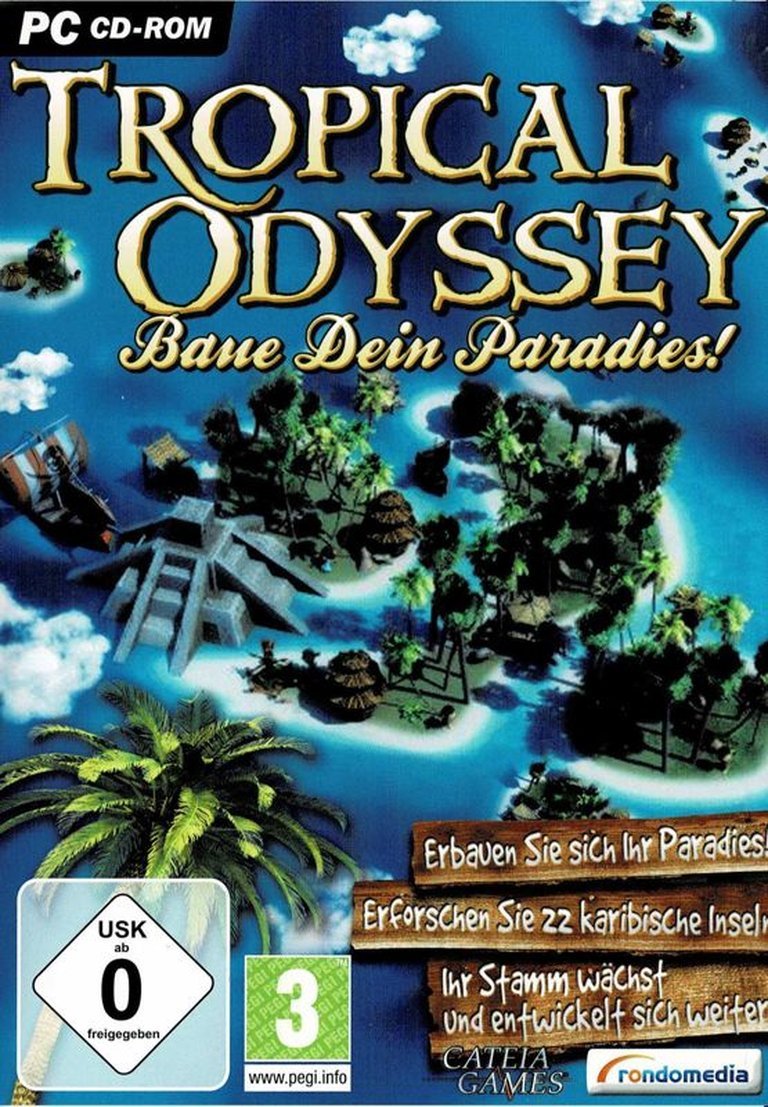
Description
In Shaman Odyssey: Tropic Adventure, players embody a tribal shaman discovering 22 tropical islands, where they must build and expand villages, construct shelters for inhabitants, gather herbs and plants to brew medicines and potions, and defend against pirates, sharks, and evil spirits to ensure the survival and prosperity of the tribe in this city-building simulation and time management game.
Gameplay Videos
Shaman Odyssey: Tropic Adventure Guides & Walkthroughs
Shaman Odyssey: Tropic Adventure Reviews & Reception
gamezebo.com : wholly unoriginal premise and lacklustre gameplay is a bit of a disappointment.
Shaman Odyssey: Tropic Adventure: Review
Introduction
Imagine washing ashore on sun-drenched tropical islands, not as a shipwrecked adventurer, but as a mystical shaman tasked with rebuilding a fractured tribe amid sharks, ghosts, and pirate raids—a premise that evokes the serene yet perilous vibes of Virtual Villagers meets ancient folklore. Released in 2009, Shaman Odyssey: Tropic Adventure (also known as Tropical Odyssey: Baue Dein Paradies! in some markets) is a modest entry in the casual simulation genre, developed by the Croatian studio Cateia d.o.o. In an era dominated by time-management hits like Build-a-lot and emerging social sims, this game promised a laid-back odyssey of village-building and spirit-warding. Yet, its legacy is one of obscurity, with scant reviews and no enduring cult following. My thesis: Shaman Odyssey is a quintessential artifact of late-2000s casual gaming—charming in its tropical escapism and innovative camera controls, but ultimately undermined by repetitive mechanics, absent challenge, and a narrative too thin to sustain its 22 islands, rendering it a relaxing diversion rather than a genre-defining triumph.
Development History & Context
Cateia d.o.o., a small Croatian developer (later branded as Cateia Games), crafted Shaman Odyssey amid the booming casual games market of the late 2000s. Founded in the post-Yugoslav tech scene, Cateia specialized in accessible PC titles for European publishers like Germany’s rondomedia Marketing & Vertriebs GmbH and Layernet GmbH, who handled the 2009 Windows release, followed by a 2010 Macintosh port. Libredia also distributed it digitally via platforms like GamersGate (with SecuROM DRM in some versions) and later Zoom Platform (DRM-free).
The game’s vision centered on empowering players as a tribal shaman in a “tropical Laguna” paradise threatened by natural and supernatural perils—pirates, sharks, storms, and spirits—reflecting a blend of city-builder simulation and light defense. Technologically, it was humble: built for Windows XP/Vista/7 with DirectX 9 compatibility, a 1 GHz CPU, 256 MB RAM, and a 64 MB VRAM GPU. This aligned with the era’s browser-portal dominance (Big Fish Games, Gamezebo), where low-spec games thrived on point-and-click interfaces and fixed/flip-screen visuals from a diagonal-down perspective. The gaming landscape was shifting from Flash-based time-managers to fuller sims like Virtual Villagers: A New Home (2009 DS port), which shared island-building themes. Constraints like real-time pacing without multi-monitor or widescreen support (per PCGamingWiki) betrayed its budget roots, prioritizing mouse-driven accessibility over polish. No patches or expansions followed, and by 2025, it’s a relic on abandonware-adjacent sites, underscoring Cateia’s fleeting presence before fading into obscurity.
Narrative & Thematic Deep Dive
At its core, Shaman Odyssey weaves a straightforward tale of tribal reunification. You embody a young shaman (customizable as male or female) visited by an ancestral spirit, who reveals your people scattered across 22 islands after unspecified calamities. Your odyssey: gather villagers, build shelters, brew potions, and fend off threats to forge a “true home.” Dialogue is sparse and functional—banal exchanges like the spirit warning, “There are more sharks, and you need to gather more food,” met with the shaman’s compliant “Ok, I’ll take care of it.” No deep lore or character arcs emerge; villagers are anonymous toilers, their “random ailments” mere gameplay prompts.
Thematically, it explores survival and harmony in paradise lost. Tropical idylls mask dangers—sharks symbolize primal sea threats, ghosts restless ancestors, pirates colonial intruders—echoing Polynesian shamanism blended with Western escapist fantasy. Happiness mechanics tie into communal bonds: villagers breed children in upgraded huts only when “hearts” appear, reinforcing family and prosperity motifs. Yet, the narrative falters in execution. Tutorials dump mechanics via info-overload (unlike Build-a-lot‘s pacing), and progression feels procedural, not epic. Levels escalate from basics (build a hut) to wonders (a central statue in Level 22), but without branching stories or moral choices, it’s a thin veneer over resource-grinding. Subtle nods to environmentalism (herb regrowth, storm warnings) add flavor, but the spirit’s repetitive guidance undermines agency, making the “odyssey” more checklist than mythic journey.
Gameplay Mechanics & Systems
Shaman Odyssey‘s core loop is a relaxing city-builder hybrid with time-management undertones, spanning 22 untimed levels (save rare 10-minute storms/pirate raids). As shaman, you point-and-click across islands, buying blueprints at your tent with seashells (beach-collected), then constructing on lots: huts (housing/population), woodcutters/stonecutters (resources), fisherman’s huts/gardens (food), storage (caps from 25/35/50/99 units), and totems (happiness boosts).
Core Loops and Progression
Resources accrue passively via villagers post-construction, but you micromanage as shaman: harvesting herbs/plants (regrow quickly) for potions brewed at the cauldron. Potions cure illnesses (hover bubbles reveal needs; timers tick down or happiness drops), repel sharks/ghosts, or enable upgrades. Happiness governs everything—daily hut sleeps boost it, exposure/sharks tank it below 30% (level fail). Population grows via children in Level 2+ huts under high happiness, unlocking more workers.
Combat and Defense
“Combat” is potion-tossing at threats: select from inventory, click sharks/ghosts/pirates. No tactics beyond repelling waves; pirates appear in later timed levels.
UI and Innovation/Flaws
Mouse-centric: dual buttons + scroll wheel enable fluid 3D camera (zoom, pan, tilt—like “walking” the village). UI lists quests, sick villagers, potions; font woes plague it (“1” mimics “2”). Trophies (bronze/silver/gold masks) score on hoarded resources/ingredients/potions/happiness, not speed—encouraging attrition over strategy. Replay levels for better scores sans re-buying blueprints. Flaws abound: pauses on alt-tab (no background play), repetition (identical island layouts), no challenge (wait for quotas). Timed levels demand rushed builds/upgrades, but most reward patience. Progression unlocks blueprints sequentially, gating content smartly, yet lacks depth—no tech trees, trading, or RNG beyond ailments.
| Mechanic | Strengths | Weaknesses |
|---|---|---|
| Building/Upgrading | Intuitive lot-clicking; productivity scales well | Blueprint seashell grind initial hurdle |
| Potions | Varied recipes; regrowing ingredients | Repetitive collection loops |
| Happiness/Population | Organic growth feels rewarding | Brittle—threats snowball failures |
| Scoring | Encourages overproduction | Ignores efficiency, promotes waiting |
Innovative for 2009 casuals: 3D navigation in a 2D-sim mold, but systems lack synergy, devolving into “build, wait, collect.”
World-Building, Art & Sound
Each of 22 islands varies subtly—beaches for shells, grassy herb patches, central construction zones, occasional “poor” starts with sparse resources—fostering a cohesive “tropical Laguna” archipelago. Atmosphere evokes deserted paradise: swaying palms, lapping waves, dynamic storms/tornados. 3D visuals shine in camera freedom, letting you peer into huts or orbit threats, but low detail disappoints up-close (blocky models, dated textures). Fixed/flip-screen limits scope, yet diagonal-down view captures idyllic peril.
Sound design, inferred from trailers/media stubs, leans ambient: gentle waves, tribal flutes, spirit whispers—royalty-free tropes enhancing relaxation. No lauded OST; effects (shark splashes, potion bubbles) are functional. These elements immerse via escapism—zooming feels exploratory—but undetailed art and presumed sparse audio prevent transcendence, suiting passive play over spectacle.
Reception & Legacy
Launch reception was muted: no Metacritic aggregate, MobyGames lacks scores/reviews (added 2024, sparse contribs), MyAbandonware/ModDB note zero votes/comments. Gamezebo’s sole deep critique (Erin Bell, 50/100) praises camera but lambasts unoriginality, repetition, lack of challenge, pausing, and font. No commercial data, but publishers’ casual focus suggests modest sales via CD-ROM/downloads. Evolved rep: obscurity as “no longer abandonware” (Zoom DRM-free), tied to Virtual Villagers in groups. Influence negligible—predates mobile sims (Hay Day), echoes in Royal Envoy (2010)—but preserves 2000s PC casuals’ relaxing grind. Forums (Chaos Project ad) hint niche promo; PCGamingWiki stubs underscore unmodded, fix-free status. In history, it’s a footnote: low-PEGI (3+) family sim amid genre glut.
Conclusion
Shaman Odyssey: Tropic Adventure distills casual sim joys—island tinkering, potion-brewing, threat-banishing—into a 22-level chill session, bolstered by savvy 3D camera amid 2009’s low-spec landscape. Yet, its banal narrative, grindy waits, absent tension, and technical quirks (pausing, fonts) hobble replayability, earning a middling place as flawed comfort food. For historians, it’s a preserved snapshot of Cateia’s output and Eastern Euro casuals; players, a 5/10 curiosity for Virtual Villagers fans seeking offline tropics. Not historic, but a harmless odyssey worth a beachy afternoon—bronze mask at best in gaming’s vast archipelago.