
- Release Year: 2010
- Platforms: Windows
- Publisher: Big Fish Games, Inc, Focus Multimedia Ltd.
- Developer: Shanghai Quarter Digital Co., Ltd.
- Genre: Adventure
- Perspective: 1st-person
- Game Mode: Single-player
- Gameplay: Hidden object, Puzzle elements
- Setting: Ancient China
- Average Score: 85/100
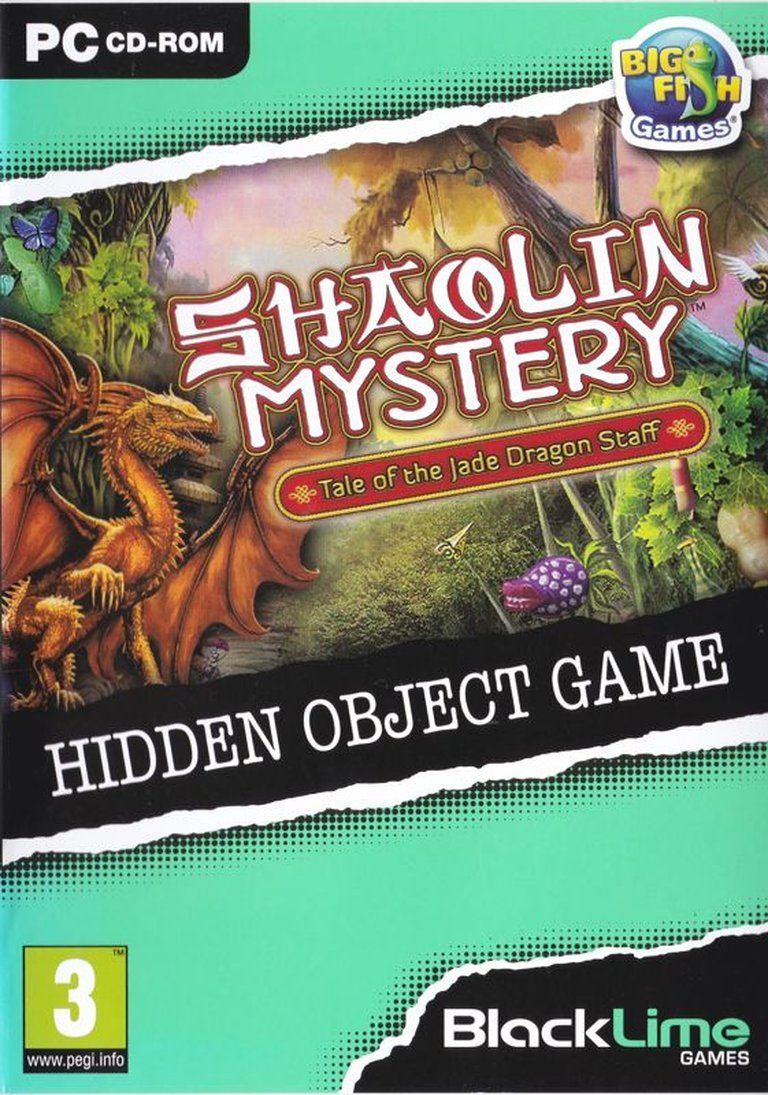
Description
Shaolin Mystery: Tale of the Jade Dragon Staff is a hidden object adventure game set in Ancient China, where the protagonist Yu, a member of the Yan rebellion, must rescue her childhood friend Zihao from Imperial forces after he claims to be the true emperor. The game blends seek-and-find mechanics with point-and-click puzzle-solving, as players collect items to solve challenges and uncover the legendary Jade Dragon Staff to restore Zihao to the throne. With interactive hotspots, mini-games, and a mix of hidden object scenes, the game offers a blend of exploration and strategy in a historically inspired setting.
Gameplay Videos
Shaolin Mystery: Tale of the Jade Dragon Staff Free Download
Shaolin Mystery: Tale of the Jade Dragon Staff Guides & Walkthroughs
Shaolin Mystery: Tale of the Jade Dragon Staff Reviews & Reception
jayisgames.com (85/100): An adventure of epic proportions. Perfect for young readers.
absolutist.com : The graphics of the game is notable for the pastel shades, smoothness and details.
Shaolin Mystery: Tale of the Jade Dragon Staff: A Comprehensive Retrospective
Introduction: A Hidden Gem in the Hidden Object Genre
Shaolin Mystery: Tale of the Jade Dragon Staff (2010) is a hidden object adventure game that emerged during the golden age of casual gaming, a period when titles like Mystery Case Files and Azada dominated digital storefronts. Developed by Shanghai Quarter Digital Co., Ltd. and published by Big Fish Games and Focus Multimedia, it stands as a fascinating artifact of its time—a game that attempted to blend narrative depth, cultural authenticity, and innovative puzzle design within the constraints of the hidden object genre. While it may not have achieved the same level of recognition as some of its contemporaries, Shaolin Mystery offers a uniquely immersive experience that warrants a closer examination.
This review will dissect the game’s development history, narrative structure, gameplay mechanics, artistic design, and legacy, arguing that Shaolin Mystery is a noteworthy example of how cultural storytelling can elevate a seemingly straightforward genre. Despite its flaws, the game’s ambitious world-building and commitment to its historical setting make it a standout title in the hidden object canon.
Development History & Context: The Rise of Hidden Object Games
The Studio and Its Vision
Shanghai Quarter Digital Co., Ltd., the developer behind Shaolin Mystery, was part of a wave of Chinese studios that began gaining traction in the global casual gaming market in the late 2000s. The studio’s portfolio includes other hidden object titles like Mystery Age: The Imperial Staff (2009), which shares thematic and mechanical similarities with Shaolin Mystery. The team was led by Xu BinJian, who served as both lead designer and project manager, and Wang GuiPing, the producer. The art direction was helmed by Qian YuLan, whose work on the game’s visuals reflects a deep appreciation for traditional Chinese aesthetics.
The game’s development coincided with a boom in the hidden object genre, which was fueled by the rise of digital distribution platforms like Big Fish Games. These platforms allowed smaller studios to reach a global audience without the need for physical retail distribution. Shaolin Mystery was designed to cater to the growing demand for narrative-driven hidden object games, which were increasingly incorporating adventure game elements to appeal to a broader audience.
Technological Constraints and Design Choices
Released in 2010, Shaolin Mystery was built using the technological standards of its time. The game was optimized for Windows PCs, with a focus on accessibility and low system requirements—a necessity for the casual gaming market. The engine used was likely a proprietary or licensed tool common among hidden object developers, prioritizing ease of use for both developers and players.
One of the most notable design choices was the game’s first-person perspective, which was somewhat unusual for hidden object games of the era. While many titles in the genre adopted a third-person or fixed-camera viewpoint, Shaolin Mystery opted for a more immersive approach, placing the player directly in the shoes of the protagonist, Yu. This decision was likely influenced by the desire to create a stronger sense of presence and engagement, particularly given the game’s emphasis on exploration and interaction.
The Gaming Landscape in 2010
The year 2010 was a pivotal one for casual gaming. The hidden object genre was at its peak, with titles like Mystery Case Files: Return to Ravenhearst and Dark Parables: The Exiled Prince setting high standards for storytelling and production values. Meanwhile, the adventure game revival was in full swing, thanks in part to the success of Telltale Games’ episodic titles and the growing popularity of indie games like Machinarium.
Shaolin Mystery entered this competitive landscape with a unique selling point: its setting and cultural authenticity. While many hidden object games drew inspiration from European folklore or American mystery tropes, Shaolin Mystery stood out by immersing players in ancient China, complete with references to Shaolin monks, imperial politics, and mythological creatures. This cultural specificity was both a strength and a potential barrier, as it required players to engage with unfamiliar themes and aesthetics.
Narrative & Thematic Deep Dive: A Tale of Rebellion and Mythology
Plot Summary and Structure
Shaolin Mystery follows the journey of Yu, a member of the Yan rebellion fighting against the oppressive Imperial forces in ancient China. The story begins when Yu witnesses the arrest of her childhood friend, Zihao, who claims to be the true emperor and rightful heir to the throne. To prove his legitimacy and save him from execution, Yu must embark on a quest to retrieve the Jade Dragon Staff, a mythical artifact that serves as a symbol of imperial authority.
The narrative is divided into seven chapters, each representing a distinct location and set of challenges:
- A Chance Encounter – Yu’s introduction to the quest, involving a jailbreak and the retrieval of initial clues.
- The Road Ahead – A journey through a bustling marketplace and an inn, where Yu gathers resources and allies.
- The Dragon Staff – Exploration of a ruined temple and the first major puzzle involving the staff’s fragments.
- The Forest of Spirits – A venture into a mystical forest filled with supernatural entities and trials.
- The Dragon King – An underwater adventure in a realm ruled by a dragon king, featuring unique environmental puzzles.
- The Hidden Temple – A test of wit and courage in a temple guarded by spirits and ancient warriors.
- The Tree of Ages – The final chapter, where Yu must restore the Jade Dragon Staff and return to save Zihao.
The structure is linear, with each chapter introducing new characters, puzzles, and hidden object scenes. The pacing is deliberate, allowing players to gradually uncover the game’s lore and mechanics.
Characters and Dialogue
The game’s cast is relatively small but memorable, with each character serving a specific narrative or mechanical purpose:
- Yu – The protagonist, whose determination and resourcefulness drive the story forward. Her motivations are clear: save Zihao and restore justice to the empire.
- Zihao – The imprisoned friend and rightful emperor, whose fate hangs in the balance. His role is largely symbolic, representing the hope of a better future.
- The Monk – A wise but enigmatic figure who aids Yu in her quest, embodying the spiritual and philosophical themes of the game.
- The Dragon King – A mythological entity who tests Yu’s resolve, adding a layer of fantasy to the historical setting.
- Various NPCs – Including a puppeteer, an innkeeper, and a gambler, who provide side quests and puzzles.
The dialogue is functional rather than profound, serving primarily to advance the plot and explain objectives. However, the game’s narrative delivery is enhanced by its visual storytelling, with environmental details and item descriptions adding depth to the world.
Themes: Rebellion, Destiny, and Cultural Identity
Shaolin Mystery explores several interconnected themes:
-
Rebellion and Justice – The game’s central conflict revolves around the struggle against tyranny, with Yu’s journey symbolizing the fight for freedom and legitimacy. This theme is reinforced by the historical setting, which draws parallels to real-world dynasties and uprisings in Chinese history.
-
Destiny and Legacy – The Jade Dragon Staff is not just a tool but a symbol of destiny. Zihao’s claim to the throne and Yu’s quest to restore it reflect the idea that true leadership is earned through courage and sacrifice.
-
Cultural Identity – The game’s setting is steeped in Chinese mythology and tradition, from the Shaolin monks to the dragon kings. This cultural specificity sets Shaolin Mystery apart from other hidden object games, which often rely on generic fantasy or horror tropes.
-
The Supernatural and the Mundane – The game blends historical realism with mythological elements, creating a world where spirits, dragons, and ancient artifacts coexist with everyday life. This duality is central to the game’s appeal, offering players a sense of wonder and discovery.
Narrative Strengths and Weaknesses
Strengths:
– Cultural Authenticity – The game’s commitment to its setting is commendable, with attention to detail in both visuals and lore.
– Pacing and Progression – The chapter-based structure ensures a steady flow of new challenges and revelations, keeping players engaged.
– Symbolism – The Jade Dragon Staff serves as a powerful narrative device, tying together the themes of rebellion, destiny, and cultural identity.
Weaknesses:
– Underdeveloped Characters – While Yu is a compelling protagonist, many secondary characters lack depth, serving primarily as quest givers or puzzle facilitators.
– Narrative Delivery – The game’s reliance on text-based dialogue and static cutscenes limits its emotional impact. A more dynamic presentation (e.g., voice acting, animated sequences) could have elevated the storytelling.
– Anticlimactic Resolution – As noted in contemporary reviews, the game’s ending feels rushed, with Yu’s return to save Zihao depicted in a slideshow rather than an interactive sequence. This undermines the sense of agency that the game otherwise cultivates.
Gameplay Mechanics & Systems: The Hidden Object Adventure Hybrid
Core Gameplay Loop
Shaolin Mystery is fundamentally a hidden object adventure game, blending two distinct but complementary genres:
- Hidden Object Scenes – Players must locate items from a list within cluttered environments. These scenes are triggered at specific points in the narrative, often as a prerequisite for advancing the plot.
- Adventure Game Mechanics – The game incorporates inventory management, puzzle-solving, and environmental interaction, requiring players to use collected items to overcome obstacles.
The core loop can be summarized as follows:
– Explore a new location.
– Identify interactive hotspots (marked by sparkles or cursor changes).
– Solve hidden object scenes to acquire necessary items.
– Use items from the inventory to progress (e.g., combining objects, unlocking doors).
– Complete mini-games or puzzles to advance the story.
This loop is repeated throughout the game’s seven chapters, with each location introducing new variations on the formula.
Hidden Object Mechanics
The hidden object scenes in Shaolin Mystery are designed with a few key features:
- Randomized Lists – The items to find in each scene are randomized, ensuring replayability. However, some objects (marked in turquoise) are consistent, serving as key items for progression.
- Hint System – A rechargeable hint button (represented by a green gem) assists players who are stuck. The hint system is forgiving, with no penalties for overuse.
- Interactive Hotspots – Some scenes feature special hotspots that, when activated, display a circle of items that must be collected to perform an action (e.g., repairing a tool, unlocking a door).
The hidden object scenes are generally well-designed, though some suffer from cluttered visuals and arbitrary item placement. For example, objects like a “dragon egg” or “guard’s badge” are often tucked away in illogical locations, requiring players to scan every pixel of the screen.
Puzzle Design and Mini-Games
Shaolin Mystery excels in its puzzle variety, offering a mix of familiar and innovative challenges:
- Inventory-Based Puzzles – Players must combine items or use them in specific ways (e.g., using a fishing rod to retrieve a bottle, grinding beans into powder).
- Mini-Games – These include:
- Sliding Puzzles – Rearranging tiles to form a complete image.
- Maze Puzzles – Guiding a rat through a labyrinth using cheese.
- Logic Puzzles – Solving riddles or matching symbols (e.g., the animal lantern puzzle in Chapter 2).
- Mechanical Puzzles – Manipulating gears, levers, or other devices (e.g., the cage pulley in Chapter 4).
- Environmental Puzzles – These require players to interact with the world in creative ways, such as using a lit candle to reveal a hidden compartment or feeding a dragon to retrieve an item.
The mini-games are a highlight of the experience, offering meaningful breaks from the hidden object scenes. Many of these puzzles are skippable, ensuring that players who prefer exploration over problem-solving are not stuck.
Inventory and Item Management
The inventory system is straightforward, with items stored in slots at the bottom of the screen. Players can drag and drop items onto interactive hotspots to use them. Some items must be assembled before they can be used, requiring players to collect multiple components (e.g., gathering pieces of a fishing rod or a mirror).
The inventory system is intuitive but occasionally suffers from ambiguity. For example, it is not always clear which items can be combined or how they should be used. This can lead to frustration, particularly in later chapters where puzzles become more complex.
User Interface and Accessibility
The UI is clean and functional, with the following elements:
– Task List – Displays current objectives, helping players stay on track.
– Hint Button – Provides assistance during hidden object scenes.
– Menu – Allows players to adjust settings, access the map, or exit the game.
The game’s accessibility features are notable for the time:
– No Click Penalties – Players can click freely without fear of losing progress.
– Unlimited Hints – The hint system is generous, ensuring that players are never permanently stuck.
– Skip Options – Mini-games can be skipped after a short wait, catering to players who prefer narrative over puzzles.
However, the lack of a map or fast-travel system can make backtracking tedious, particularly in later chapters where players must revisit multiple locations.
Innovations and Flaws
Innovations:
– Cultural Integration – The game’s puzzles and items are deeply tied to its setting, creating a cohesive experience. For example, the animal lantern puzzle draws on the Chinese zodiac, while the dragon king’s trials are rooted in mythology.
– Varied Puzzle Design – The mini-games are diverse and often creative, avoiding the repetition that plagues many hidden object titles.
– Narrative-Driven Progression – Unlike some hidden object games that feel like a series of disconnected scenes, Shaolin Mystery ties its puzzles and exploration to a compelling overarching story.
Flaws:
– Cluttered Hidden Object Scenes – Some environments are overly busy, making it difficult to distinguish between interactive objects and background details.
– Arbitrary Item Placement – The logic behind where items are hidden can be inconsistent, leading to frustration.
– Limited Character Interaction – Many NPCs serve as little more than puzzle dispensers, missing an opportunity for deeper storytelling.
World-Building, Art & Sound: Crafting Ancient China
Setting and Atmosphere
Shaolin Mystery transports players to a richly detailed version of ancient China, blending historical accuracy with mythological flourishes. The game’s locations are diverse and atmospheric:
- The City of Xian – A bustling marketplace filled with merchants, rebels, and imperial guards. The cityscape is vibrant, with lanterns, stalls, and traditional architecture.
- The Ruined Temple – A crumbling relic of a bygone era, filled with statues, puzzles, and hidden chambers.
- The Forest of Spirits – A mystical woodland inhabited by gargoyles, spirits, and enchanted creatures. The forest is eerie yet beautiful, with misty pathways and ancient trees.
- The Dragon King’s Realm – An underwater palace ruled by a mythical dragon, featuring coral towers, glowing pearls, and aquatic puzzles.
- The Hidden Temple – A sacred site guarded by spirits and warriors, where Yu must prove her worth through trials.
Each location is distinct, with its own visual identity and thematic tone. The game’s world-building is one of its strongest assets, immersing players in a setting that feels both authentic and fantastical.
Visual Design and Art Direction
The art style of Shaolin Mystery is a fusion of traditional Chinese aesthetics and digital painting techniques. The backgrounds are hand-painted, with intricate details that evoke classical Chinese art. The color palette is rich and varied, with warm hues dominating the city scenes and cooler tones in the forest and underwater realms.
Key visual elements include:
– Architecture – The game features authentic Chinese structures, from pagodas and temples to humble huts and market stalls.
– Symbolism – Dragons, phoenixes, and other mythological creatures are prominently featured, reinforcing the game’s cultural themes.
– Character Design – The characters are rendered in a semi-realistic style, with expressive faces and detailed costumes. Yu’s design, in particular, reflects her role as a rebel, with practical clothing and a determined demeanor.
The visuals are generally impressive, though some hidden object scenes suffer from overcrowding, with too many objects crammed into a single frame. This can make it difficult to parse the environment, particularly in scenes where items are small or similarly colored.
Sound Design and Music
The audio design in Shaolin Mystery is functional but unremarkable. The game features:
– Ambient Soundscapes – Each location has its own atmospheric sounds, from the bustling noises of the marketplace to the eerie whispers of the forest.
– Sound Effects – Interactive objects produce appropriate sounds (e.g., the clinking of items, the creaking of doors), enhancing immersion.
– Music – The soundtrack, composed by Li Ming, is a mix of traditional Chinese instruments and orchestral arrangements. The music is evocative but repetitive, with a few key themes recurring throughout the game.
The voice acting is minimal, with most dialogue delivered via text. This was a common limitation of casual games in 2010, but it does detract from the emotional impact of the story. A more robust audio presentation could have elevated the narrative significantly.
Contribution to the Overall Experience
The art and sound design work in tandem to create a cohesive and immersive world. The visuals are the standout feature, with their attention to cultural detail and atmospheric depth. The sound design, while not groundbreaking, complements the visuals effectively, reinforcing the game’s setting and tone.
However, the lack of dynamic audio (e.g., voice acting, adaptive music) limits the game’s ability to fully engage players on an emotional level. This is a missed opportunity, particularly given the game’s strong narrative foundation.
Reception & Legacy: A Forgotten Classic?
Critical and Commercial Reception
Shaolin Mystery was released to modest critical acclaim and limited commercial success. Contemporary reviews praised its cultural authenticity, puzzle variety, and immersive setting, but criticized its repetitive gameplay, underdeveloped characters, and anticlimactic ending.
- Jay Is Games gave the game a 3.5/5, noting that it “holds its own” visually but lacks the polish of top-tier hidden object games. The review highlighted the game’s lateral puzzles and gorgeous locations as strengths, while criticizing the unengaged narration and sequential progression.
- Omnimystery News described the game as a “fun and exciting hidden object puzzle adventure,” emphasizing its epic journey and fantastic locations.
- Big Fish Games users rated the game positively, with many praising its unique setting and challenging puzzles.
Commercially, Shaolin Mystery did not achieve the same level of success as other Big Fish Games titles, such as Mystery Case Files or Dark Parables. Its niche appeal—rooted in its cultural specificity—may have limited its mainstream popularity. However, it found a dedicated fanbase among players who appreciated its historical and mythological depth.
Evolution of Reputation
In the years since its release, Shaolin Mystery has gained a cult following among hidden object enthusiasts. It is often cited as an underappreciated gem, particularly for its ambitious world-building and cultural representation. The game’s reputation has benefited from:
– Retrospective Analysis – Modern reviews and let’s plays have highlighted the game’s strengths, particularly its atmospheric design and puzzle creativity.
– Cultural Appreciation – As the gaming industry has placed greater emphasis on diversity and representation, Shaolin Mystery has been recognized for its authentic portrayal of Chinese mythology and history.
– Nostalgia – For players who grew up with casual games in the late 2000s, Shaolin Mystery holds a nostalgic appeal, representing a time when hidden object games were at their peak.
Influence on Subsequent Games
While Shaolin Mystery did not spawn a direct sequel, its design philosophies have influenced later titles in the genre:
– Cultural Settings – Games like Mystery of the Ancients: Blackbeard’s Treasure and Dark Parables: The Swan Princess have embraced historical and mythological settings, drawing inspiration from Shaolin Mystery’s success in blending culture with gameplay.
– Puzzle Diversity – The game’s varied mini-games set a precedent for later hidden object titles, which increasingly incorporated adventure game mechanics to appeal to a broader audience.
– Narrative Integration – Shaolin Mystery demonstrated the potential for story-driven hidden object games, paving the way for titles like The Silent Age and Eventide: Slavic Fable, which prioritize narrative depth alongside puzzle-solving.
Legacy in the Hidden Object Genre
Shaolin Mystery occupies a unique place in the history of hidden object games. It is neither a blockbuster hit nor a forgotten relic, but rather a cult classic that exemplifies the creative potential of the genre. Its legacy is defined by:
– Cultural Representation – The game remains one of the few hidden object titles to authentically depict Chinese mythology and history, making it a valuable artifact in the genre’s evolution.
– Puzzle Innovation – Its diverse mini-games and inventory-based challenges have inspired subsequent developers to experiment with hybrid gameplay mechanics.
– Niche Appeal – While not a mainstream success, Shaolin Mystery has endured in the memories of players who appreciate its ambition and authenticity.
Conclusion: A Hidden Object Masterpiece in the Making
Shaolin Mystery: Tale of the Jade Dragon Staff is a flawed but fascinating entry in the hidden object genre. It stands out for its rich cultural setting, diverse puzzles, and immersive world-building, even as it stumbles in narrative delivery and character development. The game’s ambition is evident in every aspect of its design, from its hand-painted backgrounds to its mythological storytelling, making it a noteworthy achievement in casual gaming.
Final Verdict
Strengths:
✅ Cultural Authenticity – A rare and authentic depiction of ancient China in gaming.
✅ Puzzle Variety – A wide range of mini-games and challenges that keep gameplay fresh.
✅ Atmospheric World-Building – Beautifully crafted locations that immerse players in the setting.
✅ Accessibility – Forgiving hint system and skippable puzzles cater to a broad audience.
Weaknesses:
❌ Underdeveloped Characters – Secondary characters lack depth and emotional resonance.
❌ Anticlimactic Ending – The conclusion feels rushed and unsatisfying.
❌ Cluttered Hidden Object Scenes – Some environments are overly busy, leading to frustration.
❌ Repetitive Audio – The soundtrack and sound design are functional but unremarkable.
Place in Video Game History
Shaolin Mystery is not a revolutionary game, but it is a significant one. It represents a bold experiment in blending cultural storytelling with casual gameplay, proving that hidden object games could be more than just item-hunting exercises. While it may not have achieved the commercial success of its contemporaries, its artistic vision and narrative ambition ensure its place as a cult classic in the genre.
For players who appreciate atmospheric adventures, cultural depth, and creative puzzles, Shaolin Mystery is a hidden gem worth rediscovering. It is a testament to the potential of the hidden object genre and a reminder that even within the constraints of casual gaming, great storytelling can thrive.
Final Score: 7.5/10 – A Flawed but Memorable Journey Through Ancient China