
- Release Year: 2009
- Platforms: OnLive, PlayStation 3, Windows, Xbox 360
- Publisher: Eidos Interactive Limited, Mastertronic Games Ltd., Noviy Disk
- Developer: Rebellion Developments Ltd.
- Genre: Action
- Perspective: 1st-person
- Game Mode: Single-player
- Gameplay: Quick Time Events, Shooter
- Setting: 1960s, Asia, Cold War, Vietnam War
- Average Score: 38/100
Description
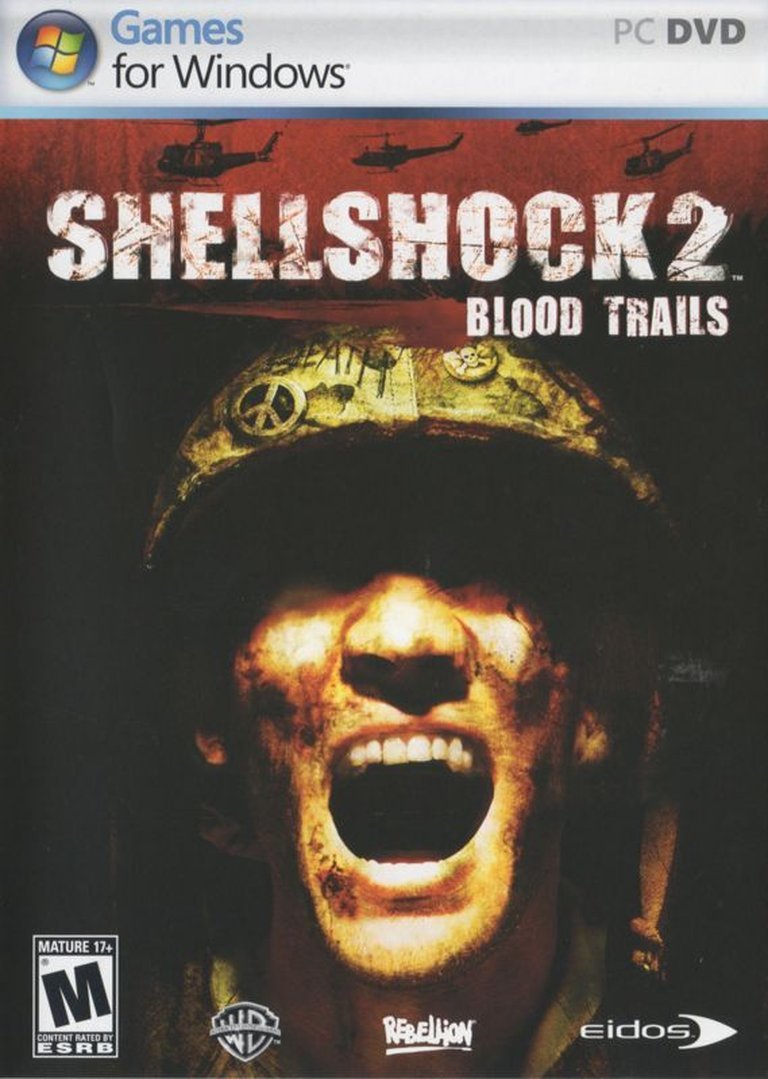
Shellshock 2: Blood Trails is a first-person shooter set during the Vietnam War, blending military combat with horror elements. Players assume the role of Nate Walker, a soldier tasked with hunting down his infected brother, Cal, who escaped after a mission involving a crashed plane carrying a deadly bio-weapon codenamed ‘Whiteknight.’ As Nate ventures through war-torn jungles and overrun outposts, he battles Vietcong forces and horrifying, virus-mutated enemies while uncovering the dark secrets of the experiment. The game emphasizes visceral combat, quick-time events, and gruesome imagery, immersing players in a tense, gory narrative.
Gameplay Videos
Shellshock 2: Blood Trails Free Download
Shellshock 2: Blood Trails Cracks & Fixes
Shellshock 2: Blood Trails Mods
Shellshock 2: Blood Trails Reviews & Reception
metacritic.com (30/100): A budget title that can’t match up to top-tier shooters and only offers ten brief stages.
ign.com (46/100): ShellShock 2: Blood Trails places you in a war where fear takes on a whole new meaning.
gamesradar.com : It could have been so good, but everything is so underplayed.
Shellshock 2: Blood Trails: Review
In the crowded landscape of early 2000s first-person shooters, few titles stand out as boldly as Shellshock 2: Blood Trails. Released in 2009 by Rebellion Developments and published by Eidos Interactive, this game attempted to blend the gritty realism of the Vietnam War with the visceral horror of zombie survival. However, its ambitious vision was marred by technical shortcomings and a lack of polish, resulting in a title that, despite its innovative premise, failed to leave a lasting impact. This review will delve into the game’s development history, narrative depth, gameplay mechanics, world-building, critical reception, and ultimate legacy.
Development History & Context
Rebellion Developments, the studio behind Shellshock 2: Blood Trails, had a modest track record but was known for its willingness to experiment with unique concepts. The studio was founded by brothers Jason Kingsley and Chris Kingsley, who served as CEO and CTO, respectively. The development team for Shellshock 2 included a diverse group of 246 individuals, each contributing to various aspects of the game’s creation.
The technological constraints of the era were significant. The game was developed for the PlayStation 3, Xbox 360, and Windows, platforms that were still finding their footing in terms of graphical capabilities and processing power. The Asura engine, used for the game’s graphics, was relatively new and untested, leading to several performance issues and visual glitches.
The gaming landscape at the time was dominated by high-budget, polished titles like Call of Duty 4: Modern Warfare and Halo 3. Shellshock 2 aimed to carve out a niche by offering a unique blend of historical warfare and survival horror, a combination that had not been extensively explored. However, the studio’s limited resources and the ambitious scope of the project ultimately led to a game that felt rushed and underdeveloped.
Narrative & Thematic Deep Dive
Shellshock 2: Blood Trails tells the story of Private Nathaniel “Nate” Walker, a newly drafted soldier sent to Vietnam to investigate a mysterious biological weapon codenamed “Whiteknight”. The weapon, created by a rogue scientist, has the power to turn humans into mindless, zombie-like creatures. Nate’s mission is complicated by the fact that his older brother, Sergeant Caleb “Cal” Walker, was the sole survivor of a previous mission to retrieve Whiteknight and has since been infected by the virus.
The narrative is structured around Nate’s quest to find Cal and uncover the truth behind Whiteknight. Along the way, Nate encounters a variety of challenges, including Viet Cong and North Vietnamese Army units, as well as the infected victims of Whiteknight. The story is told through a series of linear levels, each culminating in a scripted event or boss battle.
The dialogue in Shellshock 2 is serviceable but often feels stilted and unnatural. The characters, while well-intentioned, lack depth and development, making it difficult for players to form a strong emotional connection with them. The themes of brotherhood, survival, and the horrors of war are present but are not explored in a way that feels meaningful or impactful.
One of the game’s most notable narrative devices is the use of quick time events (QTEs) to resolve combat situations. While these events add a layer of interactivity, they often feel gimmicky and out of place, detracting from the overall immersion.
Gameplay Mechanics & Systems
Shellshock 2: Blood Trails is a first-person shooter at its core, but it incorporates elements of survival horror and stealth to create a unique gameplay experience. Players control Nate, navigating through a series of linear levels filled with enemies and environmental hazards.
The core gameplay loop involves exploring environments, engaging in combat, and solving simple puzzles. Combat is handled through a traditional FPS control scheme, with players using a variety of weapons to dispatch enemies. The game features a universal ammo system, where all weapons use the same type of ammunition, simplifying inventory management but reducing tactical depth.
Character progression is minimal, with players focusing more on survival than skill development. The user interface (UI) is functional but unremarkable, providing essential information without adding much to the overall experience.
One of the game’s most controversial mechanics is the use of QTEs during combat. These events require players to press a series of buttons quickly to avoid or mitigate damage, adding a layer of interactivity but often feeling out of place in a first-person shooter. The field of view (FOV) is also a point of contention, with many players finding it too narrow and claustrophobic.
The game’s artificial intelligence (AI) is another area of concern. Enemies often exhibit unnatural behavior, such as teleporting into the player’s line of sight or failing to react to environmental changes. This, combined with the game’s linear level design, results in a gameplay experience that feels more like a scripted event than an organic interaction.
World-Building, Art & Sound
Shellshock 2: Blood Trails is set during the Vietnam War, a conflict known for its brutal and chaotic nature. The game’s world-building attempts to capture the grimy, desperate atmosphere of the era, with environments ranging from dense jungles to abandoned temples and military bases.
The visual direction of the game is a mixed bag. While the environments are detailed and atmospheric, the character models and animations are noticeably dated, reflecting the technological limitations of the time. The game’s use of gore and violence is unflinching, with enemies dismembering and exploding in a spray of blood and viscera.
The sound design is one of the game’s stronger elements, with a soundtrack that effectively captures the mood of the era. The use of ambient sounds, such as distant gunfire and the hum of insects, adds to the immersion, while the voice acting is serviceable if not exceptional.
The game’s atmosphere is its strongest suit, with a sense of dread and tension that permeates every level. However, this atmosphere is often undermined by technical issues and design flaws, resulting in a game that feels more like a missed opportunity than a success.
Reception & Legacy
Shellshock 2: Blood Trails received “generally unfavorable” reviews upon its release, with critics citing its technical issues, uninspired gameplay, and lack of innovation. The game’s Metacritic scores reflect this, with the PC version receiving a 40/100, the PlayStation 3 version a 35/100, and the Xbox 360 version a 30/100.
Critics praised the game’s atmosphere and soundtrack, but these were not enough to save it from its numerous flaws. The game’s linear level design, clumsy graphics, and uninspired combat were frequent points of criticism, with many reviewers finding it difficult to recommend the game to anyone but the most dedicated fans of the genre.
The game’s commercial performance was equally disappointing, with low sales figures and a lack of lasting impact on the industry. The game was banned in Australia and Germany due to its high levels of violence, further limiting its reach.
Despite its flaws, Shellshock 2: Blood Trails has a certain cult following among fans of niche genres. Its unique blend of historical warfare and survival horror, while not executed perfectly, offers a glimpse of what could have been. The game’s legacy is that of a missed opportunity, a title that had the potential to be something special but ultimately fell short of its ambitions.
Conclusion
Shellshock 2: Blood Trails is a game that, despite its innovative premise and atmospheric world-building, fails to deliver on its promise. Technical issues, uninspired gameplay, and a lack of polish result in a title that is difficult to recommend, even to fans of the genre. However, the game’s unique setting and themes offer a glimpse of what could have been, and it remains a fascinating artifact of a time when developers were willing to take risks and experiment with new ideas.
In the end, Shellshock 2: Blood Trails is a game that is more notable for its flaws than its successes. It is a reminder of the challenges and pitfalls of game development, and a testament to the importance of polish and refinement in creating a compelling gaming experience. While it may not be a title that stands the test of time, it is one that deserves to be remembered for its ambition and its attempt to push the boundaries of the genre.