
- Release Year: 2000
- Platforms: Windows
- Publisher: MagnaMedia
- Developer: Studiya Krysha
- Genre: Adventure
- Perspective: 3rd-person (Other)
- Game Mode: Single-player
- Gameplay: Adventure, Point-and-click, Puzzle-solving
- Setting: Cartoon, Comedy, Historical, South America
- Average Score: 55/100
Description
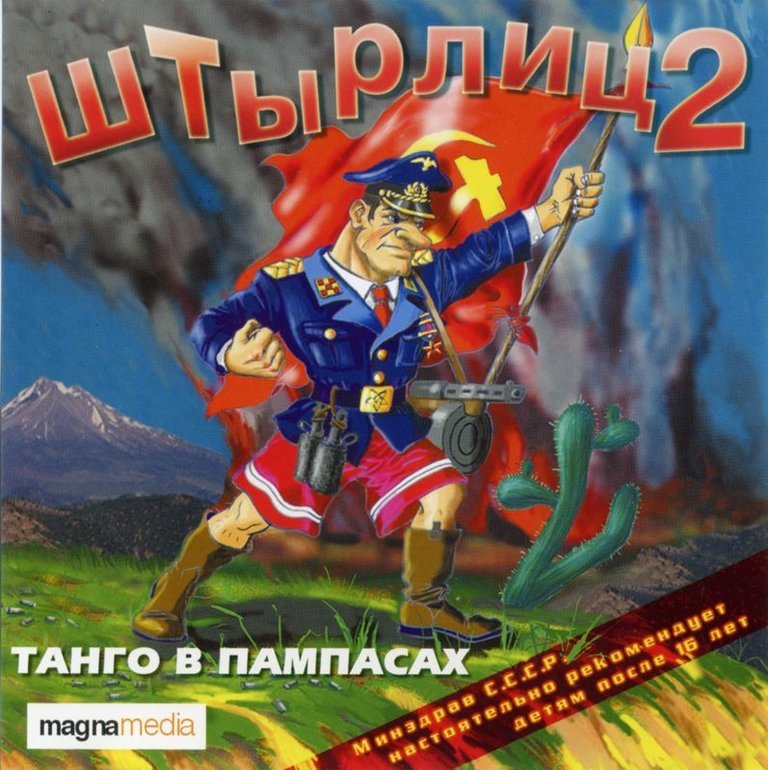
Shtyrlitz 2: Tango v Pampasah is a cartoon-style adventure game and sequel that sends the bumbling Russian spy Shtyrlitz to the Andes in Argentina, where escaped Nazis are resurfacing after World War II. As a parody of the Soviet TV series ‘Seventeen Moments of Spring’, the game features Shtyrlitz’s twisted logic as he solves puzzles and confronts enemies in this humorous commercial release.
Shtyrlitz 2: Tango v Pampasah Cracks & Fixes
Shtyrlitz 2: Tango v Pampasah: Review
Introduction
In the annals of video game satire, few franchises capture the absurdity of post-Soviet culture and historical parody quite like the Shtyrlitz series. Released in 2000 by Russian developer Studiya Krysha and publisher MagnaMedia, Shtyrlitz 2: Tango v Pampasah (literally “Shtyrlitz 2: Tango in the Pampas”) stands as a quintessential example of niche, genre-bending adventure gaming. As a sequel to 1999’s cult hit Shtyrlitz, this title doubles down on its predecessor’s formula: a deranged, deadpan parody of the beloved Soviet television series Seventeen Moments of Spring, reimagining its stoic protagonist as a bumbling, illogical spy thrust into a post-WWII Nazi resurgence in Argentina. This review argues that Tango v Pampasah is a fascinating artifact of early Russian gaming—a flawed yet charming point-and-click adventure whose enduring appeal lies in its unapologetic absurdity, layered cultural satire, and as a time capsule of a bygone era in PC gaming.
Development History & Context
Studiya Krysha, a Russian development collective, emerged in the late 1990s as a purveyor of uniquely local comedic adventures. Following the success of their 1999 debut Shtyrlitz—which parodied Soviet spy tropes for a domestic audience—the studio pivoted to a sequel with publisher MagnaMedia. Development occurred against a backdrop of burgeoning Russian PC gaming, where CD-ROM distribution enabled richer multimedia experiences than the floppy-disk era. Technologically constrained by Windows 98 DirectX 6 standards, the team crafted a cartoon-style world with pre-rendered backgrounds and rudimentary 3D character sprites, forcing creativity within limitations. The game’s vision was explicitly satirical: to weaponize Soviet-era folklore and the iconic Shtyrlitz character—a symbol of stoic heroism—into a vehicle for absurdist humor. This ambition reflected the post-Soviet zeitgeist: a culture grappling with its past, reclaiming history through irony, and finding levity in national mythology.
Narrative & Thematic Deep Dive
Tango v Pampasah’s plot is a masterclass in deliberate absurdity. It posits a world where surviving Nazis fled to Argentina’s Andes, plotting a resurgence under Martin Bormann. Shtyrlitz, now a parody of his original TV incarnation, is dispatched to recover Vladimir Lenin’s stolen cap from a mausoleum—a task blending espionage farce with Soviet reverence. The narrative unfolds through non-sequiturs and anachronisms, eschewing coherence for comedic effect. Shtyrlitz himself is reimagined as an “idiot with a twisted sense of logic,” solving puzzles through illogical leaps (e.g., using a gaucho’s mate tea to disarm a trap). Dialogue drips with deadpan wit and abrupt non-sequiturs, mirroring the Russian anekdot tradition of absurdist jokes. Thematically, the game critiques both Nazi resurgence and Soviet mythmaking, exposing the absurdity of ideological rigidity. The Pampas setting contrasts sharply with the original’s Nazi Germany, symbolizing a global stage where historical villains and symbols clash in farcical chaos.
Gameplay Mechanics & Systems
As a point-and-click adventure, Tango v Pampasah relies on inventory-based puzzles and dialogue choices, but its execution is uniquely idiosyncratic. The core loop involves exploring static, hand-painted environments (e.g., Buenos Aires slums, Andean hideouts) to collect items that defy conventional logic—a bottle of fernet brandy might become a bomb, or a tango CD could unlock a safe. Combat is virtually nonexistent, replaced by “twisted logic” puzzles where solutions require lateral thinking (e.g., feeding a Nazi spy empanadas to induce a food coma). The interface is minimalist: left-click to interact, right-click for contextual actions, with an inventory panel doubling as a repository for baffling collectibles. Progression is linear, though obtuse design often necessitates walkthroughs—a feature the game itself acknowledges in its critical reception. Flaws include pixel-hunting and arbitrary item combinations, yet these frustrations are mitigated by the game’s self-aware humor, turning dead-ends into punchlines.
World-Building, Art & Sound
The game’s setting is a vibrant, cartoonish Argentina rendered in low-resolution 2D, blending South American motifs with Soviet iconography. The Pampas and Andes backdrops evoke a sense of exoticism, juxtaposed with swastika graffiti and Lenin busts to underline the narrative’s clash of symbols. Character designs borrow from Soviet animation: Shtyrlitz’s perpetually furrowed brow and stiff gait mirror his TV counterpart, while Nazis are depicted as bumbling caricatures with oversized mustaches. Sound design is equally eclectic, mixing traditional Argentine folk music with Soviet-era military marches, creating a disorienting yet charming aural landscape. Voice acting (in Russian) is deadpan and stilted, enhancing the game’s comedic tone. The Indeo-video cutscenes, though technically primitive by modern standards, serve as extended gags, further embedding the player in its absurdist universe.
Reception & Legacy
Upon release, Tango v Pampasah polarized critics. Absolute Games awarded it a middling 55%, praising its humor but lamenting its obtuseness: “A stroll through the pampas becomes pleasant and funny… but only with a walkthrough.” Player reviews on MobyGames reflected this divide, with an average score of 1.4/5. Commercially, it was a niche hit in Russia, driven by its cult predecessor’s fanbase. Over time, however, its reputation has evolved. Modern retrospectives, like those on MyAbandonware, celebrate it as a “curated absurdity,” a testament to Russia’s unique comedic voice in gaming. Its legacy is less about influence and more as a cultural touchstone—a reminder of a time when Russian developers subverted global genres through local satire. The Shtyrlitz series itself spawned two sequels (Agent SSSR, Otkrytie Ameriki), cementing Studiya Krysha’s place in adventure gaming history.
Conclusion
Shtyrlitz 2: Tango v Pampasah is far from a perfect game. Its puzzles are frustrating, its production values dated, and its humor an acquired taste. Yet as a historical artifact, it is indispensable. It captures the spirit of late-1990s Russian gaming—a blend of post-Soviet identity, technological limitation, and unbridled creativity—while offering a uniquely hilarious critique of ideology. For fans of absurdist comedy or niche adventures, it remains a worthwhile, if challenging, experience. For historians, it’s a window into a gaming subculture that thrived outside Western AAA markets. In the end, Tango v Pampasah is less a game than a time machine: a flawed, unforgettable romp through the Pampas where Nazis, Lenin, and illogical spies collide, proving that even the most absurd stories deserve a place in history.