
- Release Year: 2020
- Platforms: Macintosh, Windows
- Publisher: Hidden Track
- Developer: Cael O’Sullivan
- Genre: Adventure
- Perspective: 3rd-person (Other)
- Game Mode: Single-player
- Gameplay: Graphic adventure, Puzzle elements
- Setting: Contemporary
Description
Shut In is an indie comedy/horror adventure game that immerses players in a contemporary setting, exploring themes of depression and isolation through its side-scrolling pixel art environment. Players navigate through puzzles and choices that reflect the inner turmoil of mental health crises, blending atmospheric horror with dark humor and a narrator reminiscent of Undertale, all set against the backdrop of quarantine-induced dread.
Gameplay Videos
Where to Buy Shut In
PC
Shut In Guides & Walkthroughs
Shut In Reviews & Reception
thesixthaxis.com : As a sufferer of these conditions myself, I recognised the symptoms being played with, although they are taken to their logical extremes here.
thereviewgeek.com : SHUT IN serves up a miserable slice of depressive puzzling.
Shut In: Review
Introduction
In the annals of video game history, few titles have managed to capture the zeitgeist of a global moment with such raw, uncomfortable authenticity as Shut In. Released during the height of the COVID-19 pandemic in October 2020, this indie psychological horror-comedy from solo developer Cael O’Sullivan and publisher Hidden Track transcends its “Halloween in lockdown” timing to become a timeless allegory for depression, agoraphobia, and the suffocating weight of isolation. More than a mere point-and-click adventure, Shut In is a masterclass in environmental storytelling and psychological immersion, transforming mundane domesticity into a labyrinthine nightmare. This review argues that Shut In achieves its brilliance through a trifecta of razor-sharp dark comedy, innovative gameplay mechanics that mirror the cognitive distortions of mental illness, and a narrative that weaponizes the player’s own expectations against them. It stands as a landmark title in the intersection of horror and mental health discourse, proving that games can be both deeply unsettling and profoundly empathetic.
Development History & Context
Shut In emerged from a confluence of personal experience and historical circumstance. Cael O’Sullivan, a developer with firsthand struggles against depression and agoraphobia, conceptualized the game during the UK’s 2020 lockdowns while collaborating with Hidden Track—a theatre company adapting to pandemic closures. This context is crucial: the game wasn’t merely inspired by isolation but forged within it, lending an unvarnished authenticity to its themes. Technically, O’Sullivan utilized RPG Maker MV, a choice that imposed deliberate constraints—the pixel art aesthetic is intentionally crude, with sharp edges and indistinct palettes that visually manifest the protagonist’s distorted perception. This lo-fi approach was less a limitation than a design decision, stripping away polish to amplify dread and disorientation. The development landscape of 2020 saw indie games increasingly tackle mental health, but Shut In distinguished itself by refusing sentimentality. Instead, it channeled the era’s collective anxiety into a hyper-personal narrative, leveraging the RPG Maker framework to create a claustrophobic, puzzle-driven experience that felt both retro and radically contemporary. The game’s evolution through free content updates—SHUTDOWN (May 2021) and SHUT UP (October 2021)—further refined its vision, adding new rooms, puzzles, and endings that deepened its thematic exploration of prolonged isolation and self-reflection.
Narrative & Thematic Deep Dive
At its core, Shut In deconstructs the mundane horror of depression through a deceptively simple premise: the player must navigate a hostile house to “get out of bed, get dressed, and go outside for fresh air.” This goal becomes a Sisyphean struggle against a house that warps into a surreal deathtrap—doors vanish into chalk outlines, everyday objects become lethal traps, and the protagonist’s own bedroom feels alien and menacing. The narrative’s most potent element is its narrator, a disembodied voice that combines the dark comedy of Undertale’s Sans with the vicious self-loathing of clinical depression. He berates, mocks, and gaslights the player at every turn: “Is your breath really that stink? Does the shattered mirror bless you with mercy?” This voice isn’t an antagonist but a manifestation of the protagonist’s inner critic—a relentless internal monologue that equates basic self-care with Herculean effort. The dialogue masterfully balances humor and pathos; a line like “The oven is cold and dark and empty. Remind you of anyone?” lands like a sucker punch, using sarcasm to expose raw vulnerability. Thematically, the game explores the paralysis of depression through environmental storytelling. Photographs of strangers replace familiar memories, and tasks like brushing teeth or making bed become labyrinthine puzzles, symbolizing how routine activities can feel insurmountable. The multiple endings—Normal, Secret, Decorated, and Bad—offer catharsis in different forms, from fleeting freedom to resigned surrender, all while reinforcing the game’s thesis: that escape is possible but requires confronting the very mental barriers that confine you.
Gameplay Mechanics & Systems
Shut In revitalizes the point-and-click adventure genre with mechanics that mirror the cognitive distortions of mental illness. The core loop—exploration, puzzle-solving, and inevitable death—is designed to evoke frustration and futility, aligning gameplay with the protagonist’s mindset. Death is frequent and grotesque—flickering lights electrocute, flesh-eating bugs swarm from taps, and misusing a plunger might trigger a boiler explosion—yet it’s never punitive. Players respawn near the point of failure with a sarcastic hint (“that is a lot of bugs”), turning setbacks into dark comedy. This design brilliantly externalizes the cycle of failure and retry central to depression. Inventory-based puzzles dominate, requiring logical yet trial-and-error experimentation. For instance, solving a microwave puzzle demands discovering a hidden code (e.g., “01:34”) while evading steam jets—a sequence that amplifies tension through real-time pressure. The UI, minimalist and text-driven, forces players to rely on memory and environmental cues, mirroring the protagonist’s scattered attention. Controls are keyboard-only (arrow keys to move, space to interact, shift for inventory), which, while limiting, heightens the sense of detachment from one’s own body. The most innovative system is the narrator’s unreliable guidance—he actively misleads, suggesting apathy (“Why bother? Try again tomorrow”) as a viable strategy, turning gameplay into a battle against both external threats and internal sabotage. This meta-layer ensures that solving puzzles isn’t just about logic but about resisting the game’s nihilistic voice.
World-Building, Art & Sound
Shut In’s genius lies in transforming a familiar setting—a suburban home—into a symbol of psychological imprisonment. The house is a character itself, its architecture bending to the protagonist’s anxiety: walls crack, shadows deepen, and rooms shift into impossible configurations. This is underscored by the pixel art aesthetic, which uses stark contrasts between light (the player’s aura) and oppressive darkness to create visual claustrophobia. Environments are static yet suffocating; a flickering lamp, a dripping faucet, or a pile of discarded junk become sources of dread. The art direction excels in subtlety—photographs of strangers, a broken toy, or a half-made bed convey backstory without exposition, inviting players to piece together the protagonist’s isolation. Sound design is equally masterful. Luc Wilkinson’s soundtrack blends discordant synth chords with ambient dread: dripping pipes, creaking stairs, and a racing heartbeat that could be the player’s own or the protagonist’s panic. The absence of voice acting (beyond the narrator) amplifies the silence, making every sound a potential threat. When bugs erupt from a tap or bulbs shatter explosively, audio cues trigger visceral panic. This sensory barrage ensures the house feels alive and hostile, a direct reflection of the protagonist’s unraveling psyche. Even “safe” spaces, like the attic’s decorative armchair in the Decorated ending, are tinged with melancholy, suggesting that self-care is fragile and temporary.
Reception & Legacy
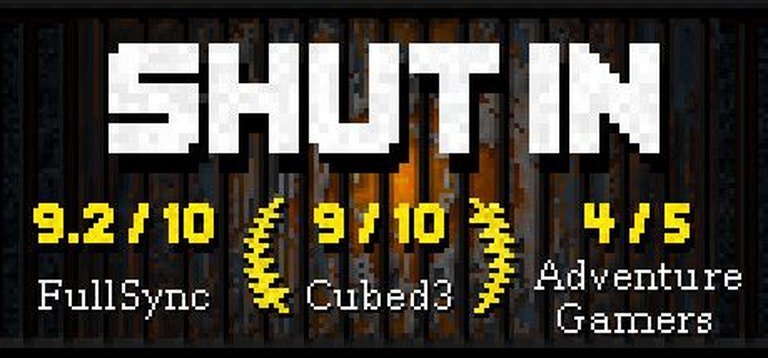
At launch, Shut In polarized critics but found a devoted niche. It holds a “Very Positive” Steam rating (90% of 85 reviews) with players praising its “unintentionally seen” authenticity (ANiceChap, Steam). Critics lauded its thematic depth; Cubed3 awarded it 90%, calling it a powerful exploration of “mental health crisis,” while Adventure Gamers (80%) commended its “intensely atmospheric” dread. However, some found its tone grating: TheSixthAxis (60%) questioned whether the mocking narrator crossed into ridicule, and Hey Poor Player (70%) noted initial frustration before appreciating its perspective. Commercially, it thrived as a budget title ($2.99–$4.99), buoyed by its timeliness and word-of-mouth. Its legacy has only grown post-launch. The SHUTDOWN and SHUT UP updates expanded the narrative, adding plant-nurturing mechanics and a “Decorated” ending that reframes self-care as a fragile victory, cementing its status as a evolving commentary on prolonged isolation. Indie Hive lauded it as a “masterpiece” for mental health representation, and it became a touchstone for games blending horror with psychological realism, influencing titles like Indecision and Lorelei and the Laser Eyes. Critically, it’s now studied for its innovative use of RPG Maker to evoke emotional states rather than technical prowess, proving that constraints can breed creativity.
Conclusion
Shut In is more than a game—it’s a psychological mirror. It doesn’t offer easy solutions for depression or isolation but instead immerses players in the lived experience of those struggles, using horror and humor to dissect the mundane hell of mental illness. Its brilliance lies in its synthesis of mechanics, narrative, and atmosphere: the punishing puzzles mirror cognitive paralysis, the narrator’s venom captures self-sabotage, and the house’s hostility externalizes internalized pain. While its trial-and-error design and abrasive tone may alienate some, these are intentional choices that deepen the game’s authenticity. In a landscape often dominated by triumphant narratives, Shut In validates the quiet, daily battles against despair. It stands as a landmark achievement in interactive storytelling, demonstrating that games can be both deeply unsettling and profoundly empathetic. For its unflinching honesty and innovative execution, Shut In earns its place in video game history—not just as a product of its time, but as a timeless testament to the power of play to articulate the inarticulate horrors of the human mind.