
- Release Year: 2003
- Platforms: Windows
- Publisher: 2K Games, Inc., Atari Interactive, Inc.
- Developer: Firaxis Games
- Genre: Compilation
- Perspective: Top-down
- Game Mode: Hotseat, LAN, Online Co-op
- Gameplay: 4X, Empire building, Turn-based strategy
- Setting: Civilization growth, Historical
- Average Score: 60/100
Description
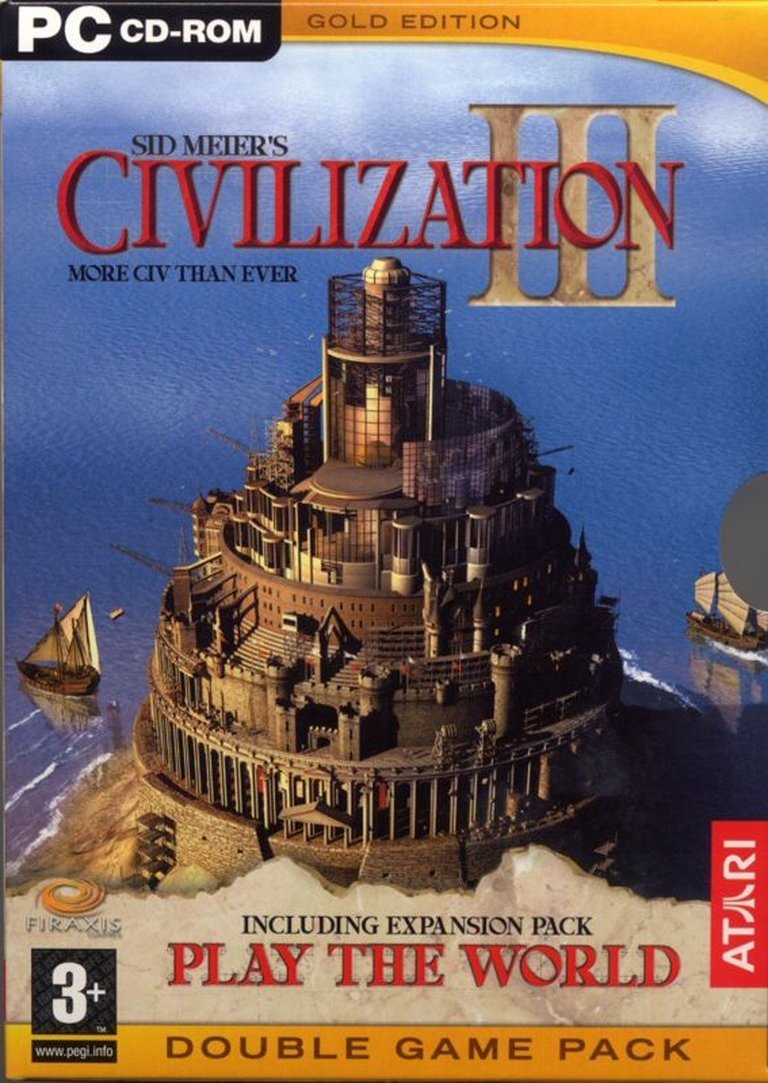
Sid Meier’s Civilization III: Gold Edition is a compilation packaging the original Civilization III and its expansion Play the World, offering players a comprehensive turn-based strategy experience. Set from 4000 BC and extending beyond the modern era, players guide a civilization through empire-building by constructing cities, training military and non-military units, improving terrain, researching technologies, constructing Wonders of the World, and engaging in diplomacy or warfare with rival civilizations to achieve dominance.
Sid Meier’s Civilization III: Gold Edition Cracks & Fixes
Sid Meier’s Civilization III: Gold Edition Patches & Updates
Sid Meier’s Civilization III: Gold Edition Mods
Sid Meier’s Civilization III: Gold Edition Guides & Walkthroughs
Sid Meier’s Civilization III: Gold Edition Reviews & Reception
gamefaqs.gamespot.com : Even Sid Meier has his bad days.
bluntlyhonestreviews.com (60/100): Sid Meier’s Civilization III was in many ways the ‘last traditional’ Civilization III, and yet even 22 years later, it stands out as one of the best titles in the series, assuming you can get it to run on modern operating systems.
Sid Meier’s Civilization III: Gold Edition Cheats & Codes
PC
Enter codes at the main menu or modify game files as specified.
| Code | Effect |
|---|---|
| Leemur | 100,000 gold and power points when entered as leader name |
| multi | Reveals entire map and allows editing enemy production when used as save game name |
Sid Meier’s Civilization III: Gold Edition
Introduction
Sid Meier’s Civilization III: Gold Edition stands as a pivotal title in the storied history of turn-based strategy games. Released in 2003, this compilation brought together the original Civilization III and its first expansion, Play the World, offering players an immersive and complex experience that defined a generation of gaming. As a professional game journalist and historian, I argue that Civilization III: Gold Edition is not just a product of its time but a masterclass in strategic depth, innovative mechanics, and enduring appeal. This review will delve into the game’s development history, narrative themes, gameplay mechanics, world-building, reception, and legacy, ultimately positioning it as a cornerstone of the Civilization series and a landmark in video game history.
Development History & Context
Civilization III was developed by Firaxis Games, a studio founded by Sid Meier, Jeff Briggs, and Brian Reynolds. The game marked a significant evolution from its predecessors, Civilization I and II, while maintaining the core principles that made the series beloved. The development team, led by Jeff Briggs and Soren Johnson, aimed to refine the formula while introducing new mechanics that would set the game apart.
The technological constraints of the early 2000s influenced the game’s design, particularly in terms of graphics and user interface. Despite these limitations, the team managed to create a visually appealing and functionally robust game that ran smoothly on the hardware of the time. The gaming landscape in 2001 was dominated by real-time strategy titles like StarCraft and Age of Empires, but Civilization III carved out its own niche by focusing on turn-based strategy and long-term empire management.
Narrative & Thematic Deep Dive
At its core, Civilization III is a game about the rise and fall of civilizations. The narrative is driven by the player’s choices, as they guide their chosen civilization from the Stone Age to the modern era. The game’s themes revolve around exploration, expansion, exploitation, and extermination—the four pillars of the 4X genre.
The game features a diverse cast of historical leaders, each with unique abilities and traits that influence gameplay. From Alexander the Great to Cleopatra, these leaders add a layer of historical authenticity and strategic variety. The dialogue and interactions between civilizations are minimal but impactful, often setting the tone for diplomatic relations and potential conflicts.
One of the game’s standout narrative elements is the concept of cultural borders. Cities produce culture, which expands the civilization’s territory, allowing for peaceful conquest through assimilation. This mechanic adds a layer of depth to the game’s narrative, as players must balance military might with cultural influence to achieve victory.
Gameplay Mechanics & Systems
Civilization III introduced several innovative mechanics that would become staples of the series. The game’s core loop revolves around managing cities, resources, and military units to build a thriving civilization. Players must balance food, production, and commerce to grow their cities, while also advancing through the technology tree to unlock new units and buildings.
The combat system is turn-based and strategic, with units gaining experience and promotions through battle. The introduction of Great People, such as scientists and artists, adds a layer of strategic depth, as these individuals can provide one-time bonuses or accelerate progress in various areas.
The user interface is intuitive and functional, though it shows its age in terms of aesthetics. The game’s modding community has since enhanced and expanded upon the base game, creating new scenarios, units, and mechanics that have kept the game relevant for years.
World-Building, Art & Sound
The world of Civilization III is procedurally generated, offering a vast array of maps and terrains to explore. The art style is isometric and detailed, with each tile representing a different type of terrain, from lush forests to arid deserts. The cities are beautifully designed, with intricate layouts that reflect their historical and cultural influences.
The sound design is equally impressive, with a soundtrack that evolves as the player progresses through the ages. The music, composed by Roger Briggs, complements the game’s themes and enhances the immersive experience. The sound effects, from the clashing of swords to the bustling of city life, add to the game’s atmosphere and make the world feel alive.
Reception & Legacy
Upon its release, Civilization III: Gold Edition received widespread acclaim from critics and players alike. The game’s innovative mechanics, strategic depth, and replayability were praised, earning it numerous awards and accolades. It was nominated for several “Game of the Year” awards and won the “Best Turn-Based Strategy Game” prize from PC Gamer US.
The game’s legacy is evident in its influence on subsequent titles in the Civilization series and the broader strategy genre. Its introduction of cultural borders, Great People, and unique civilizations set a new standard for turn-based strategy games. The game’s modding community has also played a significant role in its longevity, with countless mods and scenarios keeping the game fresh and engaging.
Conclusion
Sid Meier’s Civilization III: Gold Edition is a masterpiece of turn-based strategy, combining innovative mechanics, rich narrative themes, and immersive world-building to create an unforgettable gaming experience. Its development history, reception, and legacy underscore its importance in the annals of video game history. While the game may show its age in terms of graphics and interface, its strategic depth and replayability ensure that it remains a beloved classic. In the pantheon of strategy games, Civilization III: Gold Edition stands as a testament to the enduring appeal of the Civilization series and the genius of Sid Meier. It is, without a doubt, a cornerstone of the genre and a must-play for any fan of strategy games.