
- Release Year: 2010
- Platforms: Windows
- Publisher: 2K Games, Inc.
- Developer: Firaxis Games, Inc.
- Genre: Strategy
- Perspective: Isometric
- Game Mode: Hotseat, LAN, Online PVP, Single-player
- Gameplay: City management, Diplomacy, Turn-based combat
- Setting: Historical
Description
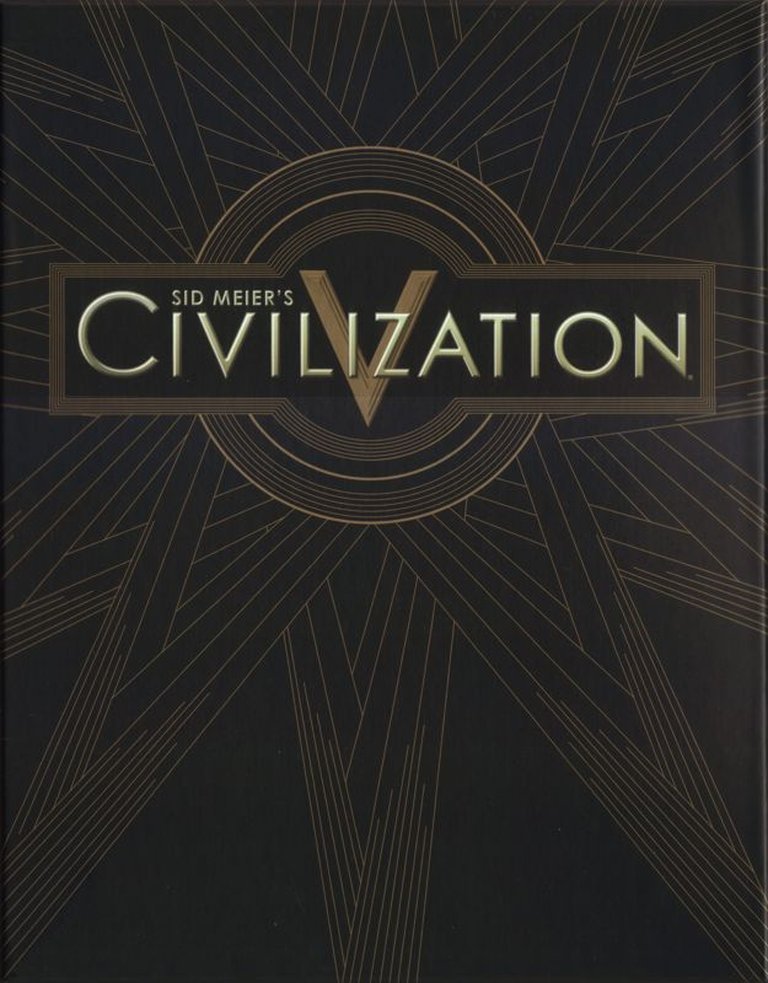
Sid Meier’s Civilization V Special Edition is an enhanced physical release of the acclaimed turn-based strategy game where players lead one of numerous historical civilizations from the dawn of humanity through the ages of exploration, industrialization, and beyond, making critical decisions in diplomacy, warfare, technology advancement, and city-building to achieve victory through domination, science, culture, or diplomacy; this edition elevates the experience with exclusive collectibles including five metal unit figurines, a two-disc soundtrack, a behind-the-scenes DVD from Firaxis Games, and a lavish 176-page hardcover artbook.
Sid Meier’s Civilization V Special Edition: Review
Introduction
In the grand tapestry of video game history, few titles have captured the intoxicating pull of empire-building quite like the Civilization series—a saga that has hooked generations of players with its siren call of “just one more turn.” Released in 2010, Sid Meier’s Civilization V marked a pivotal evolution in the franchise, introducing hexagonal grids, refined diplomacy, and a visual overhaul that brought the march of history to life on PC screens worldwide. The Special Edition, however, elevates this cornerstone entry beyond digital pixels into a tangible collector’s artifact, bundling the core game with premium physical extras that celebrate its craftsmanship. As a game journalist and historian, I’ve dissected countless strategy epics, but Civ V’s Special Edition stands out for its masterful blend of innovative gameplay and luxurious packaging. My thesis: This edition not only refines the timeless formula of civilizational ascent but also immortalizes it as a cultural milestone, offering enthusiasts a deluxe gateway to one of gaming’s most enduring legacies.
Development History & Context
The genesis of Sid Meier’s Civilization V traces back to Firaxis Games, the studio helmed by legendary designer Sid Meier himself, under the publishing umbrella of 2K Games. Founded in 1996 as a successor to MicroProse, Firaxis had already solidified its reputation with prior Civilization iterations, but Civ V represented a bold reinvention amid the evolving PC gaming landscape of the late 2000s. Meier’s vision was clear: to honor the series’ roots in turn-based strategy while addressing criticisms of earlier entries, such as sprawling maps and overly complex mechanics. By introducing hexagonal tiles instead of the traditional square grid, the team aimed for deeper tactical nuance and more organic world generation, drawing inspiration from real-world geography to make expansion feel authentic rather than abstracted.
Technological constraints of the era played a significant role. In 2010, PC hardware was advancing with better GPUs for 3D rendering, but Firaxis opted for a custom engine built from the ground up—eschewing reliance on middleware like Unreal—to optimize for strategic depth over graphical excess. This engine enabled fully animated leaders speaking in native languages during diplomacy scenes, a first for the series, but it also meant compromises: the game launched without modding support initially (added later via patches), reflecting the era’s balance between innovation and accessibility. The broader gaming landscape was shifting toward real-time strategies like StarCraft II (also 2010) and MMOs, yet Civ V doubled down on turn-based purity, positioning itself as a thoughtful counterpoint in a market craving quick dopamine hits.
Firaxis’s development process, as hinted in the Special Edition’s behind-the-scenes DVD, involved iterative playtesting to refine the “just one more turn” addictiveness. Released on September 21, 2010, in North America (and shortly after in other regions), the Special Edition was announced mere months prior by 2K, targeting hardcore fans with its $99.99 USD price tag—a premium nod to collectors in an age when physical media was still king, before digital distribution like Steam (integrated via Steamworks) began dominating. This context underscores Civ V’s role as a bridge between analog board-game roots and digital strategy, arriving just as the industry grappled with the rise of mobile gaming and consoles like the Xbox 360.
Narrative & Thematic Deep Dive
Civilization V eschews a linear plot in favor of an emergent narrative, where players script their own epic through the lens of historical simulation—a deliberate choice that amplifies its thematic depth. At its core, the “story” unfolds across epochs, from the Stone Age to the Information Era, as you lead one of 18 civilizations (expandable via DLC) under iconic figures like Gandhi, Washington, or Napoleon. These leaders aren’t mere avatars; they’re richly voiced characters with distinct personalities, agendas, and dialogue that evolve based on your interactions. For instance, Bismarck’s gruff Teutonic barbs during trade negotiations contrast sharply with Montezuma’s ritualistic threats, creating a dialogue system that feels like a UN summit laced with intrigue.
Thematically, Civ V delves into the duality of human progress: the glory of innovation versus the perils of imperialism. Themes of manifest destiny permeate city expansion and technological trees, where unlocking gunpowder might spark a world war, mirroring real history’s double-edged sword. Environmentalism emerges subtly through resource management—deforestation for happiness bonuses critiques unchecked growth—while diplomacy explores power dynamics, with city-states as proxies in a geopolitical chess game. Ranged combat introduces moral ambiguity: bombarding from afar allows “clean” victories but echoes modern drone warfare’s detachment.
In the Special Edition, the 176-page hardcover artbook deepens this narrative immersion, featuring concept art of leaders’ thrones, unit designs, and world maps that reveal untold lore—like the Aztec’s ritualistic fervor or Rome’s engineering prowess. The behind-the-scenes DVD offers glimpses into voice acting sessions, where actors channel historical gravitas, and the 2-disc soundtrack’s orchestral swells (composed by Michael McCann and Geoff Knorr) underscore thematic tension, from triumphant anthems for victories to somber dirges for fallen empires. Without a fixed plot, Civ V’s narrative is player-driven poetry: your Gandhi achieving world peace or your Catherine the Great conquering via cunning alliances crafts personal myths, making themes of legacy profoundly replayable and philosophically resonant.
Gameplay Mechanics & Systems
At its heart, Civilization V‘s gameplay loop is a symphony of strategic layers: explore, expand, exploit, exterminate (the 4X formula perfected). Turns unfold on a procedurally generated hex-grid map, where founding cities triggers a cascade of decisions—balancing food for growth, production for wonders, and science for advancement. The tech tree, streamlined from Civ IV, encourages specialization; pursuing a military path unlocks composite bowmen early, while cultural focus yields social policies that buff artists or spies.
Combat represents a innovative overhaul: units stack no more, forcing tactical positioning on the hex grid, where ranged units like archers can bombard from safety, promoting defensive strategies and zerg-rush counters. City bombardment adds depth, allowing sieges without direct exposure, but flaws emerge in late-game slog—nuclear weapons can feel overpowered, and AI pathfinding occasionally stumbles on complex terrain. Character progression ties to leaders’ unique abilities: Shaka’s Zulu impis heal after kills, embodying aggressive playstyles, while policies and ideologies (added in expansions) allow empire customization, from autocracy’s war machine to freedom’s innovation boom.
The UI is a triumph of intuitive design—advisors pop up with contextual tips, the diplomacy screen feels like a dynamic treaty room, and the one-unit-per-tile rule declutters battles. Multiplayer shines with hotseat, LAN, and online modes via Steamworks, fostering global rivalries, though balance issues (e.g., early rushes dominating) required patches. Innovative systems like religion and espionage (core or DLC) add flavor—founding a pantheon can spread influence passively—but flaws persist in pacing: mid-game can drag without mods. Overall, these mechanics create addictive loops, where a single tech breakthrough spirals into dominance, making Civ V a benchmark for 4X depth.
World-Building, Art & Sound
Civ V’s world-building constructs a living history book, with diverse biomes—rolling plains, jagged mountains, steaming jungles—generated via the new engine for organic feel. Civilizations rise amid ancient ruins yielding bonuses, evoking archaeological wonder, while wonders like the Pyramids anchor your empire visually and thematically. The atmosphere is one of epic scale: dawn-of-man fog lifts to reveal sprawling metropolises, fostering a sense of stewardship over a breathing planet.
Art direction blends realism with stylization; hex tiles allow fluid terrain blending, and unit models—from pixelated warriors evolving to stealth bombers—animate with purpose, their movements syncing to orchestral cues. The Special Edition’s metal figurines (crafted by Reaper Miniatures) extend this: five detailed pieces (e.g., a spearman or trireme) serve as desk trophies, bridging digital and physical realms. The 176-page artbook, with its glossy spreads of leader portraits and map sketches, reveals the meticulous world-craft, including unused concepts that hint at broader lore.
Sound design immerses through a layered soundtrack: the 2-disc CD captures era-spanning scores, from tribal drums to symphonic crescendos, dynamically shifting during turns—tense percussion for wars, serene flutes for golden ages. Leader voices in native tongues (e.g., Cleopatra’s sultry Arabic) add authenticity, while ambient effects like city hammers or battle clashes ground the experience. These elements coalesce into an atmosphere of inexorable progress, where the world’s vibrancy—rain-slicked forests, aurora-lit poles—makes every expansion feel monumental, enhancing replayability across maps.
Reception & Legacy
Upon launch in September 2010, Civilization V garnered widespread acclaim, earning a Metacritic score of 90/100 from critics who praised its accessible innovations and visual leap, though some noted AI weaknesses and a steep DLC curve. Commercially, it sold over three million copies in its first year, bolstering 2K’s portfolio amid a strategy genre renaissance. The Special Edition, priced at $99.99 USD (or £59.99 in the UK), appealed to collectors, with its extras lauded in previews for adding tangible value—though limited stock meant it flew under the radar compared to the base game.
Player reception on sites like MobyGames averages 4.5/5 from early adopters, highlighting the edition’s appeal to series veterans, but text reviews were sparse, focusing on the collectibles rather than gameplay shifts. Over time, reputation has only grown: expansions like Gods & Kings and Brave New World (bundled in later editions) addressed launch flaws, cementing Civ V as the series’ peak for many. Its legacy ripples through the industry—influencing Endless Legend‘s hex grids, Stellaris‘ diplomacy, and even board games like Twilight Imperium. By prioritizing modding post-launch, it fostered a vibrant community, while the Special Edition’s artifacts (figurines, artbook) preserve its historiography, influencing collector’s editions in titles like Civilization VI. Today, amid sequels and remasters, Civ V endures as a blueprint for thoughtful strategy, its Special Edition a relic of physical gaming’s golden age.
Conclusion
Sid Meier’s Civilization V Special Edition masterfully distills the franchise’s essence—strategic depth, historical sweep, and addictive progression—while its premium trappings transform a digital empire-builder into a collector’s heirloom. From Firaxis’s visionary hex-grid revolution to the thematic interplay of progress and conflict, every layer invites scrutiny and replay. Though not without flaws like AI inconsistencies, its innovations in combat, diplomacy, and presentation outshine them, supported by evocative art, sound, and those evocative extras: figurines that stand sentinel, a soundtrack that echoes eras, and an artbook chronicling creation’s forge. In video game history, it occupies a pantheon seat alongside originals like Civilization I, a definitive verdict of excellence that rewards both newcomers and historians with timeless dominion. If you’re a strategy aficionado, this edition isn’t just recommended—it’s essential. Rating: 9.5/10.