
- Release Year: 2004
- Platforms: iPad, iPhone, Macintosh, Wii, Windows Phone, Windows, Xbox 360, Xbox One, Xbox
- Publisher: 1C Company, 2K Games, Inc., Atari Europe S.A.S.U., Atari Interactive, Inc., Feral Interactive Ltd., Mastertronic Games Ltd., Take-Two Interactive Software, Inc.
- Developer: Firaxis Games East, Inc.
- Genre: Action, Strategy, Tactics
- Perspective: Diagonal-down
- Game Mode: Single-player
- Gameplay: Dancing, Fighting, Real-time combat, Stealth, Strategy
- Setting: Age of Discovery, Caribbean, Enlightenment, Sea pirates
- Average Score: 81/100
Description
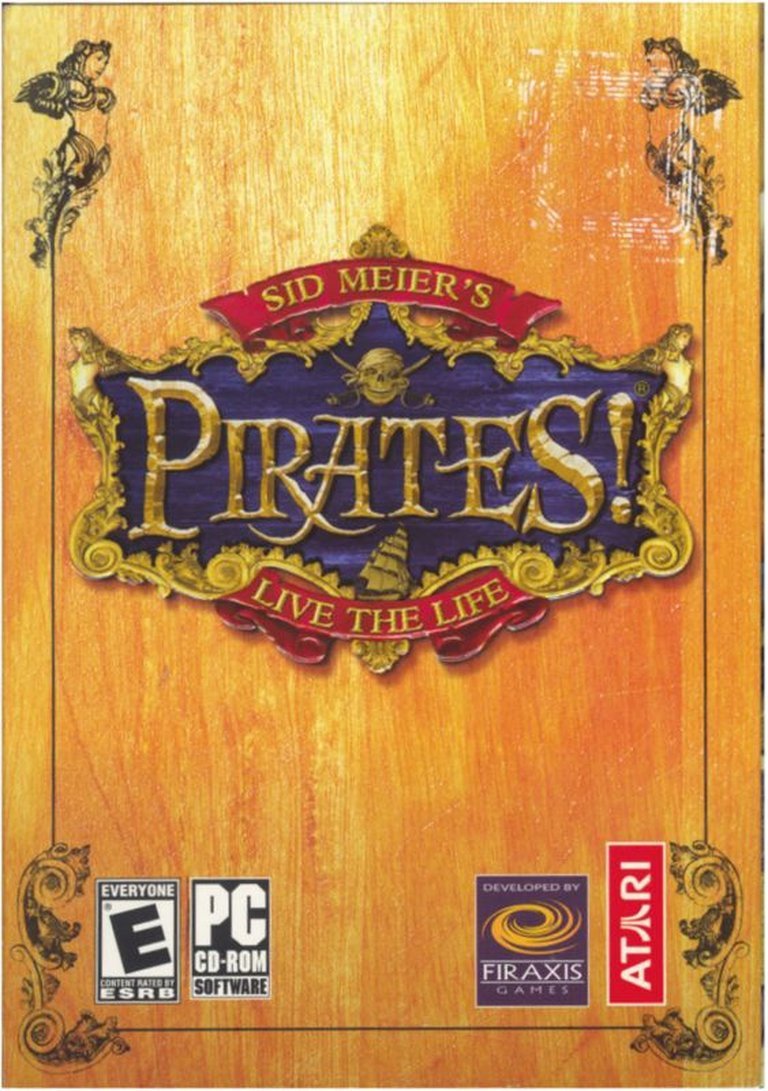
Sid Meier’s Pirates! Live the Life is a remake of the 1987 classic that immerses players in the Golden Age of Piracy within the Caribbean Sea. As a pirate, players sail the open waters to plunder cities, engage in naval battles, hunt for treasure, and interact with key figures like governors’ daughters while experiencing a blend of minigames including real-time combat, sword dueling, sneaking, and dancing—all presented with a new 3D engine.
Gameplay Videos
Where to Buy Sid Meier’s Pirates! Live the Life
PC
Sid Meier’s Pirates! Live the Life Free Download
Sid Meier’s Pirates! Live the Life Patches & Updates
Sid Meier’s Pirates! Live the Life Guides & Walkthroughs
Sid Meier’s Pirates! Live the Life Reviews & Reception
ign.com : it’s an experience that’s not to be missed.
mobygames.com (81/100): Graphically, it’s almost perfect.
Sid Meier’s Pirates! Live the Life Cheats & Codes
PC
| Code | Effect |
|---|---|
| Set the system date to September 19th | Unlocks alternate pirate dialogue |
| Press [Pause/Break] when your dance partner gives you a hand signal, then press the correct direction key | Makes dance sequences easier |
Xbox
Enter the following names as your character’s name to activate cheats.
| Code | Effect |
|---|---|
| B.Caudizzle | Crew has high morale |
| Bloody Bones Baz | Invincibility in ship-to-ship battles |
| Bonus Frag | Get some new clothes |
| D.Gackey | Start with the best ship and a full crew |
| Dragon Ma | Invincible while dueling |
| Firaxis | Unlocks Jeff Briggs |
| Max Remington | Unlocks Sid Meier |
| Scooter | Keep the Governor’s daughter’s love |
| Sprinkler | Fleet will have twice its normal speed |
| Sweet Tooth | Food stock is always full |
Xbox
Edit your saved game file with a hex editor to modify gold amount.
| Code | Effect |
|---|---|
| Edit offset B94, B93, B92 in hex | Set gold amount (stored backwards in hex) |
PSP
Enter the following name as your character’s name to activate a cheat.
| Code | Effect |
|---|---|
| B.Caudizzle | Never have to split the plunder |
Sid Meier’s Pirates! Live the Life: Review
Introduction
Ahoy, mateys! To call Sid Meier’s Pirates! Live the Life a mere game would be a grave injustice. This 2004 masterpiece, helmed by legendary designer Sid Meier and developed by Firaxis Games, is not merely a remake but a breathtaking reimagining of Meier’s 1987 classic. It invites players to seize the helm of piracy in the Golden Age of the Caribbean, blending strategy, action, and role-playing into one intoxicating cocktail. The game’s thesis is clear: to capture the unbridled freedom and romance of piracy while offering a meticulously crafted, replay-rich experience that honors its roots while boldly charting new waters. Two decades later, it stands as a paragon of “one more turn” design, proving that depth and accessibility need not be mutually exclusive.
Development History & Context
Firaxis Games, founded by Meier in 1996, brought its signature meticulous design philosophy to this remake. Meier, the “Father of Computer Gaming” whose credits span Civilization and Railroad Tycoon, sought to preserve the original’s addictive loop while modernizing its presentation. Technologically, the game utilized NDL’s Gamebryo engine—a significant leap from the 2D sprites of 1987—enabling 3D ship models, dynamic weather, and fluid animations. Yet, constraints were evident: hardware limitations of the era limited polygon counts, and textures were often reused to maintain performance. This trade-off prioritized gameplay fidelity over graphical density.
Released on November 22, 2004, Pirates! arrived amid a gaming landscape dominated by complex RPGs and cinematic action titles. While franchises like World of Warcraft redefined online play, Meier’s focus remained on single-player excellence. Atari Interactive initially published the title, but 2K Games acquired rights in May 2005, underscoring its commercial viability. Ports followed swiftly—to Xbox (2005), PSP (2007), Wii (2010), and mobile platforms—showcasing the game’s adaptability. Meier’s vision was unapologetically retro-futuristic: to prove that a game’s soul lies in its mechanics, not its pixels. As he stated, “keep the pace of the game moving and keep it fun,” a mantra that permeates every system.
Narrative & Thematic Deep Dive
The narrative unfolds as a swashbuckling revenge saga. Players begin as a young boy witnessing his family enslaved by the Spanish nobleman, Marquis de Montalbán. A decade later, they commandeer a ship in a mutiny, vowing to rescue their kin. This personal quest drives the game, yet Meier brilliantly subordinates it to emergent storytelling. Unlike linear epics, Pirates! thrives on player-driven stories: a rise from obscurity to infamy, shifting allegiances between nations (England, Spain, France, Netherlands), or romancing governors’ daughters for intel and amour.
Characters blend historical figures (Blackbeard, Henry Morgan) with archetypal NPCs. Governed by rigid templates—daughters are rated “plain,” “attractive,” or “beautiful” with interchangeable faces—they lack depth but serve their purpose: tools for social maneuvering. Dialogue is functional, yet charmingly archaic (“Arrr, ye scurvy dog!”). Thematic depth emerges from juxtaposition: the romanticized “swashbuckler” fantasy (ballroom dances, buried treasure) clashes with the gritty realities of aging and mortality. A captain’s skills wane with years, forcing retirement—a profound metaphor for piracy’s fleeting glory. This tension between myth and reality elevates the narrative beyond a simple revenge plot.
Gameplay Mechanics & Systems
Pirates! is a symphony of interconnected minigames, each demanding distinct skills:
– Sailing & Naval Combat: Wind dynamics and ship positioning are paramount. Players trade cannon volleys (round, grape, or chain shot) while boarding enemy vessels. Capturing Ships of the Line—massive 48-gun warships—feels triumphant, yet AI limitations mean enemy pirates (like a neutered Blackbeard) pose little threat.
– Sword Fighting: A rhythm-based dueling system emphasizes timing and environmental tactics (swinging ropes, kicking buckets). While initially frustrating, it rewards mastery with cinematic flair.
– Land Battles: Turn-based grid combat pits player units against city garrisons. It’s tactically rich but underutilized, as most cities fall quickly.
– Romance & Sneaking: Dancing minigames follow hand signals, while sneaking into enemy towns involves evading guards—a rare stealth-focused segment.
– Economy: Trading is rudimentary; cities offer negligible profits, making piracy far more lucrative.
Character progression hinges on aging, skill choices (e.g., “fencing” at game start), and reputation. Nations offer promotions, and pirate hunters pursue notorious players. Yet systems lack depth: treasure hunts yield meager rewards, and historical pirates feel like glorified boss fights. The UI, keyboard-centric with an on-screen keypad, is elegant but unintuitive for newcomers. Despite these flaws, the core loop—sail, plunder, repeat—is relentlessly addictive.
World-Building, Art & Sound
Firaxis conjures a vibrant Caribbean, though its beauty is mixed with repetition. Lush 3D models of ships (sloops, galleons) and cities evoke the era, but reused textures and static NPC faces break immersion. Particle effects—cannon smoke, splashing waves—add dynamism, yet the world feels sterile. Sound design, however, is superb. Sea shanties, cannon booms, and crew cheers (“Huzzah!”) anchor players in the setting. Mark Cromer and Michael Curran’s score blends Baroque melodies with pirate-themed motifs, though tracks like the reused Civilization III ballroom piece feel recycled.
The atmosphere balances whimsy and grit. Governors’ balls pulse with social intrigue, while naval battles erupt into chaos. Yet the game never fully commits to realism; violence is cartoonish, and romance is shallow. As one critic noted, it’s “Monkey Island, not Master and Commander.” This stylized approach broadens its appeal, ensuring the Caribbean remains a playground, not a prison.
Reception & Legacy
Upon release, Pirates! was hailed as a triumph. Critics lauded its 88% Metacritic score (PC), praising its “pure gameplay” (GameSpy) and “effortlessly charming” design (Eurogamer). Computer Games Magazine named it 2004’s #2 Game of the Year, citing its “timelessness.” Commercially, it sold over 1.5 million units, a testament to its broad appeal.
Legacy-wise, Pirates! pioneered open-world design, predating Grand Theft Auto IV’s sandbox ethos. Its minigame fusion influenced titles like Assassin’s Creed IV: Black Flag. Yet its ports were uneven: the Wii version suffered from fiddly controls, while the PSP simplification diluted the experience. Meier’s design philosophy—”interesting decisions over complexity”—remains influential, proving that accessibility can coexist with depth. Decades later, it endures as a GOG.com staple and a cult classic, a beacon of gameplay purity in an era of bloated budgets.
Conclusion
Sid Meier’s Pirates! Live the Life is a flawed masterpiece, a tapestry woven from ambition and pragmatism. Its systems—sailing, dueling, trading—form a cohesive whole greater than the sum of their parts. While narrative depth and graphical reuse hold it back, its “just one more voyage” addiction is undeniable. Meier succeeded in modernizing his classic without sacrificing its soul, creating a game that respects history while reveling in fantasy. For historians, it’s a snapshot of 2004’s design sensibilities; for gamers, it’s a timeless treasure. As one reviewer aptly put it: “Kudos to Sid Meier for creating yet another gaming landmark. Harr!” Set sail, and prepare to lose yourself to the siren song of the Caribbean.