
- Release Year: 2022
- Platforms: Nintendo Switch, PlayStation 4, Windows Apps, Windows, Xbox Cloud Gaming, Xbox One, Xbox Series
- Publisher: Active Gaming Media, Inc., Humble Bundle, Inc.
- Developer: rose-engine GbR
- Genre: Action, Survival horror
- Perspective: Diagonal-down
- Game Mode: Single-player
- Gameplay: Avoidance, Exploration, Inventory management, Puzzle elements, Puzzle solving, Resource Management, Shooter, Stealth
- Setting: Futuristic, Sci-fi
- Average Score: 85/100
Description
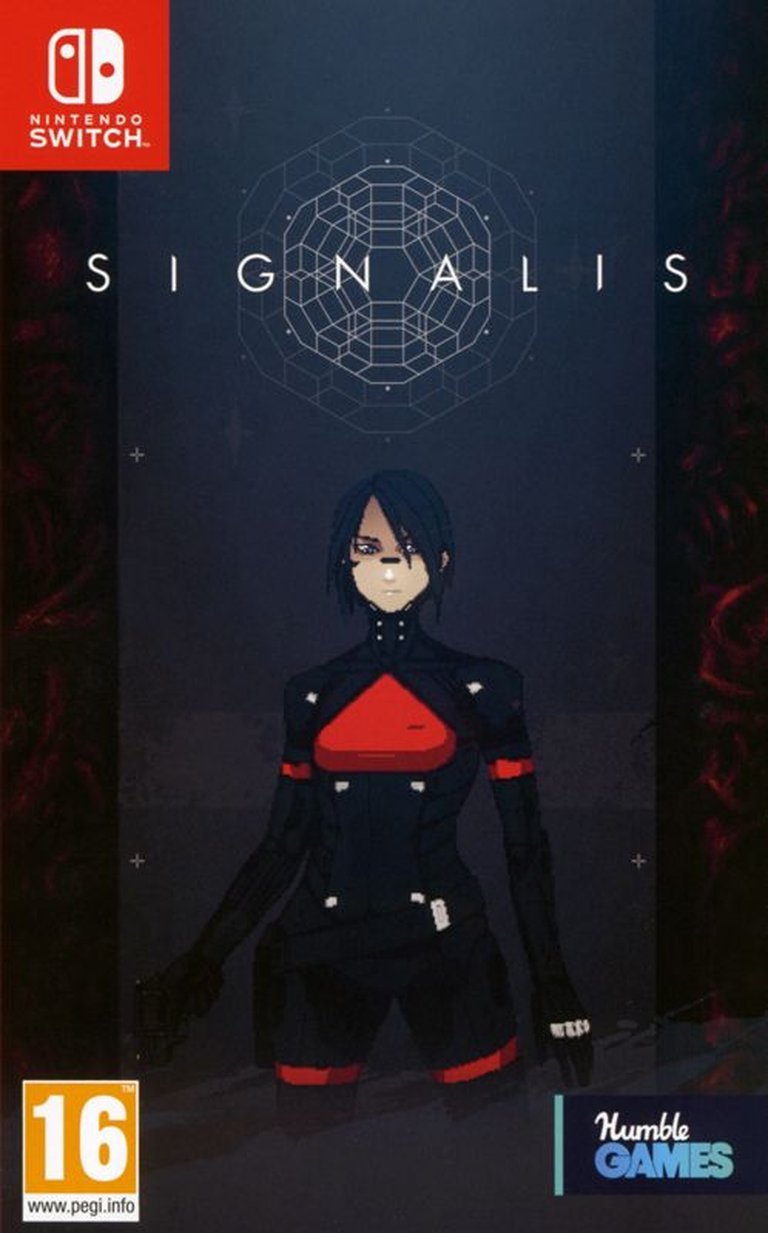
Signalis is a survival horror game set in a retro-futuristic sci-fi world where players assume the role of Replicant Elster, an android searching for her missing human Gestalt across a desolate facility. Combining lo-fi pixel art with cinematic presentation, the game emphasizes exploration, puzzle-solving, and tense resource management, while exploring themes of identity, memory, and the blurred lines between synthetic and humanity in a haunting, atmospheric narrative.
Gameplay Videos
Where to Buy Signalis
PC
Signalis Free Download
Signalis Patches & Updates
Signalis Mods
Signalis Guides & Walkthroughs
Signalis Reviews & Reception
metacritic.com (85/100): Signalis is the type of horror game that keeps you hooked from beginning to its true end.
gamespot.com : Signalis is a nostalgic haunt that knows exactly where it came from but still dares to forge ahead, too.
inverse.com (90/100): ‘Signalis’ review: The best horror game of 2022
opencritic.com (82/100): Tense, haunting and beautiful. Inventory shenanigans aside, one of the best survival horror games yet.
Signalis: A Love Letter to Survival Horror’s Soul
Introduction
Signalis emerges not merely as a game, but as a meticulously crafted artifact—a haunting fusion of PS1-era survival horror and modern psychological depth. Debuting in 2022 from Hamburg-based studio rose-engine, this dystopian sci-fi horror title has swiftly ascended to cult status, reinvigorating a genre often overshadowed by AAA spectacle. Its top-down perspective, pixelated aesthetics, and oppressive atmosphere evoke classic Resident Evil and Silent Hill, yet it carves its own path through themes of identity, memory, and the fragile humanity of artificial beings. As a survival horror connoisseur, Signalis stands as a masterclass in tension-building, narrative ambiguity, and emotional resonance—a testament to how retro mechanics can birth profoundly contemporary dread. This review delves into how rose-engine’s magnum opus balances homage with innovation, creating an experience that lingers long after the credits roll.
Development History & Context
rose-engine’s journey began in 2014 as a passion project by illustrators Yuri Stern and Barbara Wittmann. Developing in isolation from their bedrooms over eight years, the duo evolved a prototype side-scroller into a top-down survival horror epic. Their vision was uncompromising: replicate the visceral discomfort of 1990s horror while weaving a story steeped in melancholy and existential inquiry. Technically constrained by Unity and a two-person team, they leaned into stylized 2D pixel art and low-poly 3D environments, intentionally evoking PS1-era limitations. The release date—October 27, 2022—coincided with a resurgence of interest in indie horror, yet Signalis defied trends by prioritizing cerebral tension over jump scares. Published by Humble Games and Playism, it launched on PC, PS4, Xbox One, and Nintendo Switch, later expanding to new-gen consoles. Key influences included Silent Hill’s psychological unease, Resident Evil’s resource scarcity, and literary works like Robert W. Chambers’ The King in Yellow and H.P. Lovecraft’s cosmic horror. This synthesis of retro aesthetics and avant-garde themes positioned Signalis as both a homage and a redefinition of survival horror.
Narrative & Thematic Deep Dive
Signalis unravels as a fractured odyssey through cyclical trauma and forbidden memories. Players control Elster, a Replika (android technician) awakened in a crashed shuttle on a frozen planetoid. Her quest to find her missing Gestalt partner, Ariane, uncovers a labyrinthine conspiracy involving totalitarianism, bioresonance technology, and cosmic horror. The narrative eschews linearity, blending environmental storytelling, cryptic logs, and surreal dream sequences that blur reality and delusion.
Characters embody the game’s thematic core:
– Elster (protagonist): A gynoid haunted by fragmented memories, her quest driven by a promise to Ariane. Her journey questions what constitutes identity when memories are replicated or corrupted.
– Ariane Yeong (Gestalt): Elster’s human partner, whose bioresonant abilities and artistic sensibilities underscore themes of love and sacrifice. Their relationship, explicitly lesbian, defies the Eusan Nation’s dehumanizing regime.
– Supporting Cast: Figures like Isa (a Gestalt administrator) and Adler (an inquisitor Replika) reflect systemic oppression and the erosion of individuality.
Thematic depth permeates every layer:
– Identity & Replication: The game explores the ethics of “otherness,” as Replikas are treated as disposable tools despite their emergent humanity. The name “Elster” (German for magpie) symbolizes mimicry and fractured intelligence.
– Grief & Memory: Grief is portrayed not as decay but as an enduring echo, preserved through time loops. Elster’s devotion to Ariane becomes an act of defiance against a universe that reduces consciousness to data.
– Cosmic Horror: References to The King in Yellow and Arnold Böcklin’s Isle of the Dead evoke incomprehensible dread, where reality bends to cosmic indifference.
– Ambiguous Endings: Four endings emerge from player choices (e.g., “Promise,” “Memory”), rejecting hierarchy. Developers explicitly state no “true” ending exists, emphasizing subjective interpretation over prescriptiveness—a radical stance against narrative rigidity.
Gameplay Mechanics & Systems
Signalis redefines survival horror through scarcity and deliberate pacing. Core mechanics include:
- Inventory Management: A rigid six-slot system forces constant triage between weapons, ammo, puzzle items, and tools. Storage boxes in safe rooms become lifelines, but backtracking amplifies tension. Post-launch patches (e.g., v1.2) allow optional inventory expansions, purist defaults remain punishing.
- Combat & Stealth: Enemies like corrupted EULR units respawn unless incinerated with rare flares. Manual aiming with a soft auto-aim encourages focused shots for higher damage, but evasion is often wiser. Melee is limited to a stun baton, emphasizing vulnerability.
- Puzzles & Exploration: Solutions require piecing together environmental clues—deciphering photo codes, aligning pipes, or overriding security. Puzzles are grounded but complex, rewarding patience. The map auto-upmarks objectives, reducing frustration while preserving mystery.
- Save System: Manual saves at terminals in safe rooms raise stakes; no autosaves punish risk-taking.
- Progression: Exploration loops back, with new keys unlocking paths. Verticality (e.g., the paternoster elevator) rewards thoroughness.
Critics lauded the tension born from these systems, though some (e.g., 4Players.de) cited inventory limitations as tedious. Ultimately, every mechanic reinforces themes of confinement and resource scarcity, making survival an act of defiance.
World-Building, Art & Sound
Signalis’ retro-futuristic world is a character unto itself. Set in the Eusan Nation’s dystopian future, the Sierpinski-23 mining facility on planet Leng decays into surrealism. Environments shift from mundane offices (Penrose-512) to the fleshy, shifting void of “Nowhere,” mirroring Elster’s psyche.
Art Direction: A hybrid of pixel art, low-poly 3D, and anime aesthetics (reminiscent of Neon Genesis Evangelion) creates a haunting consistency. Visual motifs—flickering surveillance cameras, CRT monitors, and the recurring Penrose triangle—evoke analog fragility versus cosmic horror. The color palette of red, white, and black amplifies dread, especially in scenes like Elster’s synthetic skin melting after contact with The King in Yellow.
Sound Design: Audio is a masterclass in unease. Ambient silence punctuated by distant groans and distorted radio transmissions builds tension. Composer 1000 Eyes and Cicada Sirens’s score blends industrial beats with ethereal melodies, heightening emotional beats (e.g., Ariane’s “Cigarette Wife” track). First-person perspective shifts during key moments (e.g., encountering The King in Yellow) exploit spatial horror, with no jump scares—only inevitable dread.
This synergy of art and sound transforms exploration into a visceral experience, where every corridor and radio static carries weight.
Reception & Legacy
Signalis garnered critical acclaim, with an 82% average on OpenCritic and 98% positive Steam user ratings. Critics praised its atmosphere, puzzles, and narrative depth. Eurogamer called it “sapphic, sci-fi fever dream,” while Polygon highlighted its “intimate take on cosmic horror.” Awards included Best Debut at the German Computer Game Awards and Best Indie Horror at the Horror Game Awards. Commercially, it sold ~870,000 units, exceeding expectations for an indie title.
However, not all praise was universal. GamesRadar critiqued its “overly mechanical” tension, and Jimquisition found inventory management frustrating. Over time, Signalis evolved from a cult darling to a genre benchmark. Its influence is evident in upcoming indie horror games citing its blend of retro mechanics and psychological storytelling. The game’s fanbase remains active, dissecting lore and debating endings on platforms like Reddit. As a cultural touchstone, Signalis revitalized survival horror’s focus on atmosphere over action, proving that constraint can breed creativity.
Conclusion
Signalis is more than a game—it’s a meditation on love, loss, and the persistence of identity in a hostile cosmos. rose-engine’s meticulous craftsmanship transforms retro constraints into profound narrative tools, crafting an experience that is both a homage to survival horror’s past and a bold step forward. Its thematic depth, from queer-coded romance to cosmic horror, resonates with unease and beauty. While inventory limits may irk some, they underscore the game’s core message: survival is measured not in bullets, but in the memories we refuse to let fade. In a landscape dominated by AAA spectacle, Signalis stands as an unmissable testament to the power of indie vision—a masterpiece that burrows into your psyche and refuses to let go. It is, unequivocally, a modern classic.