
- Release Year: 2007
- Platforms: Windows
- Publisher: Ubisoft Entertainment SA
- Genre: Special edition
- Game Mode: Online PVP, Single-player
- Average Score: 76/100
Description
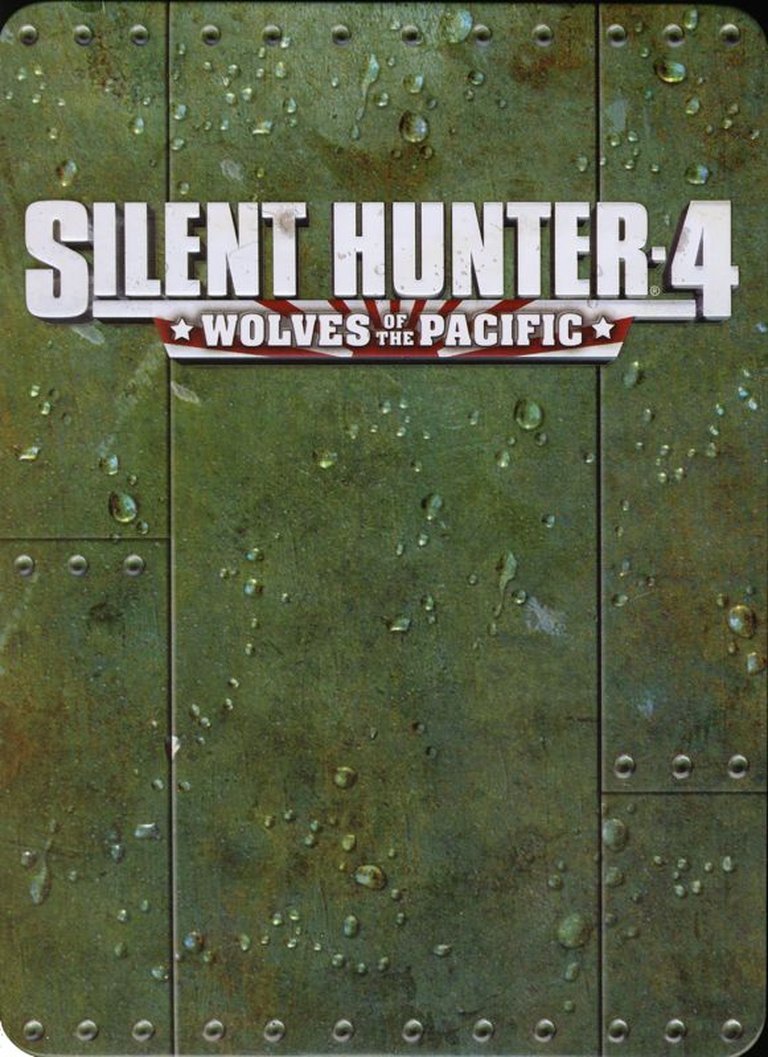
Silent Hunter 4: Wolves of the Pacific (Deluxe Edition) is a submarine simulation game set during World War II, where players command a U.S. Navy submarine in the Pacific theater. The game offers realistic 3D graphics, detailed submarine systems, and a dynamic campaign with varied missions, including rescues, reconnaissance, and major naval battles like the Battle of Midway. It features adjustable difficulty levels, multiplayer modes for online adversarial play, and a Deluxe Edition with exclusive physical extras like a metal box, soundtrack, and collectible items.
Silent Hunter 4: Wolves of the Pacific (Deluxe Edition) Reviews & Reception
store.steampowered.com (69/100): Mixed (69% of the 1,066 user reviews for this game are positive).
en.wikipedia.org (79/100): The game received “generally favorable reviews” according to video game review aggregator Metacritic.
mobygames.com (78/100): The fourth installment of the Silent Hunter series takes the player back to were it all began in 1996 with the original Silent Hunter: the Pacific theatre.
metacritic.com (79/100): The change of scenery to the Pacific is refreshing, but unfortunately it is pretty much the only thing that has changed since the last version.
Silent Hunter 4: Wolves of the Pacific (Deluxe Edition) Cheats & Codes
PC
Go to the radar and press [STRG].
| Code | Effect |
|---|---|
| [STRG] | The radar contacts will appear as smiley faces. |
Silent Hunter 4: Wolves of the Pacific (Deluxe Edition): A Masterclass in Submarine Simulation
Introduction
Few games capture the tension, isolation, and strategic depth of submarine warfare like Silent Hunter 4: Wolves of the Pacific (Deluxe Edition). Released in 2007 by Ubisoft Bucharest, this title stands as a pinnacle of the submarine simulation genre, blending historical authenticity, immersive gameplay, and a dynamic campaign system. The Deluxe Edition, limited to just 3,000 units worldwide, elevates the experience with a treasure trove of physical extras, including a metal box, an original soundtrack, a submarine documentary, and more. This review delves into the game’s development, narrative, mechanics, and legacy, exploring why it remains a beloved title among simulation enthusiasts.
Development History & Context
The Studio and Vision
Ubisoft Bucharest, the developer behind Silent Hunter 4, was no stranger to the franchise, having previously worked on Silent Hunter III. The studio aimed to refine the formula of its predecessor while shifting the setting from the Atlantic to the Pacific Theater of World War II. The vision was clear: create a submarine simulator that balanced accessibility for newcomers with depth for veterans, all while maintaining historical accuracy.
Technological Constraints and Innovations
The game was built on an improved version of the Silent Hunter III engine, which allowed for enhanced graphics and more realistic physics. However, the development team faced challenges, particularly in optimizing the game for the hardware of the era. The result was a visually impressive title that pushed the boundaries of what was possible in 2007, though not without its share of bugs and performance issues.
The Gaming Landscape of 2007
At the time of its release, Silent Hunter 4 entered a market dominated by first-person shooters and open-world games. Simulation titles, while niche, had a dedicated fanbase, and Silent Hunter 4 was poised to cater to that audience. The game’s focus on realism and historical fidelity set it apart from more arcade-like experiences, appealing to players who craved depth and authenticity.
Narrative & Thematic Deep Dive
Plot and Setting
Silent Hunter 4 places players in the role of a U.S. Navy submarine commander during World War II, with the primary theater of operations being the Pacific. The game begins shortly after the attack on Pearl Harbor, thrusting players into the heart of the conflict. The narrative is dynamic, with players receiving orders and updates via in-game radio messages, creating a sense of immersion and urgency.
Characters and Dialogue
While the game lacks a traditional story-driven narrative, the crew members of the submarine are more than just faceless entities. Players can manage and evolve their crew, promoting them, awarding medals, and improving their skills. This system adds a layer of personal investment, as players grow attached to their crew and strive to keep them alive through the perils of war.
Themes of Isolation and Strategy
The game’s themes revolve around the isolation and strategic complexity of submarine warfare. Players must navigate the vast Pacific Ocean, balancing the need for stealth with the necessity of engaging enemy forces. The tension of being hunted by destroyers while stalking merchant convoys is palpable, creating a unique blend of excitement and dread.
Gameplay Mechanics & Systems
Core Gameplay Loop
The core gameplay loop of Silent Hunter 4 is a masterclass in simulation design. Players take on the role of a submarine commander, managing every aspect of their vessel, from crew assignments to torpedo allocation. The game offers a variety of play modes, including a dynamic campaign, single war patrols, and single battle engagements.
Combat and Stealth
Combat in Silent Hunter 4 is a delicate dance of stealth and precision. Players must use sonar, radar, and periscopes to locate and track enemy vessels, all while avoiding detection. The game’s damage model is realistic, with torpedoes causing varying degrees of destruction based on their point of impact. The AI is improved, taking into account factors like weather, time of day, and noise levels, making each engagement a unique challenge.
Character Progression and Crew Management
One of the game’s standout features is its crew management system. Players can promote crew members, award medals, and improve their skills, creating a sense of progression and investment. The crew’s efficiency and morale are affected by their actions and the length of missions, adding another layer of strategy to the gameplay.
User Interface and Controls
The game’s interface is streamlined and intuitive, making it easier for players to navigate the submarine and control its systems. The GUI allows for quick access to different control areas, such as the command room, navigation map, and periscope. Players can also choose to “walk” through the submarine using the in-game camera, enhancing the immersion.
World-Building, Art & Sound
Setting and Atmosphere
The Pacific Theater of World War II is brought to life with stunning detail in Silent Hunter 4. The game’s environments are richly textured, from the vast expanse of the ocean to the intricate interiors of the submarine. The attention to historical accuracy is evident in the design of the vessels, weapons, and equipment, creating a sense of authenticity that immerses players in the era.
Visual Direction
The game’s visuals are a testament to the capabilities of the Silent Hunter III engine. The 3D graphics are detailed and realistic, with accurate representations of submarines, ships, and aircraft. The lighting and weather effects add to the immersion, creating a dynamic and believable world.
Sound Design
The sound design in Silent Hunter 4 is exceptional, with a focus on realism and immersion. The ambient sounds of the ocean, the creaking of the submarine, and the distant hum of enemy engines all contribute to the game’s atmosphere. The soundtrack, composed by Rod Abernethy and Jason Graves, is a standout feature, enhancing the tension and drama of the gameplay.
Reception & Legacy
Critical and Commercial Reception
Upon its release, Silent Hunter 4 received generally favorable reviews, with critics praising its realism, depth, and immersion. The game’s dynamic campaign and crew management system were particularly highlighted as standout features. However, the game was not without its criticisms, with some reviewers noting bugs and performance issues.
Evolution of Reputation
Over the years, Silent Hunter 4 has gained a reputation as one of the best submarine simulators ever made. The game’s dedicated fanbase has created numerous mods and patches, addressing many of the original issues and enhancing the gameplay experience. The Deluxe Edition, with its physical extras, has become a sought-after collector’s item.
Influence on Subsequent Games
Silent Hunter 4 has had a significant influence on the submarine simulation genre, setting a high bar for realism and depth. Subsequent titles in the Silent Hunter series, as well as other submarine simulators, have drawn inspiration from its mechanics and design. The game’s legacy is evident in the continued popularity of the franchise and the enduring appeal of submarine simulations.
Conclusion
Silent Hunter 4: Wolves of the Pacific (Deluxe Edition) is a masterclass in submarine simulation, blending historical authenticity, immersive gameplay, and a dynamic campaign system. The game’s attention to detail, realistic mechanics, and engaging crew management system set it apart from other titles in the genre. While not without its flaws, the game’s strengths far outweigh its weaknesses, making it a must-play for fans of simulation games and World War II history.
The Deluxe Edition, with its wealth of physical extras, is a testament to the game’s enduring appeal and popularity. Whether you’re a seasoned veteran of the Silent Hunter series or a newcomer to submarine simulations, Silent Hunter 4: Wolves of the Pacific (Deluxe Edition) offers an unparalleled experience that captures the tension, strategy, and excitement of underwater warfare.