
- Release Year: 1995
- Platforms: Amiga, Android, Antstream, DOS, iPad, iPhone, Macintosh, Windows
- Publisher: Adventuresoft Ltd., e.p.i.c. interactive entertainment gmbh, iPhSoft
- Developer: Adventuresoft Ltd.
- Genre: Adventure
- Perspective: 3rd-person
- Game Mode: Single-player
- Gameplay: Graphic adventure, Point and select, Puzzle elements
- Setting: Fantasy
- Average Score: 32/100
Description
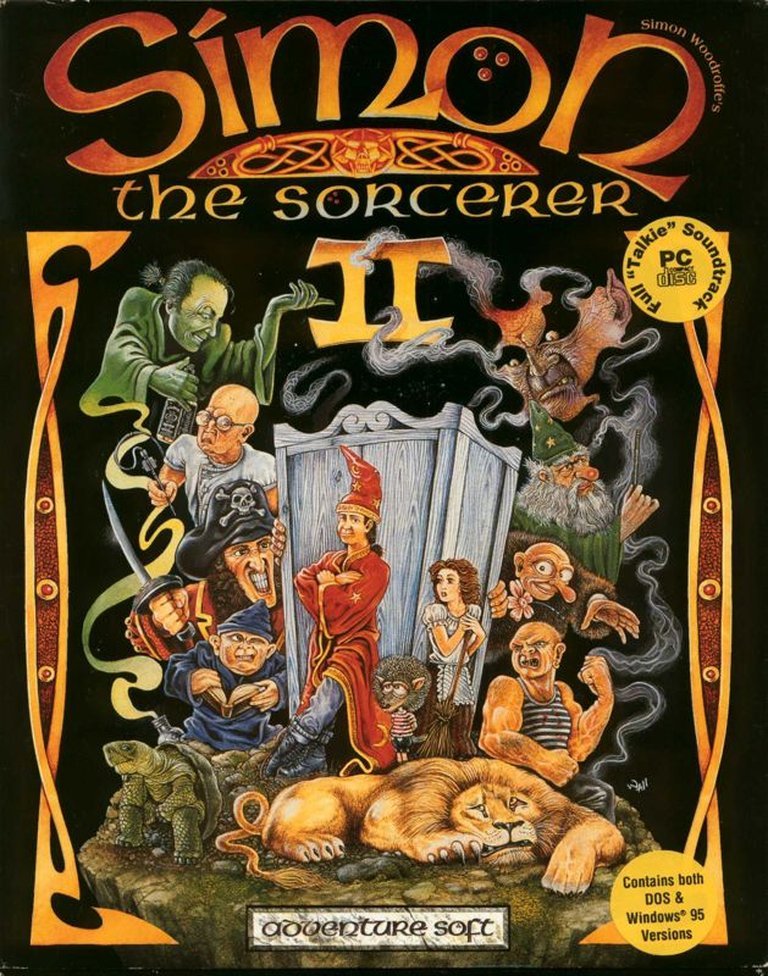
Simon the Sorcerer II: The Lion, the Wizard and the Wardrobe is a point-and-click adventure game that follows the misadventures of the teenage sorcerer Simon, who is transported to a fantastical dimension through a magical wardrobe. Tasked with finding a way back home, Simon must also thwart the evil plans of the villainous Sordid while navigating a world filled with humor, puzzles, and eccentric characters. The game builds on its predecessor with improved graphics, sound, and gameplay mechanics, offering a blend of British comedy, fantasy settings, and challenging puzzles.
Gameplay Videos
Where to Buy Simon the Sorcerer II: The Lion, the Wizard and the Wardrobe
PC
Simon the Sorcerer II: The Lion, the Wizard and the Wardrobe Free Download
Simon the Sorcerer II: The Lion, the Wizard and the Wardrobe Reviews & Reception
gog.com (32/100): Journey with Simon through this inevitable sequel to the best selling Simon the Sorcerer, as he manages once more to get stuck in a land of twisted fairytales, recycled gags and carbon dated clichés!
Simon the Sorcerer II: The Lion, the Wizard and the Wardrobe: A Comprehensive Retrospective
Introduction
Simon the Sorcerer II: The Lion, the Wizard and the Wardrobe (1995) is a landmark title in the golden age of point-and-click adventure games, a sequel that refined and expanded upon its predecessor while carving its own identity. Developed by Adventure Soft and designed by Simon Woodroffe, the game is a masterclass in comedic writing, world-building, and puzzle design, wrapped in a parody of fantasy tropes and fairy tales. This review will dissect the game’s development, narrative, gameplay, and legacy, arguing that it remains one of the most underrated yet influential adventure games of the 1990s.
Development History & Context
The Studio and Vision
Adventure Soft, a British studio founded by Mike and Simon Woodroffe, was already a respected name in the adventure genre by 1995, thanks to titles like Elvira: Mistress of the Dark and the original Simon the Sorcerer (1993). The sequel was conceived as a direct continuation, with Simon Woodroffe writing the entire story and overseeing its tone—a blend of British humor, satire, and self-aware fantasy. The game’s title itself is a playful nod to The Chronicles of Narnia, signaling its intent to subvert classic fantasy narratives.
Technological Constraints and Innovations
Released for DOS and Windows, Simon the Sorcerer II utilized the AGOS engine, an in-house tool that allowed for detailed hand-drawn graphics and fluid animations. The CD-ROM version featured full voice acting, a rarity at the time, though the Amiga port (released later) lacked background music due to hardware limitations. The game’s development was marked by meticulous attention to detail, with sketches and color tests ensuring a vibrant, cartoonish aesthetic that stood out in an era dominated by pixel art.
The Gaming Landscape of 1995
The mid-1990s were a transitional period for adventure games. LucasArts’ Monkey Island and Day of the Tentacle had set high standards for humor and gameplay, while Sierra’s King’s Quest series leaned into darker narratives. Simon the Sorcerer II arrived as a bridge between these styles, offering the wit of LucasArts with the whimsy of British comedy. Its release coincided with the rise of 3D graphics, making its 2D charm a deliberate throwback—a choice that would later define its legacy.
Narrative & Thematic Deep Dive
Plot Overview
The game begins with Simon, now a teenager, accidentally transported back to the magical world he escaped in the first game. This time, the villain is Sordid, a resurrected sorcerer seeking revenge. Simon’s quest to return home involves finding “mucusade,” a magical fuel, while navigating a world filled with parodies of Discworld, Dungeons & Dragons, and even McDonald’s. The story’s strength lies in its pacing: Simon’s journey from a royal castle to a pirate ship to Sordid’s lair is punctuated by absurd yet logical puzzles.
Characters and Dialogue
Simon’s evolution from a precocious child to a sarcastic teen is central to the game’s humor. His interactions with characters like the Swampling (now a fast-food mogul) and the dim-witted demons Gerald and Max are highlights, blending slapstick with sharp wit. The dialogue is densely packed with puns, cultural references, and meta-commentary, though some jokes (e.g., the “dog shit” tournament line) have aged poorly. The voice acting, while divisive (Brian Bowles replaced Chris Barrie as Simon), adds depth to the game’s comedic timing.
Themes and Satire
The game’s themes revolve around growing up, identity, and the absurdity of fantasy conventions. Simon’s teenage angst mirrors the player’s own frustrations with illogical puzzles, creating a meta-layer of humor. The world is a patchwork of parodies: the royal castle mocks medieval bureaucracy, the pirate ship satirizes adventure tropes, and Sordid’s robotic body critiques the “evil overlord” archetype. This self-awareness makes the game feel modern despite its 1995 release.
Gameplay Mechanics & Systems
Core Gameplay Loop
Simon the Sorcerer II is a classic point-and-click adventure, with players using a verb-based interface (e.g., “Look,” “Use,” “Talk”) to interact with the world. The inventory system is intuitive, though some puzzles require lateral thinking (e.g., the infamous “three balloons” puzzle). The game’s difficulty is balanced: while some solutions are obscure, the F5 hotspot reveal (a feature ahead of its time) mitigates frustration.
Puzzle Design
The puzzles are a mix of logical and absurd, often requiring players to combine items in unexpected ways. For example, obtaining mucusade involves sabotaging a magic tournament, a sequence that blends humor with problem-solving. However, the game’s reliance on moon logic (e.g., using a pony tail to distract a guard) can be polarizing. The pirate ship segment, while memorable, is a notable low point due to its convoluted design.
UI and Quality-of-Life Features
The interface is clean and functional, with icons clearly labeled and inventory management streamlined. The map system, though improved from the first game, is still cumbersome, requiring players to exit areas to access it. The CD-ROM version’s voice acting and sound effects (e.g., the “A-Team” pirate) enhance immersion, though the lack of subtitles in some versions is a missed opportunity.
World-Building, Art & Sound
Setting and Atmosphere
The game’s world is a vibrant, cartoonish realm where magic and modernity collide. Locations like the royal castle, pirate ship, and Sordid’s lair are richly detailed, with backgrounds teeming with visual gags. The art style, reminiscent of Dragon’s Lair and Monkey Island, uses bright colors and exaggerated animations to create a living, breathing world. The game’s tone shifts seamlessly from whimsical (e.g., the Swampling’s fast-food joint) to eerie (e.g., the Valley of Doom).
Sound Design
The soundtrack, composed by David R. Punshon, is a standout feature, blending orchestral fantasy themes with playful leitmotifs. The voice acting, while uneven (Simon’s new voice is a common criticism), adds personality to the characters. Sound effects, from the clinking of coins to the groans of monsters, are meticulously crafted, enhancing the game’s comedic and atmospheric moments.
Reception & Legacy
Critical and Commercial Reception
Upon release, Simon the Sorcerer II received widespread acclaim, with critics praising its humor, puzzles, and production values. Games World: The Magazine called it “hilarious entertainment for all,” while PC Games (Germany) highlighted its clever localization. The game sold over 600,000 copies, cementing Adventure Soft’s reputation. However, some reviews (e.g., Joystick (France)) noted its similarities to Monkey Island, a comparison that would follow the series.
Evolution of Reputation
Over time, the game’s reputation has grown, with retrospectives (e.g., Adventure Gamers’ 2011 “Top 100” list) celebrating its wit and charm. The 25th Anniversary Edition (2018), while controversial for its graphical filters, introduced the game to new audiences. Modern players appreciate its humor and puzzle design, though the voice acting and some jokes remain divisive.
Influence on the Industry
Simon the Sorcerer II influenced later adventure games by proving that humor and satire could coexist with complex puzzles. Its use of parody and meta-commentary paved the way for titles like Discworld and The Witcher’s comedic side quests. The game’s legacy is also evident in its cult following, with fan projects and remasters keeping its spirit alive.
Conclusion
Simon the Sorcerer II: The Lion, the Wizard and the Wardrobe is a triumph of comedic storytelling and adventure game design. While it may not have reached the commercial heights of Monkey Island, its blend of British humor, inventive puzzles, and vibrant world-building ensures its place in gaming history. The game’s flaws—occasional moon logic, uneven voice acting—are outweighed by its charm, wit, and heart. For fans of adventure games, it remains a must-play, a testament to Adventure Soft’s creativity and the enduring appeal of point-and-click adventures.
Final Verdict: 9/10 – A comedic masterpiece that stands the test of time.