
- Release Year: 2004
- Platforms: iPhone, J2ME, Palm OS, PlayStation 3, PSP, Symbian, Windows Mobile, Windows
- Publisher: Infinite Dreams Inc.
- Developer: Infinite Dreams Inc.
- Genre: Action, Shooter
- Perspective: Top-down
- Game Mode: Single-player
- Gameplay: 2D scrolling, Arcade, Direct control
- Average Score: 82/100
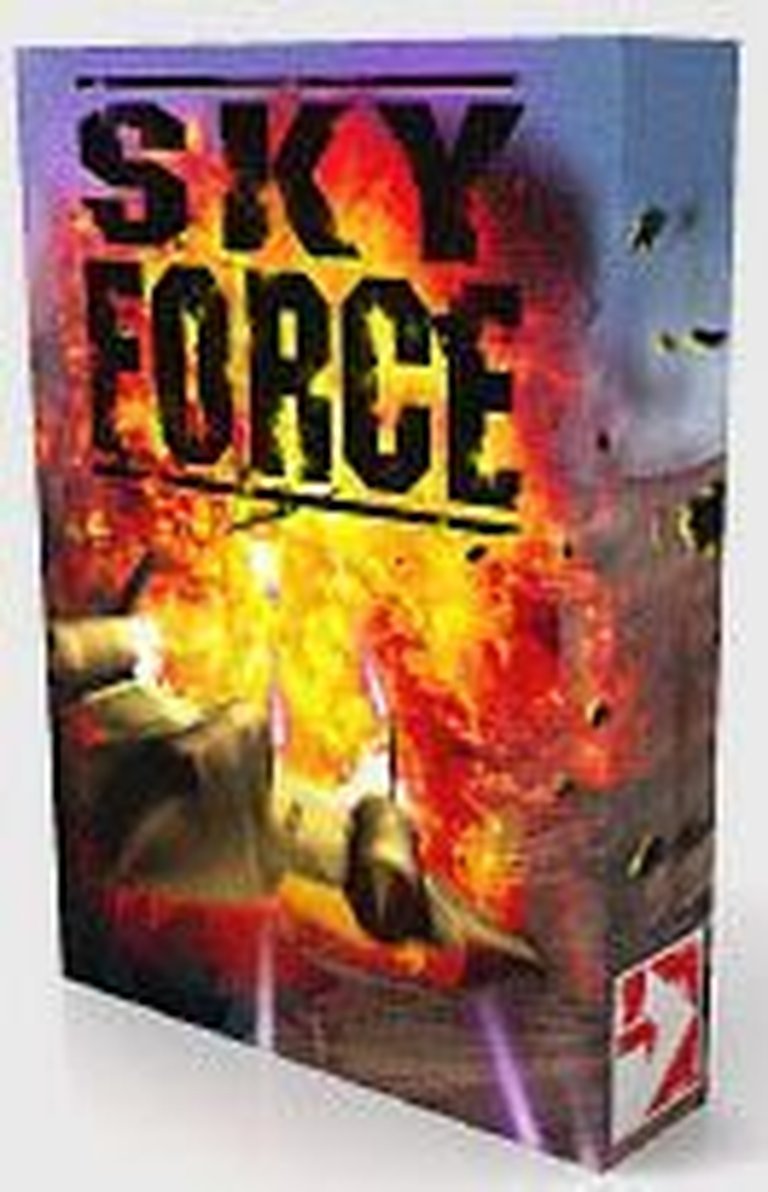
Description
Sky Force is a top-down arcade shooter set in intense aerial combat scenarios where players pilot a fighter plane through waves of enemy aircraft, ships, and ground forces. Set against dystopian battlefields, the game emphasizes fast-paced action, rescuing allies for power-ups, and upgrading weapons to tackle increasingly challenging stages. Inspired by classics like ‘1943,’ it combines retro-style visuals with modern polish across multiple platforms.
Gameplay Videos
Where to Buy Sky Force
Sky Force Free Download
Sky Force Cracks & Fixes
Sky Force Reviews & Reception
metacritic.com (69/100): Don’t expect too much from Sky Force. It is very tactical and pretty tough, but it’s still a good game for fans of the old-school vertical shoot’em-ups.
ign.com (95/100): Force your friends to buy this one.
Sky Force: Review
In the pantheon of classic shoot ’em ups, Sky Force stands as a testament to the enduring appeal of vertical scrolling action. Developed by Infinite Dreams Inc., this 2004 release captured the hearts of gamers with its blend of retro charm and modern polish. As we delve into the intricacies of Sky Force, we will explore its development history, narrative depth, gameplay mechanics, world-building, and its lasting legacy in the gaming industry.
Introduction
Sky Force is more than just a nostalgic trip down memory lane; it is a masterclass in how to blend old-school gameplay with contemporary aesthetics. Released in an era dominated by 3D graphics and complex narratives, Sky Force chose to focus on what made shoot ’em ups great: fast-paced action, challenging gameplay, and a sense of progression. This review will argue that Sky Force is not just a relic of the past but a timeless classic that continues to influence modern game design.
Development History & Context
The Studio
Infinite Dreams Inc., a Polish video game developer, was the creative force behind Sky Force. Founded in 2001, the studio quickly made a name for itself with innovative and high-quality mobile games. Sky Force was one of their earliest and most successful titles, setting the stage for future releases in the series.
The Creators’ Vision
The vision for Sky Force was clear: to recreate the thrill of classic arcade shooters on modern mobile devices. The developers aimed to capture the essence of games like Capcom’s 19XX series and Seibu Kaihatsu’s Raiden, while adding their own unique twists. The result was a game that felt both familiar and fresh, appealing to both old-school gamers and newcomers alike.
Technological Constraints of the Era
Released in 2004, Sky Force faced significant technological constraints. Mobile gaming was still in its infancy, with devices like the Symbian and Pocket PC offering limited processing power and screen real estate. Despite these limitations, Infinite Dreams managed to create a visually impressive and technically sound game. The use of sprite-based 2D graphics allowed for smooth animations and detailed environments, while the game’s design ensured that it ran smoothly on the hardware of the time.
The Gaming Landscape
The early 2000s were a transitional period for the gaming industry. Console gaming was dominated by 3D graphics and complex narratives, while PC gaming was seeing a resurgence with the rise of MMORPGs and strategy games. Mobile gaming, however, was still finding its footing. Sky Force emerged in this landscape as a beacon of what mobile gaming could achieve, proving that high-quality, engaging experiences were possible on handheld devices.
Narrative & Thematic Deep Dive
Plot
The plot of Sky Force is straightforward but effective. Players take on the role of a pilot tasked with defeating the evil General Mantis, who seeks to wreak havoc upon the world with his Night Owl aircraft. The game’s eight levels are filled with a variety of enemies, from small planes to massive tanks and helicopters, culminating in epic boss battles.
Characters
The characters in Sky Force are archetypal but well-executed. General Mantis serves as the primary antagonist, his menacing presence looming over the player throughout the game. The player’s character, while not given a name or backstory, is a silent hero, their actions speaking louder than words.
Dialogue
Dialogue is minimal in Sky Force, but what little there is serves to enhance the game’s atmosphere. Cutscenes between levels provide brief glimpses into the story, while in-game text offers hints and tips. The use of text is sparse but effective, allowing the gameplay to take center stage.
Themes
Sky Force explores themes of heroism, perseverance, and the struggle against overwhelming odds. The player’s journey is one of constant challenge and growth, as they upgrade their weapons and tactics to face increasingly difficult enemies. The game’s themes are universal and timeless, resonating with players of all ages and backgrounds.
Gameplay Mechanics & Systems
Core Gameplay Loop
The core gameplay loop of Sky Force is simple but engaging. Players control a plane that can move freely within the vertical scrolling environment, shooting down enemies and collecting power-ups. The game’s difficulty ramps up quickly, requiring players to master the controls and develop strategies to survive.
Combat
Combat in Sky Force is fast-paced and satisfying. Enemies come in a variety of types, each with their own behaviors and weaknesses. Players must learn to recognize these patterns and adapt their tactics accordingly. The game’s weapon upgrade system allows for a high degree of customization, with players able to choose from a variety of weapons and power-ups to suit their playstyle.
Character Progression
Character progression in Sky Force is tied to the game’s weapon upgrade system. As players complete levels and defeat enemies, they earn stars that can be used to upgrade their weapons and unlock new abilities. This system encourages replayability, as players strive to unlock all the game’s secrets and achieve the highest scores.
UI
The user interface of Sky Force is clean and intuitive. Health, weapon, and power-up indicators are clearly displayed, allowing players to focus on the action. The game’s menus are easy to navigate, with options for adjusting settings and accessing saved games.
Innovative or Flawed Systems
One of the most innovative aspects of Sky Force is its weapon upgrade system. Unlike traditional shoot ’em ups, where weapons are often pre-determined, Sky Force allows players to customize their loadout, adding a layer of strategy and replayability. However, the game’s difficulty can be a double-edged sword, with some players finding it too challenging, while others find it too easy.
World-Building, Art & Sound
Setting
The setting of Sky Force is a futuristic world under threat from a malevolent force. The game’s levels take players through a variety of environments, from urban landscapes to industrial complexes and military bases. Each level is uniquely designed, with its own set of challenges and enemies.
Atmosphere
The atmosphere of Sky Force is tense and exciting. The game’s fast-paced action is complemented by a sense of urgency, as players race against time to save the world from destruction. The use of dynamic lighting and particle effects adds to the game’s visual appeal, creating a sense of immersion.
Visual Direction
The visual direction of Sky Force is a blend of retro and modern aesthetics. The game’s sprite-based graphics are detailed and expressive, while the use of 3D polygon objects adds depth and complexity. The game’s art style is consistent and cohesive, with each element working together to create a unified whole.
Sound Design
The sound design of Sky Force is top-notch. The game’s soundtrack is a mix of electronic and orchestral music, creating a sense of epic scale. Sound effects are crisp and satisfying, with each weapon and explosion sounding unique and powerful. The game’s voice acting is minimal but effective, with cutscenes featuring brief but impactful dialogue.
Reception & Legacy
Critical and Commercial Reception at Launch
Sky Force was met with critical acclaim upon its release. IGN gave it a near-perfect score of 9.5 out of 10, praising its graphics, gameplay, and replayability. Other critics echoed these sentiments, with many highlighting the game’s blend of old-school and modern elements. Commercially, Sky Force was a success, selling well on Symbian and Pocket PC devices and laying the groundwork for future releases in the series.
Evolution of Reputation
Over the years, Sky Force‘s reputation has only grown. The game is often cited as one of the best shoot ’em ups of its era, with its influence felt in subsequent games and the industry as a whole. Its legacy is a testament to the enduring appeal of classic gameplay mechanics and the power of innovative design.
Influence on Subsequent Games and the Industry
Sky Force has had a significant impact on the gaming industry. Its blend of retro and modern elements has inspired countless games, from mobile shooters to console exclusives. The game’s weapon upgrade system and challenging gameplay have become staples of the genre, with many developers citing Sky Force as a major influence.
Conclusion
Sky Force is a timeless classic that stands as a testament to the enduring appeal of shoot ’em ups. Its blend of retro charm and modern polish, combined with innovative gameplay mechanics and a sense of progression, make it a standout title in the genre. Whether you’re a fan of classic arcade shooters or a newcomer to the genre, Sky Force offers an experience that is both challenging and rewarding. Its legacy is secure, and its influence will be felt for years to come. In the pantheon of video game history, Sky Force deserves a place of honor, a shining example of what makes gaming great.