
- Release Year: 2004
- Platforms: Windows
- Publisher: Niels Bauer Games
- Developer: Niels Bauer Games
- Genre: Role-playing (RPG), Strategy, Tactics
- Perspective: 3rd-person
- Game Mode: Single-player
- Gameplay: Faction leadership, Reputation system, Ship modification, Turn-based combat
- Setting: Futuristic, Sci-fi
Description
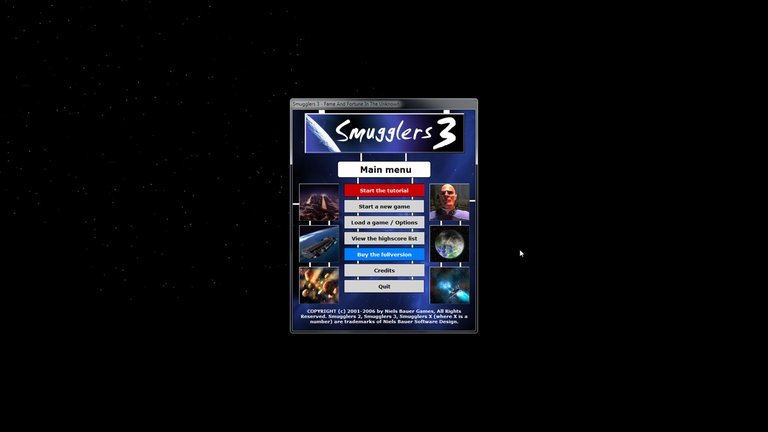
Smugglers 3 is a turn-based sci-fi strategy RPG set in a galactic war between the Federation and the Outer Rim. Players can align with one of four factions, including the Trader Coalition or the Syndicate, to lead them to prosperity through trade, piracy, or espionage. The game features enhanced graphics, expanded star systems, customizable ships, and a reputation system that affects faction trust.
Mods
Guides & Walkthroughs
Reviews & Reception
drakesflames.blogspot.com : The space combat part could have been a LOT more interesting.
Smugglers 3: A Comprehensive Review
Introduction
In the vast landscape of space simulation and strategy games, Smugglers 3 (2004) stands as a testament to the enduring appeal of open-ended, player-driven experiences. Developed by the German indie studio Niels Bauer Games, this title is the third installment in a series that began with Smugglers (2001) and continued with Smugglers 2 (2001). Smugglers 3 expands upon its predecessors’ foundations, offering a rich, turn-based spacefaring experience where players navigate the complexities of trade, combat, and factional politics in a war-torn galaxy. This review will delve into the game’s development history, narrative depth, gameplay mechanics, world-building, reception, and legacy, ultimately assessing its place in gaming history.
Development History & Context
The Studio and Its Vision
Niels Bauer Games, based in Freiburg, Germany, was a small but ambitious studio known for its niche strategy and simulation titles. Founded by Niels Bauer, the studio specialized in open-ended gameplay experiences, with Smugglers 3 being one of its flagship projects. The game was developed with a clear vision: to create a spacefaring simulation that combined the depth of Wing Commander: Privateer with the economic strategy of Elite.
Technological Constraints and the Gaming Landscape
Released in January 2004, Smugglers 3 arrived during a transitional period in PC gaming. The early 2000s saw a shift from 2D to 3D graphics, but indie developers often had to work within budgetary constraints. Smugglers 3 features improved graphics over its predecessors, but its strength lies not in visual spectacle but in its intricate systems and player agency. The game’s turn-based combat and text-heavy interface reflect the limitations of the era, yet they also contribute to its unique charm.
Influence of Predecessors
The Smugglers series drew inspiration from classic space sims like Elite and Wing Commander: Privateer, blending trading, combat, and exploration. Smugglers 3 builds upon these influences by introducing factional politics, a reputation system, and a more dynamic galaxy. The game’s modular ship customization and crew management systems also reflect the series’ evolution, offering players deeper strategic options.
Narrative & Thematic Deep Dive
Plot and Setting
Smugglers 3 is set in a galaxy torn apart by a protracted war between the Federation and the Outer Rim. Amidst this conflict, two new factions emerge: the Trader Coalition, representing merchants affected by the war, and the Syndicate, a loose alliance of pirates and smugglers seeking to profit from the chaos. Players can align with any of these four factions, each offering unique missions, equipment, and starting locations.
Characters and Dialogue
While the game lacks a traditional narrative with a cast of memorable characters, its strength lies in its emergent storytelling. Players shape their own stories through interactions with NPCs, faction leaders, and crew members. The dialogue is functional but lacks the depth of modern RPGs, reflecting the game’s focus on systems over narrative.
Themes
The game explores themes of ambition, loyalty, and the moral ambiguity of war. Players must navigate the consequences of their actions, whether they choose to play as a noble trader, a ruthless pirate, or a cunning diplomat. The reputation system adds a layer of consequence, as players’ choices affect their standing with factions and the galaxy at large.
Gameplay Mechanics & Systems
Core Gameplay Loops
Smugglers 3 offers a sandbox experience where players can engage in trading, combat, exploration, and faction missions. The game’s turn-based combat system is straightforward but tactical, with distance and weapon effectiveness playing key roles. Players must manage their ship’s modules, crew, and resources to survive and thrive in the galaxy.
Combat and Ship Customization
Combat is turn-based and strategic, with players selecting actions like firing weapons, jamming systems, or evading attacks. The distance factor adds depth, as weapons have varying ranges and effectiveness. Ship customization is a major focus, with players able to modify their vessels with new modules, weapons, and engines. The technology rating of planets determines which upgrades are available, encouraging exploration.
Reputation and Faction Systems
The reputation system tracks players’ standing with each faction, affecting mission availability and pricing. Players can gain favor by completing missions, trading legally, or engaging in piracy. The faction system adds a layer of political strategy, as players must balance their alliances and enemies.
UI and Accessibility
The game’s UI is functional but dated, with text-heavy menus and a lack of modern accessibility features. However, its compatibility with screen-reading software makes it accessible to visually impaired players, a notable achievement for its time.
World-Building, Art & Sound
Setting and Atmosphere
The game’s galaxy is vast and dynamic, with 75 planets across 25 star systems. Each planet has its own economy, technology level, and political alignment, creating a living world that evolves based on player actions. The war between factions adds a layer of unpredictability, as planets change hands and new opportunities arise.
Visual Direction
The game’s visuals are modest by modern standards, with 3D-rendered ships and planets set against a starry backdrop. The UI is text-heavy, with simple icons and menus. While not visually stunning, the game’s aesthetic is functional and fits its turn-based, strategic nature.
Sound Design
The soundtrack is minimal but effective, with ambient space music and sound effects that enhance the game’s atmosphere. The lack of volume controls can be an issue for some players, but the game’s compatibility with screen-reading software offsets this limitation.
Reception & Legacy
Critical and Commercial Reception
Smugglers 3 received mixed reviews upon release, with critics praising its depth and replayability but criticizing its dated graphics and combat system. The game’s cult following grew over time, with players appreciating its open-ended gameplay and strategic depth. The expansion, Smugglers 3: Expansion, added new content like gladiatorial combat and marriage mechanics, further extending the game’s lifespan.
Influence on Subsequent Games
Smugglers 3 influenced later space sims and strategy games, particularly in its blend of trading, combat, and factional politics. Its open-ended design and modular ship customization systems can be seen in games like Escape Velocity and Star Traders: Frontiers. The series continued with Smugglers IV: Doomsday (2009) and Smugglers V: The Smugglers Guild (2014), but Smugglers 3 remains a standout entry.
Cult Following and Abandonware Status
Despite its niche appeal, Smugglers 3 developed a dedicated fanbase. The game’s availability has become a topic of discussion, with fans seeking it out as abandonware. Its legacy lies in its ability to offer a deep, player-driven experience that transcends its technical limitations.
Conclusion
Smugglers 3 is a gem of early 2000s indie game development, offering a rich, open-ended spacefaring experience that prioritizes strategy and player agency over graphical fidelity. Its blend of trading, combat, and factional politics creates a dynamic galaxy that rewards exploration and experimentation. While its age shows in its visuals and UI, its core systems remain engaging and influential. Smugglers 3 is a must-play for fans of classic space sims and a testament to the enduring appeal of well-crafted, player-driven experiences. Its place in gaming history is secure as a cult classic that continues to inspire and entertain.