
- Release Year: 2014
- Platforms: iPad, iPhone, Macintosh, Windows
- Publisher: Naiad Entertainment LLC
- Developer: Naiad Entertainment LLC
- Genre: Action, Strategy, Tactics
- Perspective: Diagonal-down
- Game Mode: Single-player
- Gameplay: Puzzles, Real-time, RPG elements, Stealth, Turn-based
- Setting: Fantasy
- Average Score: 84/100
Description
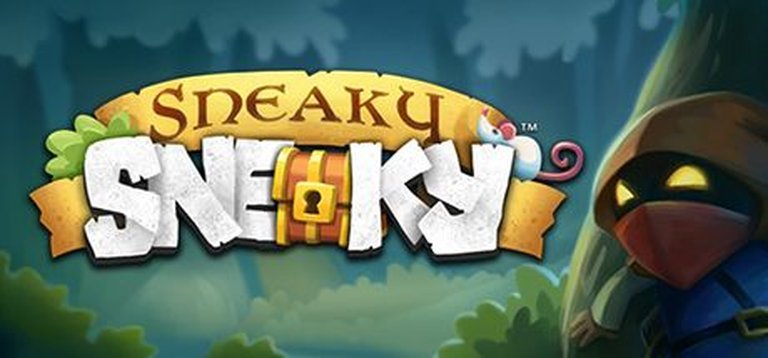
Sneaky Sneaky is a charming stealth-strategy game set in a fantasy world, where players must navigate through levels by avoiding enemies, solving puzzles, and utilizing stealth mechanics. The game features a crisp, smooth art style and offers a mix of real-time action and turn-based strategy, with RPG elements like upgrades and stat leveling. It’s designed to be accessible for casual players while providing challenges for hardcore gamers, such as achieving 100% stealth or completing no-item runs.
Where to Buy Sneaky Sneaky
PC
Sneaky Sneaky Free Download
Sneaky Sneaky Cracks & Fixes
Sneaky Sneaky Guides & Walkthroughs
Sneaky Sneaky Reviews & Reception
metacritic.com (82/100): A wonderfully put together stealth action title, Sneaky Sneaky has enough stabby fun to keep you going for hours.
gamesbeat.com : It’s fun to be sneaky
bigredbarrel.com (82/100): Sneaky Sneaky, a stealth-puzzle game, shows the player a different side of stealth games. It’s bright, colourful and adorable with no dark cities or brooding antiheroes.
gamesreviews2010.com (90/100): Sneaky Sneaky is a fantastic stealth puzzler that will challenge your skills and keep you entertained for hours on end.
Sneaky Sneaky: A Stealth Puzzler That Defies Expectations
Introduction
In the vast landscape of stealth games, Sneaky Sneaky (2014) emerges as a charming yet deceptively complex title that blends real-time stealth with turn-based combat. Developed by Naiad Entertainment, this indie gem carves out a niche by offering a family-friendly, puzzle-driven experience that appeals to both casual and hardcore gamers. While its brevity and occasional control quirks have drawn criticism, its innovative mechanics, vibrant art style, and strategic depth make it a standout in the genre. This review delves into the game’s development, narrative, gameplay, and legacy, arguing that Sneaky Sneaky is a hidden treasure in the stealth genre, deserving of recognition for its bold experimentation and accessibility.
Development History & Context
The Studio and Vision
Naiad Entertainment, a small indie studio, developed Sneaky Sneaky with a clear vision: to create a stealth game that was approachable yet challenging, blending real-time movement with turn-based combat. The studio aimed to craft a game that could appeal to a broad audience, including younger players, by eschewing the dark, violent themes typical of stealth titles like Thief or Dishonored. Instead, they opted for a bright, cartoonish aesthetic and a lighthearted tone, making the game feel more like a playful adventure than a gritty espionage thriller.
Technological Constraints and Design Choices
Released in 2014, Sneaky Sneaky was designed to run on both mobile platforms (iOS and Android) and PC, which influenced its technical and design decisions. The game’s fixed, diagonal-down perspective and flip-screen visuals were chosen to simplify navigation and ensure smooth performance across devices. The turn-based combat system was a deliberate choice to accommodate the limitations of touch controls on mobile while still offering strategic depth. This hybrid approach allowed the game to stand out in a crowded market, though it also introduced some challenges, particularly in pathfinding and movement precision.
The Gaming Landscape of 2014
The year 2014 was a pivotal one for indie games, with titles like Shovel Knight, Darkest Dungeon, and This War of Mine redefining what small teams could achieve. Sneaky Sneaky entered this landscape as a unique hybrid, blending elements of stealth, puzzle-solving, and light RPG mechanics. Its release on Steam and mobile platforms positioned it as a versatile title, though its reception varied significantly between platforms. The iOS version was met with critical acclaim, praised for its intuitive touch controls and charming presentation, while the PC version received more mixed reviews, with critics citing its short length and occasional control issues.
Narrative & Thematic Deep Dive
Plot Overview
Sneaky Sneaky follows the titular thief, Sneaky, who, after pulling off the heist of a lifetime, finds himself ambushed and imprisoned. The game opens with a brief cutscene of Sneaky escaping prison, only to have his stolen rubies snatched by a mischievous bird and scattered across the kingdom. The narrative, though minimal, serves as a framing device for the gameplay, which revolves around Sneaky’s quest to reclaim his treasure while evading or outsmarting a variety of enemies.
Characters and Dialogue
The game’s characters are simple but effective. Sneaky is a silent protagonist, his personality conveyed through his actions and the game’s visual style. The enemies, ranging from bumbling guards to cunning wolves, are designed to be more humorous than menacing, fitting the game’s lighthearted tone. The dialogue is sparse, with most interactions limited to brief text prompts or environmental cues. This minimalist approach keeps the focus on gameplay but also means the narrative lacks depth, serving primarily as a backdrop for the puzzles and stealth mechanics.
Themes: Stealth as Play
At its core, Sneaky Sneaky explores the theme of stealth as a form of play. The game celebrates the joy of outsmarting opponents, whether through careful planning, quick reflexes, or creative use of the environment. Unlike many stealth games that emphasize tension and survival, Sneaky Sneaky frames stealth as a playful challenge, encouraging experimentation and rewarding clever solutions. This theme is reinforced by the game’s art style and sound design, which create a whimsical, almost storybook-like atmosphere.
The game also touches on the theme of persistence. Levels are designed to be replayable, with players encouraged to try different strategies or aim for high scores. The lack of severe penalties for failure (e.g., retries don’t significantly impact scoring) reinforces the idea that stealth is about learning and adapting rather than punishing mistakes.
Gameplay Mechanics & Systems
Core Gameplay Loop
Sneaky Sneaky is structured around a series of self-contained levels, each presenting a unique puzzle to solve. The core gameplay loop involves:
1. Observation: Players must study enemy patrol patterns, marked by red-striped detection zones, to plan their route.
2. Execution: Using a tap-to-move system, players navigate Sneaky through the environment, avoiding detection or initiating stealth kills.
3. Combat: If detected, the game shifts to a turn-based combat system where players and enemies take alternating actions.
4. Progression: Completing levels earns XP, which can be used to upgrade Sneaky’s attributes (health, movement, damage), and gold, which can be spent on items like potions or bait.
This loop is simple but effective, offering a satisfying balance between planning and execution. The game’s puzzle-like design ensures that each level feels distinct, with new enemies and environmental hazards introduced gradually to keep the experience fresh.
Stealth and Combat Systems
The stealth mechanics are the game’s strongest feature. Players must time their movements carefully, using cover and distractions to avoid detection. The detection system is straightforward: enemies have a fixed field of view, and stepping into it triggers an alert. The game rewards patience and precision, with stealth kills (performed by attacking from behind or while hidden) offering bonus XP.
The turn-based combat system is a mixed bag. While it adds strategic depth, allowing players to plan their attacks and use items tactically, it can also feel disjointed from the real-time stealth gameplay. Combat is initiated when Sneaky is spotted or when he attacks an enemy directly. The turn-based nature means that battles can drag on, particularly against tougher enemies like wolves, which have high health and powerful attacks. However, the system also allows for creative solutions, such as luring enemies into traps or using the environment to gain an advantage.
Character Progression and Items
Sneaky Sneaky incorporates light RPG elements through its progression system. Players earn XP by completing levels, killing enemies, and achieving stealth kills. This XP can be spent on upgrading Sneaky’s health, movement speed, or damage output, allowing for some customization in playstyle. Additionally, gold collected from enemies or found in the environment can be used to purchase items from Squeaky the mouse, including:
– Potions: Restore health or action points.
– Bait: Lures enemies into traps or distractions.
– Barrels: Provides temporary cover or hiding spots.
These items add variety to the gameplay, though their impact is somewhat limited by the game’s short length. The progression system is simple but effective, giving players a sense of growth without overwhelming them with complexity.
UI and Controls
The game’s UI is clean and functional, with a minimalist design that keeps the focus on the gameplay. On mobile, the touch controls are intuitive, with players tapping to move and swiping to aim the bow. On PC, the mouse controls are less precise, leading to occasional frustration, particularly in levels that require tight movement or quick reactions.
One of the game’s most criticized aspects is its pathfinding. Sneaky’s movement is not always predictable, with the character sometimes taking unintended routes that lead directly into enemy detection zones. This issue is exacerbated in levels that require precise timing or complex paths, where a single misstep can ruin an otherwise perfect run.
World-Building, Art & Sound
Setting and Atmosphere
Sneaky Sneaky is set in a vibrant, fantasy-inspired world divided into three distinct regions: the Impwood, the Cursed Canyon, and the Summer Kingdom. Each region introduces unique environmental challenges, such as deep sand in the Cursed Canyon, which slows movement, or dense foliage in the Impwood, which provides additional cover. The world is colorful and inviting, with a storybook aesthetic that contrasts sharply with the dark, oppressive settings of most stealth games.
The game’s atmosphere is lighthearted and playful, reinforced by its visual and audio design. Enemies are designed to be more comical than threatening, with exaggerated animations and sound effects that emphasize the game’s whimsical tone. This approach makes Sneaky Sneaky feel accessible and fun, even when the gameplay becomes challenging.
Visual Direction
The art style is one of the game’s strongest assets. The 2D sprites are crisp and detailed, with a hand-drawn quality that gives the game a timeless appeal. The environments are richly textured, with each region featuring distinct color palettes and architectural styles. The Impwood, for example, is lush and green, while the Cursed Canyon is bathed in warm, golden hues. This visual variety keeps the game engaging, even as the core mechanics remain consistent.
The character designs are equally impressive. Sneaky himself is a charming protagonist, with his hooded cloak and mischievous demeanor evoking classic cartoon thieves. The enemies are similarly well-designed, with each type having unique visual cues that help players identify their behaviors and weaknesses.
Sound Design
The sound design complements the visual style perfectly. The ambient music is light and melodic, with a whimsical quality that enhances the game’s playful tone. Sound effects are used effectively to provide feedback, such as the satisfying “poof” of an enemy disappearing after a stealth kill or the tense music that plays when Sneaky is detected.
The lack of voice acting is notable but not detrimental. The game’s minimalist approach to dialogue and sound ensures that the focus remains on the gameplay, with audio cues serving primarily to reinforce the player’s actions and the game’s feedback systems.
Reception & Legacy
Critical Reception
Sneaky Sneaky received generally favorable reviews on iOS, with critics praising its charming art style, innovative stealth mechanics, and accessible gameplay. GameZebo, for example, called it “one of the best titles of 2014,” highlighting its compelling case for premium mobile experiences. The PC version, however, received more mixed reviews, with critics citing its short length (approximately 2-3 hours) and occasional control issues. Destructoid, in particular, criticized the game’s difficulty curve and pathfinding quirks, though it acknowledged its charm and strategic depth.
Despite these criticisms, the game was recognized for its unique blend of stealth and turn-based combat. It was named TouchArcade’s “Game of the Week” and was an entrant in the 2014 Independent Games Festival Awards, showcasing its innovation and appeal within the indie community.
Commercial Performance and Player Feedback
Commercially, Sneaky Sneaky was a modest success, particularly on mobile platforms where its accessible gameplay and charming presentation resonated with casual gamers. On Steam, the game’s reception was more muted, with players expressing disappointment over its brevity and lack of replayability. However, those who enjoyed the game praised its puzzle-like design and strategic depth, with many highlighting its potential as a gateway to more complex stealth titles.
Influence and Legacy
While Sneaky Sneaky did not spawn a direct sequel, its influence can be seen in subsequent indie stealth games that blend real-time and turn-based mechanics. Titles like Invisible, Inc. and Shadow Tactics: Blades of the Shogun share similarities in their emphasis on tactical planning and environmental interaction, though they cater to a more hardcore audience. Sneaky Sneaky‘s legacy lies in its accessibility and innovation, proving that stealth games can be both challenging and family-friendly.
The game’s reception also reflects broader trends in the gaming industry, particularly the growing demand for premium mobile experiences that offer depth and replayability. Sneaky Sneaky succeeded in this regard on iOS but struggled to meet expectations on PC, where players often seek longer, more complex experiences.
Conclusion
Sneaky Sneaky is a game of contradictions: it is both simple and strategic, charming and occasionally frustrating, brief yet densely packed with content. Its greatest strength lies in its ability to distill the essence of stealth gameplay into an accessible, puzzle-like experience that appeals to a wide audience. While its short length and control quirks prevent it from achieving greatness, its innovative mechanics, vibrant art style, and playful tone make it a memorable entry in the stealth genre.
In the grand tapestry of video game history, Sneaky Sneaky may not be a landmark title, but it is a testament to the creativity and ambition of indie developers. It proves that stealth games can be fun, colorful, and inviting, and it serves as a reminder that sometimes, the most satisfying experiences come from the simplest ideas. For those willing to overlook its flaws, Sneaky Sneaky offers a delightful adventure that celebrates the joy of being sneaky.
Final Verdict: 7.5/10 – A charming and innovative stealth puzzler that shines despite its shortcomings.