
- Release Year: 2013
- Platforms: Android, iPad, iPhone, Linux, Macintosh, Nintendo Switch, Windows
- Publisher: Firebrand Games and Entertainment Ltd., Pixel Games UK
- Developer: Firebrand Games and Entertainment Ltd.
- Genre: Action
- Perspective: Top-down
- Game Mode: Single-player
- Gameplay: Shooter
- Setting: Futuristic, Sci-fi
- Average Score: 69/100
Description
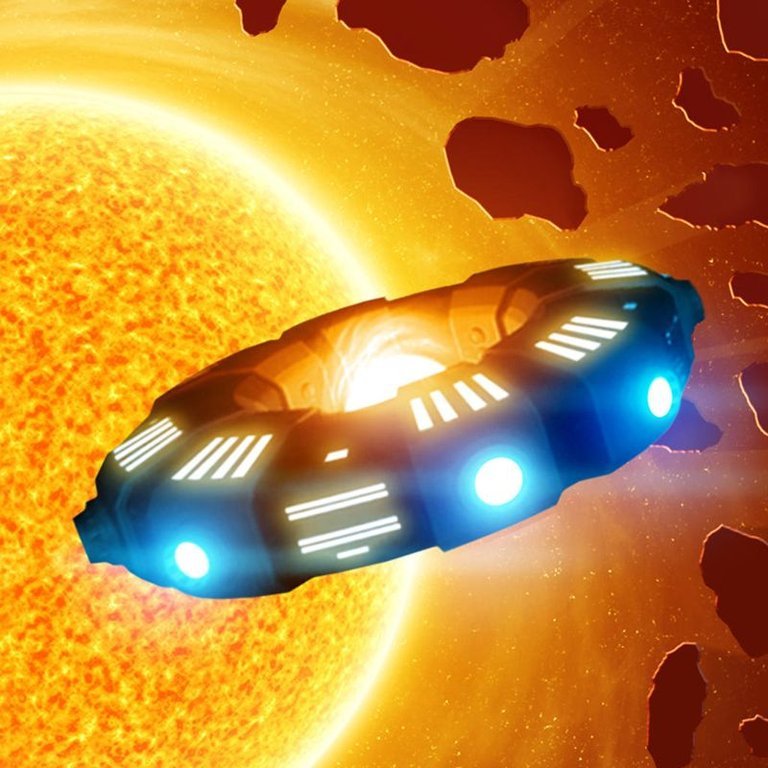
Solar Flux is a 2D arcade game set in the year 2107, where players pilot a spaceship to rescue dying suns by collecting plasma and shooting it into them. The game features gravity-based mechanics, requiring players to navigate carefully to avoid overheating from solar rays or colliding with meteorites, all while managing limited fuel. With Asteroids-like controls, including thrust and inertia, the game offers a challenging blend of action and strategy across multiple platforms.
Gameplay Videos
Where to Buy Solar Flux
PC
Solar Flux Guides & Walkthroughs
Solar Flux Reviews & Reception
metacritic.com (72/100): Solar Flux HD features an innovative star system, and that’s not just a pun because it takes place in space among star systems.
jpswitchmania.com : Solar Flux is a finely designed game, with hours of content to last you a while.
opencritic.com (62/100): Overall, Solar Flux is good verging on great; it does have a bit of a visual vacuum, but the gameplay — though difficult to get a handle on at first — makes up for this, with potentially addictive action.
gamesreviews2010.com : Solar Flux is not just a game; it is an invitation to embark on a cosmic odyssey, where puzzle-solving prowess and strategic thinking are the keys to success.
steambase.io (74/100): Solar Flux has earned a Player Score of 74 / 100.
Solar Flux: A Cosmic Puzzle of Light, Heat, and Gravity
Introduction
In the vast, silent expanse of space, where stars flicker like dying embers, Solar Flux (2013) emerges as a beacon of ingenuity—a game that transforms the act of saving celestial bodies into a delicate dance of physics, strategy, and precision. Developed by Firebrand Games and published by Pixel Games UK, Solar Flux is a 2D arcade-puzzle hybrid that challenges players to pilot a nimble spacecraft through treacherous cosmic environments, collecting plasma to reignite fading suns before they collapse into oblivion. At its core, Solar Flux is a game about balance: balancing momentum against gravity, risk against reward, and urgency against patience.
With its release across multiple platforms—iOS, Android, PC, Linux, Mac, and later the Nintendo Switch—Solar Flux carved a niche for itself in the indie puzzle genre, blending the retro charm of Asteroids-style inertia-based movement with modern puzzle design. Its premise is simple yet profound: you are humanity’s last hope, a lone pilot navigating the void to restore light to a universe on the brink of entropy. But beneath this poetic veneer lies a game of deceptive depth, where mastery of physics and quick thinking are the keys to survival.
This review will dissect Solar Flux in exhaustive detail, exploring its development history, narrative themes, gameplay mechanics, artistic design, and lasting legacy. We will examine how it stands as both a tribute to classic arcade mechanics and a bold experiment in puzzle-strategy fusion, and whether its ambitions ultimately shine as brightly as the suns it seeks to save.
Development History & Context
The Studio Behind the Stars
Firebrand Games, the Glasgow-based developer behind Solar Flux, is a studio with a diverse portfolio. Known primarily for their work on racing games like Fast & Furious: Showdown and Hot Wheels: World’s Best Driver, Firebrand’s foray into the puzzle genre with Solar Flux marked a significant departure from their usual fare. This shift was not merely a creative detour but a deliberate attempt to explore new design spaces, leveraging their technical prowess in physics-based gameplay to craft something entirely different.
The studio’s decision to develop Solar Flux was influenced by the rising popularity of mobile gaming in the early 2010s, a period when touchscreen devices were becoming the primary platform for casual and puzzle games. Firebrand saw an opportunity to merge the accessibility of mobile gaming with the depth of PC and console experiences, resulting in a game that felt at home on both smartphones and traditional gaming platforms.
Technological Constraints and Design Philosophy
Solar Flux was conceived in an era where mobile hardware was rapidly evolving but still limited compared to PCs and consoles. The game’s 2D top-down perspective and minimalist aesthetic were not just stylistic choices but practical ones, ensuring smooth performance across a wide range of devices. The physics engine, which governs the ship’s movement, gravity, and plasma dynamics, was optimized to run efficiently on mobile processors without sacrificing the precision required for its puzzle mechanics.
The game’s control scheme reflects this dual-platform design philosophy. On mobile, players use touch controls to steer their ship, tapping and dragging to adjust thrust and direction. On PC and consoles, the game supports both mouse/keyboard and controller inputs, with the latter offering a more tactile experience. This flexibility was crucial for Solar Flux’s multi-platform appeal, though it also introduced challenges in ensuring consistency across control methods—a issue that would later draw mixed reactions from players.
The Gaming Landscape of 2013
Solar Flux arrived at a time when the indie game scene was flourishing, thanks in part to digital distribution platforms like Steam, the App Store, and Google Play. Games like Fez, Super Hexagon, and Plants vs. Zombies had demonstrated that small, innovative titles could achieve both critical acclaim and commercial success. Within the puzzle genre, titles such as World of Goo and Peggle had set high standards for creativity and accessibility, while physics-based puzzlers like Angry Birds Space and Fruit Ninja dominated the mobile charts.
Against this backdrop, Solar Flux positioned itself as a hybrid experience—part arcade shooter, part puzzle game, part strategy challenge. Its blend of Asteroids-inspired movement with modern puzzle mechanics was a gamble, but one that paid off in terms of originality. The game’s release in August 2013 on iOS, followed by PC and other platforms, was met with cautious optimism. Critics and players alike recognized its uniqueness, even if its execution wasn’t universally praised.
Narrative & Thematic Deep Dive
A Universe in Peril: The Premise
Solar Flux is set in the year 2107, a time when the universe is in a state of decay. Stars are dying at an alarming rate, threatening to plunge entire galaxies into darkness. The player assumes the role of a lone pilot aboard a specialized “Flux Accumulator” ship, tasked with collecting scattered plasma fragments and delivering them to the cores of dying suns. The goal is not just to restore these stars but to prevent a cascading collapse that would doom all life in the cosmos.
The game’s narrative is minimalist, conveyed primarily through its premise and level descriptions rather than cutscenes or dialogue. This approach allows the gameplay to take center stage while still providing a compelling context for the player’s actions. The stakes are high—nothing less than the survival of the universe—but the storytelling is understated, relying on atmosphere and implication rather than exposition.
Themes of Entropy and Renewal
At its heart, Solar Flux is a meditation on entropy, the thermodynamic principle that all systems tend toward disorder. The dying suns represent the inevitable decay of the universe, a force that the player must combat through skill and perseverance. This theme is reinforced by the game’s mechanics: the player’s ship is constantly at risk of overheating, fuel is limited, and every mistake brings the universe closer to collapse.
Yet Solar Flux is also a game about renewal. Each successfully restored sun is a small victory against entropy, a moment of rebirth in a dying cosmos. The act of collecting plasma and firing it into a star’s core is symbolic of the cyclical nature of existence—stars die, but their remnants fuel new life. This duality of decay and renewal gives the game a philosophical depth that belies its simple premise.
The Role of the Player: Heroism in the Void
The player’s role in Solar Flux is that of a cosmic savior, a lone hero fighting against insurmountable odds. There are no allies, no reinforcements—just the player and their ship, navigating the void in a desperate bid to stave off universal collapse. This isolation is reflected in the game’s design: the ship is small and fragile, the obstacles are numerous and deadly, and the margin for error is razor-thin.
This sense of solitude is further emphasized by the game’s lack of narrative characters. There are no NPCs, no dialogue, no backstory for the pilot. The player is a faceless, nameless entity, defined solely by their actions. This anonymity serves to universalize the player’s role—anyone could be the hero in this story, and the responsibility for saving the universe rests entirely on their shoulders.
The Ambiguity of the “Perishing Universe”
One of the most intriguing aspects of Solar Flux’s narrative is its ambiguity. The game’s description speaks of a “perishing universe,” but it never clarifies whether this is a natural phenomenon or the result of some cataclysmic event. Are the stars dying because of an external threat, or is this simply the inevitable end of all things? The lack of answers invites players to interpret the game’s events for themselves, adding a layer of mystery to the experience.
This ambiguity extends to the game’s obstacles. Asteroids, solar flares, and force fields are framed as challenges to the player, but their narrative significance is left open to interpretation. Are they natural hazards, or are they part of a larger, unseen conflict? The game’s minimalist storytelling leaves these questions unanswered, allowing players to fill in the gaps with their own theories.
Gameplay Mechanics & Systems
Core Gameplay Loop: A Dance of Physics and Precision
Solar Flux’s gameplay revolves around a deceptively simple loop: collect plasma, deliver it to a dying sun, and avoid destruction in the process. However, the execution of this loop is anything but simple. The game’s physics-based movement system, inspired by Asteroids, requires players to master the nuances of inertia, gravity, and momentum.
The player’s ship moves through space with no friction, meaning that every thrust propels the ship in a direction until an opposing force (such as another thrust or a gravitational pull) alters its trajectory. This creates a sense of weight and realism, as the ship glides through the void with a satisfying sense of momentum. However, it also introduces a steep learning curve, as players must account for the ship’s inertia when navigating tight spaces or avoiding hazards.
Plasma Collection and Delivery: The Heart of the Game
The primary objective in each level is to collect plasma fragments scattered throughout the environment and deliver them to the core of a dying sun. Plasma fragments are small, glowing orbs that must be gathered by flying the ship over them. Once collected, the player can fire the plasma toward the sun, restoring a portion of its energy.
The act of firing plasma is where Solar Flux’s puzzle mechanics come into play. Plasma orbs can be fired individually or combined into larger clusters, which restore more energy to the sun but are harder to aim. Players must carefully plan their trajectory to ensure that the plasma reaches its target without being deflected by obstacles or gravitational forces.
Obstacles and Hazards: The Universe Fights Back
The cosmos in Solar Flux is a dangerous place, filled with hazards that threaten to destroy the player’s ship. These include:
- Asteroids: Large, immobile rocks that must be avoided at all costs. Colliding with an asteroid results in instant destruction.
- Solar Flares: Bursts of energy emitted by dying suns, which push the player’s ship away and can disrupt their trajectory.
- Force Fields: Invisible barriers that block movement and must be navigated around.
- Supernovas: Exploding stars that create shockwaves, forcing the player to time their movements carefully.
- Heat Zones: Areas near suns where the player’s ship overheats, requiring them to seek shelter in the shadows of planets or asteroids.
Each of these hazards introduces a unique challenge, requiring players to adapt their strategies on the fly. The game’s difficulty ramps up gradually, with later levels combining multiple hazards to create complex, multi-layered puzzles.
Resource Management: Fuel and Heat
In addition to navigating hazards, players must manage two critical resources: fuel and heat.
- Fuel: The ship’s thrusters consume fuel, which is limited. Running out of fuel leaves the player helpless, drifting through space until they either collide with an obstacle or complete the level. Fuel can be replenished by collecting fuel pods scattered throughout the environment, but these are often placed in hard-to-reach areas, adding another layer of strategy to the gameplay.
- Heat: The ship’s heat shields degrade when exposed to the intense radiation of dying suns. If the shields fail, the ship overheats and is destroyed. Players must seek refuge in the shadows of planets or asteroids to cool down, but lingering too long can waste precious time.
The interplay between fuel and heat management adds a tactical dimension to Solar Flux. Players must balance the need to move quickly with the need to conserve resources, making every decision a potential trade-off.
The 3-Star Rating System: Encouraging Mastery
Solar Flux employs a 3-star rating system to evaluate the player’s performance in each level. Stars are awarded based on criteria such as completion time, fuel remaining, and shield integrity. Earning all three stars in a level requires near-perfect execution, encouraging players to replay levels and refine their strategies.
This system is more than just a measure of skill—it’s a core part of the game’s progression. Many levels are locked until the player earns a certain number of stars, ensuring that they cannot simply brute-force their way through the game. Instead, they must master the mechanics and develop a deep understanding of the game’s physics.
Control Schemes: A Double-Edged Sword
One of the most contentious aspects of Solar Flux is its control scheme. The game supports multiple input methods, including touchscreen (on mobile), mouse/keyboard (on PC), and controller (on all platforms). However, the effectiveness of these controls varies widely depending on the platform.
- Touchscreen Controls: On mobile devices, players use touch gestures to steer the ship, tapping to thrust and dragging to adjust direction. While this method is intuitive for casual play, it lacks the precision required for the game’s more challenging levels. The absence of tactile feedback can make it difficult to execute fine movements, leading to frustration.
- Mouse/Keyboard Controls: On PC, the mouse is used to aim the ship, while the keyboard controls thrust. This setup offers greater precision than touch controls but can feel awkward, as the player must coordinate two separate input methods.
- Controller Controls: The game’s controller support is its strongest feature, offering a natural and responsive way to pilot the ship. The analog sticks provide the precision needed for tight maneuvers, and the tactile feedback of physical buttons enhances the sense of control. However, the Nintendo Switch version suffers from a peculiar limitation: the game does not recognize inputs from Joy-Cons when the console is in handheld mode, forcing players to use either the touchscreen or a Pro Controller.
The inconsistency in control schemes is one of Solar Flux’s most significant flaws. While the game’s physics and puzzle design are excellent, the controls often struggle to keep up, particularly on mobile and handheld platforms.
World-Building, Art & Sound
A Visual Odyssey: The Aesthetics of Space
Solar Flux’s visual design is a study in minimalism and atmosphere. The game’s 2D top-down perspective places the player’s ship against a backdrop of swirling nebulae, glowing stars, and distant galaxies. The art style is clean and uncluttered, with a focus on clarity and readability—essential for a game that demands precise navigation.
The game’s four galaxies each have a distinct visual identity, with unique color palettes and environmental themes. From the icy blues of a frozen nebula to the fiery reds of a dying star system, the visuals evoke a sense of wonder and isolation. The suns themselves are rendered with a soft, pulsating glow, their light flickering as they near extinction—a subtle but effective way to convey the urgency of the player’s mission.
The Illusion of Depth: Parallax and Particle Effects
Despite its 2D presentation, Solar Flux employs several techniques to create a sense of depth and immersion. Parallax scrolling gives the background a sense of motion, while particle effects—such as the shimmering trails of plasma and the flickering embers of solar flares—add texture to the environment. These details are small but crucial, transforming what could have been a sterile puzzle game into a living, breathing cosmos.
The Soundtrack: A Symphony of the Void
The game’s ambient soundtrack is one of its most underrated features. Composed of slow, atmospheric tracks that blend electronic and orchestral elements, the music perfectly complements the game’s themes of isolation and urgency. The soundtrack is dynamic, shifting in intensity as the player progresses through a level, with moments of calm giving way to pulses of tension during critical sequences.
The sound design extends beyond the music, with subtle audio cues that enhance the gameplay experience. The hum of the ship’s engines, the crackle of solar flares, and the distant rumble of supernovas all contribute to the game’s immersive atmosphere. These sounds are not just decorative—they serve a functional purpose, alerting the player to hazards and providing feedback on their actions.
The Absence of Narrative: Strength or Weakness?
Solar Flux’s minimalist approach to storytelling is a double-edged sword. On one hand, the lack of dialogue and exposition allows the gameplay to take center stage, creating a pure, uncluttered experience. The player’s focus is entirely on the mechanics, the puzzles, and the act of saving the universe—there are no distractions, no unnecessary cutscenes, no lore dumps.
On the other hand, the absence of narrative depth can make the game feel hollow at times. While the premise of saving dying suns is compelling, the lack of context or character development means that the player’s actions lack emotional weight. There is no sense of connection to the universe they are saving, no personal stake in the outcome. This is a deliberate choice, but it may leave some players wanting more.
Reception & Legacy
Critical Reception: A Mixed but Positive Response
Solar Flux received a generally favorable response from critics, with an average score of 73% based on three reviews (according to MobyGames) and a Metacritic score of 72 for its iOS version. Critics praised the game’s originality, challenging gameplay, and atmospheric presentation, though many noted its steep learning curve and occasionally frustrating controls.
- OMG! Ubuntu! (83%): The Linux version was lauded for its “stunning visual diversity” and “enticing soundtrack,” with the reviewer noting that the game’s mechanics, while difficult to master, were ultimately rewarding.
- Nintendo Life (70%): The Switch version was described as “good verging on great,” with addictive gameplay that outweighed its visual repetitiveness. The reviewer highlighted the game’s potential for replayability, thanks to its 3-star rating system.
- Way Too Many Games (65%): The Switch version was criticized for its “weird physics and unreliable controls,” but the reviewer acknowledged that the game’s challenge could be oddly compelling, especially for players who enjoy overcoming frustration.
Player Reception: A Niche Appeal
Player reception to Solar Flux has been similarly mixed. On Steam, the game holds a “Mostly Positive” rating, with 79% of 72 reviews recommending it. Players who enjoyed the game praised its unique mechanics, satisfying puzzle design, and relaxing atmosphere. However, those who disliked it often cited the controls as the primary issue, particularly on mobile and handheld platforms.
The game’s difficulty was another point of contention. Some players appreciated the challenge, finding it rewarding to master the game’s physics and earn three-star ratings. Others found the learning curve too steep, particularly in the later levels, where the combination of hazards and resource management can feel overwhelming.
Legacy: A Small but Shining Star
Solar Flux may not have achieved the same level of recognition as other indie puzzlers of its era, but it has carved out a small but dedicated niche. Its blend of Asteroids-style movement with modern puzzle mechanics makes it a unique entry in the genre, and its atmospheric presentation sets it apart from more generic offerings.
The game’s influence can be seen in later titles that combine physics-based movement with puzzle-solving, such as Gravi and Gravity Badgers. While Solar Flux did not spawn a direct sequel, its core mechanics—particularly the emphasis on inertia and momentum—have inspired other developers to explore similar design spaces.
The Nintendo Switch Port: A Missed Opportunity?
The 2018 Nintendo Switch port of Solar Flux was an attempt to bring the game to a new audience, but it was met with mixed reactions. While the game’s visuals and soundtrack translated well to the Switch’s hardware, the control issues that plagued the mobile version persisted. The inability to use Joy-Cons in handheld mode was a particularly egregious oversight, limiting the game’s appeal on a platform where portability is a key selling point.
Despite these flaws, the Switch version did introduce Solar Flux to a broader audience, and its inclusion in the Nintendo eShop ensured that it remained accessible to new players. However, it is unlikely to be remembered as a standout title in the Switch’s vast library of indie games.
Conclusion: A Flickering Light in the Indie Firmament
Solar Flux is a game of contradictions. It is both simple and complex, relaxing and frustrating, beautiful and repetitive. Its premise is grand—saving the universe from entropy—but its execution is intimate, focusing on the minute details of physics and precision. It is a game that demands patience, skill, and a willingness to embrace its quirks.
At its best, Solar Flux is a masterclass in puzzle design, blending arcade mechanics with strategic depth to create a experience that is both challenging and rewarding. The game’s physics-based movement system is a triumph, offering a level of realism and weight that is rare in 2D puzzlers. The visuals and soundtrack are equally impressive, immersing the player in a cosmos that is both vast and intimate.
However, Solar Flux is not without its flaws. The controls, particularly on mobile and handheld platforms, are a persistent issue, often undermining the game’s otherwise excellent design. The lack of narrative depth may leave some players feeling disconnected from the experience, and the game’s difficulty can be punishing for those who are not prepared to invest the time to master its mechanics.
Final Verdict: 7.5/10 – A Unique but Flawed Gem
Solar Flux is a game that shines brightly in moments but is ultimately held back by its inconsistencies. It is a title that will appeal to fans of physics-based puzzlers and arcade-style gameplay, particularly those who enjoy a challenge. However, its control issues and steep learning curve may deter more casual players.
For those willing to overcome its flaws, Solar Flux offers a deeply satisfying experience—a cosmic journey that is as much about the joy of movement as it is about saving the universe. It is not a perfect game, but it is a memorable one, a flickering light in the indie firmament that deserves to be remembered.
Recommendation: If you are a fan of puzzle games with a physics twist, Solar Flux is worth your time, particularly on PC or with a controller. However, if you prefer more forgiving controls or narrative-driven experiences, you may find it frustrating. Approach with an open mind and a willingness to learn, and you may discover a hidden gem in the vast expanse of indie gaming.