
- Release Year: 2022
- Platforms: PlayStation 5, Windows, Xbox Series
- Publisher: Modus Games, LLC
- Developer: Reply Game Studios
- Genre: Action
- Perspective: Behind view
- Game Mode: Single-player
- Gameplay: Hack and Slash, Skill-based combat
- Setting: Dark fantasy, Fantasy, Gothic
- Average Score: 69/100
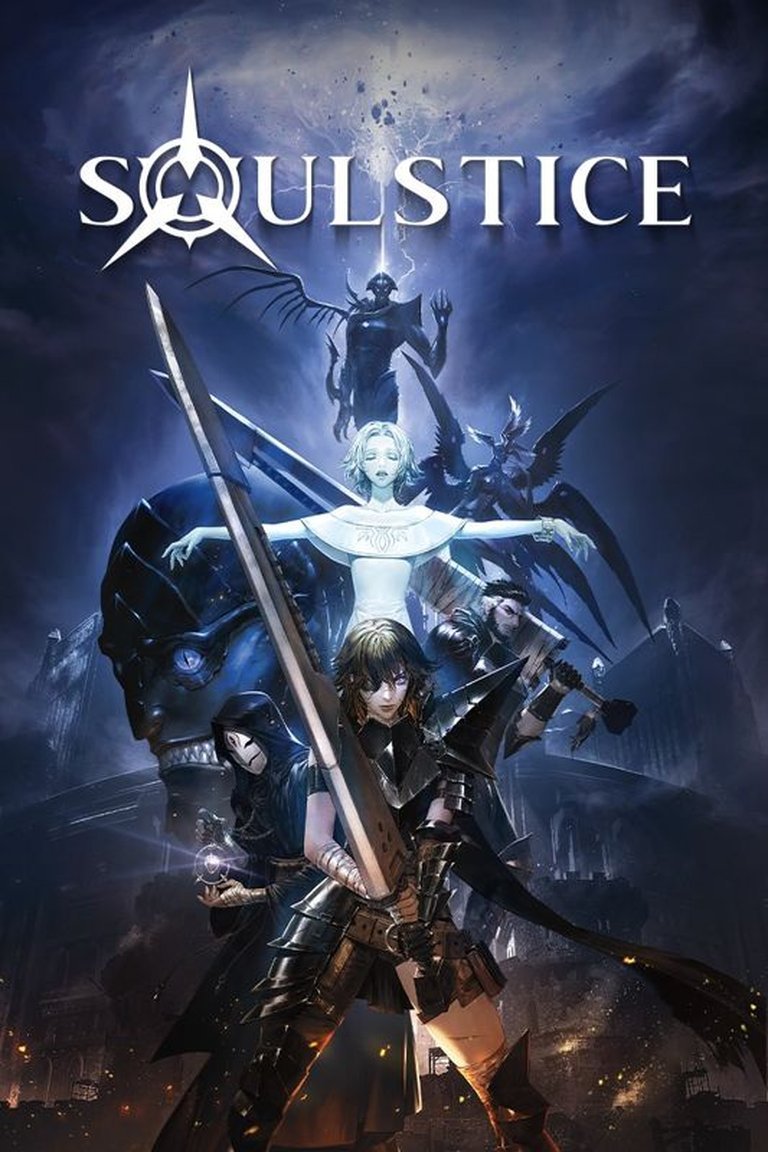
Description
Soulstice is a dark fantasy action game developed by Reply Game Studios, featuring hack and slash combat with skill-based mechanics from a behind-view perspective. Set in a richly imagined fantasy world, players control a female protagonist as they engage in intense battles while unravelling a mysterious narrative filled with intrigue and adventure.
Gameplay Videos
Where to Buy Soulstice
PC
Soulstice Free Download
Soulstice Mods
Soulstice Guides & Walkthroughs
Soulstice Reviews & Reception
metacritic.com (68/100): Soulstice does an exceptional job of keeping the player engaged throughout its entirety.
reddit.com (70/100): Soulstice is a melting pot of things Devil May Cry does well and adds interesting demanding combat.
ign.com : Combat is the shining point, but it’s plagued with a terrible camera, some buggy performance, and a steep learning curve.
Soulstice: A Gothic Symphony of Sisterhood and Slaughter
Introduction: The Chimera’s Call
In the crowded pantheon of character-action games, where the spectral legacy of Devil May Cry and the balletic chaos of Bayonetta cast long shadows, Soulstice emerged in September 2022 not as a revolutionary messiah, but as a fiercely ambitious and deeply personal love letter to the genre. Developed by Milan-based Reply Game Studios—a team better known for mobile and casual titles under the Forge Reply banner—this was their boldest, most expensive, and most critically scrutinized project to date. At its heart lies a brilliant, high-concept premise: two sisters, Briar and Lute, share a single body as a Chimera warrior, a fusion of living flesh and spectral shade. This isn’t merely a narrative gimmick; it is the foundational keystone of the entire gameplay and thematic architecture. Soulstice’s thesis is that true power arises from symbiotic partnership, not solitary prowess. This review will argue that while Soulstice stumbles under the weight of its own ambition and budget constraints, its profound commitment to this dualistic core—both in combat and story—elevates it above a mere imitation, securing its place as a fascinating, flawed, and ultimately encouraging landmark for mid-tier, passion-driven action game development.
Development History & Context: An Italian Overture
The Studio and Vision: Reply Game Studios, part of the larger Reply S.p.A. tech conglomerate, was primarily a work-for-hire and mobile game developer. Soulstice represented a monumental pivot into premium, console/PC action gaming. Creative Director Fabio Pagetti and Lead Designer Marco Mortillaro spearheaded a project years in the making, aiming to create a “next-generation action game” with a dark fantasy identity distinct from its Japanese predecessors. Their vision, as articulated in early promotional material, was to blend the “stylish action” of Capcom and Platinum with a European dark fantasy aesthetic reminiscent of Berserk or Claymore, and a narrative focused on an unbreakable sisterly bond.
Technological Constraints & The 2022 Landscape: Built in Unreal Engine 4 with PhysX physics and FMOD for audio, Soulstice was a technically competent but not cutting-edge showcase. It arrived in a post-Devil May Cry 5 (2019) and Bayonetta 3 (2022) world, where the bar for “style action” was astronomically high. The indie/AA space was also seeing notable entries like Hellblade: Senua’s Sacrifice (2017) and Absolver (2017), which prioritized atmosphere and systemic combat. Soulstice landed squarely between these poles: it lacked the sheer polish and depth of the genre’s titans, but it also wasn’t a minimalist indie experiment. Its most significant constraint was evident in its scope: a single, massive city (Ilden) reused across 20+ hours, leading to pronounced environmental repetition—a point of near-universal criticism. The development team’s Italian heritage informed the game’s gothic, cathedral-laden aesthetic, but the limited art and level design resources meant this vision often manifested as a beautiful but monotonous grayish-brown ruin.
Release and Publishing: Published by Modus Games, LLC, a known supporter of mid-tier AA titles, Soulstice launched on September 20, 2022 for PlayStation 5, Xbox Series X/S, and Windows. A PlayStation 4 port followed on June 20, 2023, accompanied by a content update. Its initial price point ($39.99/$3.99 on Steam later) positioned it as a premium, if modestly budgeted, experience.
Narrative & Thematic Deep Dive: Bonded by Blood and Shadow
Plot Structure and Pacing: The narrative is delivered across five acts and 25 chapters, framed by “Memories” that flesh out backstory. The prologue establishes the inciting incident: the sisters’ Chimera transformation. Act I thrusts players into the besieged city of Ilden, introducing the core conflict against the Wraiths and the mysterious Order of the Ashen Blade. Acts II through IV deepen the conspiracy, revealing the Order’s morally ambiguous plans and the true nature of the “Soulstice” event referenced in the title. Act V builds to a climax at the Tear in the Sky, resolving the immediate threat while leaving broader mythological threads open for sequel potential.
Characters and Dynamics: The success of the narrative hinges entirely on Briar and Lute. Voiced with compelling gravitas by Stefanie Joosten (famous for Metal Gear Solid V: The Phantom Pain‘s Quiet), their relationship is the game’s undeniable emotional core. Briar is the fierce, physical Knight; Lute is the ethereal, observant Shade. Their dialogue is constant, bantering, arguing, and supporting one another. The genius of the writing (primarily by Samuele Perseo and Fabio Pagetti) is in how their bond is tested and proven not through grand declarations, but through synchronized combat mechanics. When Lute’s aura protects Briar, or when they execute a dual-powered transformation, the gameplay shows what the story tells: they are stronger together.
Supporting characters like the cold observer Layton, the enigmatic antagonist Kordelia, and the tragic other Chimera Hannah provide plot momentum, but most are underdeveloped archetypes. The Order of the Ashen Blade is a fascinating but lightly sketched institution—more a plot device than a fully realized faction. The themes of sacrifice, autonomy, and institutional betrayal are present but handled with a relatively straightforward, occasionally predictable, script. The most resonant theme is the “coming-of-age” aspect: Briar and Lute are literally reborn, learning to navigate a new, shared existence while questioning the dogma that created them.
Gameplay Mechanics & Systems: The Dance of Two Souls
Core Loop and Combat Synergy: Soulstice is a “hack and slash” or “character-action” game at its foundation, but its genius lies in the mandatory dual-character management. Briar handles all melee attacks with a suite of seven unlockable weapons (Ashen Vindicator sword/hammer, bow, katar daggers, whip, tonfa guns, etc.). Lute is not a direct playable character but a passive-active support system whose abilities are triggered via a single button (default Circle/B) in response to on-screen prompts or manually for auras.
The central tactical layer is Lute’s Aura System. She can project a Red or Blue spiritual dome. Certain enemies (Wraiths, Corrupted, Possessed) are color-coded and immune to Briar’s attacks unless the matching aura is active. This forces constant awareness: switch auras mid-combo, manage the dome’s limited duration, and time defensive prompts (Deflect, Bind, Repel) to protect Briar. This creates a demanding “rhythm” where players must process enemy types, aura status, combo inputs, and spatial positioning simultaneously.
Progression and Customization: Currency (Soul Fragments) is used to upgrade each weapon with new combos and enhanced stats via a simple skill tree. The system encourages specialization but doesn’t lock players in; switching weapons mid-combo is a key stylish-action trope Soulstice implements well. The Unity Meter is the game’s “super” mechanic. Building it through stylish, uninterrupted combat unlocks two boons: a powerful finisher on certain attack strings, and the “Chimera Form”—a temporary state that massively boosts Briar’s damage and speed. This is the game’s biggest point of contention: as noted by IGN and PC Gamer, the meter requires already playing well to fill, making it a reward for success rather than a tool to achieve success, unlike the more flexible Nero’s Devil Breaker or Dante’s Devil Trigger.
Flawed Systems: The Camera and Level Design: The most pervasive and damning criticism across nearly every review—from Jeuxvideo.com to Metacritic user scores—is the camera. It is largely fixed or automatically controlled, with limited manual override. It frequently fights the player, zooming unnaturally close during fights, getting obstructed by environment geometry, or losing track of enemies in chaotic moments. This is not a minor nitpick; it actively sabotages the core combat experience, turning defensive maneuvers into guesswork.
Closely related is the level design. While the city of Ilden is conceptually vast, its execution is repetitive and linear. Environments—dank sewers, identical stone ramparts, copy-pasted slums—blur together. Progression is often tied to breaking color-coded crystals, a thin veil on the old “keycard hunt.” Backtracking and simple puzzles involving Lute’s sensory ability (“investigation points”) break up the action but feel like obligatory filler rather than meaningful exploration. As Jarrett Green (IGN) states, these sections are “a chore.”
World-Building, Art & Sound: Beauty in the Bleakness
Setting and Atmosphere: The Holy Kingdom of Keidas and the fallen city of Ilden are steeped in European gothic dark fantasy. The lore, delivered via codex entries, is robust: a history of a near-apocalyptic “Soulstice,” the creation of Chimeras, and the schism between the Order and the “Shadeless.” The central visual motif is the Tear in the Sky—a permanent, ominous vortex above Ilden that visually corrupts the environment as you approach, a clever environmental storytelling tool.
Visual Direction: This is a game of stark contrasts. On one hand, enemy and boss design is universally praised. From glowing-prism-headed aberrations to giant, multi-stage Matryoshka-doll bosses, the Wraiths, Corrupted, and Possessed are creatively grotesque and visually expressive, fitting the Berserk inspiration perfectly. Briar and Lute’s designs, especially their corrupted “monster” forms, are striking. On the other hand, environmental art is criticized as bland and repetitive. The “color palette of mud” (as some reviewers put it) and the reuse of asset libraries make Ilden feel less like a sprawling city and more like a few-block set extended over 20 hours. The technical execution is also spotty, with frequent frame rate dips during dense combat, particularly on PC.
Sound Design and Music: This is a highlight. The soundtrack is a moody, atmospheric blend of orchestral dread and driving combat themes. Sound effects are chunky and satisfying—the clang of Briar’s hammer, the shatter of crystals, the eerie whispers of Lute’s powers. Voice acting is a major strength. Stefanie Joosten’s dual performance anchors the game, while the supporting cast (Andi Gibson as Kordelia, Lindsay Sheppard as Hannah) delivers solid, if sometimes melodramatic, performances that suit the dark fantasy tone.
Reception & Legacy: A Cult Classic in the Making?
Critical Reception at Launch: Soulstice received a mixed-to-positive reception,aggregating to a 70% critic score on MobyGames and Metascores of 68 (PC), 72 (PS5, Xbox Series X/S). The divide was stark:
* The Praise (80-100%): Reviews from MKAU Gaming (100%), Marooners’ Rock (94%), and Gamer Escape (8/10) celebrated its combat depth, the Briar/Lute dynamic, and its identity as a worthy love letter to the genre. They saw a confident, content-rich debut that didn’t need to surpass DMC to be excellent.
* The Criticism (40-75%): Reviews from GamesRadar (40%), PC Gamer (56%), IGN (5/10), and PLAY (UK) (6/10) focused on the camera, repetitive environments, and a story/ world they found generic. For them, the combat brilliance was consistently undermined by frustrating technical and design choices.
Player Reception: User scores are more divided. On Metacritic, the user score hovers around 6.2/10, reflecting the same split. Some players, like those on Reddit’s r/Games, passionately defend the combat and narrative (“a 10 if you’re into DMC”), while others echo the critics’ frustrations with the camera and pacing. Steam user reviews are “Mostly Positive” (73% as of recent data), suggesting a core audience that engaged with its strengths.
Legacy and Influence: Soulstice is unlikely to be remembered as a genre-defining masterpiece. However, its legacy is significant in other ways:
1. Proof of Concept for AA Style Action: It demonstrated that a non-Japanese, mid-budget studio could competently tackle the notoriously difficult “style action” genre. Its existence encourages publishers to take similar risks.
2. The Dual-Protagonist Blueprint: The mechanical and narrative integration of two characters in one body is its most original contribution. While games like Broforce or Rodea the Sky Soldier have used dual mechanics, Soulstice‘s focused, synergy-based system is a notable entry that could inspire future iterations.
3. A Cautionary Tale on Scope vs. Polish: It serves as a case study in the perils of ambition exceeding resources. The repetitive level design and camera issues are textbook examples of where focus and iteration were needed.
4. Cult Potential: With its strong core combat, memorable protagonist duo, and unresolved story, Soulstice has the ingredients for a cult following. The expressed hopes from many reviewers (and some user comments) for a sequel suggest its flaws are seen as fixable, and its strengths as worth building upon.
Conclusion: A Flawed Gem Worthy of the Chimera’s Bond
Soulstice is not the paragon of the style-action genre it aspires to be. Its environmental homogeneity, infuriatingly poor camera, and derivative story beats are fundamental wounds that prevent it from joining the pantheon with DMC or Bayonetta. Yet, to dismiss it would be to overlook something genuinely special. The combat system, with its aura-switching, weapon juggling, and the constant, tactile presence of Lute’s support, is a masterclass in translating a narrative concept into engaging mechanics. Briar and Lute are not just characters; they are two halves of a single, exhilarating gameplay instrument. When the combat sings—and it often does, especially on higher difficulties—Soulstice achieves a thrilling, synergistic rhythm few games replicate.
Coupled with a serviceable but emotionally resonant story of sisterly devotion and stellar voice acting and sound design, the experience manages to overcome its significant stumble steps more often than not. It is a game you finish not just because you enjoy the fights, but because you care about the sisters fighting them.
Final Verdict: Soulstice is a 7.5/10—a “Good” game with flashes of “Great” in its combat heart. It is an essential play for genre enthusiasts hungry for a new challenge and a compelling duo, but it must be approached with patience for its technical roughness. Its place in history is not as a titan, but as a bold, heartfelt, and instructive milestone: a testament to what a small, passionate studio can achieve by building a game around a single, brilliant idea, and a reminder that even in execution, the bond between two souls can create something compelling enough to outshine the gloom of a bland, repetitive world. The door is left open for Ilden’s story to continue; here’s hoping a sequel allows its promising mechanics to finally step out of the shadows of its inspirations and into a light of its own.