
- Release Year: 2006
- Platforms: Windows
- Publisher: Akella, Empire Interactive Entertainment, Empire Interactive Europe Ltd., Strategy First, Inc.
- Developer: Malfador Machinations
- Genre: Strategy, Tactics
- Perspective: Diagonal-down
- Game Mode: Hotseat, LAN, Online PVP, Single-player
- Gameplay: 4X, Hexagonal movement grid, Moddable, Scriptable AI, Ship design, Turn-based
- Setting: Futuristic, Sci-fi
- Average Score: 73/100
Description
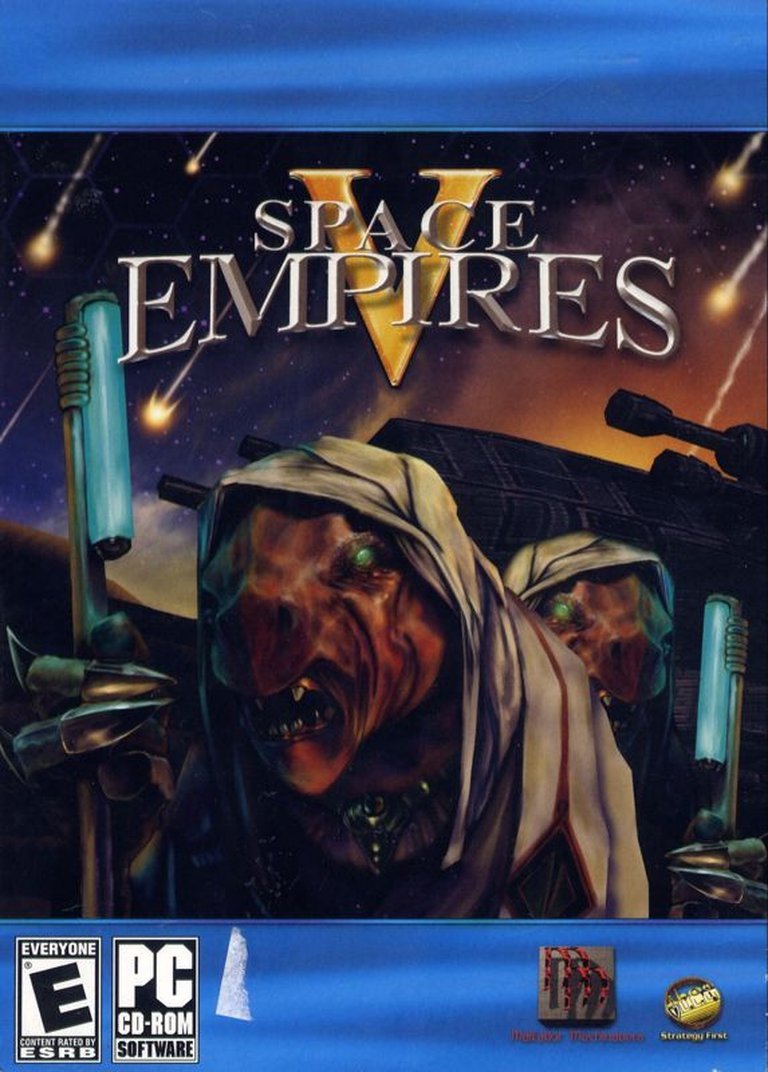
Space Empires V is a turn-based 4X strategy game set in a sci-fi universe, where players build and expand their interstellar empire through exploration, diplomacy, warfare, and technological advancement. As the fifth installment in the Space Empires series, it features an updated UI, a robust ship design system, and mod-friendly mechanics, allowing players to customize their experience. The game includes 24-bit 3D graphics, detailed tactical combat, and the ability to create custom AI opponents with unique traits, enhancing both visual fidelity and strategic depth.
Gameplay Videos
Where to Buy Space Empires V
PC
Space Empires V Cracks & Fixes
Space Empires V Patches & Updates
Space Empires V Mods
Space Empires V Guides & Walkthroughs
Space Empires V Reviews & Reception
metacritic.com (68/100): A triumphant return to form for the series.
ign.com : Too much is too much.
mobygames.com (66/100): Less than solid entry.
monstercritic.com (85/100): If you’re a fan of the series or strategy in general and are willing to put up a few minor flaws and some bugs (which will hopefully be patched), then I highly recommend this title.
Space Empires V Cheats & Codes
PC
Press ~ at the main window, then enter one of the following codes. Press ~ to activate the cheat.
| Code | Effect |
|---|---|
| money | Add 100,000 resources of each type to the Current Player’s treasury. |
| research | Add 100,000 research points to the Current Player. |
| intel | Add 100,000 intelligence points to the Current Player. |
| alltech | Current Player gains all technologies. |
| restoresupplies | All of the Current Player’s ships get full supplies and ordinance. |
| allsysseen | Current Player has seen all solar systems. |
| allempseen | Current Player has encountered all other players. |
| allplayershuman | All players set to human control. |
| viewallcombats | All combats are shown on screen. |
| fastbuild | All construction queues get 1,000,000 in accumulated resources. |
| nomaint | Current Player’s empire no longer pays maintenance. |
| omni | Current Player is omnipresent in all solar systems. |
| collisiongrid | Show the collision grid in combat. |
| showstats | Show statistics on the selected combat object. |
| retrofit [design name] | Retrofit the current ship to the new design. |
| repair | Completely repair the currently selected ship. |
| viewalldesigns | Get copies of all enemy ship and unit designs. |
| runturns # | Runs # amount of turns as all players as computers. |
| restoremove | Restores the movement points of a selected ship or fleet. |
Space Empires V: A Flawed Masterpiece of 4X Strategy
Introduction
Space Empires V (SEV) is a game that embodies the duality of ambition and execution. Released in 2006 by Malfador Machinations and published by Strategy First, it stands as the fifth installment in the venerable Space Empires series, a franchise that has long been a staple of the 4X (eXplore, eXpand, eXploit, eXterminate) strategy genre. SEV is a game that promises depth, customization, and a sandbox of galactic conquest, yet it is also a game that stumbles under the weight of its own complexity, technical instability, and an interface that often feels like a relic of a bygone era.
For fans of the genre, SEV is a tantalizing proposition. It offers an unparalleled level of customization, from ship design to empire creation, and a tactical combat system that, when it works, is a spectacle to behold. However, it is also a game that demands patience, perseverance, and a willingness to forgive its many flaws. This review will delve deep into the game’s development history, its narrative and thematic elements, its gameplay mechanics, its world-building and aesthetic presentation, its reception and legacy, and ultimately, its place in the pantheon of 4X strategy games.
Development History & Context
The Space Empires series has always been a labor of love for its creator, Aaron Hall, who served as the designer, producer, and developer for Space Empires V. The series began in 1993 with the first Space Empires, a game that was heavily inspired by the likes of Master of Orion and Civilization. Over the years, the series evolved, with each installment adding new layers of complexity and depth. Space Empires IV, released in 2000, was particularly well-received, praised for its deep strategic gameplay and robust modding community.
By the time Space Empires V was in development, the 4X genre was in a state of flux. Master of Orion III had been a commercial and critical disappointment, leaving a void that games like Galactic Civilizations and Sword of the Stars were beginning to fill. The gaming landscape was also shifting towards more accessible, streamlined experiences, a trend that SEV would buck with its unapologetic complexity.
Technologically, SEV was a significant leap forward for the series. It was the first Space Empires game to feature 3D graphics, a move that was both ambitious and necessary to keep pace with contemporary titles. The game’s engine allowed for real-time tactical combat, a feature that was still relatively novel in the turn-based 4X genre. However, this technological leap came with its own set of challenges. The game’s 3D rendering was often criticized for being more functional than visually impressive, and the transition to 3D introduced a host of technical issues that would plague the game post-launch.
The development team at Malfador Machinations was small but dedicated, with Aaron Hall at the helm. The team’s ambition was clear: they wanted to create the most customizable, deepest 4X experience possible. This ambition is evident in the game’s extensive modding tools, which allowed players to create their own races, ship designs, and even script custom AI behaviors. However, this focus on depth and customization came at the expense of polish and accessibility, two areas where SEV would ultimately fall short.
Narrative & Thematic Deep Dive
Space Empires V is not a game that prioritizes narrative in the traditional sense. There is no overarching story, no cinematic cutscenes, and no predefined characters with whom the player can form an emotional connection. Instead, the game’s narrative is emergent, born from the player’s actions and the interactions between the various empires vying for galactic dominance.
The game’s thematic core is one of exploration, expansion, and conflict. Players are tasked with guiding their chosen race from a single homeworld to a sprawling interstellar empire, all while navigating the complexities of diplomacy, warfare, and technological advancement. The game’s setting is a classic sci-fi sandbox, with a variety of alien races, each with their own strengths, weaknesses, and quirks. From the militaristic Terrans to the inscrutable Ximli, each race offers a unique playstyle, encouraging replayability and experimentation.
One of the game’s most interesting narrative elements is its approach to diplomacy. Unlike many 4X games, which often reduce diplomacy to a series of binary choices (e.g., “ally” or “declare war”), SEV offers a granular, customizable diplomacy system. Players can negotiate treaties that specify exactly what technologies will be shared, what military rights will be granted, and even how voting will work within alliances. This level of detail is both a blessing and a curse. On the one hand, it allows for a level of diplomatic nuance that is rare in the genre. On the other hand, it can be overwhelming, especially for players who are new to the series or the genre as a whole.
The game’s lack of a traditional narrative is both a strength and a weakness. For players who prefer to create their own stories, SEV offers a vast, open-ended sandbox in which to do so. However, for players who crave a more guided, story-driven experience, the game can feel hollow and directionless. The absence of a strong narrative throughline is particularly noticeable in the game’s early stages, where the lack of clear objectives can make the experience feel tedious and aimless.
Gameplay Mechanics & Systems
At its core, Space Empires V is a turn-based 4X strategy game. Players begin with a single homeworld and must explore the galaxy, colonize new planets, research technologies, and build a fleet capable of defending their empire and conquering others. The game’s mechanics are deeply rooted in the traditions of the genre, but SEV distinguishes itself through its emphasis on customization and depth.
Exploration and Expansion
Exploration in SEV is a methodical, strategic endeavor. The game’s galaxy is procedurally generated, with each playthrough offering a unique layout of star systems, planets, and resources. Players must send scout ships to explore these systems, uncovering new worlds to colonize and resources to exploit. The game’s hexagonal movement grid adds a layer of tactical depth to exploration, as players must carefully plan their routes to avoid hostile forces and maximize efficiency.
Colonization is similarly strategic. Each planet offers different resources and environmental challenges, and players must decide which worlds are worth the investment. The game’s terraforming mechanics allow players to modify planets to better suit their empire’s needs, but this process is time-consuming and resource-intensive, requiring careful planning and prioritization.
Research and Technology
Research is one of the most complex and rewarding aspects of SEV. The game’s technology tree is vast, with thousands of research options spanning everything from basic propulsion systems to advanced weapons and planetary defenses. Research is not a linear process; instead, players must allocate research points to various fields, with each breakthrough unlocking new possibilities.
One of the most interesting aspects of the research system is its modularity. Technologies are not just abstract upgrades; they are tangible components that can be integrated into ship designs. For example, researching a new type of engine might allow players to build faster, more maneuverable ships, while researching a new weapon system might give their fleet an edge in combat. This modular approach to research encourages experimentation and creativity, as players are constantly tinkering with new combinations of technologies to create the perfect ship.
Ship Design and Combat
Ship design is where Space Empires V truly shines. The game’s ship design system is one of the most detailed and flexible in the genre, allowing players to customize every aspect of their vessels, from the placement of engines and weapons to the layout of internal systems like life support and power generators. This level of customization is both a blessing and a curse. On the one hand, it allows for an incredible degree of creativity and strategic depth. On the other hand, it can be overwhelming, especially for players who are new to the series.
Combat in SEV is a mix of turn-based strategy and real-time tactics. When two fleets engage, players can choose to resolve the battle automatically or take manual control. Manual combat is where the game’s 3D engine comes into play, allowing players to watch their ships engage in real-time battles. The combat system is deep, with factors like weapon arcs, shield placement, and ship maneuverability all playing a role in the outcome. However, the combat system is not without its flaws. The AI can be unpredictable, and the game’s performance can suffer during large-scale battles, especially on lower-end systems.
Diplomacy and Espionage
Diplomacy in SEV is a double-edged sword. On the one hand, the game’s diplomacy system is one of the most detailed and customizable in the genre, allowing players to negotiate complex treaties and alliances. On the other hand, the system is plagued by technical issues and AI quirks that can make diplomacy feel more like a chore than a strategic tool.
Espionage is another area where SEV offers depth but struggles with execution. Players can send spy ships to infiltrate enemy empires, steal technologies, and sabotage facilities. However, the espionage system is often criticized for being overly complex and underwhelming in its results. The lack of clear feedback and the AI’s unpredictable behavior can make espionage feel like a gamble rather than a strategic endeavor.
User Interface and Accessibility
The user interface in Space Empires V is perhaps the game’s most polarizing feature. On the one hand, it is functional, offering players access to a vast array of information and options. On the other hand, it is clunky, outdated, and often overwhelming. The interface is a holdover from an earlier era of PC gaming, with a labyrinthine series of menus and submenus that can be difficult to navigate.
One of the most common criticisms of the UI is its lack of intuitiveness. Basic tasks, like managing colonies or designing ships, require a series of clicks and menu navigations that can feel unnecessarily cumbersome. The game’s tutorial does little to alleviate this issue, as it is often criticized for being incomplete and poorly explained.
The UI’s bloated nature is also a concern. The game’s interface files take up a significant amount of memory, a fact that is particularly noticeable on lower-end systems. While this is less of an issue on modern hardware, it was a significant drawback at the time of the game’s release.
World-Building, Art & Sound
Space Empires V is not a game that prioritizes visual spectacle. Its art style is functional rather than flashy, with a focus on clarity and utility over aesthetic appeal. The game’s 3D graphics, while a step up from the 2D sprites of its predecessors, are often criticized for being dated and uninspired. Ship models are blocky and poorly textured, and the game’s planetary views lack the detail and dynamism of more modern titles.
However, the game’s visual presentation is not without its charms. The galaxy map, with its hexagonal grid and procedurally generated star systems, has a certain retro appeal. The game’s racial portraits, designed by Shane Watson, are also a highlight, offering a glimpse into the unique cultures and aesthetics of the game’s various factions.
The sound design in SEV is similarly functional. The game’s soundtrack, composed by TwistedTracks.com, is atmospheric and immersive, with a mix of ambient tracks and more dramatic compositions. The sound effects, designed by Christopher DeLaurenti, are serviceable, with the usual array of laser blasts, engine hums, and explosion sounds. However, the sound design is not a standout feature, and it often fades into the background during extended play sessions.
Reception & Legacy
Space Empires V was met with mixed reviews upon its release. Critics praised the game’s depth, customization options, and modding capabilities, but they also criticized its technical issues, clunky interface, and steep learning curve. The game’s Metacritic score of 68 reflects this divided reception, with some reviewers hailing it as a masterpiece of the genre and others dismissing it as a buggy, inaccessible mess.
One of the most common criticisms of SEV was its instability. The game was plagued by crashes, freezes, and other technical issues, many of which persisted even after multiple patches. The game’s AI was also a frequent target of criticism, with many reviewers noting that it was unpredictable, often illogical, and prone to exploiting the game’s mechanics in unintended ways.
Despite these flaws, Space Empires V developed a dedicated fanbase. The game’s modding community was particularly active, with players creating everything from new ship designs to entirely new races and gameplay mechanics. The game’s depth and customization options also made it a favorite among hardcore strategy fans, who appreciated its uncompromising complexity and strategic depth.
In the years since its release, Space Empires V has become something of a cult classic. While it is not as widely remembered or celebrated as other 4X titles like Civilization or Master of Orion, it has earned a place in the hearts of those who appreciate its unique blend of depth, customization, and emergent gameplay. The game’s legacy is also evident in its influence on subsequent 4X titles, many of which have borrowed elements from SEV’s design philosophy, particularly its emphasis on modular ship design and granular diplomacy.
Conclusion
Space Empires V is a game that defies easy categorization. It is simultaneously one of the deepest, most customizable 4X strategy games ever made and one of the most flawed, frustrating, and inaccessible. Its ambition is undeniable, but its execution is often lacking, held back by technical issues, a clunky interface, and an AI that is more unpredictable than intelligent.
For hardcore strategy fans who are willing to look past its flaws, Space Empires V offers a rewarding, if challenging, experience. The game’s depth, customization options, and modding capabilities make it a sandbox of nearly limitless possibilities, a place where players can create their own stories of galactic conquest and diplomacy. However, for more casual players or those who prefer a more streamlined, accessible experience, SEV is likely to be a frustrating, if not outright unplayable, mess.
Ultimately, Space Empires V is a game that is best appreciated by those who are willing to meet it on its own terms. It is not a game for everyone, but for those who are willing to invest the time and effort to master its systems, it offers a uniquely rewarding experience. It is a flawed masterpiece, a game that is as frustrating as it is fascinating, and one that continues to inspire both admiration and exasperation in equal measure.
Final Verdict: 7/10 – A deeply flawed but uniquely rewarding 4X experience that is best suited for hardcore strategy fans willing to overlook its many technical and design shortcomings.