
- Release Year: 2007
- Platforms: Macintosh, Windows
- Publisher: Akella, HermitWorks Entertainment Corporation, Meridian4, Inc.
- Developer: HermitWorks Entertainment Corporation
- Genre: Action, Simulation, Strategy, Tactics
- Perspective: 1st-person
- Game Mode: LAN, Online Co-op, Single-player
- Gameplay: Business simulation, Managerial, Shooter
- Setting: Futuristic, Sci-fi
- Average Score: 51/100
Description
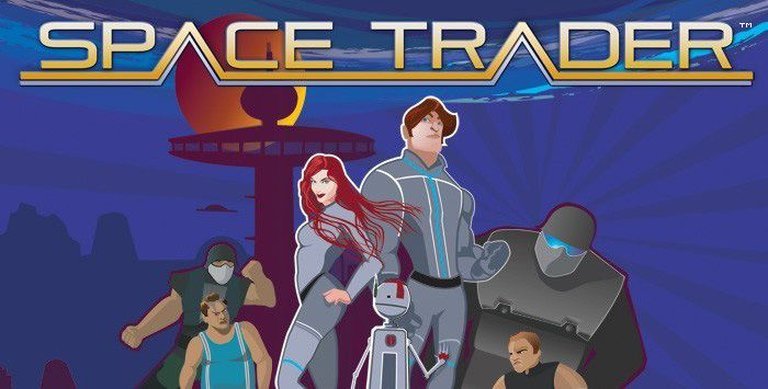
Space Trader: Merchant Marine is a spacefaring simulation game where players assume the role of an interstellar merchant aiming to maximize profits within a set timeframe. Set across the solar system, players trade commodities between planets, leveraging dynamic disasters that shift market values while undertaking risky bounty missions for extra income. Multiplayer modes feature competitive stash hunts amid cooperative play, with diverse challenges spanning from Earth-Moon commerce routes to system-wide trading empires. Players choose their path: focus purely on trade, combat criminal elements, or balance both to climb leaderboards and avoid bankruptcy.
Gameplay Videos
Where to Buy Space Trader: Merchant Marine
PC
Space Trader: Merchant Marine Cracks & Fixes
Space Trader: Merchant Marine Guides & Walkthroughs
Space Trader: Merchant Marine Reviews & Reception
metacritic.com (53/100): This game is part FPS, adventure game and a virtual stock market game. I was impressed by how each aspect of the game works within the core game, and while the game could be a bit more solid in graphics, audio, basically making it more esthetically pleasing. Addictive, very fun and innovative are the best words to describe the game
ign.com : The game itself is a throwback in more ways than one. Not only does it offer up a type of game that we rarely see anymore, but its presentation values and overall design philosophy reach back to the mid-1990s and some of the games we were playing back then
gamepressure.com (50/100): Space Trader: Merchant Marine is the debut production of the independent HermitWorks Entertainment studio. The intention of the developers was to combine the best features of economic strategies and action games with a first person perspective (FPP)
steambase.io (50/100): Space Trader: Merchant Marine has earned a Player Score of 50 / 100. This score is calculated from 639 total reviews which give it a rating of Mixed
Space Trader: Merchant Marine: Review
In the pantheon of video games that blend genres, few titles stand out as uniquely as Space Trader: Merchant Marine. Released in 2007 by the independent studio HermitWorks Entertainment, this game is a bold experiment that combines elements of first-person shooters, economic strategy, and space trading simulations. Despite its modest origins and the passage of time, Space Trader: Merchant Marine remains a fascinating study in genre fusion and a testament to the creativity of its developers. This review will delve into the game’s development history, narrative depth, gameplay mechanics, world-building, reception, and legacy, ultimately arguing that Space Trader: Merchant Marine deserves a place in the annals of video game history for its innovative approach and enduring charm.
Development History & Context
The Studio and Creators’ Vision
HermitWorks Entertainment, the studio behind Space Trader: Merchant Marine, was founded by Cameron and Marcia Tofer, both of whom had previously worked at BioWare. The Tofers, along with a team of passionate developers, set out to create a game that would revive the classic space trading genre while adding modern twists. Their vision was to blend the strategic depth of economic simulations with the adrenaline-pumping action of first-person shooters, all set within a richly detailed sci-fi universe.
Technological Constraints and Gaming Landscape
The game was developed using the open-source id Tech 3 engine, which was notable for being the first commercial title to use this engine after it was open-sourced in August 2005. This choice allowed the developers to focus on gameplay and content rather than engine development, but it also meant that the game’s graphics and performance were somewhat dated by the time of its release. The gaming landscape in 2007 was dominated by high-budget AAA titles, making Space Trader: Merchant Marine a refreshing indie alternative.
Funding and Development Timeline
The game’s development began in 2005 and was funded in part by the Canadian government through the Teléfilm project, which aimed to encourage Canadian-made and owned content. This support allowed HermitWorks to bring their vision to life, culminating in the game’s release on July 25, 2007, for Microsoft Windows and Mac OS X. The game’s source code was later released in April 2008, and an iOS version followed in 2009.
Narrative & Thematic Deep Dive
Plot and Characters
Space Trader: Merchant Marine tells the story of a pilot who starts their trading adventure in a future where humanity is ruled by the oppressive Ministry of Accounts. The player must navigate the complexities of interplanetary trade, evade government scrutiny, and build a fortune while dealing with various challenges and adversaries. The narrative is relatively thin, serving more as a backdrop for the gameplay mechanics than a driving force. However, the game’s themes of economic struggle, bureaucratic oppression, and the pursuit of wealth in a dystopian future are compelling and thought-provoking.
Dialogue and World-Building
The dialogue in Space Trader: Merchant Marine is often witty and sarcastic, adding a layer of humor to the game’s otherwise serious themes. The characters, while not deeply developed, are memorable for their quirks and the roles they play in the game’s economy. The world-building is impressive, with a detailed universe that includes various planets, commodities, and factions. The Ministry of Accounts, in particular, serves as a formidable and ever-present antagonist, adding tension and challenge to the gameplay.
Gameplay Mechanics & Systems
Core Gameplay Loops
The core gameplay of Space Trader: Merchant Marine revolves around buying and selling commodities to make a profit. Players travel between planets, buying low and selling high, while also dealing with random events, disasters, and government inspections. The game’s economic system is complex and engaging, with prices fluctuating based on supply and demand, and players must strategize to maximize their profits.
Combat and Character Progression
In addition to trading, players can engage in first-person shooter combat, taking on bounty missions and fighting crime bosses. The combat is straightforward but enjoyable, with a variety of weapons and upgrades to unlock. Character progression is tied to the player’s wealth and reputation, with new opportunities and challenges unlocking as they become more successful.
UI and Innovative Systems
The user interface in Space Trader: Merchant Marine is clean and intuitive, making it easy for players to navigate the game’s various systems. One innovative feature is the co-operative multiplayer mode, where players can compete in trading and cooperate in combat. This adds a social element to the game, encouraging players to work together and strategize.
Flawed Systems
Despite its strengths, Space Trader: Merchant Marine has its flaws. The lack of a save option in the main campaign can be frustrating, as players must complete each chapter in a single sitting. Additionally, the game’s graphics and sound design are dated, which can detract from the overall experience.
World-Building, Art & Sound
Setting and Atmosphere
The game’s setting is a future where humanity has colonized the solar system, and the Ministry of Accounts rules with an iron fist. The atmosphere is grimy and dystopian, with a focus on the gritty realities of interplanetary trade. The art direction is consistent with the game’s themes, with a mix of futuristic and retro elements that give the game a unique visual style.
Visual Direction
The visuals in Space Trader: Merchant Marine are a product of the id Tech 3 engine, which was state-of-the-art at the time but has since been surpassed by more modern engines. The game’s graphics are functional but not particularly impressive, with low-poly models and flat textures. However, the game’s art direction and attention to detail make up for its technical limitations.
Sound Design
The sound design in Space Trader: Merchant Marine is similarly dated, with a techno soundtrack that fits the game’s futuristic setting but can become grating over time. The voice acting is competent but not exceptional, with some characters standing out more than others. The sound effects are functional but unremarkable, adding to the game’s overall retro feel.
Reception & Legacy
Critical and Commercial Reception
Upon its release, Space Trader: Merchant Marine received mixed reviews from critics. While some praised the game’s innovative blend of genres and engaging gameplay, others criticized its dated graphics, thin narrative, and repetitive gameplay. The game’s commercial performance was modest, with a small but dedicated fanbase appreciating its unique qualities.
Evolution of Reputation
Over time, Space Trader: Merchant Marine has gained a cult following among fans of indie games and space trading simulations. Its reputation has evolved from a modestly successful indie title to a beloved classic, with players appreciating its innovative approach and enduring charm. The game’s influence can be seen in subsequent titles that blend genres and experiment with new gameplay mechanics.
Influence on Subsequent Games and the Industry
Space Trader: Merchant Marine has had a lasting impact on the gaming industry, inspiring developers to experiment with genre fusion and innovative gameplay mechanics. Its blend of economic strategy, first-person shooter combat, and space trading has influenced titles like Elite Dangerous and No Man’s Sky, which also combine multiple genres to create unique and engaging experiences.
Conclusion
Space Trader: Merchant Marine is a bold and innovative experiment in genre fusion, blending economic strategy, first-person shooter combat, and space trading simulations into a unique and engaging experience. Despite its flaws and dated graphics, the game’s enduring charm and influence on subsequent titles make it a worthy addition to the annals of video game history. For fans of indie games, space trading simulations, and innovative gameplay mechanics, Space Trader: Merchant Marine is a must-play title that offers a rich and rewarding experience. Its place in video game history is secure, and its legacy continues to inspire new generations of developers and players alike.