
- Release Year: 2012
- Platforms: Linux, Macintosh, Windows
- Publisher: Zachtronics LLC
- Developer: Zachtronics LLC
- Genre: Compilation
- Game Mode: Single-player
- Average Score: 88/100
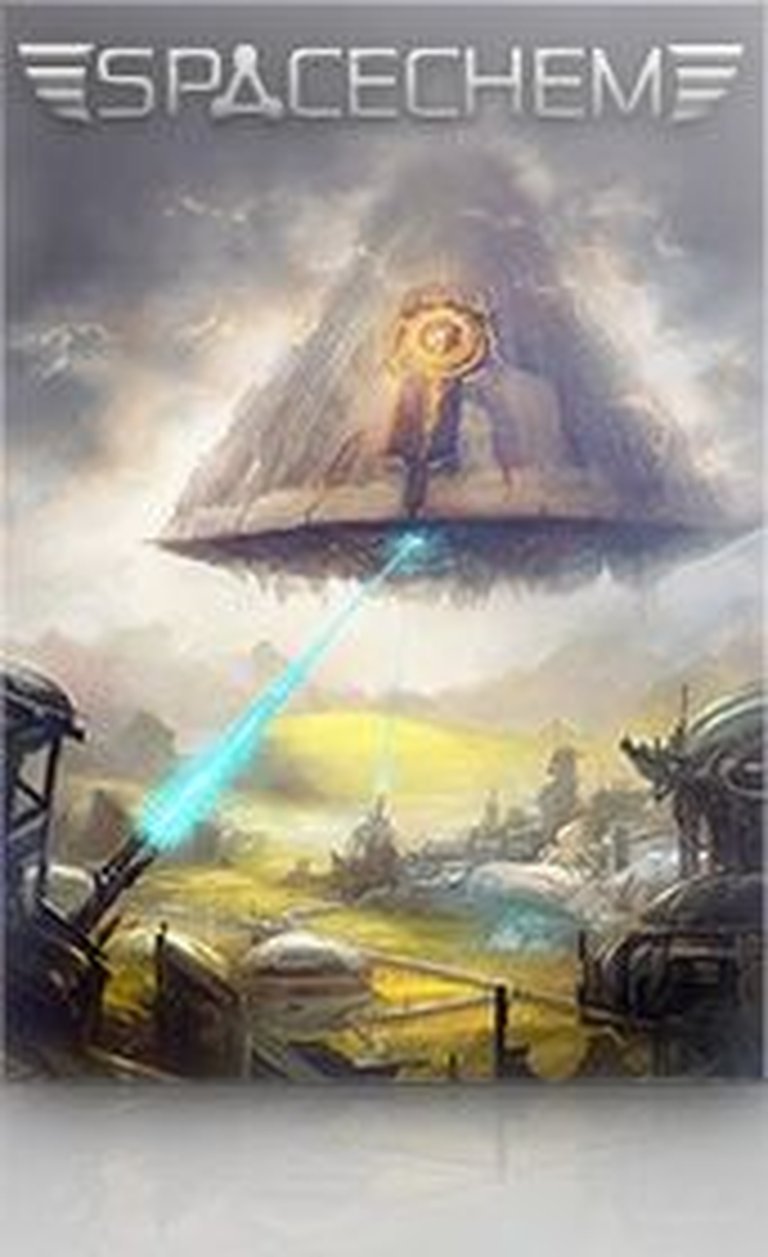
Description
SpaceChem is a puzzle and indie game developed by Zachtronics Industries, where players take on the role of a Reactor Engineer tasked with programming two remote manipulators, called ‘waldos,’ to assemble and disassemble chemical molecules through a visual programming interface. Set in a futuristic industrial environment, the game challenges players to design efficient assembly lines on a grid-based reactor, using commands to move, bond, and transform atoms into specific molecular outputs. With its open-ended problem-solving approach, SpaceChem blends chemistry and programming concepts, offering a unique and intellectually stimulating experience.
Gameplay Videos
Where to Buy SpaceChem
SpaceChem Free Download
SpaceChem Patches & Updates
SpaceChem Guides & Walkthroughs
SpaceChem Reviews & Reception
metacritic.com (84/100): SpaceChem is an intelligent and addictive puzzler with a high difficulty level but some of the most enjoyable and satisfying puzzles I’ve ever experienced.
steambase.io (92/100): SpaceChem has earned a Player Score of 92 / 100.
pcgamer.com (89/100): As much mental workout as excellent puzzle game, SpaceChem challenges and entertains, plus it has an engaging story.
bestgamesreviews.info (90/100): SpaceChem is a challenging but rewarding puzzle game that will test your problem-solving skills and programming aptitude.
SpaceChem: A Masterclass in Design-Based Puzzles and Corporate Satire
Introduction
In the pantheon of indie games, few titles have left as indelible a mark as SpaceChem. Released in 2011 by Zachtronics, this design-based puzzle game is a tour de force of mechanical depth, narrative ambition, and thematic richness. It challenges players to don the lab coat of a Reactor Engineer for the eponymous SpaceChem corporation, tasked with assembling molecules through a visual programming language that simulates chemical synthesis. Yet, beneath its sterile, industrial veneer lies a biting critique of corporate exploitation, a Lovecraftian horror narrative, and a puzzle system so profound it has been adopted as an educational tool. SpaceChem is not merely a game—it is a statement on creativity, automation, and the dehumanizing effects of unchecked capitalism.
This review will dissect SpaceChem in exhaustive detail, exploring its development history, narrative themes, gameplay mechanics, artistic direction, and lasting legacy. By the end, it will be clear why SpaceChem remains a cornerstone of indie game design and a benchmark for puzzle games over a decade after its release.
Development History & Context
The Birth of Zachtronics and the Evolution of a Genre
Zachtronics, the studio behind SpaceChem, was founded by Zach Barth in 2000. Initially, the studio focused on free, browser-based Flash games, with Barth experimenting with automation and engineering puzzles. One of his earliest works, The Codex of Alchemical Engineering (2008), laid the groundwork for SpaceChem by introducing players to the concept of manipulating atoms and molecules through a visual programming interface. However, Codex was rooted in alchemy rather than chemistry, and its mechanics were more abstract.
The pivotal moment in SpaceChem‘s conception came when Barth visited Gas Works Park in Seattle, a site featuring the remnants of a derelict chemical processing plant. The industrial aesthetic and the idea of pipelines inspired him to expand the molecular bonding mechanics from Codex into a more structured, industrial framework. This led to the core idea of combining low-level atomic manipulation with high-level pipeline construction, simulating conveyor-belt automation to process chemical reactions on a larger scale.
A Labor of Love: Development and Challenges
Development of SpaceChem began in November 2009 and lasted approximately 16 months. Barth, who handled core programming, puzzle design, and implementation, worked on the game in his spare time while maintaining a full-time job. The team eventually grew to seven members, including artists, sound designers, and programmers, marking a shift from Barth’s earlier solo projects like Infiniminer.
One of the most significant challenges during development was balancing puzzle difficulty. Barth wanted to avoid hand-holding tutorials while ensuring the game remained accessible. He addressed this by sketching puzzles on paper, estimating their complexity, and playtesting them with a small group of players in late 2010. The goal was to create a steep but fair learning curve that introduced new concepts progressively.
Another hurdle was implementing a stable simulation for atomic interactions. The game’s mechanics required robust logic to handle emergent behaviors in reactor assembly without crashes or inconsistencies. Barth iterated on prototypes derived from core mechanics, refining the simulation to ensure it could handle the complexity of player-designed reactors.
Release and Reception: From Obscurity to Acclaim
SpaceChem was initially released on January 1, 2011, as a digital download for Windows, Mac OS X, and Linux via Zachtronics’ website. The game was priced at $20, a bold move for an indie title at the time. However, its fortunes changed dramatically when it was featured in a positive review by Quintin Smith of Rock, Paper, Shotgun, who called it “potentially the best puzzle game” of the year. This attention led to Valve offering to sell the game on Steam, which became available on March 2, 2011. The Steam release was a turning point, significantly boosting sales and visibility.
The game’s critical reception was overwhelmingly positive. It earned an aggregate Metacritic score of 84/100, with praise for its addictive puzzle design, educational value, and innovative mechanics. Eurogamer awarded it a 9/10, calling it a “cerebral triumph,” while PC Gamer gave it an 89/100, highlighting its mental workout and blend of chemistry and programming. However, some critics noted its steep learning curve and lack of comprehensive tutorials, which could overwhelm beginners.
Post-Release Support and Expansions
Following its initial release, SpaceChem received several updates and expansions. The “63 Corvi” DLC, released on July 22, 2011, served as a prequel storyline centered on a young Bruce Novak, the CEO of SpaceChem, and his mission to collapse the star 63 Corvi into a collapsar gateway. The DLC introduced new puzzles and mechanics, including a “quantum junction” feature for more complex atom routing.
A significant free update in April 2011 introduced ResearchNet, a mode featuring official advanced puzzles designed for optimization challenges, as well as a level editor for community creations. This update fostered an active modding scene, with players creating and sharing custom puzzles. The game was also ported to iOS and Android, though support for these platforms was later discontinued due to technical constraints.
Narrative & Thematic Deep Dive
A Dystopian Future of Corporate Exploitation
SpaceChem is set in the year 2745, where humanity has expanded to colonize distant planets amid severe resource shortages. The SpaceChem corporation, a subsidiary of Vossler Industries, was founded to address these shortages by synthesizing essential chemicals from local planetary materials. However, the corporation’s operations are marked by ruthless prioritization of profit over safety, leading to catastrophic incidents and the exploitation of its workforce.
Players assume the role of a low-level contractor and trainee reactor engineer, operating as a “waldo operator” remotely assigned to isolated planetary facilities. Through in-game memos and emails, the narrative unfolds as the engineer progresses from basic training to managing crises across various sites, uncovering the corporation’s unethical practices and the existential threats posed by alien monsters.
Key Characters and Themes
The narrative is framed through transmissions from SpaceChem executives, with Bruce Novak, the ambitious CEO, serving as a central figure. Novak’s directives reflect his personal investment in the engineer’s success, but his character arc also reveals the human cost of corporate ambition. Supporting characters, such as facility managers Joel, Tim, and Marianne, provide contextual lore and operational briefings, often conveying urgency or fatalism as they face the perils of frontier stations.
The story explores themes of blind obedience to corporate imperatives, the fusion of chemistry and alchemy as a metaphor for pseudoscience, and hints of rebellion against the invasion of eldritch alien entities. The narrative progresses from routine production tasks to revelations about SpaceChem’s origins, culminating in conflict with ancient cosmic entities provoked by the corporation’s expansionist policies.
Corporate Satire and Cosmic Horror
SpaceChem’s narrative is a masterclass in corporate satire, critiquing the dehumanizing effects of automation and the exploitation of workers. The engineer’s role exemplifies unquestioning adherence to directives despite evident dangers and moral ambiguities. The game’s setting—a dystopian future where a megacorporation dominates interstellar chemical production—serves as a commentary on unchecked capitalism and the ethical implications of scientific advancement.
The introduction of alien monsters, or “Anomalies,” adds a layer of cosmic horror to the narrative. These eldritch entities disrupt SpaceChem’s operations, leading to catastrophic events and the gruesome deaths of named characters. The game’s defense missions, where players must fend off these monsters using their reactors, underscore the precariousness of human life in the face of corporate hubris and cosmic indifference.
Gameplay Mechanics & Systems
Reactor Assembly and Programming
At its core, SpaceChem is a puzzle game about designing and programming chemical reactors. Players assemble reactors on a grid-based layout, where atoms enter through input ports and are manipulated to form target molecules for output. The manipulation is handled by two robotic arms, or “waldos” (one red and one blue), which operate simultaneously on the grid to grab, transport, and assemble atoms into stable compounds.
The waldos follow programmed paths defined by directional arrows placed on the grid, allowing players to route atoms precisely while avoiding collisions. Programming occurs through a visual scripting language that sequences commands for each waldo along their paths, executed in discrete cycles to simulate chemical reactions. Key commands include:
- Grab: Pick up free atoms.
- Move: Transport atoms across the grid via arrows.
- Rotate: Reorient molecules for bonding.
- Release/Drop: Deposit atoms or partial molecules onto storage pads or bonding sites.
- Sync: Ensure coordination between the red and blue waldos by pausing one until the other reaches a matching point.
- Bond: Create connections between compatible atoms.
- Fuse: Merge atoms into higher elements in advanced reactors.
This scripting system emphasizes concepts such as loops for repetitive tasks, branching for conditional paths, and subroutines for modular efficiency, mirroring parallel programming paradigms.
Puzzle Progression and Objectives
The puzzle campaign in SpaceChem consists of 53 assignments divided across multiple planetary facilities. Each facility contains approximately 5 to 7 puzzles that escalate in complexity, introducing new mechanical layers while tying into the overarching narrative. Early puzzles focus on simple molecule assembly, while later ones demand sophisticated synchronization across larger systems.
In each puzzle, players must program reactors to convert input atoms into specified target molecules at designated production rates. Beyond mere completion, objectives emphasize efficiency by minimizing total cycles elapsed, symbols in the instruction sequences, and the physical footprint of reactor grids. Performance metrics—cycles, symbols, and reactors—determine relative success, with in-game histograms visualizing how a solution compares to global player data.
Later puzzles incorporate advanced elements, such as multi-symbol production for intricate polyatomic molecules, flexible inputs that vary in composition or timing, and boss puzzles framed as defense assignments. These culminating challenges blend production goals with survival elements, often involving atmospheric pumps to source elements dynamically while fending off eldritch threats.
The Optimization Loop and Replayability
One of SpaceChem’s most compelling aspects is its optimization loop. Players are encouraged to return to completed puzzles to refine their solutions, reducing cycle counts, symbol usage, and reactor footprints. This feedback loop promotes conceptual mastery over exhaustive enumeration, rewarding players for creative and efficient designs.
The game’s leaderboards and histograms provide a sense of competition and community, allowing players to compare their solutions with others globally. The ability to share solutions via YouTube videos further fosters a collaborative environment, where players can learn from each other’s approaches and iterate on their designs.
World-Building, Art & Sound
A Dystopian Industrial Aesthetic
SpaceChem’s visual direction is a stark, industrial aesthetic that reflects its dystopian setting. The game’s reactors, pipelines, and facilities are rendered in a minimalist, functional style, emphasizing the cold, impersonal nature of corporate automation. The color palette is dominated by grays, blues, and reds, with the waldos’ vibrant hues providing a stark contrast against the sterile backgrounds.
The game’s art direction is complemented by its sound design, composed by Evan Le Ny. The soundtrack is a mix of ambient electronic tracks and industrial soundscapes, evoking the hum of machinery and the isolation of deep-space facilities. The sound effects—from the clanking of waldos to the hissing of chemical reactions—further immerse players in the game’s world, reinforcing the sense of operating within a vast, impersonal machine.
Narrative Delivery and Atmosphere
The narrative is delivered through interstitial transmissions and story panels between puzzles, building a sense of corporate hubris and interstellar conflict. The game’s writing is sharp and satirical, with a dry, bureaucratic tone that underscores the absurdity of SpaceChem’s operations. The gradual reveal of the corporation’s unethical practices and the existential threats posed by alien entities creates a sense of mounting dread, culminating in the game’s cosmic horror-themed boss battles.
The atmosphere is further enhanced by the game’s UI, which mimics the interface of a corporate terminal. The use of Greek letters for input and output regions, the technical jargon in mission briefings, and the sterile, data-driven presentation all contribute to the game’s immersive world-building.
Reception & Legacy
Critical Acclaim and Commercial Success
SpaceChem was met with widespread critical acclaim upon release, earning an aggregate Metacritic score of 84/100. Critics praised its addictive puzzle design, educational value, and innovative blend of chemistry and programming. Eurogamer’s John Teti commended the game’s depth and creative freedom, while PC Gamer highlighted its mental workout and accessibility despite its complexity.
The game’s commercial success allowed Zach Barth to quit his job at Microsoft and run Zachtronics full-time. It also provided a platform for the studio’s subsequent titles, such as Infinifactory (2015) and Opus Magnum (2017), which expanded on SpaceChem’s reactor assembly mechanics and established a signature style for Zachtronics’ portfolio.
Educational Impact and Community Engagement
Beyond its critical and commercial success, SpaceChem has had a lasting impact in education. The game has been used to teach concepts related to chemistry, programming, and algorithmic thinking, with Zachtronics offering discounts and free licenses to schools. The studio’s Guide for Educators outlines lesson plans that integrate the game’s puzzles into STEM curricula, making it a valuable tool for educators.
The SpaceChem community remains active, with players continuing to create and share custom puzzles through ResearchNet and modding tools. Annual tournaments and speedrunning communities keep the game alive, while ongoing updates, such as the 2019 Community Edition, ensure compatibility with modern operating systems.
Influence on the Industry
SpaceChem pioneered the “design-based puzzle” genre, blending programming logic with chemical synthesis in a way that influenced subsequent titles. Its open-ended problem-solving approach and emphasis on creativity and optimization have become hallmarks of Zachtronics’ games, inspiring a new wave of indie puzzlers that prioritize player expression and emergent gameplay.
The game’s legacy is also evident in its cultural impact. It has been cited in academic discussions on game-based learning and has inspired modders and educators to explore the intersection of gaming and education. SpaceChem’s enduring popularity is a testament to its depth, replayability, and the timeless appeal of its core mechanics.
Conclusion: A Landmark in Indie Game Design
SpaceChem is more than a puzzle game—it is a masterclass in design, narrative, and thematic depth. Its innovative mechanics, biting corporate satire, and Lovecraftian horror elements combine to create an experience that is as intellectually stimulating as it is emotionally resonant. The game’s legacy is secure, not only as a cornerstone of Zachtronics’ portfolio but as a landmark in indie game design that continues to inspire and challenge players over a decade after its release.
For those willing to engage with its steep learning curve, SpaceChem offers a rewarding journey of creativity, problem-solving, and discovery. It is a game that demands patience and perseverance but repays those investments with a sense of accomplishment and a deeper understanding of the systems that govern our world. In the annals of video game history, SpaceChem stands as a testament to the power of indie development and the enduring appeal of games that dare to challenge, educate, and inspire.
Final Verdict: 9.5/10 – A Timeless Masterpiece of Puzzle Design and Narrative Ambition