
- Release Year: 2004
- Platforms: Macintosh, Windows
- Publisher: 1C Company, Graphsim Entertainment Inc., Matrix Games, Ltd., Slitherine Software UK Ltd., Snowball.ru, Virtual Programming Ltd.
- Developer: Slitherine Software UK Ltd.
- Genre: Simulation, Strategy, Tactics
- Perspective: Diagonal-down
- Game Mode: Online PVP, Single-player
- Gameplay: Diplomacy, Empire building, Naval invasions, Research, Siege, Trade, Turn-based
- Setting: Classical antiquity, Classical Greece
- Average Score: 65/100
Description
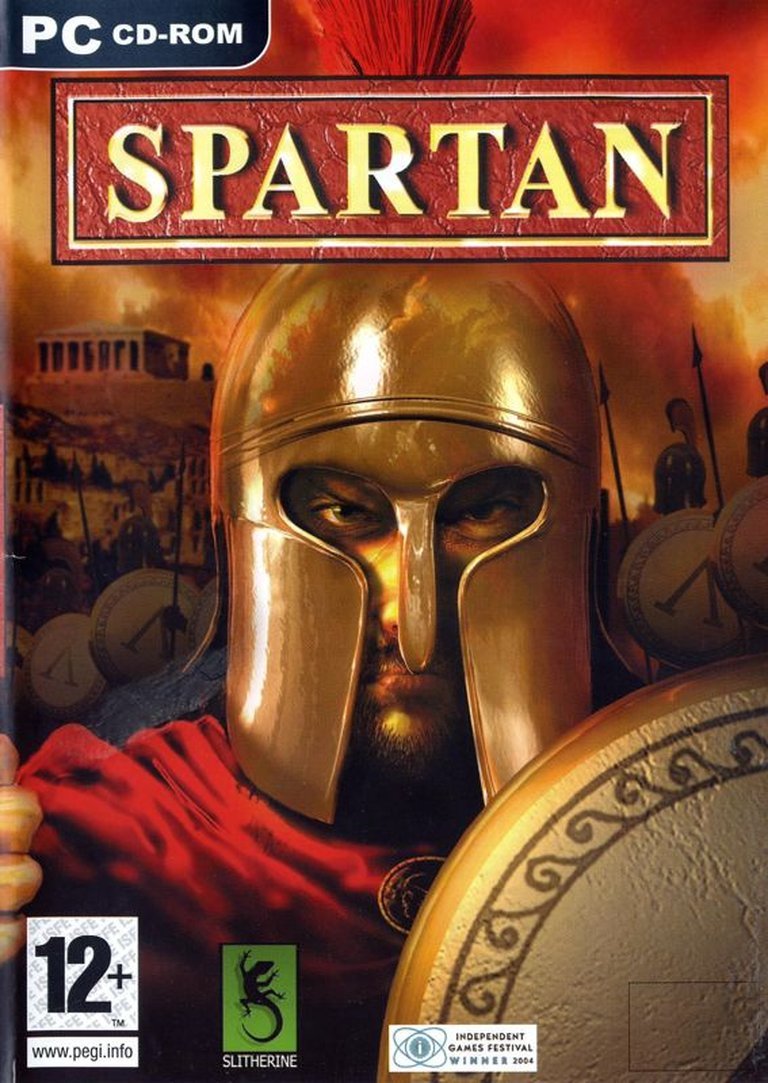
Spartan is a turn-based strategy game set in classical antiquity, where players command the Spartans in an empire-building campaign across a 3D map of Greece and the Near East, populated by over 100 nations. Focusing on research, diplomacy, trade, and warfare—including castle sieges with catapults and naval invasions—the objective is to unite the Aegean states to challenge the Persian Empire, with optional 2D battles and multiplayer support.
Gameplay Videos
Where to Buy Spartan
PC
Spartan Free Download
Spartan Cracks & Fixes
Spartan Patches & Updates
Spartan Reviews & Reception
metacritic.com (56/100): for both strategy and visuals, Spartan is very…well, spartan.
ign.com : Slitherine is back with another historical strategy game that never really rallies the troops.
gamespot.com (75/100): Spartan is a grand (dare I say epic?) strategy game set in ancient Greece.
Spartan: Review
Introduction
In the shadow of titans like Civilization III and the looming promise of Rome: Total War, Spartan emerged in 2004 as a gritty, unyielding tribute to the bronze-clad warriors of ancient Greece—a turn-based strategy game that dared to simulate the brutal realpolitik of the Aegean world. Developed by the plucky British studio Slitherine Software, this empire-builder thrusts players into a sprawling campaign map of Greece and Asia Minor, tasking them with uniting fractious city-states against the Persian juggernaut. While the Spartans’ legendary hoplites evoke images of unbridled martial glory, Spartan subverts expectations by emphasizing research, diplomacy, and trade over ceaseless bloodshed. My thesis: Spartan stands as a commendable, if flawed, artifact of early-2000s indie strategy gaming—ambitious in its historical fidelity and systemic depth, yet hamstrung by timid AI, restrictive mechanics, and visuals that feel as austere as a Lacedaemonian mess hall. It rewards patient historians more than adrenaline junkies, cementing Slitherine’s reputation as purveyors of niche, simulation-heavy fare.
Development History & Context
Slitherine Software UK Ltd., a boutique UK developer founded by brothers J.D. and Iain McNeil, crafted Spartan amid the cutthroat strategy landscape of 2004. Fresh off Legion (2002) and its Gold expansion, this title formed the third pillar of their “Legion series,” evolving from Roman legions to Hellenic hoplites. Iain McNeil led design, drawing on research assistance from Nicolas Fincher and Paul Robinson, with nods to the Hoplite Association for authenticity. Philip Veale handled programming, building on David Parsons’ original engine, while Alex Scarrow contributed 3D art and Fad 2D visuals. The soundtrack came from Iain Stevens and David Reeks, powered by middleware like Miles Sound System and Bink Video.
Technological constraints defined the era: Pentium III-era PCs struggled with full 3D, so Spartan offered toggleable 2D/3D battles for accessibility. Released March 24, 2004 (Windows; Macintosh later), it hit amid giants—Civilization III‘s expansions dominated turn-based empire-building, while Creative Assembly’s Rome: Total War loomed, promising seamless turn-based/real-time fusion. Publishers fragmented globally: Graphsim Entertainment (NA), Just Play (EU), 1C Company (Russia), and Slitherine itself. Budget constraints shone through in the 180-person credits (mostly QA), a testament to Slitherine’s lean operation—core team of ~12, per reviews. Vision: Historical simulation over spectacle, with Veale emphasizing limited battle control to mimic ancient generals’ realities, avoiding “click races.” An expansion, Gates of Troy (December 2004), added missions, heroes, and units, delayed by a bizarre robbery of the master disc. In a post-9/11 gaming boom favoring spectacle, Spartan was a defiant niche play, prioritizing depth over dazzle.
Narrative & Thematic Deep Dive
Spartan eschews scripted tales for emergent historical drama, framed by a terse synopsis: Over 2,000 years ago, Sparta—city of warriors trained solely for war—carved the empire of Lakedaimon amid rising rivals like Athens, Thebes, Corinth, Macedonia, and the Persian colossus. Players unite the Aegean to defy the “Great King,” echoing Thermopylae’s defiance. No voiced protagonists or branching dialogues exist; narrative unfolds via victory conditions (e.g., conquer X cities, amass silver, erect wonders) tailored to 100+ factions—Greeks (Sparta, Athens), tribals (Thracian Asti), Easterners (Lydians, Mysians). Each boasts unique units/buildings, like Sparta’s elite Spartiates.
Themes probe classical antiquity’s tensions: Martial hubris vs. cunning diplomacy; fragile unity against empire; resource scarcity mirroring Greece’s terrain. Diplomats embody intrigue—sent to incite unrest, gift horses, or seek asylia (merchant sanctuary), risking expulsion or execution. Events inject flavor: Socrates’ death, barbarian raids, Persian invasions (turn ~200-350, moddable). No deep characters, but faction asymmetry evokes Peloponnesian War rivalries—Sparta’s phalanx purity vs. Athens’ versatility. Plot peaks in scripted threats: Persian hordes with archer/cavalry swarms, Roman legions probing from the west. Critiques note historical liberties (e.g., ahistorical deployments), yet praise fidelity—silver mines, farmland limits, brick-dependent growth simulate Bronze Age economics. Ultimately, it’s a sandbox saga of hubris: Overexpand, face revolts; neglect research, crumble. Devoid of melodrama, its themes resonate through simulation, a historian’s diorama of Hellenic fragility.
Gameplay Mechanics & Systems
At core, Spartan loops strategic empire management and tactical clashes. Turn-based grand strategy spans a Greece/Asia Minor map with 100+ nations. Manage cities via screens: Assign population to boost output (risk unrest if overemployed); build barracks, temples, mines using resources (silver currency/troops; food population; bricks construction; wood/copper/iron units). No new cities—conquer or develop existing ones, fostering tense expansion. Trade via tables (set quantities, monitor costs); research sliders across seven domains (e.g., military, economy) unlocks upgrades incrementally, each turn a month.
Diplomacy shines: Limited diplomats gain experience, execute orders (sabotage, alliances), face peril—boiling in oil adds peril. Armies (up to 16 units: peasants, skirmishers, hoplites, cavalry, generals) move on isometric 3D map; naval invasions, sieges with catapults. Multiplayer supports online campaigns.
Battles hybridize: Real-time, but pre-deployment reigns—scout foes, form lines/squares, order hold/advance. Battle auto-resolves post-start; sound attack/retreat horns, rally routing troops. Limited control mimics antiquity (Veale: “anticipate behavior”), but frustrates—units ignore orders, devolve to mobs; cavalry fights like infantry. 2D (pixelated, bloody) outperforms naff 3D; auto-resolve viable via strength scores. UI logical (rollovers, intuitive menus), but micromanagement bogs multisettlement turns. Progression: Units heal/gain XP; factions specialize (e.g., Macedonia’s Argyraspides). Flaws: Timid AI (huddles, rarely innovates); no unit movement mid-battle; happiness micromanagement irks. Innovations: Resource uniqueness, diplomat risks. Pacing: Early trade/diplo blooms; mid-game conquests; late invasions challenge. Moddable (e.g., delay Persians), with Steam re-release.
| Mechanic | Strengths | Weaknesses |
|---|---|---|
| City Management | Resource specialization, population assignment | Happiness volatility, no new builds |
| Research/Trade | Slider nuance, economic depth | Incremental, database-like trading |
| Diplomacy | Risk-reward agents | Underutilized, basic alliances |
| Combat | Historical limits, replayable deployments | Hands-off chaos, poor AI |
| Progression | Faction asymmetry, events | Easy victories, repetitive |
Exhaustive yet elegant, loops demand balance—neglect food, starve; ignore bricks, stagnate.
World-Building, Art & Sound
The Aegean sprawls vividly: Lush 2D isometric map paints verdant Greece, arid Anatolia—forests, swamps, hills influence battles (e.g., lights shred heavies in mire). Cities evolve from hamlets (few slots) to metropolises, icons evoking hoplite ethos. Atmosphere: Tense, with random events (pirates, kings’ deaths) and invasions evoking Persian Wars peril. Factions differentiate—Spartan austerity vs. Thracian ferocity.
Visuals: Serviceable but spartan. Campaign: Colorful, detailed terrain; minimap cramped. City screens functional, artful portraits (varied diplomats). Battles: 2D fixed-view crisp (blood splatters); 3D barren (blocky models, empty skies). No widescreen/AA native; 2004 specs (P3 366MHz, 128MB RAM).
Sound: Sole 8:39 track—atmospheric strings, Mediterranean evocation—loops elegantly, MP3-worthy. Battle tunes repetitive, uninspiring. Authentic Greek cries (faction variants: marching, routs); Miles engine crisp. No voiceover/subtitles, but effects suffice. Collectively, evokes antiquity’s grit—viscerally historical, if sonically sparse.
Reception & Legacy
Launch mixed: Metacritic 56/100 (13 critics); MobyGames 63% (4 critics, e.g., 75% 4Players.de praised research/setting, slammed battles; 47% GameStar decried “öden” fights). IGN 5/10: “Woeful” combat, tame management. Players warmer (8.2/10 Metacritic, 4.2/5 Moby; fans laud AI challenge, modding). Commercial: Modest, budget title; Steam $9.99 endures.
Reputation evolved: Early “timid AI, shallow” panned; cult following praises simulation (e.g., GameSpot users: “Best TBS,” modded invasions). Influenced Slitherine—Gates of Troy, Panzer Corps, Field of Glory iterated tactical depth. Prefigured Total War‘s history focus, but indie scale limited splash. Legacy: Niche pioneer of authentic antiquity sims; Steam revival preserves it amid SafeDisc woes. No industry shaker, but Slitherine’s 20+ years (e.g., Battlestar Galactica Deadlock) trace here—proof small teams yield enduring strategy.
Conclusion
Spartan endures as a bold, austere simulacrum of Hellenic strife—rich in economic/diplomatic texture, faithful to history’s constraints, yet undermined by unresponsive battles and AI lethargy. Its 100 factions, resource webs, and emergent wars offer replayable depth for TBS aficionados, outshining flashier peers in authenticity. Flaws—micromanagement tedium, visual austerity—cap its heights, but at sub-$10, it’s a steal for history buffs. Verdict: 7/10. A worthy footnote in strategy canon, bolstering Slitherine’s ascent; not immortal like Civ, but a hoplite’s honorable stand in gaming history. Play for the phalanx thrill, mod for eternity.