
- Release Year: 2005
- Platforms: PlayStation 2, Windows, Xbox
- Publisher: Funbox Media Ltd., Hip Interactive Corp., Kingstill International Software Services Ltd., Titus Japan K.K.
- Developer: Asobo Studio S.A.R.L.
- Genre: Action
- Perspective: 1st-person, Behind view
- Game Mode: Single-player
- Gameplay: Hand-to-Hand Combat, Parachuting, Shooter, Stealth, Vehicular combat
- Setting: Counter-terrorism, Military, Modern
- Average Score: 73/100
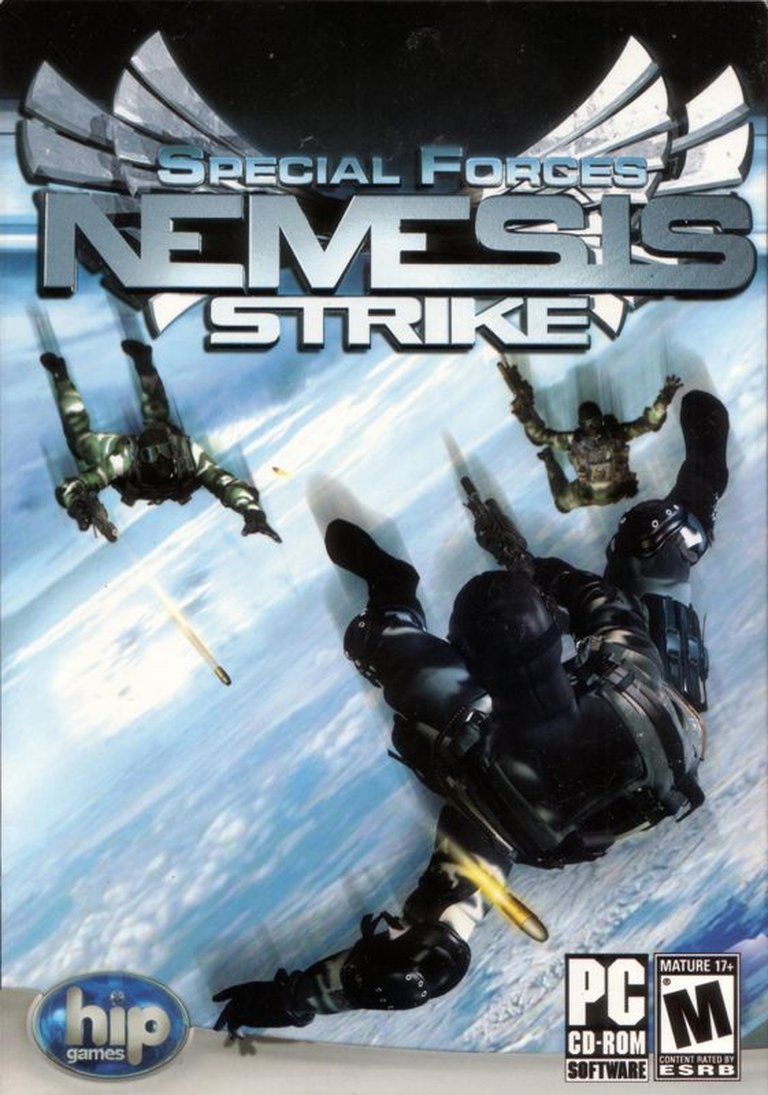
Description
Special Forces: Nemesis Strike is an action-packed game where players join an elite anti-terrorist squad to thwart the global threat posed by the sinister NEMESIS organization. As Stealth Owl, an infiltration expert skilled in precision and airborne tactics, or Raptor, a brute-force weapons specialist adept in close combat, players navigate diverse environments—from submarine bases to missile silos—while engaging in high-octane missions. The game prioritizes fast-paced combat over stealth, featuring destructible environments, an array of weapons like rocket launchers and turrets, and vehicle segments to amplify the chaotic battle against evil.
Gameplay Videos
Special Forces: Nemesis Strike Free Download
Special Forces: Nemesis Strike Cracks & Fixes
Special Forces: Nemesis Strike Patches & Updates
Special Forces: Nemesis Strike Reviews & Reception
metacritic.com (85/100): A great game with a lot of action, much more than your average budget title, and its price tag is impossible to beat for what’s offered.
ign.com (70/100): Not so bad. Not so good, either.
mobygames.com (65/100): The physics system is also implemented in the game and most of the time there is a nice amount of stuff and dudes flying around as you make havoc with havok.
Special Forces: Nemesis Strike Cheats & Codes
PC (PiZZADOX Trainer, 2005-06-04)
Enter key combinations during gameplay.
| Code | Effect |
|---|---|
| F1 | Infinite Health |
| F2 | Infinite Armor/Battery |
| F3 | Infinite Ammo/Grenades/Rockets/No Reload |
| F4 | Infinite Vehicle Energy |
| F5 | Infinite Time |
PC (aSxDOX Trainer, 2005-04-05)
Enter key combinations during gameplay.
| Code | Effect |
|---|---|
| F2 | Infinite Health |
| F3 | Infinite Shield |
| F4 | Infinite Ammo/No Reload |
| F5 | Infinite Time |
Special Forces: Nemesis Strike: Review
In the pantheon of early 2000s action games, Special Forces: Nemesis Strike stands as a curious artifact, a title that attempted to blend stealth, action, and vehicular combat into a cohesive whole. Developed by Asobo Studio and published by Hip Interactive, this 2005 release was the fourth and final installment in the CT Special Forces series. Despite its ambitious goals, Nemesis Strike often feels like a game that tried to do too much with too little, resulting in a mixed bag of experiences that are both memorable and frustrating. This review will delve into the game’s development history, narrative, gameplay mechanics, world-building, reception, and legacy to provide a comprehensive analysis of its place in video game history.
Development History & Context
The Studio
Asobo Studio, the French developer behind Nemesis Strike, had a modest portfolio prior to this title. Known for their work on licensed properties and budget titles, Asobo was not a household name in the gaming industry. Their previous projects included games like The Mummy and Garfield, which were largely unremarkable but demonstrated their ability to handle diverse genres and licenses. Nemesis Strike was one of their more ambitious projects, aiming to create a third-person shooter with a mix of stealth and action elements.
The Creators’ Vision
The vision for Nemesis Strike was to create a game that combined the best elements of stealth and action genres. The developers wanted to offer players a choice between two distinct playstyles: the stealth-oriented Stealth Owl and the more aggressive Raptor. This dual-protagonist approach was intended to provide variety and replayability, allowing players to experience the game from different perspectives.
Technological Constraints
Released in 2005, Nemesis Strike was developed during a transitional period in gaming technology. The game was released on Windows, Xbox, and PlayStation 2, each with its own set of technical limitations. The developers had to balance the game’s visuals and performance across multiple platforms, which often resulted in compromises. The game’s graphics, while serviceable, show their age, and the physics engine, while innovative for the time, can be inconsistent and glitchy.
The Gaming Landscape
The early 2000s were a golden age for action games, with titles like Max Payne, Splinter Cell, and the early Call of Duty games setting the standard for the genre. Nemesis Strike entered this crowded market with a unique selling proposition: a blend of stealth and action, set against a backdrop of global terrorism. However, the game struggled to stand out amidst the competition, often overshadowed by more polished and innovative titles.
Narrative & Thematic Deep Dive
Plot
The narrative of Nemesis Strike is a classic tale of good versus evil, with the Counter Terrorist Special Forces (CTSF) battling against the nefarious Nemesis organization. The story begins with a speech by the World Council President, highlighting the CTSF’s successes in fighting terrorism. The plot quickly escalates as the Nemesis organization launches a series of attacks, culminating in the theft of advanced technology.
The player controls two protagonists: Stealth Owl, an infiltration expert, and Raptor, a weapons specialist. Their missions range from infiltrating enemy bases to destroying missile silos and rescuing hostages. The story is straightforward, with a focus on action and spectacle over character development or complex themes.
Characters
The characters in Nemesis Strike are archetypal, with little depth or nuance. Stealth Owl and Raptor are the game’s two playable protagonists, each with their own unique skills and weapons. Owl is the stealthy, precise operative, while Raptor is the aggressive, heavily armed soldier. Their interactions are minimal, and their personalities are largely defined by their roles in the story.
The antagonists, led by the enigmatic Gregory Statszeck, are equally one-dimensional. Their motivations are vague, and their actions are driven by a desire for power and destruction. The lack of depth in the characters is a significant weakness, as it makes it difficult for players to invest emotionally in the story.
Dialogue
The dialogue in Nemesis Strike is serviceable but unremarkable. The voice acting is competent, but the scripts are often clichéd and formulaic. The game’s attempts at humor fall flat, and the dramatic moments lack the emotional resonance needed to make them impactful. The dialogue serves its purpose in advancing the plot, but it rarely rises above the mundane.
Themes
The primary theme of Nemesis Strike is the ongoing battle against terrorism. The game explores the idea of a global conflict, with the CTSF acting as the world’s last line of defense against evil. Themes of patriotism, sacrifice, and the struggle between good and evil are prevalent throughout the story. However, the game’s shallow narrative and one-dimensional characters prevent these themes from being explored in any meaningful depth.
Gameplay Mechanics & Systems
Core Gameplay Loops
Nemesis Strike offers a mix of stealth and action gameplay, with players switching between Stealth Owl and Raptor for different missions. The core gameplay loop involves completing objectives, such as infiltrating enemy bases, destroying targets, and rescuing hostages. The game’s missions are varied, with a mix of indoor and outdoor levels, vehicular sections, and free-fall parachuting.
Combat
Combat in Nemesis Strike is fast-paced and aggressive, with a focus on gunplay and explosions. Raptor’s missions are particularly action-oriented, with players using a variety of weapons to take down enemies. The game’s physics engine adds a layer of chaos to the combat, with enemies and objects flying through the air when hit by explosions or gunfire.
Stealth Owl’s missions, on the other hand, require a more cautious approach. Players must use stealth and precision to avoid detection and take down enemies silently. The game’s stealth mechanics are serviceable but lack the depth and sophistication of titles like Splinter Cell or Metal Gear Solid.
Character Progression
Character progression in Nemesis Strike is minimal. Players do not earn experience points or level up their characters. Instead, the game focuses on completing missions and unlocking new weapons and abilities. The lack of a meaningful progression system is a significant weakness, as it reduces the game’s replayability and incentives for players to engage with the content.
UI
The user interface in Nemesis Strike is functional but uninspired. The HUD provides essential information, such as health and ammo, but it lacks the polish and intuitiveness of more modern titles. The minimap is useful for navigation, but it can be cluttered and difficult to read in the heat of battle.
Innovative or Flawed Systems
One of the game’s more innovative features is its physics engine, which adds a layer of chaos and unpredictability to the combat. However, this system can also be a source of frustration, as it often leads to glitches and unintended consequences. The game’s stealth mechanics are serviceable but lack the depth and sophistication of more polished titles. The lack of a meaningful progression system is another significant flaw, as it reduces the game’s replayability and incentives for players to engage with the content.
World-Building, Art & Sound
Setting
The setting of Nemesis Strike is a global conflict between the CTSF and the Nemesis organization. The game’s levels range from subterranean bases to outdoor environments, with a mix of indoor and outdoor missions. The world-building is serviceable but lacks the depth and detail of more immersive titles. The game’s environments are often bland and unremarkable, with little to distinguish them from one another.
Atmosphere
The atmosphere in Nemesis Strike is tense and action-packed, with a focus on spectacle and excitement. The game’s use of music and sound effects contributes to this atmosphere, with a mix of orchestral scores and electronic beats. However, the game’s visuals and environments often fail to match the intensity of the gameplay, resulting in a disconnect between the two.
Visual Direction
The visual direction of Nemesis Strike is a mix of strengths and weaknesses. The game’s graphics are serviceable but show their age, with textures and models that are dated by modern standards. The game’s use of lighting and shadows is effective in creating a sense of atmosphere, but the overall visual style is unremarkable. The game’s cutscenes and cinematics are particularly weak, with stiff animations and uninspired direction.
Sound Design
The sound design in Nemesis Strike is one of its stronger elements. The game’s use of music and sound effects is effective in creating a sense of tension and excitement. The orchestral scores and electronic beats complement the gameplay, while the sound effects add a layer of realism and immersion. The voice acting is competent, but the scripts are often clichéd and formulaic.
Reception & Legacy
Critical and Commercial Reception
Upon its release, Nemesis Strike received mixed reviews from critics. The game was praised for its ambitious blend of stealth and action, as well as its innovative physics engine. However, it was criticized for its shallow narrative, one-dimensional characters, and technical flaws. The game’s reception was further hampered by its release on multiple platforms, each with its own set of technical limitations.
Commercially, Nemesis Strike was a modest success. The game sold well enough to justify its development, but it failed to make a significant impact on the market. Its legacy is that of a curious artifact, a game that tried to do too much with too little and ended up being overshadowed by more polished and innovative titles.
Influence on Subsequent Games
Despite its mixed reception, Nemesis Strike had a modest influence on subsequent games. Its blend of stealth and action, as well as its use of a dual-protagonist approach, was later seen in titles like Tom Clancy’s Ghost Recon and Splinter Cell: Conviction. The game’s innovative physics engine also inspired other developers to experiment with similar systems, although with varying degrees of success.
Industry Impact
Nemesis Strike’s impact on the industry was limited. The game’s technical flaws and shallow narrative prevented it from becoming a major influence on the genre. However, its ambitious blend of stealth and action, as well as its use of a dual-protagonist approach, were later seen in more successful titles. The game’s legacy is that of a curious artifact, a game that tried to do too much with too little and ended up being overshadowed by more polished and innovative titles.
Conclusion
Special Forces: Nemesis Strike is a game that tried to do too much with too little. Its ambitious blend of stealth and action, as well as its innovative physics engine, were ahead of their time. However, the game’s shallow narrative, one-dimensional characters, and technical flaws prevented it from achieving greatness. Despite its mixed reception, Nemesis Strike had a modest influence on subsequent games and the industry as a whole. Its legacy is that of a curious artifact, a game that tried to push the boundaries of the genre but ultimately fell short of its goals. In the end, Nemesis Strike is a game that is worth revisiting for its historical significance and innovative features, but it is not a title that will be remembered as a classic of the genre.