
- Release Year: 1999
- Platforms: Windows
- Publisher: Centropolis Interactive
- Developer: Mythic Entertainment, Inc.
- Genre: Action
- Perspective: 1st-person
- Game Mode: Online PVP
- Gameplay: Character classes, Leveling system, Power node capture, Spell-based combat, Team objectives
- Setting: Fantasy
- Average Score: 72/100
Description
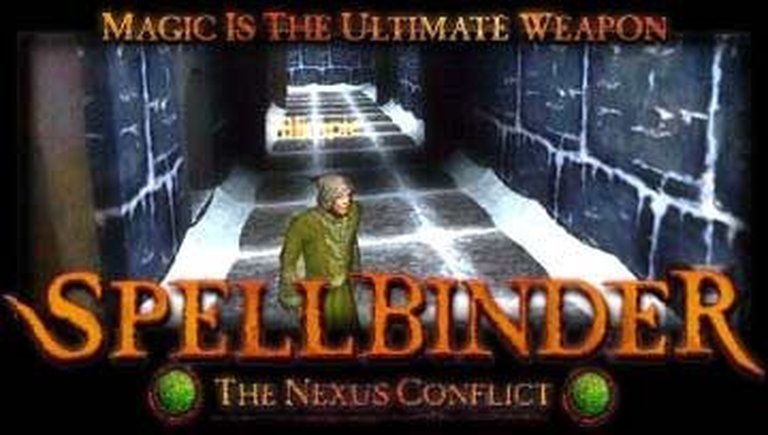
Spellbinder: The Nexus Conflict is an online-only multiplayer shooter set in a medieval fantasy world inspired by the Rolemaster RPG, where teams of spellcasters from four classes—magician, mystic, runemage, and healer—battle to conquer power nodes across mystical maps. Capturing nodes grants mana for powerful spells, with matches lasting 60 minutes or ending when one team controls all nodes, as players earn experience to level up abilities and ensure fair play through level-matched opponents.
Gameplay Videos
Spellbinder: The Nexus Conflict Free Download
Spellbinder: The Nexus Conflict Reviews & Reception
en.wikipedia.org (75/100): If you prefer team-based shooters and want to see an actual return for your skill and effort that lasts longer than the frag-count screen, you should give Spellbinder a try
gamespot.com : Mythic has tempered what would otherwise be a solid but unremarkable shooter with a number of role-playing game elements that make Spellbinder surprisingly deep and distinctive.
Spellbinder: The Nexus Conflict: Review
Introduction
In the late 1990s, as the thunderous roar of rocket launchers echoed through Quake III Arena and Unreal Tournament, a quieter revolution stirred in the shadows of fantasy realms: Spellbinder: The Nexus Conflict. Released on October 31, 1999, this online-only multiplayer shooter from Mythic Entertainment dared to swap bullets for bolts of arcane fury, transplanting the intricate magic systems of the tabletop RPG Rolemaster into a frenetic first-person arena. Amid the FPS gold rush, Spellbinder stood out not for blistering speed or gore-soaked spectacle, but for its bold fusion of persistent RPG progression with team-based tactical combat. My thesis: While overshadowed by its flashier contemporaries, Spellbinder was a pioneering experiment in hybrid genre design, rewarding skill with lasting character growth and foreshadowing the class-based, persistent-world shooters that would define the 2000s MMO landscape.
Development History & Context
Mythic Entertainment, a scrappy studio helmed by visionaries like Executive Producer Mark Jacobs (who conceived the original game idea) and Producer/Game Designer Matt Firor, crafted Spellbinder as a digital evolution of Rolemaster‘s spell-heavy pen-and-paper mechanics from Iron Crown Enterprises. In February 1999, Mythic licensed the NetImmerse 2.2 engine (later rebranded as Gamebryo/Lightspeed/NetImmerse) from Numerical Design Limited, optimizing it for low-bandwidth online play—a critical choice given the era’s dial-up dominance and nascent broadband. Rob Denton served as both Production Manager and Lead Programmer, supported by a lean team including programmers Brian Axelson and Matt Doetsch-Kidder, level designer Colin Hicks, and artists like Michael Crossmire (who handled spell effects).
The game’s context was a perfect storm of technological and market shifts. PCs in 1999 required modest specs—a Pentium 200, 32MB RAM, and a 3D accelerator with 4MB VRAM—making Spellbinder‘s tiny download-only footprint (under 40MB) revolutionary for subscription-based online gaming. Published by Centropolis Interactive via their Gaming Center portal, it launched as a monthly-fee service (around $5/month), predating free-to-play models but aligning with early MMOs like Ultima Online (1997) and Asheron’s Call (1999). The FPS genre was exploding post-Quake II (1997) and Half-Life (1998), but pure deathmatchers like Unreal Tournament (1999) and Quake III (November 1999) dominated. Team-based titles like Starsiege: Tribes (1998) hinted at objectives beyond frags, yet Spellbinder innovated by grafting RPG persistence onto this framework. A demo dropped December 4, 1999, via IGN, teasing its magic duels. Servers persisted until early 2006, when Mythic shifted focus post-EA acquisition, but the team’s DNA lived on in Dark Age of Camelot (2001), where many credits overlapped.
Technological constraints shaped its DNA: NetImmerse ensured smooth 3D rendering over shaky connections, but lag plagued peak hours. Mythic’s vision—fair, skill-based matches via level-bracketed arenas—addressed power imbalances plaguing early online play, a prescient nod to modern matchmaking.
Narrative & Thematic Deep Dive
Spellbinder eschews traditional single-player storytelling for emergent multiplayer drama, lacking voiced cutscenes, lore dumps, or branching quests. Instead, its “narrative” unfolds through 60-minute matches in a medieval fantasy arena, where two or three teams vie for supremacy in “The Nexus Conflict”—a war over pulsating power nodes that symbolize raw magical ley lines. Each team’s nexus (a fortified base node) anchors their power, generating mana for spells; conquering enemy nodes drains foes while fueling your arcane arsenal. Victory demands total domination or time expiry, evoking Rolemaster‘s gritty, simulationist magic where power flows from contested essences, not infinite ammo.
Thematically, Spellbinder explores power as addiction and collaboration. Nodes represent nexus points of reality-warping energy, mirroring Rolemaster‘s spell lists rooted in elemental essences (fire, ice, wind). Characters embody archetypal fantasy roles: the Magician as destructive force, channeling cataclysmic fireballs; the Mystic as elusive trickster, boosting agility or vanishing into shadows; the Runemage as territorial warden, laying trap-runes that sizzle with energy collars; and the Healer as selfless guardian, weaving protective shells and resurrections. Dialogue is sparse—grunts, death screams, and emotes—but team chat fosters emergent tales of betrayal, heroic stands, and grinding ascensions to level 25.
Underlying themes draw from Rolemaster‘s crunchy realism: Magic drains mana and stamina, punishing solo bravado and rewarding synergy. A lone Magician crumbles without a Healer’s buffs or Runemage’s traps; kills yield XP for hits, kills, heals, plus bonuses for full-match commitment. This creates a Sisyphean grind toward godhood, thematizing ambition’s toll—skilled players evolve permanently, but lag or disconnects forfeit bonuses, underscoring fragility. No deep lore binds it, but the nexus motif echoes cosmic conflicts, positioning players as pawns in an eternal magical arms race. In a genre of faceless fraggers, Spellbinder‘s themes elevate teamwork to mythic necessity, prefiguring MOBAs like DotA.
Gameplay Mechanics & Systems
At its core, Spellbinder loops around node conquest: Approach a neutral or enemy node, cast an infusion spell, and claim it for mana generation. Matches pit level-matched teams (e.g., levels 1-4 or 5-10) in keyboard/mouse-controlled 1st-person arenas, emphasizing positioning over twitch reflexes. Combat replaces guns with mana/stamina-limited spells—fire crashes reverberantly, ice shatters glassily, wind gusts low—each with distinct visuals/audios for tactical awareness.
Classes define asymmetry:
– Magician: High-damage AoE blasts; fragile glass cannon.
– Mystic: Speed/jump buffs, invisibility for flanks; agile scout.
– Runemage: Deployable traps for chokepoints; defensive powerhouse.
– Healer: Zero offense, but buffs (shields, regen) and revives make teams immortal.
Progression is the star: XP from hits/kills/heals/resurrects accrues per-match, with bonuses for duration/team wins. Levels unlock spell tiers and stat points (attack power, HP, speed, strafe), persisting across sessions. Bracketed arenas ensure fairness—no level 1 vs. 7 mismatches.
UI is minimalist: HUD tracks mana/stamina bars, level, nodes controlled, and teammate statuses. Flaws include clunky controls (noted in German reviews as “träge”), lag spikes causing rubber-banding (especially ISDN/peak hours), and disconnects forfeiting bonuses. Innovation shines in team interdependence—solo play dooms you; coordinated pushes (mages frontlining, healers rear, runes blocking) yield dominance. Only one mode limits variety, and early launch had just four maps/character models, but small size enabled quick patches.
| Mechanic | Strengths | Weaknesses |
|---|---|---|
| Node Capture | Strategic depth; mana economy forces objectives | Predictable paths encourage camping |
| Class System | Rock-paper-scissors synergy | Healers underpowered solo |
| Progression | Permanent rewards motivate grinding | Bonus XP loss on DC frustrates |
| Matchmaking | Level brackets = fair fights | Lag desyncs duels |
Overall, loops blend FPS immediacy with RPG investment, but tech hurdles blunt the edge.
World-Building, Art & Sound
Spellbinder‘s world is a high-fantasy diorama of arcane battlegrounds: the stony Keep with tapestries and pillars; crumbling Ruins evoking lost civilizations; icy Glacier for slippery ambushes; and ornate Temple pulsing with mysticism. Maps are vast yet intimate, designed for node chokepoints and nexus defenses, fostering claustrophobic team clashes. Atmosphere builds through spell effects—flame bursts, light shells, energy collars—crisp and varied despite modest polys, thanks to NetImmerse’s efficiency.
Visuals punch above weight: Colorful character models (four bases, customizable heads/clothes) animate fluidly, with clean textures capturing “picturesque high fantasy.” No blockiness; even on era hardware, it rivals retail titles. Sound design is functional but sparse: Bland menu music loops; in-game, spell SFX dominate (explosive crashes, glassy clinks, whooshes), paired with screams for feedback. No ambient score or voice lines dilutes immersion, but effects clearly signal threats (e.g., distinguish ice from fire).
These elements amplify team fantasy: Glowing nodes throb like hearts, spells weave a magical battlefield tapestry, turning arenas into living myths. Limited assets constrain replayability, but they cohere into a cohesive, atmospheric spell-slinging sandbox.
Reception & Legacy
Launch reception averaged 70% (MobyGames 7.0/10), with five critics weighing in:
– GameSpot (7.5/10): Praised RPG depth in team shooters; “permanent rewards for skill.”
– Daily Radar (3/4): “Deep blend of action, strategy, teamwork.”
– Computer Games (3.5/5): Exciting chaos, accessible classes; “tasty but light sandwich.”
– GameSpot UK (7/10): Enjoyable progression; questions sub fee vs. free alts.
– GameStar (3/6): Motivational leveling, but lag/controls drag.
No player reviews on Moby; Metacritic lacks data. Commercially niche—subscription model and server shutdown (2006) limited reach—yet it influenced via persistent progression in arenas, echoing in World of Warcraft raids and League of Legends ranked play. Mythic’s alumni (Jacobs, Firor, Denton) channeled lessons into Dark Age of Camelot‘s class synergy and RvR, cementing its shadow legacy. Today, it’s preserved via demos on Archive.org, a relic of pre-MMO shooter hybrids.
Conclusion
Spellbinder: The Nexus Conflict was a spellbinding anomaly: a lean, download-only innovator blending Rolemaster‘s magic with Tribes-like objectives, gated by brackets for enduring fairness. Its exhaustive class interplay, node-driven strategy, and grind-to-greatness progression outshone vapid fragfests, despite lag, sparse content, and stiff competition from Quake III/ UT. Tech woes and server demise eclipsed it, but as a bridge from arena shooters to persistent MMOs, it earns a firm historical B+—essential for genre historians, a cult curiosity for fantasy FPS fans. In video game history, Spellbinder whispers: True power lies not in the spell, but the nexus of skill and squad.