
- Release Year: 2012
- Platforms: Windows
- Publisher: Nordic Games GmbH
- Genre: Compilation
- Average Score: 55/100
Description
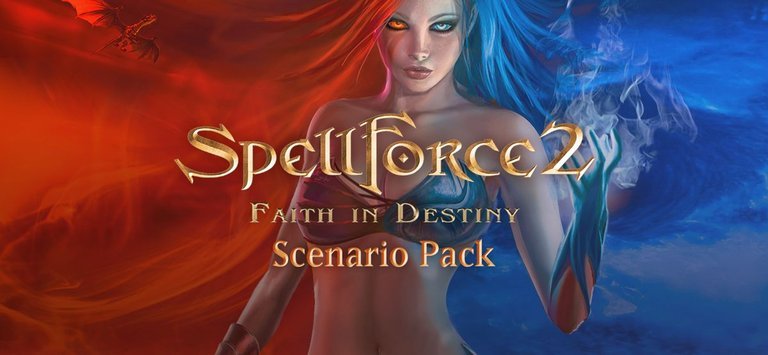
SpellForce 2: Faith in Destiny – Scenario Bundle is a compilation of three downloadable scenarios for the fantasy RPG/RTS hybrid game SpellForce 2: Faith in Destiny. Set in the war-torn world of Eo, players assume the role of a young hero tasked with uncovering and defeating a mysterious new evil. The bundle includes ‘Flink’s Secret Diary,’ ‘The Golden Fool,’ and ‘The Last Stand,’ each offering unique challenges and expanding the game’s lore with diverse heroes and strategic battles.
Where to Buy SpellForce 2: Faith in Destiny – Scenario Bundle
SpellForce 2: Faith in Destiny – Scenario Bundle Patches & Updates
SpellForce 2: Faith in Destiny – Scenario Bundle Guides & Walkthroughs
SpellForce 2: Faith in Destiny – Scenario Bundle Reviews & Reception
metacritic.com (55/100): SpellForce 2: Faith in Destiny delivers nothing particularly surprising, it’s just how it is: Awesome.
criticalgamer.co.uk : Spellforce 2: Faith in Destiny is an expansion pack for a six year old game and shows this painfully.
gamesreviews2010.com : SpellForce 2: Faith in Destiny is a groundbreaking video game that seamlessly blends the genres of real-time strategy (RTS) and role-playing (RPG).
SpellForce 2: Faith in Destiny – Scenario Bundle Cheats & Codes
PC
Press [Ctrl] + K to open the console and enter the following case-sensitive codes. Replace (x) with 1 to enable or 0 to disable. Replace (number) with the desired value.
| Code | Effect |
|---|---|
| UI: FOWEnable (x) | Disable fog of war |
| LogSender:GiveGood(number) | Get indicated number of all goods |
| LogSender:AddMoney(number) | Get indicated amount of gold |
| LogSender:GodMode(x) | God mode |
| LogSender:NoManaUsage(x) | Spells or abilities can be used repeatedly |
SpellForce 2: Faith in Destiny – Scenario Bundle: A Comprehensive Retrospective
Introduction: The Legacy of a Hybrid Experiment
The SpellForce 2: Faith in Destiny – Scenario Bundle is a curious artifact in the annals of gaming history—a compilation of three downloadable content (DLC) scenarios for SpellForce 2: Faith in Destiny, released in December 2012. This bundle, comprising Flink’s Secret Diary, The Golden Fool, and The Last Stand, serves as both a testament to the enduring appeal of the SpellForce series and a poignant reminder of the challenges faced by mid-tier developers in the early 2010s. The SpellForce franchise, known for its ambitious fusion of real-time strategy (RTS) and role-playing game (RPG) mechanics, has always occupied a niche space, catering to players who crave depth, complexity, and a richly woven narrative tapestry. The Scenario Bundle is no exception, offering a blend of standalone stories that expand upon the lore of Faith in Destiny while providing bite-sized, self-contained adventures.
This review aims to dissect the Scenario Bundle in exhaustive detail, exploring its development history, narrative intricacies, gameplay mechanics, and artistic achievements. We will also examine its reception, legacy, and the broader context of its release. By the end, we will determine whether this compilation is a worthy addition to the SpellForce canon or merely a footnote in the series’ evolution.
Development History & Context: A Game Born from Turmoil
The Troubled Genesis of Faith in Destiny
The SpellForce 2: Faith in Destiny – Scenario Bundle is inextricably linked to the tumultuous development of its parent game, SpellForce 2: Faith in Destiny. Originally conceived as an expansion to SpellForce 2: Shadow Wars (2006), Faith in Destiny was developed by Trine Games, an Indian studio, under the auspices of JoWooD Entertainment, a once-prominent Austrian publisher. However, the project was plagued by delays, financial instability, and managerial disarray.
- Initial Announcement and Delays: Faith in Destiny was first announced in 2009, with an expected release in the second fiscal quarter of 2011. However, funding issues and internal strife at JoWooD led to indefinite delays. By March 2011, the game was officially postponed, with JoWooD citing the need for additional polishing and testing.
- Change of Hands: In October 2011, Nordic Games (now THQ Nordic) acquired the rights to Faith in Destiny and other JoWooD properties. Nordic Games, known for rescuing and reviving dormant franchises, took over development and set a new release date for May 15, 2012. However, in a humorous yet telling move, Nordic Games delayed the game again—this time to avoid competing with Diablo III, which was slated for release on the same date. The final release date was set for June 19, 2012.
The Scenario Bundle: A Post-Launch Expansion
The Scenario Bundle was released on December 17, 2012, six months after Faith in Destiny. Developed by Mind Over Matter Studios, the bundle was designed to complement the base game by offering additional content that fleshed out the world of Eo and provided players with new challenges. Unlike traditional expansions, which often introduce new factions or mechanics, the Scenario Bundle focused on delivering self-contained narratives that explored the backstories of key characters and events referenced in Faith in Destiny.
The bundle includes:
1. Flink’s Secret Diary (2012): A humorous and lighthearted adventure centered around Flink McWinter, a roguish thief tasked with retrieving a stolen artifact.
2. The Golden Fool (2013): A competitive and strategic scenario revolving around the legendary Drakkar game and its mythical “Golden Fool” piece.
3. The Last Stand (2013): A tense, defense-oriented mission where players must fend off waves of the Nameless, the game’s primary antagonists.
The Gaming Landscape of 2012-2013
The early 2010s were a period of transition for the gaming industry. The rise of digital distribution platforms like Steam and GOG.com was reshaping how games were sold and consumed, while the popularity of DLC and microtransactions was beginning to overshadow traditional expansion packs. The SpellForce series, with its niche appeal, struggled to compete with mainstream titles like Diablo III, The Elder Scrolls V: Skyrim, and Mass Effect 3.
In this context, the Scenario Bundle represented an attempt to cater to a dedicated fanbase while experimenting with episodic content. However, the bundle’s release was overshadowed by the broader industry trends, and it failed to garner significant attention outside of the SpellForce community.
Narrative & Thematic Deep Dive: Stories Within a Story
The Overarching Lore of Faith in Destiny
SpellForce 2: Faith in Destiny is set in the world of Eo, a fractured realm where islands are connected by a network of magical portals. The game’s narrative unfolds four years after the events of SpellForce 2: Shadow Wars, with the portal network in disarray and the islands isolated from one another. The protagonist is a Shaikan, a member of a race descended from dragons, who embarks on a quest to uncover the truth behind his disturbing dreams and the resurgence of the Nameless, a demonic force seeking to conquer Eo.
The Scenario Bundle does not directly continue the main storyline of Faith in Destiny. Instead, it serves as a collection of prequels and side stories, offering players a deeper understanding of the world and its inhabitants. Each scenario is self-contained, with its own cast of characters, objectives, and themes.
Scenario 1: Flink’s Secret Diary
- Plot Summary: Flink McWinter, a notorious thief and scoundrel, is hired by Order Master Matricus to retrieve the Fire Ledger, a powerful artifact containing the secrets of fire magic. The ledger has been stolen by orcs, and Flink must navigate a web of deceit, betrayal, and comedy to reclaim it.
- Themes: Flink’s Secret Diary is a lighthearted romp that contrasts sharply with the darker tones of Faith in Destiny. The scenario explores themes of redemption, greed, and the consequences of one’s actions. Flink, despite his roguish nature, is forced to confront his past and the impact of his choices on those around him.
- Characters:
- Flink McWinter: A charming yet flawed protagonist whose wit and cunning are matched only by his penchant for trouble.
- Matricus: A stern and unyielding figure who serves as Flink’s employer and moral compass.
- Flink’s Mother: A recurring character who adds a touch of humor and pathos to the story.
- Dialogue and Writing: The scenario’s dialogue is witty and irreverent, with Flink’s internal monologue providing much of the humor. The writing is self-aware, often breaking the fourth wall to poke fun at RPG tropes.
Scenario 2: The Golden Fool
- Plot Summary: After her defeat in SpellForce 2: Shadow Wars, Carla, a Drakkar champion, seeks to restore her reputation by finding the legendary Golden Fool, a mythical game piece said to grant its owner unstoppable power. Her quest takes her to the Tuscari Desert, where she must outmaneuver rivals and uncover the truth behind the artifact.
- Themes: The Golden Fool is a tale of ambition, rivalry, and the corrupting influence of power. Carla’s journey is one of self-discovery, as she grapples with her past failures and the lengths she is willing to go to achieve greatness.
- Characters:
- Carla: A determined and competitive protagonist whose drive to succeed is both her greatest strength and weakness.
- Amun Kar: The inventor of the Drakkar game, whose legacy looms large over the scenario.
- Rivals: A cast of colorful opponents who challenge Carla’s skills and resolve.
- Dialogue and Writing: The scenario’s dialogue is sharp and competitive, reflecting the high-stakes nature of the Drakkar game. The writing emphasizes strategy and cunning, with Carla’s internal struggles adding depth to the narrative.
Scenario 3: The Last Stand
- Plot Summary: Professor Twiddle, a key figure in Faith in Destiny, embarks on a perilous mission to Dun Mora, where he seeks to safeguard the Twiddlium Compensator, a device crucial to restoring the portal network. When the Nameless launch a full-scale assault on the city, players must take on the role of Caine, a seasoned warrior, and defend the elves against wave after wave of demonic invaders.
- Themes: The Last Stand is a grim and desperate tale of survival, exploring themes of sacrifice, heroism, and the cost of war. The scenario is a testament to the resilience of the elves and their allies in the face of overwhelming odds.
- Characters:
- Caine: A battle-hardened warrior whose leadership and tactical prowess are put to the test.
- Queen Sansha: The ruler of Dun Mora, whose wisdom and courage inspire her people.
- Professor Twiddle: A brilliant yet eccentric inventor whose work holds the key to Eo’s salvation.
- Dialogue and Writing: The scenario’s dialogue is tense and urgent, reflecting the high stakes of the battle. The writing emphasizes the camaraderie and determination of the defenders, as well as the ruthless efficiency of the Nameless.
Thematic Cohesion and Narrative Strengths
The Scenario Bundle excels in its ability to expand the lore of Eo while offering diverse storytelling experiences. Each scenario is distinct in tone and focus, yet they all contribute to the overarching narrative of Faith in Destiny. The bundle’s greatest strength lies in its character-driven storytelling, with each protagonist undergoing significant personal growth over the course of their respective adventures.
However, the scenarios are not without their flaws. The writing, while generally strong, occasionally succumbs to clichés and predictable plot twists. Additionally, the scenarios’ self-contained nature means that they lack the epic scale and narrative depth of the main Faith in Destiny campaign.
Gameplay Mechanics & Systems: A Hybrid Experience
Core Gameplay Loop
The Scenario Bundle retains the hybrid RTS/RPG mechanics that define the SpellForce series. Players must balance resource management, base building, and real-time combat with character progression, questing, and exploration. The scenarios are designed to be accessible to newcomers while offering depth and complexity for veterans.
- Resource Management: Players gather silver, stone, and lenya to construct buildings, recruit units, and research upgrades. The resource system is streamlined compared to traditional RTS games, with an emphasis on strategic decision-making rather than micromanagement.
- Base Building: Each scenario features a unique map layout, requiring players to adapt their strategies to the terrain and objectives. Base building is simplified, with a focus on defensive structures and unit production.
- Combat: The game’s combat system blends RTS mechanics (unit control, formations, and tactics) with RPG elements (character abilities, spells, and equipment). Players can directly control their hero or issue commands to their army, allowing for a high degree of tactical flexibility.
Character Progression and Customization
One of the Scenario Bundle’s standout features is its deep character progression system. Each scenario introduces a unique protagonist with their own skill trees, abilities, and equipment.
- Skill Trees: Players can allocate skill points to Combat, Magic, or Shaikan abilities, allowing for a high degree of customization. The skill trees are well-balanced, with each branch offering meaningful choices that impact gameplay.
- Equipment and Loot: The scenarios feature a variety of weapons, armor, and artifacts that can be equipped to enhance a character’s abilities. Loot is randomly generated, encouraging exploration and replayability.
- Hero Abilities: Each protagonist has access to unique abilities that reflect their personality and role in the story. For example, Flink’s stealth and deception skills contrast with Caine’s combat prowess and leadership.
Innovative and Flawed Systems
The Scenario Bundle introduces several innovative mechanics that set it apart from traditional RTS and RPG games. However, these innovations are not without their flaws and limitations.
- Dragon Riding: A hallmark of Faith in Destiny, dragon riding makes a brief appearance in the Scenario Bundle. While visually impressive, the mechanic is underutilized, with limited opportunities for aerial combat or exploration.
- Domination Mode: Introduced in Faith in Destiny, Domination Mode is a multiplayer-focused game type where players compete to control strategic nodes on the map. While not a feature of the Scenario Bundle, its inclusion in the base game highlights the series’ commitment to experimental gameplay.
- AI and Pathfinding: The game’s AI is competent but unremarkable, with enemy units often exhibiting predictable behavior. Pathfinding can be clunky, particularly in dense environments, leading to frustration during large-scale battles.
User Interface and Controls
The Scenario Bundle retains the intuitive UI of Faith in Destiny, with click’n’fight and quick-action buttons that streamline combat and resource management. The interface is clean and functional, though it occasionally suffers from clutter and poor organization, particularly during hectic battles.
- Camera Controls: The game offers multiple camera angles, including a third-person perspective for direct hero control. While this feature is innovative, it is poorly implemented, with awkward controls and limited utility.
- Menu Navigation: The menus are easy to navigate, with clear icons and tooltips. However, the inventory system can be cumbersome, particularly when managing large quantities of loot.
World-Building, Art & Sound: Crafting the Realm of Eo
Setting and Atmosphere
The Scenario Bundle takes players to diverse and visually distinct locations within the world of Eo. Each scenario is set in a unique environment, from the lush forests of Flink’s home island to the arid wastes of the Tuscari Desert and the besieged city of Dun Mora.
- Flink’s Secret Diary: The scenario is set on a vibrant and colorful island, teeming with life and humor. The environment reflects Flink’s lighthearted and irreverent personality, with whimsical landmarks and playful NPCs.
- The Golden Fool: The Tuscari Desert is a harsh and unforgiving landscape, filled with ancient ruins and hidden dangers. The scenario’s atmosphere is mysterious and competitive, reflecting the high-stakes nature of the Drakkar game.
- The Last Stand: Dun Mora is a fortified elven city, under siege by the Nameless. The scenario’s environment is dark and oppressive, with crumbling walls, burning buildings, and desperate defenders.
Visual Direction and Art Style
The Scenario Bundle retains the detailed and vibrant art style of Faith in Destiny, with richly textured environments, intricate character models, and impressive special effects. However, the game’s aging graphics engine is evident, particularly in the jagged character models and dated animations.
- Character Design: The protagonists and NPCs are well-designed, with distinct visual identities that reflect their personalities. Flink’s rogue-like appearance contrasts with Carla’s competitive and determined demeanor, while Caine’s battle-worn armor emphasizes his role as a warrior.
- Environmental Detail: The scenarios feature highly detailed environments, with interactive elements and hidden secrets. The Tuscari Desert, in particular, is a standout, with its sweeping dunes and ancient ruins creating a sense of mystery and adventure.
- Special Effects: The game’s spell effects and combat animations are visually impressive, though they occasionally suffer from performance issues on lower-end systems.
Sound Design and Music
The Scenario Bundle features a strong audio design, with immersive sound effects and a dynamic soundtrack that enhances the gameplay experience.
- Voice Acting: The scenarios feature full voice acting, with strong performances from the cast. Flink’s witty and irreverent dialogue is particularly well-delivered, while Carla’s competitive and determined tone adds depth to her character.
- Sound Effects: The game’s sound effects are realistic and immersive, from the clash of swords to the roar of dragons. The ambient sounds of each environment further enhance the atmosphere, creating a rich and engaging auditory experience.
- Music: The soundtrack is epic and orchestral, with thematic compositions that reflect the tone of each scenario. The battle themes are particularly noteworthy, with pulsing rhythms and soaring melodies that heighten the intensity of combat.
Reception & Legacy: A Mixed but Enduring Impact
Critical Reception
The SpellForce 2: Faith in Destiny – Scenario Bundle received mixed reviews from critics and players alike. While praised for its innovative gameplay mechanics, rich storytelling, and deep character customization, the bundle was criticized for its dated graphics, clunky AI, and lack of significant innovation.
- Metacritic: The base game, Faith in Destiny, holds a Metascore of 55, indicating mixed or average reviews. The Scenario Bundle was not reviewed separately on Metacritic, but user scores suggest a similar reception.
- Player Reviews: On platforms like Steam and GOG.com, the bundle has garnered moderate praise, with players appreciating the additional content and lore but noting its short length and technical issues.
Commercial Performance
The Scenario Bundle was released during a period of declining interest in the SpellForce series. While the base game, Faith in Destiny, sold moderately well, the bundle struggled to attract a significant audience. Its niche appeal and lack of mainstream marketing contributed to its limited commercial success.
Influence and Legacy
Despite its mixed reception, the Scenario Bundle has had a lasting impact on the SpellForce franchise and the broader RTS/RPG hybrid genre.
- Influence on Subsequent Games: The bundle’s focus on character-driven storytelling and episodic content influenced later entries in the series, such as SpellForce 3 (2017) and its expansions. The success of the hybrid mechanics also inspired other developers to experiment with blending genres.
- Cult Following: The SpellForce series has developed a dedicated fanbase, with the Scenario Bundle serving as a beloved addition to the lore of Eo. The scenarios’ unique narratives and gameplay experiences have earned them a place in the hearts of longtime fans.
Conclusion: A Worthy Addition to the SpellForce Canon
The SpellForce 2: Faith in Destiny – Scenario Bundle is a flawed yet fascinating compilation that offers rich storytelling, innovative gameplay, and a deep dive into the world of Eo. While it suffers from dated graphics, technical issues, and a lack of significant innovation, the bundle’s character-driven narratives and strategic depth make it a worthy addition to the SpellForce series.
For fans of the franchise, the Scenario Bundle is a must-play, offering hours of engaging content and a deeper understanding of the lore. For newcomers, the bundle serves as an accessible entry point into the world of SpellForce, though it may not fully capture the epic scale of the main campaigns.
Ultimately, the SpellForce 2: Faith in Destiny – Scenario Bundle is a testament to the enduring appeal of the SpellForce series and a reminder of the challenges faced by mid-tier developers in an increasingly competitive industry. While it may not be a masterpiece, it is a valuable and enjoyable addition to the SpellForce canon.
Final Verdict: 7.5/10 – A solid and engaging compilation that expands the lore of Eo, though not without its flaws.