
- Release Year: 1998
- Platforms: Windows
- Publisher: Jordan Freeman Group, LLC, Knowledge Adventure, Inc.
- Developer: Knowledge Adventure, Inc.
- Genre: Educational
- Perspective: Fixed / flip-screen
- Game Mode: Single-player
- Gameplay: Reading, writing
- Average Score: 94/100
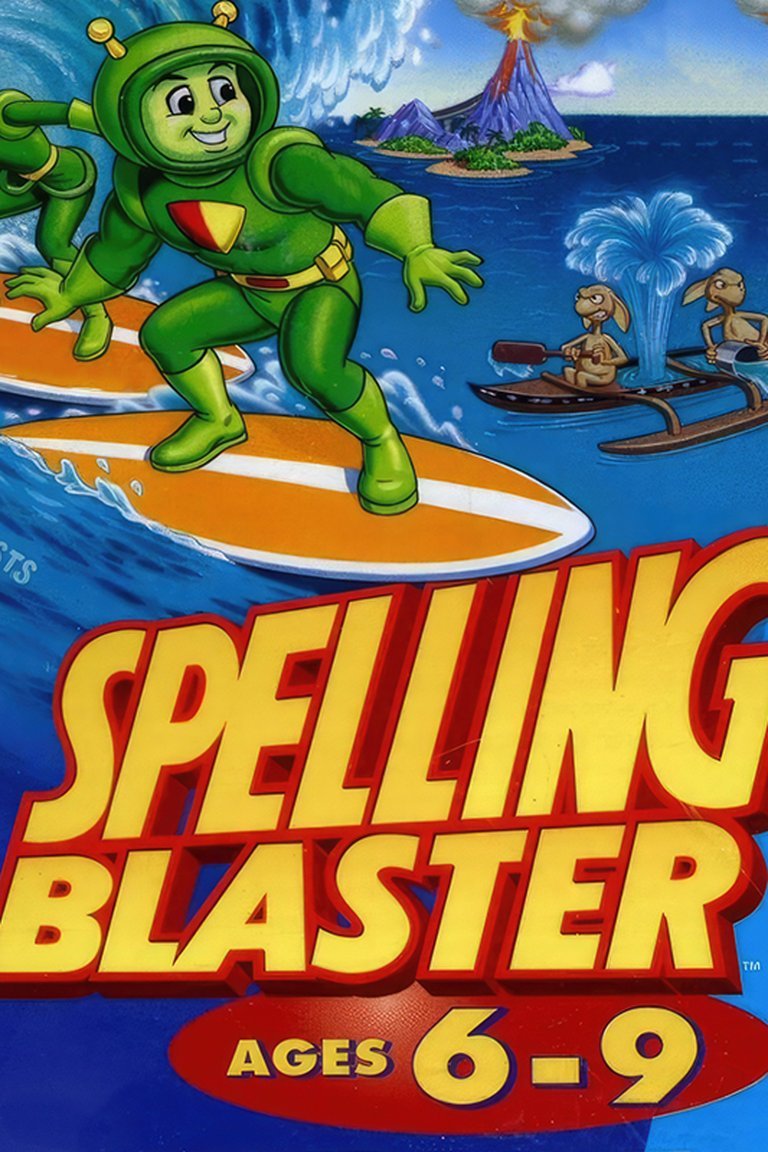
Description
Spelling Blaster: Ages 6-9 is an interactive educational game designed to help children improve their spelling skills through engaging, arcade-like gameplay. Set in a space-themed adventure, players choose an intergalactic companion and embark on missions that involve solving spelling challenges, learning antonyms and synonyms, and mastering word rules. With its vibrant visuals and point-and-select interface, the game combines fun and learning to captivate young players while reinforcing reading and writing fundamentals.
Gameplay Videos
Spelling Blaster: Ages 6-9 Free Download
Spelling Blaster: Ages 6-9 Reviews & Reception
superkids.com (94/100): Spelling Blaster contains over 1,700 words organized in over 140 spelling lists, but it also provides word-appropriate storybooks as rewards for achieving mastery of the spelling lists.
Spelling Blaster: Ages 6-9 – A Retrospective on the Edutainment Classic
Introduction: The Legacy of a Spelling Adventure
In the late 1990s, educational software was undergoing a renaissance, blending entertainment with pedagogy in ways that captivated young learners. Among the standout titles of this era was Spelling Blaster: Ages 6-9, a 1998 release by Knowledge Adventure that seamlessly merged arcade-style gameplay with foundational literacy skills. Part of the venerable Blaster Learning System—a franchise that included Math Blaster and Reading Blaster—this title represented a bold experiment in making spelling instruction engaging, interactive, and, above all, fun.
At its core, Spelling Blaster was more than just a digital flashcard set; it was a narrative-driven adventure where players assumed the role of an intergalactic hero tasked with recovering stolen books from the bumbling Mumblers of Planet Nonsense. The game’s premise was simple yet ingenious: by solving spelling puzzles, children could unlock clues, progress through vibrant island environments, and ultimately restore order to a world where communication had broken down. This review will dissect Spelling Blaster’s development, gameplay, educational value, and lasting impact, arguing that it remains a landmark in the “edutainment” genre—a testament to how games can transform rote learning into an immersive experience.
Development History & Context: The Rise of Knowledge Adventure
The Studio Behind the Blaster
Spelling Blaster: Ages 6-9 was developed and published by Knowledge Adventure, a studio that had already cemented its reputation in educational software by the late 1990s. Originally founded as part of the Davidson & Associates family (creators of the Math Blaster series), Knowledge Adventure specialized in creating interactive learning tools that appealed to both children and educators. Their philosophy was clear: education should not feel like a chore. By 1998, the studio had expanded its Blaster franchise to cover reading, science, and, with Spelling Blaster, orthographic mastery.
The game was built using the Atlas engine, a proprietary tool that allowed for the integration of rich visuals, audio, and interactive elements—a necessity for the CD-ROM era. The technical constraints of the time (e.g., limited RAM, 256-color graphics, and quad-speed CD-ROM drives) shaped Spelling Blaster’s design, favoring fixed/flip-screen visuals and point-and-select interfaces over more complex 3D environments. Despite these limitations, the game’s art style and sound design created a cohesive, immersive world.
The Edutainment Boom of the Late ’90s
The late 1990s were a golden age for educational software. Titles like The Oregon Trail, Reader Rabbit, and JumpStart dominated classrooms and home computers, proving that games could be both fun and instructive. Spelling Blaster entered this competitive landscape with a unique hook: it framed spelling as a detective adventure, leveraging the popularity of sci-fi themes (à la Star Wars or Star Trek) to engage its young audience.
The game’s release in August 1998 coincided with a broader cultural shift toward digital learning. Schools were increasingly adopting computers, and parents sought software that could supplement traditional teaching methods. Spelling Blaster’s timing was impeccable, offering a structured yet playful approach to spelling that aligned with emerging educational standards.
Narrative & Thematic Deep Dive: A Quest for Literacy
Plot and Setting
Spelling Blaster’s narrative is deceptively simple but effectively motivational. The player selects one of three “Blasterpals”—Blasternaut, Galactic Commander, or Spot—to embark on a mission to Planet Islandria, where the ne’er-do-well Mumblers (aliens from Planet Nonsense) are stealing books to learn how to communicate. The premise is a clever metaphor for the importance of spelling: without proper language skills, even the most well-intentioned creatures are reduced to incoherent mumbling.
The adventure unfolds across three distinct islands:
1. Tropical Island – A lush, vibrant environment with challenges like the Bridge Puzzle and Sir Finnigan’s Challenge.
2. Ice Island – A frosty, treacherous landscape featuring Priscilla’s Ice Cave and the Geyser Abyss.
3. Island of Darkness – A shadowy, mysterious realm with the Cave Hunt and other perilous trials.
Each island is designed to test different spelling skills, from phonics and rhyming to proofreading and word patterns. The narrative framing—recovering stolen books—reinforces the game’s educational mission: spelling is not just about memorization but about preserving and understanding language.
Characters and Dialogue
The game’s cast is small but memorable:
– Blasternaut, Galactic Commander, and Spot serve as the player’s avatars, each with a distinct personality (though their roles are largely interchangeable).
– The Mumblers are the comedic antagonists, their grunts and mumbles emphasizing the consequences of poor communication.
– Supporting NPCs (e.g., Sir Finnigan, Priscilla) guide the player through challenges, offering encouragement and hints.
The dialogue is minimal but effective, using text and synthesized speech to reinforce word recognition. However, the speech synthesis—particularly for custom word lists—was a notable weakness, often producing unclear or robotic pronunciations that could confuse younger players.
Themes: The Power of Language
Spelling Blaster’s underlying themes are deceptively profound for an educational title:
– Communication as Empowerment: The Mumblers’ inability to speak coherently mirrors the frustration children feel when they struggle with spelling. By helping them, players internalize the idea that mastery of language is liberating.
– Adventure as Motivation: The game transforms spelling drills into a heroic quest, making abstract concepts tangible. Each correctly spelled word brings the player closer to solving the mystery, reinforcing positive feedback loops.
– Collaboration and Problem-Solving: The “Spell Track” feature, which logs misspelled words for teacher/parent review, emphasizes that learning is a shared journey between child, educator, and technology.
Gameplay Mechanics & Systems: Learning Through Play
Core Gameplay Loop
Spelling Blaster’s gameplay is structured around a mission-based progression system:
1. Select a Word List: Players (or teachers) choose from over 140 pre-loaded spelling lists (covering 1,700+ words) or create custom lists.
2. Complete Island Challenges: Each island features mini-games that test different skills:
– Bridge Puzzle: Fill in missing letters to reconstruct a bridge.
– Volcano Climb/Descent: Navigate obstacles by spelling words correctly.
– Priscilla’s Ice Cave: Use context clues to complete sentences.
– Cave Hunt: Unscramble letters to form words.
3. Gather Clues: Success in these challenges reveals clues about the guilty Mumbler.
4. Deduce the Culprit: After collecting enough clues, the player identifies the thief and recovers the stolen book.
This loop is reinforced by rewards:
– Certificates for completing missions.
– Storybooks (29 in total) that incorporate mastered words, reinforcing reading comprehension.
– Progress tracking via the “Spell Track” feature, which logs errors for review.
Educational Mechanics
The game’s educational design is meticulously structured:
– Phonics and Word Families: Activities emphasize rhyming words, prefixes/suffixes, and common spelling patterns (e.g., “-ight,” “-ough”).
– Proofreading and Editing: Players must identify and correct misspelled words in sentences, a skill critical for writing.
– Contextual Learning: Many challenges require reading comprehension (e.g., completing sentences with the correct word).
– Customization: Teachers/parents can add custom words, adjust difficulty, and set mastery thresholds (e.g., 80% accuracy to progress).
Flaws and Frustrations
While innovative, Spelling Blaster was not without its issues:
– Keyboarding Challenges: Some mini-games required quick typing, which could frustrate younger or less dexterous players. This created a barrier where children who knew the answers might still fail due to motor skill limitations.
– Speech Synthesis Problems: Custom word lists were not digitized, leading to unintelligible robotic pronunciations that could mislead players.
– Repetitive Gameplay: While the island themes varied, the core mechanics (e.g., filling in letters, unscrambling) could feel repetitive over extended play sessions.
– Limited Narrative Depth: The story, while engaging, was linear and predictable, offering little replay value beyond educational reinforcement.
UI and Accessibility
The game’s point-and-select interface was intuitive for its time, with clear menus and visual feedback. However, the fixed/flip-screen visuals (a limitation of the era) sometimes made navigation clunky. The inclusion of Acrobat Reader 3.0 for printing storybooks was a thoughtful touch, though it added to the installation complexity.
World-Building, Art & Sound: Crafting an Immersive Learning Environment
Visual Design: A Colorful, Cartoonish Universe
Spelling Blaster’s art style is bright, cartoonish, and inviting, with a sci-fi aesthetic that appealed to its target demographic. The three islands each had distinct visual themes:
– Tropical Island: Lush greens, sandy beaches, and tiki-style architecture.
– Ice Island: Cool blues and whites, with icy caves and geysers.
– Island of Darkness: Moody purples and blacks, evoking a sense of mystery.
The character designs were expressive and exaggerated, with the Mumblers’ goofy appearances reinforcing their role as non-threatening antagonists. Animations were simple but effective, using sprite-based movement to convey action.
Sound Design: Reinforcing the Adventure
The game’s audio was a mix of upbeat MIDI tracks, sound effects, and synthesized speech:
– Background Music: The soundtrack featured light, adventurous tunes that matched the island themes (e.g., tropical beats, eerie melodies for the Island of Darkness).
– Sound Effects: Bleep-bloops, whooshes, and cartoonish noises accompanied actions, reinforcing feedback (e.g., a “ding” for correct answers, a “buzz” for errors).
– Voice Acting: Limited to text-to-speech synthesis, which was functional but often stilted and unclear, especially for custom words.
While not groundbreaking, the sound design enhanced immersion and provided auditory reinforcement for learning.
Atmosphere: Balancing Fun and Focus
The game struck a delicate balance between whimsy and structure. The sci-fi setting made spelling feel like a grand adventure, while the structured progression ensured that players were consistently challenged. However, the lack of voice acting (beyond synthesis) and repetitive environments occasionally undercut the sense of discovery.
Reception & Legacy: A Beloved but Flawed Classic
Critical and Commercial Reception
Upon release, Spelling Blaster: Ages 6-9 received generally positive reviews from educators and parents:
– SuperKids awarded it 4.8/5 for Educational Value, praising its word diversity, customization, and Spell Track feature. However, they noted that less coordinated children might struggle with the arcade-style controls.
– Parents and teachers appreciated the structured learning and reward system, though some found the sci-fi theme underwhelming compared to other Blaster titles.
– Commercial success was modest but steady, benefiting from the Blaster franchise’s strong reputation. It was often bundled with other Knowledge Adventure titles (e.g., Math Blaster, Reading Blaster) in educational software packs.
Evolution of the Franchise
Spelling Blaster was part of a larger ecosystem of Blaster games, including:
– Math Blaster: Ages 6-9 (1998)
– Reading Blaster: Ages 6-8 (1998)
– Writing Blaster: Ages 6-9 (1998)
These titles shared a similar arcade-edutainment formula, though Spelling Blaster stood out for its detective narrative and focus on orthography.
Influence on Edutainment
Spelling Blaster’s legacy lies in its proof that spelling could be fun. It influenced later titles like:
– JumpStart Spelling (1998) – A competitor that adopted a similar adventure-based approach.
– Reader Rabbit’s Spelling series – Which incorporated more narrative-driven gameplay.
– Modern apps like Endless Alphabet and Spelling City – Which build on the idea of gamified spelling instruction.
The game also demonstrated the value of progress tracking (via Spell Track), a feature now standard in educational software.
Preservation and Modern Relevance
Today, Spelling Blaster is a cultural artifact, preserved on platforms like the Internet Archive and Macintosh Repository. While its graphics and mechanics feel dated, its core educational principles remain sound. Modern remakes or spiritual successors could benefit from:
– Improved speech synthesis (e.g., using AI voice actors).
– More dynamic gameplay (e.g., adaptive difficulty, branching narratives).
– Multiplayer or cooperative modes to enhance social learning.
Conclusion: A Flawed but Foundational Masterpiece
Spelling Blaster: Ages 6-9 was not a perfect game, but it was a pioneering one. It took the often-dreaded task of spelling practice and transformed it into an intergalactic adventure, proving that education and entertainment could coexist harmoniously. Its strengths—customizable word lists, diverse activities, and a rewarding progression system—outweighed its flaws (clunky controls, repetitive gameplay, and robotic speech).
In the pantheon of edutainment, Spelling Blaster deserves recognition as a bridge between traditional learning and digital play. It may not have the nostalgia factor of The Oregon Trail or the polish of modern apps, but its innovative spirit and educational efficacy secure its place in gaming history. For children of the late ’90s, it was more than a spelling drill—it was a portal to a world where words had power, and every correct letter brought them one step closer to victory.
Final Verdict: 8/10 – A Landmark in Edutainment
Spelling Blaster: Ages 6-9 is a must-study for game historians and educators alike. While its technical limitations and repetitive mechanics prevent it from being a timeless classic, its bold vision and educational impact make it a defining title of its era. In an age where “gamification” is a buzzword, Spelling Blaster remains a testament to the enduring power of play in learning.
Further Reading & Resources:
– Internet Archive – Spelling Blaster: Ages 6-9
– SuperKids Review
– Blaster Learning System – Kiddle Encyclopedia
– Google Arts & Culture – Educational Software Exhibit