
- Release Year: 2002
- Platforms: Windows
- Publisher: Buka Entertainment, Data Becker GmbH & Co. KG, Oxygen Interactive Software Ltd., Red Ant Enterprises Pty Ltd.
- Developer: Jonquil Software
- Genre: Role-playing (RPG), Trading
- Perspective: Isometric
- Game Mode: Single-player
- Gameplay: Combat, Crafting, Questing, Skill advancement, Trading
- Setting: Fantasy
- Average Score: 64/100
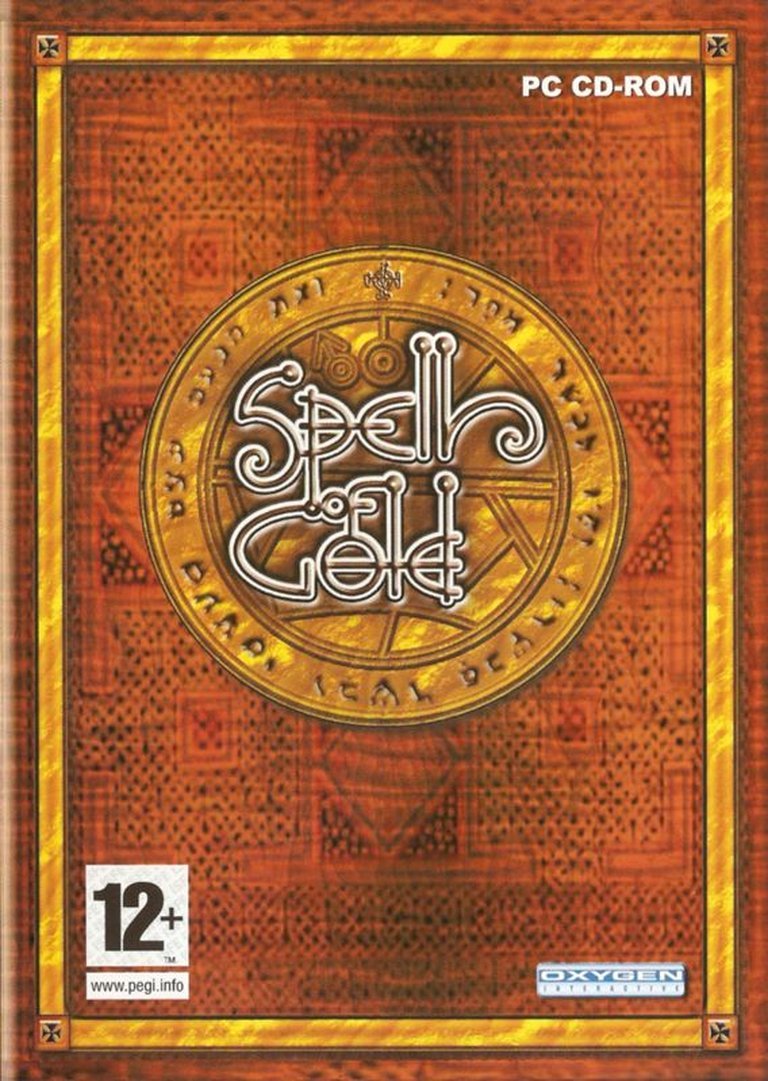
Description
Spells of Gold is a unique blend of RPG and trading simulation set in the fantasy world of Vayon. Players take on the role of a lone hero who must navigate between towns, engaging in trade to accumulate wealth and skills while avoiding dangers like hostile encounters and heavy taxes. The game features three distinct classes—Fighter, Wizard, and Trader—each offering different gameplay dynamics. With a vast map of cities, degrading trade goods, and guilds that provide quests and rewards, the game promises depth and strategy. However, its execution falls short with outdated graphics, repetitive gameplay, and unbalanced combat, making it a missed opportunity despite its ambitious premise.
Gameplay Videos
Spells of Gold Free Download
Spells of Gold Patches & Updates
Spells of Gold Mods
Spells of Gold Guides & Walkthroughs
Spells of Gold Reviews & Reception
ign.com : Although my overall score may not reflect it, I really enjoyed Spells of Gold. It is a technically stunted title on the surface, but a very addictive and satisfying gaming experience at its core.
mobygames.com (53/100): An experiment that failed… miserably.
gamesreviews2010.com (75/100): Spells of Gold is a classic RPG that is still enjoyed by gamers today. The game’s engaging gameplay, well-written story, and impressive graphics make it a must-play for fans of the genre.
squakenet.com : This ended up as being an almost complete failure that is only really worth a look for its sheer ineptitude.
Spells of Gold: A Flawed but Fascinating Fusion of Trade and Adventure
Introduction
In the early 2000s, the RPG landscape was dominated by titans like The Elder Scrolls III: Morrowind and Neverwinter Nights, games that prioritized sprawling narratives and deep combat systems. Amidst this backdrop, Spells of Gold (2002) emerged as an ambitious oddity—a game that dared to blend the methodical economics of Elite with the fantasy adventuring of The Legend of Zelda. Developed by the obscure Russian studio Jonquil Software and published by Buka Entertainment, Spells of Gold promised a unique hybrid experience where trade, combat, and magic coexisted as equally viable paths to power. Yet, despite its innovative premise, the game struggled to reconcile its disparate elements, leaving behind a legacy as a cult curiosity rather than a genre-defining masterpiece.
This review seeks to dissect Spells of Gold in its entirety, exploring its development, narrative ambitions, mechanical intricacies, and the reasons behind its polarizing reception. Through a critical lens, we will examine whether the game’s flaws outweigh its bold ideas, and why, over two decades later, it continues to evoke nostalgia among those who dared to venture into its fragmented worlds.
Development History & Context
The Studio Behind the Spell
Jonquil Software, the developer of Spells of Gold, was a relatively unknown entity in the Western gaming market. Based in Russia, the studio operated during a time when Eastern European developers were beginning to gain traction in the global industry, though often through budget titles or localized projects. Jonquil’s portfolio included a mix of strategy and RPG titles, but none achieved widespread recognition. Spells of Gold was their most ambitious project, an attempt to carve a niche in the crowded RPG market by fusing two seemingly disparate genres: the trading simulation and the fantasy RPG.
The game’s development was constrained by the technological limitations of the early 2000s. With a team of just 46 developers (and 4 additional contributors), Jonquil lacked the resources of larger studios. The result was a game that, while mechanically complex, suffered from dated visuals, clunky animations, and a lack of polish. The isometric perspective, a staple of RPGs like Baldur’s Gate and Diablo, was chosen for its practicality, allowing the studio to create a vast world without the need for 3D rendering.
The Gaming Landscape of 2002
The early 2000s were a transitional period for RPGs. The genre was moving away from the stat-heavy, turn-based mechanics of the 1990s toward more action-oriented and immersive experiences. Games like The Elder Scrolls III: Morrowind (2002) and Neverwinter Nights (2002) set new standards for open-world exploration and narrative depth, while Diablo II (2000) had already perfected the hack-and-slash formula.
Spells of Gold arrived in this competitive environment with a bold but risky proposition: a game where trading was as critical as combat or magic. The developers drew inspiration from Elite (1984), the seminal space trading simulator, and sought to adapt its economic mechanics to a fantasy setting. This was not entirely unprecedented—games like Ultima VII (1992) had incorporated trading elements—but Spells of Gold made it the core of the experience.
The Vision: A Trader’s Odyssey
The game’s official description paints an ambitious picture:
“An interesting combination of an RPG with a trading game, this game puts you in a setting where the class of trader can be just as important as your combative or magical skills. Starting on the world of Vayon, you must trade and travel between the various towns, building up money and skills, avoiding hostile situations and heavy taxes, and making the most of import and export trends from the various places to get enough money to purchase new skills and equipment for your lone hero.”
The vision was clear: Spells of Gold aimed to be a game where players could thrive as merchants, warriors, or mages—or a combination of all three. The promise of a non-linear narrative, where players could advance the main plot at their own pace while engaging in side quests and economic ventures, was enticing. However, the execution would prove to be the game’s Achilles’ heel.
Narrative & Thematic Deep Dive
The World of Lokatrienn
Spells of Gold is set in the fractured realm of Lokatrienn, a universe composed of multiple worlds, each with its own distinct cultures, economies, and political systems. The protagonist begins their journey on the world of Vayon, a land teeming with cities, guilds, and temples. The game’s lore is delivered incrementally, with the overarching narrative unfolding as the player explores and interacts with the world.
The premise is intriguing: Lokatrienn is a realm where gods and guilds vie for influence, and the player’s choices—whether in trade, combat, or allegiance—shape the balance of power. The game hints at a grander conflict between good and evil, with the player’s actions determining the fate of the universe. However, the narrative is often overshadowed by the game’s mechanical shortcomings, leaving many players unaware of the deeper lore until much later in their journey.
Themes: Commerce, Power, and Moral Ambiguity
At its core, Spells of Gold explores themes of economic power and moral choice. The game posits that wealth and influence can be attained through means other than violence—through shrewd trading, diplomatic alliances, and strategic investments. This was a novel idea in a genre where combat was typically the primary path to progression.
The game also delves into the consequences of allegiance. Players can align themselves with one of five gods, each offering unique blessings and curses. Similarly, guilds provide specialized skills and quests, but maintaining favor with them requires careful balancing of reputation. The thematic depth is commendable, but the execution is hampered by the game’s lack of narrative cohesion. Dialogue is often stilted, and the absence of female NPCs—a bizarre oversight—undermines the game’s attempt at world-building.
The Plot: A Slow Burn
The main plot of Spells of Gold is deliberately slow to unfold. The game begins with the player as a humble trader, tasked with navigating the complexities of intercity commerce. As the player accumulates wealth and power, they gradually uncover the darker forces at play in Lokatrienn, including the machinations of the Dark Alliance and the secrets of the universe’s creation.
The non-linear structure is both a strength and a weakness. On one hand, it allows players to engage with the world at their own pace, focusing on trade, combat, or exploration as they see fit. On the other hand, the lack of a strong narrative throughline means that many players may miss the deeper lore entirely, dismissing the game as a shallow trading simulator.
Gameplay Mechanics & Systems
The Core Loop: Trade, Travel, and Combat
Spells of Gold’s gameplay revolves around three primary activities: trading, traveling, and combat. The game’s most innovative feature is its economic system, which simulates supply and demand across hundreds of cities. Players must purchase goods in one city, transport them to another where they are in higher demand, and sell them for a profit. The system is surprisingly deep, with commodities degrading over time, taxes varying by region, and prices fluctuating based on market trends.
However, the execution of this system is flawed. Travel between cities is represented by a simplistic dot-to-dot map, with no random encounters or environmental hazards to spice up the journey. Combat, when it occurs, is similarly uninspired. Enemies spawn predictably outside city gates, and battles are resolved through a basic real-time system that lacks depth. The lack of balance in weapons—particularly the overpowered bow—renders most combat encounters trivial, undermining the game’s attempt at strategic depth.
Character Progression: A Triad of Skills
Players can develop their character across three classes: Fighter, Wizard, and Trader. Each class offers unique skills and abilities, and players are encouraged to experiment with hybrid builds. For example, a player might focus on trading to accumulate wealth, then invest in magical or combat skills to tackle more challenging quests.
The skill system is robust, with guilds and temples offering specialized training. However, the lack of clear guidance on how to balance these skills can lead to frustration. Players who over-invest in one area may find themselves locked out of certain quests or story paths, a design choice that feels punitive rather than rewarding.
Quests and Side Activities
Spells of Gold features a mix of main quests and side activities, including guild missions, temple tasks, and random encounters. The quests are varied, ranging from simple fetch missions to complex political intrigues. However, the lack of a quest log or clear objectives means that players often struggle to track their progress, leading to aimless wandering.
The game’s side activities—such as managing reputation with guilds and gods—add depth but are often overshadowed by the tediousness of travel and combat. The absence of a fast-travel system exacerbates this issue, making the game feel slower and more cumbersome than it needs to be.
World-Building, Art & Sound
Visual Design: A Mixed Bag
Spells of Gold’s visual presentation is a product of its time and budget. The isometric perspective, while functional, lacks the polish of contemporaries like Diablo II or Baldur’s Gate II. Character models are stiff, animations are clunky, and the environments, while varied, suffer from repetitive textures and bland color palettes.
The game’s art direction is ambitious, with each of the 25 worlds boasting its own distinct aesthetic. However, the execution falls short, with many areas feeling generic and uninspired. The lack of environmental detail—such as dynamic weather or interactive objects—further detracts from the immersion.
Sound Design: A Forgotten Element
The audio design in Spells of Gold is equally underwhelming. The soundtrack, while atmospheric, is repetitive and quickly grows tiresome. Sound effects are minimal, with combat lacking the visceral impact of more polished titles. The absence of voice acting—common in RPGs of the era—means that dialogue is delivered through text, further distancing the player from the world.
Atmosphere: A Missed Opportunity
Despite its flaws, Spells of Gold occasionally captures a sense of wonder. The idea of traversing multiple worlds, each with its own economy and culture, is compelling. The game’s ambient music, while repetitive, does evoke a sense of adventure. However, these moments are fleeting, often overshadowed by the game’s mechanical shortcomings.
Reception & Legacy
Critical Reception: A Divided Response
Spells of Gold received mixed reviews upon release, with critics praising its ambitious design but criticizing its execution. The game’s average critic score of 53% (based on six reviews) reflects this divide. Some reviewers, like those at Igray.ru and GamersHell.com, acknowledged the game’s depth and potential, while others, such as games xtreme and Doupe.cz, dismissed it as a tedious and flawed experience.
Player reception was similarly polarized. The game’s average player score of 2.8 out of 5 suggests that most found it lacking, though a vocal minority—particularly those who appreciated its trading mechanics—defended it as an underrated gem.
Commercial Performance and Obscurity
Spells of Gold was not a commercial success, failing to make a significant impact in the Western market. Its obscurity was compounded by the lack of a digital re-release, making it difficult for modern players to experience. Despite this, the game has developed a cult following, with fans lobbying for its preservation on platforms like GOG.
Influence and Legacy
While Spells of Gold did not spawn a franchise or directly influence major titles, its attempt to blend trading and RPG mechanics was ahead of its time. Modern games like The Elder Scrolls V: Skyrim and Kingdom Come: Deliverance have incorporated trading systems, though none have made it as central to the experience as Spells of Gold attempted.
The game’s legacy is one of ambition unfulfilled. It remains a fascinating experiment—a reminder of the risks and rewards of innovation in game design.
Conclusion: A Flawed Gem Worth Remembering
Spells of Gold is a game of contradictions. It is ambitious yet flawed, innovative yet clunky, and deeply engaging yet frustratingly repetitive. Its attempt to merge the economic depth of a trading simulator with the adventure of a fantasy RPG was bold, but the execution fell short of the vision.
For those willing to overlook its technical limitations and embrace its quirks, Spells of Gold offers a unique experience. The thrill of discovering a lucrative trade route, the satisfaction of balancing guild allegiances, and the slow unraveling of Lokatrienn’s mysteries can be rewarding. However, the game’s tedious travel, unbalanced combat, and lack of polish make it a difficult sell for modern audiences.
Ultimately, Spells of Gold is a game best remembered as a fascinating experiment—a testament to the creativity of its developers and the challenges of blending genres. It may not be a masterpiece, but it is a worthy footnote in the history of RPGs, a reminder of the roads not taken and the ideas that dared to defy convention.
Final Verdict: 6.5/10 – A flawed but fascinating fusion of trade and adventure, best appreciated by patient and curious players.