
- Release Year: 2014
- Platforms: Linux, Macintosh, Windows
- Publisher: Winter Wolves Studio
- Developer: Winter Wolves Studio
- Genre: Simulation
- Perspective: 1st-person
- Game Mode: Single-player
- Gameplay: Life, Social simulation
- Setting: Fantasy
- Average Score: 44/100
Description
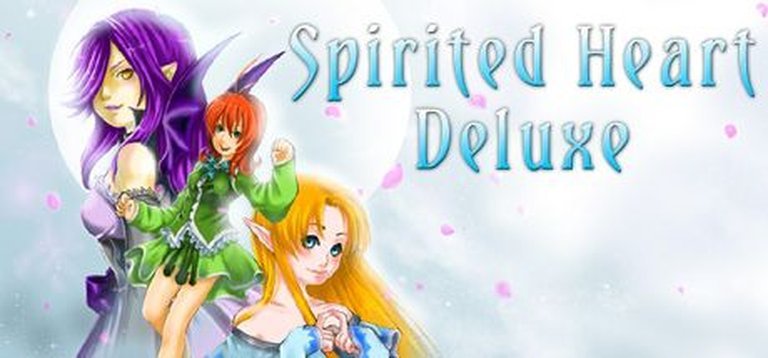
Spirited Heart Deluxe is a fantasy-themed life simulation game set in an anime-inspired universe, where players choose from three female protagonists to raise stats, pursue careers, and navigate relationships across 12 unique love interests. The game blends stat-raising mechanics with romantic narratives, featuring a mid-game quest from a goddess who promises a wish upon completion, while allowing players to toggle love interests by gender. Despite artistic inconsistencies between male and female character designs, it offers diverse backstories and an immersive world of adventure and personal growth.
Gameplay Videos
Where to Buy Spirited Heart Deluxe
PC
Spirited Heart Deluxe Guides & Walkthroughs
Spirited Heart Deluxe: A Flawed Yet Fascinating Niche Gem in the Life Simulation Pantheon
Introduction
In the vast and often overcrowded landscape of indie life simulations, Spirited Heart Deluxe stands as a fascinating, if deeply flawed, artifact of a specific subgenre. Released by Winter Wolves in 2014, this fantasy-themed stat-raiser with dating sim elements carved out a niche for itself through its unique blend of character customization, job progression, and romantic pursuits. Its legacy is complex: lauded for its charming aesthetic and dedicated fanbase, yet simultaneously criticized for its frustrating mechanics, jarring art inconsistencies, and significant writing disparities. This review aims to dissect Spirited Heart Deluxe not just as a game, but as a cultural document within the history of indie visual novels and life simulations, arguing that its enduring appeal lies in its ambitious core concept and the passionate community it fostered, even as its execution reveals the growing pains of a small studio pushing the boundaries of accessible Ren’Py development.
Development History & Context
- Winter Wolves Studio: The Indie Visionary: Founded by Marco “Winter Wolves” Conti, the studio became synonymous with accessible, narrative-driven indie games, particularly within the otome and life simulation space before “otome” was a mainstream Steam tag. Conti’s vision for Spirited Heart Deluxe was ambitious: create a deep, player-driven life experience within a fantasy framework, blending stat management with meaningful relationship building. The studio operated with the constraints typical of small indie teams: limited budget, reliance on established tools like Ren’Py, and a dependence on freelance artists and writers for expanding content.
- Technological Constraints & The Ren’Py Engine: Built using the versatile Ren’Py visual novel engine, Spirited Heart Deluxe benefited from Ren’Py’s accessibility and strong community support, allowing for complex branching narratives and stat tracking. However, this came with limitations. The engine’s 2D nature defined its presentation, and the “Deluxe” moniker itself reflected an iterative approach rather than a technological leap – the core game was expanded upon, not fundamentally rebuilt. The engine’s flexibility also meant that adding substantial new content (like the female love interests) was feasible but led to noticeable integration issues.
- The Gaming Landscape (2011-2014): This period saw the burgeoning rise of Steam as a platform for indie games, particularly visual novels and life sims. Titles like Long Live The Queen and Princess Maker (in its various forms) established precedents, but Spirited Heart Deluxe arrived amidst a wave of dating sims and otome games gaining traction. Its unique selling point was the combination of deep stat progression with a fantasy setting and the promise of significant replayability across multiple races and love interests. The market was becoming more crowded, demanding games to stand out through either polish or unique concepts; Spirited Heart Deluxe leaned heavily on the latter.
- The “Girl’s Love” Expansion: A crucial piece of context is the game’s evolution. The initial 2011 release featured only male love interests (6 characters). The female love interests (another 6 characters) were added significantly later, bundled into the “Deluxe” version. This wasn’t just DLC; it was a major content expansion with a distinct art style (hiring a new artist) and, crucially, different writers. This development history is etched onto the final product, creating a noticeable schism between the original content and the expansion.
Narrative & Thematic Deep Dive
- Structure: The Power of Premise Over Plot: Spirited Heart Deluxe intentionally eschews a single, overarching plot in favor of player-driven narratives. The core premise – a young woman of a chosen fantasy race (Human, Elf, Demoness) arrives in a new land to build her life over a decade – provides the framework. Each race offers a distinct starting justification: humans may come from fallen nobility, elves from a secluded village, demonesses from a challenging background. These starting stories, while simple, effectively ground the player and justify the initial stat differences.
- The Goddess Intervention: The most significant narrative event is the mid-game appearance of a goddess who tasks the protagonist with fulfilling a specific, race-aligned objective (e.g., a human might be tasked with restoring a sacred artifact). This quest promises a single wish upon completion, providing a clear, endgame goal beyond simple romance or career success. However, the goddess’s arrival is narratively jarring. It feels abrupt, disconnected from the preceding slice-of-life simulation, and functions more as a game mechanic trigger (unlocking the special “Goddess” endings) than a seamlessly integrated plot point. Its thematic purpose – offering a path beyond conventional life goals – is intriguing but underdeveloped within the narrative flow.
- Character Analysis: A Tale of Two Halves: The game’s narrative strength and weakness lie squarely in its characters.
- Protagonist (The Player Avatar): Defined primarily by race and chosen background during creation. Her personality emerges through dialogue choices influenced by her race (e.g., demons might have more cynical or assertive options). While not deeply written, this system provides a consistent, if broad, role-playing experience.
- Love Interests – The Great Divide: This is the most contentious aspect.
- Male Love Interests (Original Cast): Generally criticized as underdeveloped. They possess distinct archetypes and initial personalities, but their romantic arcs are often flat. Character development is minimal, and the “deep romance” frequently feels perfunctory – flirting, a few events, and then marriage. The writing is competent but lacks emotional depth or significant challenges to the relationship, as noted in the Listography review (“they aren’t poorly written… they’re simply… boring”).
- Female Love Interests (“Girl’s Love” Expansion): Receive significantly more praise. Their arcs are described as “extremely good emotional and impactful,” featuring “character development, real challenges to overcome, and heartfelt confessions.” Characters like Hade are lauded for depth, suggesting the new writers prioritized nuanced relationship building, complex emotional journeys, and overcoming personal hurdles – elements largely absent from the male routes. This stark contrast highlights the inconsistent quality within the game’s narrative.
- Themes: The core themes revolve around self-determination, finding one’s place in a fantasy world, and the pursuit of happiness through various paths (career, romance, fulfilling a mystical quest). The focus on stat progression and job choice powerfully reflects the theme of building an identity through effort and choice. However, the sudden shift to the goddess quest introduces a theme of divine purpose that feels tacked on rather than explored in relation to the established slice-of-life focus.
Gameplay Mechanics & Systems
- Core Loop: Stat-Raising & Job Progression: The heart of Spirited Heart Deluxe is its stat-driven life simulation. Players navigate a 10-year timeline (divided into months), choosing from a roster of 20 different jobs. Each job has specific stat requirements (e.g., “Barmaid” requires high Charm) and provides different stat bonuses upon completion (e.g., Charm, Reflexes). The goal is to strategically cycle through jobs to unlock higher-paying or more prestigious positions, accumulating wealth and improving core attributes (Strength, Charm, Reflexes, Intelligence, Luck). This loop is engaging for fans of the genre, offering a clear sense of progression and character building.
- Character Creation & Depth: A major strength is the extensive character creation system. Players choose their race and select various background traits (e.g., “Rich Family,” “Street Urchin,” “Scholar”). These choices directly influence starting stats and initial job availability, adding immense replayability. Creating a “Street Urchin” demoness versus a “Scholar” elf results in vastly different starting experiences and strategic approaches.
- Romance Integration: Romance is woven into the job system. Love interests appear at specific job locations, requiring players to strategically work at those jobs to increase relationship levels. The promise of “over 100 different dialogue combinations” based on the protagonist’s race and the love interest’s personality adds variety. The option to toggle specific love interests (e.g., only pursue female characters) is a welcome feature for player preference.
- The Dice Minigame & RNG Frustration: Performing jobs involves an optional dice-rolling minigame. Success depends on matching or exceeding a target number with your character’s relevant stat. While simple, this introduces heavy reliance on Random Number Generation (RNG). As noted in multiple analyses (NiklasNotes, Steambase reviews), this is a significant source of frustration. Players can feel powerless when high stats fail due to bad rolls, or conversely, succeed without merit. This undermines the sense of earned progression and leads to repetitive grinding as players attempt to mitigate RNG variance through repeated attempts or save-scumming.
- Events, Endings, and Replayability: Random events occur periodically, offering choices that can impact stats, relationships, or money. The game boasts 32 endings total: 20 “normal” endings based on the protagonist’s career and relationship status at the end of the decade, and 12 special “marriage” endings (one for each love interest), plus 3 “Goddess” endings (one per race, obtained by maxing specific stats). This provides substantial replayability, encouraging players to explore different race/love interest combinations and career paths. A notable flaw, however, is that achieving a Goddess ending abruptly ends the game, denying the player the satisfaction of continuing their life after completing the divine quest, a contrast to the marriage endings.
- UI and Interface: The interface is typical for Ren’Py games: clean menu-based navigation for stats, jobs, inventory, and relationships. It’s functional but lacks significant flair. Some technical issues, like character portraits being cut off when the game window is resized (as noted in the Listography review), detract from the presentation.
World-Building, Art & Sound
- Setting & Atmosphere: The game is set in a generic fantasy world. While towns, jobs, and the goddess quest provide context, the world-building is intentionally minimal. The focus is squarely on the protagonist’s personal journey and relationships within this broad fantasy backdrop. The atmosphere shifts depending on the player’s focus – bustling around jobs, intimate during romance events, or mysterious during the goddess quest – but lacks a cohesive, immersive world design.
- Art Direction & The Juxtaposition: This is perhaps the game’s most visually striking and problematic feature.
- Male Love Interests: Feature an older, more “rough” anime/manga art style. It’s less polished but possesses a certain charm and consistency, reflecting the original game’s identity.
- Female Love Interests: Added later with a completely different artist, resulting in a much more modern and technically refined anime style. However, this stylistic clash creates a jarring visual experience when both sets of characters appear. As the Listography review bluntly states, “they look very strange appearing on screen together.” The art quality itself is good (especially for the females), but the inconsistency is a major aesthetic flaw. Character design also varies, with some female outfits drawing criticism (“some of the girls outfits make me roll my eyes”) compared to the generally well-received male designs.
- Technical Issues: Besides the clipping issue, the art lacks animation (sprites and CGs are static). Backgrounds are functional but not particularly detailed. The overall visual presentation is serviceable but hampered by the art inconsistency and technical limitations.
- Sound Design & Music: The audio experience is basic. The game features background music that fits the fantasy/simulation setting but is generally unremarkable and not memorable. Sound effects are minimal. Crucially, the game is not fully voice acted. The only vocalization is the voiced ending narration, described as “clear and nice to listen to, but a bit unemotional and boring.” This limited use of voice acting makes it stand out awkwardly. While functional, the soundscape lacks depth and fails to significantly enhance the atmosphere or emotional weight of the narrative.
Reception & Legacy
- Launch & Critical Consensus: Spirited Heart Deluxe launched to a mixed reception. Steam reviews (88 total analyzed) are deeply polarized, reflecting a 45% positive rating (24 positive, 29 negative). Criticism was heavily focused on the frustrating RNG mechanics (cited as the top negative point by ~10% of reviews), perceived shallow gameplay (~9%), the high price point ($19.99, seen as too steep for the content by ~9%), and the underdeveloped male characters (~7%). Positive reviews highlighted its charm as a casual life sim (~9%), the appeal of the romantic elements and multiple endings (~11%), and the decent graphics (~5%). The niche nature of the genre meant appeal was highly dependent on player tolerance for stat grinding and RNG reliance.
- Evolution of Reputation & Community: Over time, the game has solidified its reputation as a “cult classic” within its specific niche. Its dedicated fanbase appreciates its unique blend of races, the depth of character creation, the sheer volume of endings, and the inclusion of LGBTQ+ content (female-female romance). Discussions on forums (like the Steam Community Hub) often revolve around strategies for dealing with RNG, specific character preferences, and admiration for certain female routes. The significant price complaints remain a common point of contention.
- Influence & Legacy: Spirited Heart Deluxe holds a specific place in the history of indie life simulations and otome games. It demonstrated the viability of the Ren’Py engine for complex stat-based narratives and helped popularize the “life sim + dating” hybrid on Steam. Its most significant legacy might be the lesson it provides: the challenges of integrating substantial post-release content (especially with different creative teams) can lead to jarring inconsistencies. It paved the way for more polished titles in the space but also highlighted the genre’s persistent issues with RNG and repetitive loops. Its enduring niche appeal lies in its unapologetic focus on player-driven stat progression and romance within a fantasy framework, flaws and all.
Conclusion
Spirited Heart Deluxe is a quintessential example of an ambitious indie title hampered by execution inconsistencies and technical limitations, yet possessing an undeniable charm and depth that resonates with a dedicated audience. Its core strength – the blend of deep character customization, strategic stat-raising, and a wide array of romance options within a fantasy setting – is compelling and offers significant replayability. The extensive character creation system is a standout feature, and the inclusion of well-written female romance routes (despite the jarring art clash) adds genuine emotional depth.
However, the game is plagued by frustrating RNG mechanics that undermine a sense of earned progression, a noticeable decline in writing quality for the original male love interests, and an abrupt narrative structure due to the goddess quest. The visual inconsistency between the original and expanded character art remains a persistent aesthetic flaw, and the limited audio presentation fails to elevate the experience beyond the visual novel standard.
Ultimately, Spirited Heart Deluxe earns its place in video game history as a flawed but fascinating artifact. It’s a cult classic that succeeded by targeting a very specific niche – players who prioritize stat progression, customization, and romantic choice above graphical fidelity or narrative polish, and who are willing to tolerate frustrating mechanics and inconsistencies for its unique blend of fantasy life simulation. While it lacks the polish and cohesion of modern masterpieces in the genre, its ambitious core, dedicated community, and role as a stepping stone for more refined titles ensure it remains a memorable, if divisive, entry in the annals of indie gaming. Verdict: Recommended for patient stat-sim enthusiasts and dating sim fans seeking variety, approached with caution regarding its RNG reliance and price point.