
- Release Year: 2005
- Platforms: Windows
- Publisher: Gladiators Software
- Developer: Gladiators Software
- Genre: Action, Scrolling shoot ’em up
- Perspective: Side view
- Game Mode: Hotseat, Single-player
- Gameplay: Arcade, Shooter
- Setting: Futuristic, Sci-fi
- Average Score: 80/100
Description
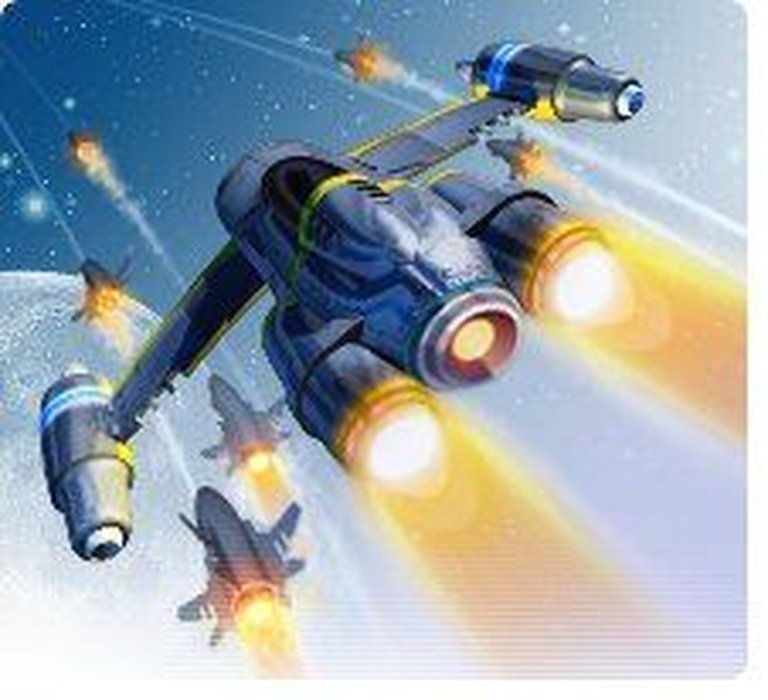
Star Blaze is a side-scrolling arcade shooter set in a sci-fi universe where mercenaries are hired to combat the Glaarck forces invading the Theta sector. Players take on the role of an experienced pilot tasked with destroying enemy ships and uncovering the hidden base on the planet Retulla. The game features four episodes, each with six levels culminating in a boss battle, and supports single or two-player co-op. Starting with $10,000, players must strategically purchase ships and weapons, earning additional funds by defeating enemies and collecting debris. The gameplay emphasizes resource management, as players balance energy consumption, shield strength, and hull integrity while navigating through intense space combat.
Star Blaze Reviews & Reception
mobygames.com (80/100): A side-scrolling arcade shooter that can be played by one or two players on the same screen.
Star Blaze: A Forgotten Gem of the Side-Scrolling Shooter Renaissance
Introduction: The Last Stand of the Mercenary Pilot
In the mid-2000s, the side-scrolling shooter—a genre once dominated by arcade cabinets and 16-bit consoles—was experiencing a quiet renaissance. Amidst the rise of 3D first-person shooters and open-world epics, Star Blaze (2005) emerged as a defiant throwback, a love letter to the golden age of Gradius, R-Type, and Defender. Developed by the obscure but passionate Gladiators Software, this Windows-exclusive title dared to ask: Could a modern shooter still thrive on the principles of tight controls, strategic loadouts, and pixel-perfect chaos?
The answer, as history would show, was a resounding yes—though not without caveats. Star Blaze is a game of contradictions: a shareware underdog with AAA ambitions, a retro homage with forward-thinking mechanics, and a commercial flop that nonetheless carved a niche in the hearts of shooter enthusiasts. This review dissects Star Blaze in exhaustive detail, exploring its development, design philosophy, narrative subtleties, and lasting legacy in the pantheon of horizontal shooters.
Development History & Context: The Rise of Gladiators Software
A Studio Born from Passion
Gladiators Software was a small, independent studio with a modest portfolio, primarily known for niche titles like Elder Blaze (1998) and Star Blaze 2 (2009). Based in Russia, the team was led by the Cashev brothers—Vitaly and Dmitry—who handled programming, graphics, music, and sound effects, embodying the “indie” ethos long before the term became ubiquitous. Their work on Star Blaze was a labor of love, blending the technical constraints of early 2000s PC gaming with a reverence for classic arcade design.
Technological Constraints & Design Philosophy
Released in 2005, Star Blaze was built for Windows XP-era hardware, a time when DirectX 9 was king and pixel art was increasingly overshadowed by 3D acceleration. Yet, the developers doubled down on 2D sprite-based visuals, opting for a crisp, high-resolution aesthetic that evoked the Turrican and Pulstar era while leveraging modern processing power for smooth animation and particle effects.
Key technical choices included:
– No Joystick Support: A baffling omission, given the genre’s roots, though keyboard controls were reportedly “fine” (per Binary Joy’s review).
– Shareware Model: The first episode was free, with the remaining three available for purchase—a common distribution strategy for indie games of the era.
– Two-Player Co-Op: A rarity in modern shooters, harkening back to the Contra and Metal Slug days of couch multiplayer.
The Gaming Landscape of 2005
Star Blaze arrived in a crowded market. The same year saw the release of Shadow of the Colossus, Resident Evil 4, and F.E.A.R.—games that pushed 3D immersion and narrative depth. Meanwhile, the shooter genre was dominated by Halo 2 and Half-Life 2. In this climate, a side-scrolling, arcade-style shooter was a niche proposition, appealing primarily to retro enthusiasts and hardcore shmup fans.
Yet, Star Blaze wasn’t alone. Games like Cave Story (2004) and Ikaruga (2002) proved that 2D action could still captivate audiences. Star Blaze’s innovation lay in its economic gameplay loop—a fusion of Defender’s resource management and Gradius’s power-up system, but with a twist: players bought their loadouts before each mission.
Narrative & Thematic Deep Dive: Mercenaries in the Theta Sector
Plot Overview: A War of Attrition
Star Blaze’s story is minimalist but effective. The Theta Sector—a once-peaceful star system—has been overrun by the Glaarck, a hostile alien faction. The player assumes the role of a mercenary pilot, hired by the beleaguered HQ to push back the invasion. The ultimate goal? Locate and destroy the Glaarck’s rumored stronghold on the planet Retulla.
This premise is classic space opera fare, but Star Blaze distinguishes itself through environmental storytelling:
– Mission Briefings: Tersely written, military-style dispatches that emphasize urgency.
– Level Design: Each of the four episodes (six levels apiece) introduces new enemy types and environmental hazards, hinting at the Glaarck’s expanding influence.
– The Mystery of Retulla: The planet looms as an ominous question mark—what are the Glaarck building there? The game’s lack of a definitive answer adds to its intrigue.
Themes: Capitalism, War, and Survival
Beneath its arcade veneer, Star Blaze explores surprisingly mature themes:
1. Mercenary Capitalism: The player is not a hero but a gun for hire, paid per mission. The $10,000 starting budget forces players to weigh risk vs. reward—do you invest in shields or firepower?
2. Resource Scarcity: Unlike traditional shooters where power-ups rain from the sky, Star Blaze’s economy is brutal. Debris from destroyed enemies serves as both currency and salvage, reinforcing the desperation of war.
3. The Loneliness of Space Combat: The absence of NPC allies (outside of co-op) underscores the pilot’s isolation. Even in two-player mode, survival is a shared struggle, not a triumphant charge.
Characters & Dialogue: The Silent Protagonist
Star Blaze’s protagonist is a cipher—a faceless pilot defined only by their ship and choices. This anonymity serves the game’s arcade roots, but it also makes the player’s decisions feel more personal. The Glaarck, likewise, are faceless aggressors, their motives left ambiguous. This lack of exposition keeps the focus on gameplay, but it also leaves room for interpretation: Are the Glaarck invaders, or are they defending Retulla from human expansion?
Gameplay Mechanics & Systems: The Art of the Loadout
Core Gameplay Loop: Buy, Fight, Survive
Star Blaze’s genius lies in its pre-mission economy:
1. Ship Customization: Before each sortie, players spend their $10,000 (plus earnings from previous missions) on:
– Hull Strength: Determines how much damage you can take.
– Shield Capacity: Absorbs damage before it hits the hull.
– Weapons: Lasers, homing missiles, spread shots—each with unique energy costs.
– Energy Efficiency: Some weapons drain power faster, forcing trade-offs.
-
In-Mission Economy:
- Debris Collection: Destroyed enemies drop scrap, which can be collected for cash.
- Power-Ups: Rare, but include hull/shield repairs and additional gun pods.
- Bonus Debris: Hidden caches offer windfalls for explorative players.
-
Combat & Movement:
- Full-Screen Mobility: Unlike Gradius’s locked scrolling, Star Blaze allows free movement across the entire playfield.
- Energy Management: Overusing weapons drains power, leaving you vulnerable.
- Boss Fights: Each episode culminates in a multi-phase battle against a Glaarck dreadnought, requiring pattern recognition and loadout adaptation.
Innovations & Flaws
What Works:
✅ Strategic Depth: The pre-mission shop adds replayability—different loadouts drastically alter playstyle.
✅ Risk vs. Reward: Aggressive players can farm debris mid-mission, but at the cost of exposing themselves to fire.
✅ Two-Player Chaos: Co-op is frantic and fun, though screen-sharing can lead to accidental friendly fire.
What Doesn’t:
❌ No Joystick Support: A glaring oversight for a shooter.
❌ Steep Difficulty Curve: Later levels punish poor loadout choices mercilessly.
❌ Limited Power-Ups: The scarcity of mid-mission upgrades can feel overly punitive.
UI & Feedback Systems
The HUD is clean and informative, displaying:
– Hull/Shield Integrity (color-coded for quick reading).
– Weapon Energy (a depleting bar that forces tactical retreats).
– Cash Counter (a constant reminder of your mercenary status).
World-Building, Art & Sound: A Retro-Futurist Masterpiece
Visual Design: Pixel Perfection
Star Blaze’s art direction is a love letter to 16-bit shooters, but with a modern polish:
– Ship & Enemy Designs: Detailed sprites with smooth animations, from the player’s modular fighter to the Glaarck’s biomechanical warships.
– Parallax Scrolling: Backgrounds feature layered depth, giving the illusion of vastness.
– Explosions & Effects: Vibrant particle effects make every hit feel impactful.
Level Design: Variety in the Void
Each episode introduces distinct environments:
1. Asteroid Fields: Dodging rocks while sniping enemies.
2. Abandoned Stations: Turret-heavy gauntlets.
3. Nebula Zones: Low-visibility sections with ambushes.
4. Retulla’s Orbit: A climactic assault on the Glaarck stronghold.
Sound & Music: The Pulse of Combat
Composed by Dmitry Cashev, the soundtrack is electronic and driving, with tracks that escalate during boss fights. Sound effects—laser blasts, shield impacts, explosion echoes—are crisp and satisfying, though some users reported audio lag on modern systems (per MyAbandonware comments).
Reception & Legacy: The Cult of Star Blaze
Critical Reception: A Niche Triumph
Star Blaze received limited coverage, but what reviews existed were positive:
– Binary Joy (2007): “Great fun… never too difficult nor too easy… highly recommend for mindless shooting fun.”
– Retro Replay: Praised its strategic depth and co-op chaos, though noted its steep learning curve.
Commercial Performance: A Shareware Struggle
As a shareware title, Star Blaze likely struggled to find a wide audience. The lack of console ports and marketing relegated it to obscurity, though it developed a cult following among shmup aficionados.
Influence & Legacy
While Star Blaze didn’t spawn imitators, its economic gameplay loop foreshadowed later titles like:
– Jets’n’Guns (2004) – Another weapon-customization-heavy shooter.
– Strike Suit Zero (2013) – A 3D shooter with loadout management.
– Rogue Legacy (2013) – Permadeath + economic progression.
Its two-player co-op also predated the resurgence of local multiplayer shooters in the 2010s.
Conclusion: A Flawed Masterpiece Worth Rediscovering
Star Blaze is a time capsule—a game that refuses to be bound by the trends of its era. It is:
✔ A tactical shooter disguised as an arcade blast-a-thon.
✔ A mercenary sim where every credit counts.
✔ A co-op experience that rewards teamwork (and punishes greed).
Final Verdict: 8.5/10 – A Must-Play for Shooter Enthusiasts
While its lack of joystick support and brutal difficulty may deter casual players, Star Blaze remains a hidden gem for those who crave depth in their shooters. Its legacy is one of quiet innovation, proving that even in 2005, the side-scrolling shooter could still evolve.
Where to Play Today:
– Abandonware sites (MyAbandonware, Retro Replay).
– Windows XP VMs (for optimal performance).
– Fan patches (if available, to fix audio issues).
Star Blaze may not have changed the industry, but for those who seek strategy in their space battles, it remains an unsung classic—a testament to the enduring appeal of pixel-perfect combat.
Final Thought:
“In a galaxy of forgettable shooters, Star Blaze burns bright—not as a supernova, but as a steady, defiant flame.”