
- Release Year: 2010
- Platforms: Macintosh, PlayStation 4, Windows, Xbox One
- Publisher: Atari Europe S.A.S.U., Perfect World Entertainment, Inc.
- Developer: Cryptic Studios, Inc.
- Genre: Role-playing (RPG)
- Perspective: 3rd-person (Other)
- Game Mode: MMO
- Gameplay: Action RPG, Massively Multiplayer, Shooter, Space flight, Vehicular
- Setting: Futuristic, Sci-fi
- Average Score: 71/100
Description
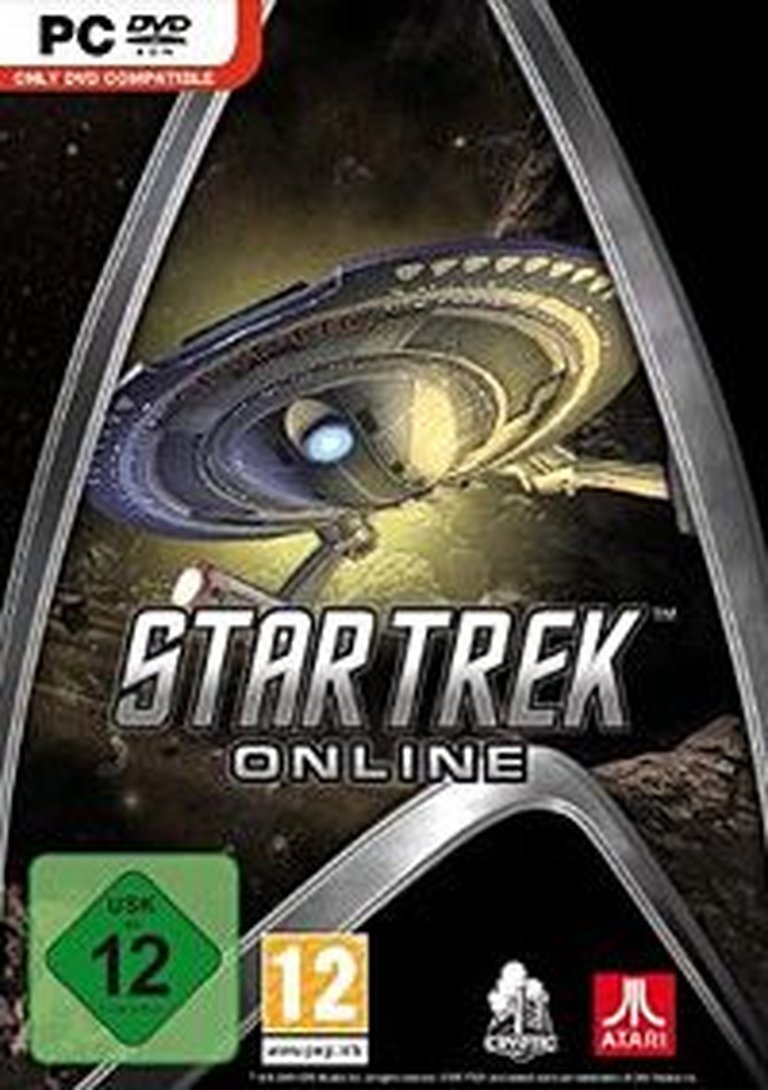
Star Trek Online is a massively multiplayer online role-playing game (MMORPG) set in the Star Trek universe, taking place 30 years after the events of Star Trek: Nemesis. Players can choose to align with the Federation, Klingon Empire, or Romulan Republic, engaging in both space and ground combat. The game features a rich narrative with various story arcs, tactical space battles, and real-time ground combat, allowing players to explore the Alpha Quadrant and beyond.
Gameplay Videos
Where to Buy Star Trek Online
PC
Star Trek Online Free Download
Star Trek Online Guides & Walkthroughs
Star Trek Online Reviews & Reception
imdb.com (80/100): Excellent homage, excellent gameplay
metacritic.com (66/100): A smattering of memorable moments in 50+ hours of game time simply isn’t good enough for me to be able to recommend Star Trek Online to MMO fans.
tentonhammer.com : The game is comprised mainly of space and ground combat along with a minion system in the form of bridge officers.
ign.com (68/100): In space, no one can hear you nerd out.
Star Trek Online Cheats & Codes
PC
Go to your account and look for the enter code option within ‘Star Trek Online Account Management’.
| Code | Effect |
|---|---|
| JIH MUSHA SOH | Unlocks Admiral James T. Kirk’s uniform |
Star Trek Online: Review
A Galactic Odyssey Bridging Legacy and Modern Game Design
Introduction
In the vast expanse of licensed MMORPGs, Star Trek Online (STO) stands as a testament to ambition, fandom, and resilience. Launched in 2010 by Cryptic Studios, STO boldly goes where few Trek games have gone before: a persistent online universe set 30 years after Star Trek: Nemesis, weaving together threads from The Next Generation, Deep Space Nine, Voyager, and even Discovery. This review posits that while STO stumbled at launch with technical limitations and uneven design, its evolution into a free-to-play titan has solidified its place as a love letter to Trek lore—flawed but deeply authentic.
Development History & Context
Studio Vision & Turbulent Beginnings
Cryptic Studios inherited STO after Perpetual Entertainment’s collapse in 2008, rebuilding it from scratch. Tasked with translating Trek’s cerebral diplomacy and starship drama into an MMO, Cryptic faced skepticism. The late 2000s MMO landscape was dominated by World of Warcraft, and Trek’s niche audience posed challenges. Cryptic’s vision centered on two pillars: player-as-captain fantasy and episodic storytelling, but technical constraints of the era—server instability, limited ground combat mechanics—haunted early iterations.
Release & Monetization Shifts
Launched in February 2010 under Atari, STO required a subscription, drawing mixed reviews. By 2011, Cryptic was acquired by Perfect World Entertainment, prompting a 2012 shift to free-to-play—a decision that revitalized its player base. Later expansions (Legacy of Romulus, Delta Rising) refined core systems, while console ports in 2016 (PS4, Xbox One) broadened accessibility.
Narrative & Thematic Deep Dive
A Galaxy in Flux
STO’s story unfolds in 2409–2412, exploring a fractured Alpha Quadrant:
– The Klingon Empire reignites war after the Khitomer Accords collapse.
– The Romulan Star Empire unravels post-Hobus supernova (as seen in J.J. Abrams’ 2009 Star Trek).
– The Borg, Dominion, and Iconians re-emerge as existential threats.
Characters & Dialogue
VO work from Trek alumni (Michael Dorn as Worf, Jerry Ryan as Seven of Nine) elevates the experience, though original NPCs often lack depth. The writing balances Trek idealism with wartime pragmatism, particularly in arcs like Victory is Life (2018), which reunites DS9’s cast to confront the Hur’q.
Themes
– Unity vs. Tribalism: The Romulan Republic’s struggle mirrors real-world refugee crises.
– Legacy & Progress: TOS-era missions (Agents of Yesterday) contrast 25th-century tech with retro aesthetics.
Gameplay Mechanics & Systems
Dual Combat Pillars
– Space Combat: A highlight, blending real-time tactics with subsystem management (shields, weapons, engines). The “broadside” mechanic and Bridge Officer abilities evoke Starfleet Command.
– Ground Combat: Less polished, with clunky third-person shooting and MMO-style ability rotations. Later updates improved mobility but retained repetitiveness.
Progression & Customization
– Rank System: Players ascend from Ensign to Fleet Admiral, unlocking ships like the Odyssey-class and Defiant.
– Skill Trees & Specializations: Mix of traditional RPG stats and faction-specific traits (e.g., Romulan Singularity Core mechanics).
– The Foundry: A player-generated mission tool (discontinued in 2019) exemplified Trek’s collaborative spirit.
Endgame & Monetization
– Reputation Grinds: Time-gated factions (Delta Alliance, Temporal Defense) offer elite gear.
– Lockboxes & Zen Store: Controversial but non-pay-to-win, with cosmetic and QoL items dominating.
World-Building, Art & Sound
Visual Design
– Ships & Stations: Faithful recreations of canon designs (USS Enterprise-F, Deep Space 9) coexist with original Cryptic aesthetics (e.g., Vesta-class).
– Planets & Aliens: Iconian architecture’s bio-mechanical grandeur contrasts with sterile Starfleet hubs. Some textures feel dated, but art direction compensates.
Soundscape
– Music: Orchestral motifs from TNG and DS9 blend with original compositions by Rod Abernethy.
– SFX: Phaser banks and warp cores hum with series-accurate fidelity.
Reception & Legacy
Launch Backlash to Redemption
– 2010: Metacritic 66/100—praised for ship combat, panned for bugs and shallow endgame.
– Post-F2P: Player counts surged, with expansions (Delta Rising, Age of Discovery) earning goodwill.
Cultural Impact
– Community: STO’s robust roleplaying scene and annual Q’s Winter Wonderland event showcase its niche appeal.
– Industry Influence: Proved licensed MMOs could thrive post-Galaxies, paving the way for The Old Republic.
Conclusion
Star Trek Online is a paradox: a janky, imperfect game that captures the soul of its franchise like few others. Its space combat remains unparalleled in Trek gaming, and its narrative ambition—spanning TOS to Picard—offers lore-deep rewards for fans. While ground missions and monetization missteps linger, STO’s 14-year journey mirrors Starfleet’s ethos: “to boldly go” through adversity. For Trekkies, it’s essential; for MMO enthusiasts, a curio. In video game history, it’s a testament to the power of fandom—and the stars we navigate to reach it.
Final Verdict: 7.5/10 — A flawed but heartfelt odyssey, worthy of the combadge.