
- Release Year: 2015
- Platforms: Linux, PlayStation 4, Windows
- Publisher: Zanrai Interactive LLC
- Developer: Zanrai Interactive LLC
- Genre: Action
- Perspective: Side view
- Game Mode: Hotseat
- Gameplay: Arcade, Stealth
- Setting: Sci-fi
- Average Score: 67/100
Description
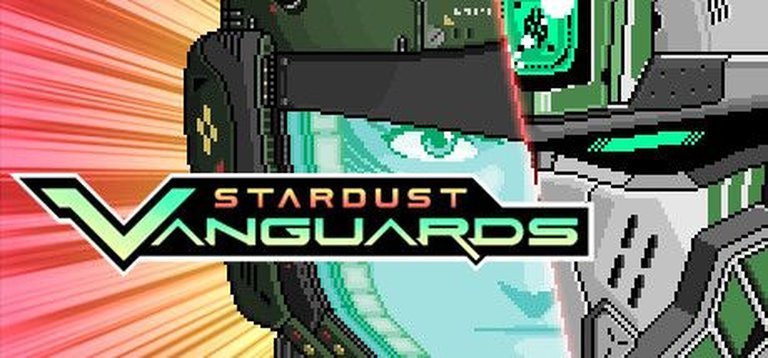
Stardust Vanguards is a fast-paced side-scrolling action game set in a hectic sci-fi universe, emphasizing local multiplayer duels for up to four players in fixed/flip-screen arenas with arcade and stealth gameplay elements. Players mash up abilities tied to buttons, compete in changing environments, and engage in trash-talking battles, making it ideal for game nights though limited by its purely local setup and lack of online play.
Gameplay Videos
Where to Buy Stardust Vanguards
PC
Stardust Vanguards Guides & Walkthroughs
Stardust Vanguards Reviews & Reception
steambase.io (79/100): Mostly Positive
metacritic.com (63/100): Mixed or Average
indiegamemag.com : Stardust Vanguards is fun, but just not for very long.
indiegamereviewer.com (60/100): it’s simply too average to really rival the competition.
Stardust Vanguards: Review
Introduction
Imagine a chaotic interstellar arena where beam swords clash amid bullet hell barrages, NPC fleets swarm unpredictably, and temporary alliances form against opportunistic space pirates—all crammed onto a single shared screen for four friends wielding controllers. Stardust Vanguards, released in 2015 by Dallas-based indie studio Zanrai Interactive, channels the high-octane drama of classic anime space operas like Gundam into a pure local multiplayer dueler. In an era dominated by online battle royales and live-service giants, this game’s unapologetic focus on couch co-op chaos feels like a defiant love letter to the golden age of arcade cabinets and LAN parties. My thesis: Stardust Vanguards is a fleeting burst of pixelated pandemonium—a masterful niche title for game nights that excels in short, explosive sessions but falters under prolonged scrutiny, cementing its place as a cult curiosity rather than a genre-defining staple.
Development History & Context
Zanrai Interactive LLC, a tiny independent outfit from Dallas, Texas, helmed Stardust Vanguards as one of its flagship early projects. Founded by Jason Koohi, who wore nearly every creative hat—director, designer, artist, VFX wizard, composer, and even voiceover artist—the game exemplifies the multitasking ethos of indie development in the mid-2010s. Programmer Simon Inch handled the technical backbone, with additional design input, while a handful of special thanks credits (including alpha tester Jordan Shofner and voice talent Monica Koohi as “Lil Sis”) highlight the grassroots, family-and-friends vibe. Built in Unity, the game launched on January 30, 2015, for Windows and Linux via Steam (at a modest $9.99, later discounted to $3.99), followed by a PlayStation 4 port in 2016—marking it as a PS4 console exclusive in some groupings.
The mid-2010s indie scene was ripe for this: couch multiplayer was surging back with titles like TowerFall Ascension (2013), Starwhal (2014), and later Gang Beasts or Ultimate Chicken Horse, capitalizing on nostalgia for pre-online eras amid console living room revivals. Technological constraints were minimal—Unity’s accessibility allowed a small team to target 1080p/720p with low specs (1.5GHz CPU, 512MB RAM, Shader Model 2.0)—but the deliberate choice of local-only play (no online, Remote Play Together added later) bucked trends toward always-connected gaming. Koohi’s vision drew from “old-school anime space operas,” blending Gundam-esque mechs with arcade dueling, amid a landscape where bullet hell (Enter the Gungeon, 2016) and asymmetric multiplayer (Overcooked, 2016) were exploding. Awards like SXSW 2015 Gaming Official Selection and IndieCade East eSports nod underscore its festival buzz, positioning it as a scrappy contender in the “couch co-op revival.”
Narrative & Thematic Deep Dive
Stardust Vanguards eschews traditional storytelling for emergent narrative chaos, a deliberate absence that amplifies its thematic core: the unpredictable frenzy of interstellar warfare, where alliances shatter and opportunism reigns. There’s no overarching plot, cutscenes, or character arcs—players command anonymous “vanguards” (mechs with optional female protagonists per MobyGames tags) in arena skirmishes. Dialogue is sparse, limited to announcer quips, Koohi’s voiceovers, and “Lil Sis” computer alerts warning of pirate incursions, evoking anime HUDs like Macross or Gundam‘s tactical overlays.
Thematically, it distills space opera tropes into pure mechanics: summoning NPC armies mirrors fleet command in Legend of the Galactic Heroes, while random pirate events force “temporary truces,” embodying betrayal and realpolitik. Themes of resource scarcity (limited bullets, cooldown dashes) and escalating chaos critique endless war’s futility—pirates can outright win battles, subverting player agency. Subtle motifs like summon delays prevent “last-second cheese,” promoting strategy over spam. Critiques note its lack of depth (no lore unlocks, campaigns), but this minimalism heightens replayability’s social layer: trash-talking friends amid bullet-sword duels births player-driven stories. In an industry bloated with cinematic narratives (The Last of Us), Vanguards proves thematic purity through abstraction—war as arcade ballet, heroism as emergent from multiplayer mayhem.
Gameplay Mechanics & Systems
At its heart, Stardust Vanguards is a precision-tuned arena battler deconstructing couch dueling into tight loops of risk-reward combat. Core loop: duel rivals while summoning/dodging NPCs, earning Reinforcement Points (RP) from kills to call waves of three ship types (scouts, heavies, bosses—costlier but tankier). Matches unfold on fixed/flip-screen side-view arenas (13 unlockable battlefields), blending bullet hell evasion with melee precision.
Combat Arsenal (tied to face buttons for accessibility):
– Dash: Infinite-use burst with overheat (visual spark cue, no HUD clutter)—vital for repositioning, bullet-dodging.
– Beam Sword: Directional arc swing; deflects projectiles Jedi-style, infinite ammo, one-hit-kill potential.
– Bullets: Limited burst-fire (refills in co-op waves); support for NPC swarms.
– Shield: 3-second invincibility bubble—perfect for summon windups or pirate dodges.
Modes elevate loops:
– Deathmatch/Team Battles: Free-for-all or 2v2 frenzy.
– Conquest (King of the Hill): Zone control amid chaos.
– Space Ball: Soccer-CTF hybrid—sword/bullets propel orb to goals (frustratingly physics-reliant, per reviews).
– Co-op: 1-4 players vs. escalating waves (3 difficulties + endurance), shared lives.
– Custom Deathmatch: Infinite ammo, swords-only, pirate frequency sliders—build-your-mayhem.
Random Events: Dozens of pirate scenarios (line attacks, pincers, convoys, blitzkriegs) inject unpredictability—pirates pursue victory independently, birthing truces or backstabs. UI is minimalist: RP meter, health bars, event warnings—clean but criticized for post-match menu slogs.
Flaws abound: sluggish input lag (dash-to-sword delays), repetitive waves (only 3 enemy types), shallow progression (no unlocks beyond arenas). Steam notes controller preference (Xbox 360 ideal; KB for solo). Yet, in 4-player bliss, it shines—precision rewards mastery, summons create “screen-filling” spectacles. Innovative yet flawed: a blueprint for chaotic asymmetry in an eSports-lite package.
World-Building, Art & Sound
The “world” is a vibrant interstellar void—13 arenas (asteroids, mining colonies, nebulae) with tactical cover (debris for ambushes). Fixed-screen design fosters claustrophobic intensity, flipping for fairness. Visuals evoke retro anime: stylized pixel-ish mechs (Gundam nods), particle-heavy VFX (beam clashes, explosions), Unity-powered vibrancy at 1080p. Drab space palettes prioritize readability—flattish backgrounds aid bullet parsing—but lack TowerFall‘s punchy flair.
Atmosphere crackles via sound design: Koohi’s “rocking” OST (Bandcamp-available) fuses Hatsune Miku synthwave with space opera swells—thumping, futuristic anthems hyping duels (though default mix buries it under SFX/announcer). FreeSFX.co.uk effects (lasers, booms) and ObsidianDawn brushes add polish. Voiceovers (“Pirates incoming!”) inject personality, building tension. Collectively, elements forge a “hectic sci-fi vibe” (PlayStation Lifestyle)—nostalgic yet fresh, immersive for multiplayer trash-talk, but solo/co-op feels hollow without social spark.
Reception & Legacy
Launch reception was mixed-positive: MobyGames 6.7/10 (64% critics), Metacritic PS4 63/100 (“Mixed”), Steam “Very Positive” (83% of 54 reviews, 79/100 player score). Critics lauded local fun—”heaps of fun for game nights” (PlayStation Lifestyle, 70%), “high repeatability with friends” (Brash Games, 70%)—but slammed shallowness: “runs dry quickly” (Chalgyr’s Game Room, 65%), “fatigue after few games” (Digitally Downloaded, 50%), controls/menus (Indie Game Reviewer, 60%). Parents praised E10+ mild violence (arcade gore, no graphic blood) for family nights.
Commercially niche (27-28 MobyGames collectors), it sold modestly on Steam/PSN. Legacy endures in couch revival: influenced eSports indies (IndieCade nod), prefiguring Party Hard-style chaos in Gang Beasts or NPC summons in Lovers in a Dangerous Spacetime (2015). No direct sequels, but Zanrai’s ethos (e.g., teased Westgunne) echoes. Not revolutionary like TowerFall, but a preserved artifact of 2010s indie multiplayer—fun evanescent, like a pirate raid.
Conclusion
Stardust Vanguards masterfully bottles anime-fueled arena anarchy into local multiplayer gold, its summon systems and pirate twists birthing unforgettable chaos for controller-wielding friends. Yet, repetition, control quirks, and mode shallowness cap it as “disposable fun” (Chalgyr’s)—brilliant for bursts, baffling solo. In video game history, it claims a footnote as a plucky 2015 indie darling: essential for couch co-op completists, skippable otherwise. Verdict: 7/10—a stellar skirmisher that shines brightest in company, forever evoking those epic, laughter-filled nights under pixelated stars. Grab controllers; history awaits your duels.