
- Release Year: 2001
- Platforms: Windows
- Publisher: Eidos Interactive Limited
- Developer: Mucky Foot Productions Limited
- Genre: Simulation
- Perspective: 1st-person
- Game Mode: Online Co-op, Online PVP, Single-player
- Gameplay: Base building, Business simulation, Economic strategy, Managerial, Military strategy, Resource Management, Terraforming
- Setting: Post-apocalyptic, Sci-fi, Space station
- Average Score: 89/100
Description
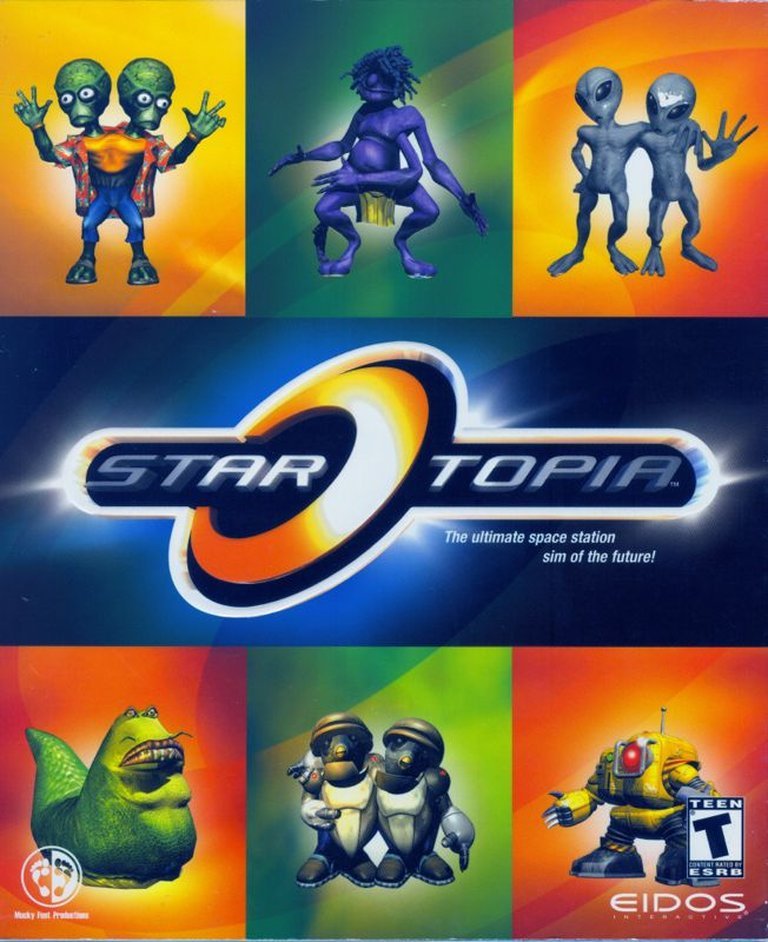
Set in a post-apocalyptic future, Startopia is a real-time strategy and city management simulation game where players rebuild and manage a network of toroidal space stations. These stations are divided into three distinct decks: a core deck for essential functions like energy collection and maintenance, a Pleasure deck featuring entertainment venues, and a biodiverse Bio deck for cultivating plant life and attracting alien visitors. Players must manage resources, construct facilities, employ both droids and nine unique alien species, and compete economically or militarily against rival enterprises. With gameplay involving logistics, trade, station customization, and combat, Startopia offers a rich blend of managerial depth and sci-fi creativity across mission-based, sandbox, and multiplayer modes.
Gameplay Videos
Where to Buy Startopia
Startopia Free Download
Startopia Cracks & Fixes
Startopia Serial Keys
Startopia Patches & Updates
Startopia Mods
Startopia Guides & Walkthroughs
Startopia Reviews & Reception
imdb.com (100/100): This is, in a nutshell, the Hitchhiker’s Guide to the Galaxy crossed with Babylon 5 and Red Dwarf (if only for the Scuzzer maintenance robots)
metacritic.com (86/100): Humour – GOOD humour – is hard to get across in entertainment software, but Startopia succeeds in not only being a fun game, but a funny game.
mobygames.com (85/100): Highly addictive, if not as original as some claim.
Cheats & Codes
PC
Hold F11 and type the code. Messages will appear confirming correct entry.
| Code | Effect |
|---|---|
| rshift | Enables shortcut commands with Right Shift |
| rshiftspeedup | Allows changing game speed with Right Shift + > / < / L |
| tomfdigsmanga | Enables Toon Items |
| showfps | Displays frames per second |
| scriptinfo | Displays script information (cycle with Right Shift + TAB) |
| xyzzy | Full Alpha Mode |
| rshiftlevelwin | Press Right Shift + Numpad 6 to win the level (NumLock off) |
| rshiftscuzzercam | Scuzzer Cam mode (cycle with Right Shift + Numpad 7/8, NumLock off) |
| cliveroolz | Sinclair Spectrum mode (resolution changes) |
| bangunsnotgames | Wire Frame Mode |
Startopia: Review
Introduction
Startopia is a cult classic simulation game that masterfully combines elements of city management, real-time strategy, and humor. Released in 2001 by Mucky Foot Productions (a studio founded by ex-Bullfrog employees), it drew inspiration from games like Dungeon Keeper 2, Theme Hospital, and Theme Park while adding its own unique spin. Despite initial sales challenges and technical issues, Startopia has left an indelible mark on the gaming landscape with its innovative gameplay, memorable characters, and uproarious humor.
Development History & Context
Mucky Foot Productions was founded in 1997 by Bullfrog alumni Mike Diskett, Guy Simmons, Fin McGechie, and Gary Carr. Their first game, Urban Chaos, was well received, but it was Startopia that would capture the hearts of simulation gamers. Initially courted by Psygnosis, the team ultimately chose Eidos Interactive based on a better rapport.
Development began shortly after Urban Chaos’ release. The game was envisioned as a futuristic take on Bullfrog’s management sims, set in a post-apocalyptic galaxy where the player must rebuild dilapidated space stations. The innovative toroidal station design, three-deck structure (Engineering, Pleasure, Bio), and humorous alien races were all part of the original vision.
After a delayed release due to bug fixes, Startopia launched in June 2001. While it received critical acclaim (85% average score), sales were disappointing at 110,000 units. The team’s disappointment was evident, but a loyal fanbase emerged, leading to a 2021 remake called Spacebase Startopia by Realmforge Studios.
Narrative & Thematic Deep Dive
Set in a post-apocalyptic future, Startopia’s narrative tasks players with rebuilding the once-thriving network of space stations. These stations are now rundown relics of a former galactic empire, scarred by war. The player acts as a freelance station manager, hired by various employers to restore their stations to profitability or military dominance.
The central theme is one of renewal amidst despair. The game world is filled with diverse alien species, each with unique cultures and abilities. The player must navigate political rivalries, economic challenges, and environmental hazards to succeed.
Key plot points include:
1. Reclaiming abandoned station segments by opening bulkheads
2. Managing visitor needs (food, leisure, love, nature)
3. Balancing economic growth with military expansion
4. Converting aliens to one’s cause or engaging in territorial battles
Humor permeates every aspect of Startopia. The AI assistant VAL constantly provides snarky commentary, lampooning everything from the player’s management decisions to galactic history. For example, VAL claims responsibility for Earth’s Ice Age, a nod to Douglas Adams’ humor. The game also parodies various sci-fi tropes, with references to Star Trek, 2001: A Space Odyssey, and The Hitchhiker’s Guide to the Galaxy.
Gameplay Mechanics & Systems
Startopia’s gameplay is a complex tapestry of interrelated systems. At its core, it’s a real-time management sim where the player constructs and manages facilities across three decks while juggling economic, military, and environmental concerns.
Key mechanics include:
1. Station Management: The toroidal station is divided into segments separated by bulkheads. Players expand by paying energy to open new segments and manage three decks:
– Engineering Deck: Basic infrastructure like ports, rechargers, energy collectors
– Pleasure Deck: Entertainment venues like shops, bars, discos
– Bio Deck: Terraformable ecosystem for growing plants and attracting nature-loving aliens
-
Resource Management: Energy serves as both currency and power source. Players collect energy from solar collectors, manage resources through recycling and trade, and balance income against expenses.
-
Alien Races: Nine distinct races, each with unique roles (e.g., Salt Hogs for recycling, Greys for medical care, Kasvagorians for security). Players must hire, manage, and sometimes convert these aliens.
-
Combat System: Security forces consist of Kasvagorians and security droids. Players can wage war against rival managers by hacking bulkheads and capturing segments.
-
Terraforming: The Bio Deck allows players to adjust terrain height, moisture, heat, and water levels. Different plants require specific conditions and provide various resources.
-
Research: Turakken scientists can analyze objects to unlock new technologies and upgrades, which can be manufactured in factories.
-
Trade: Players interact with merchant Arona Daal and other traders to buy/sell goods, with prices influenced by supply/demand.
-
Crime & Security: The station can attract criminal aliens, which must be managed through security forces, jails, or medical treatment.
The game’s interface employs a mix of real-time controls, context-sensitive menus, and detailed building management. While generally user-friendly, some aspects like building rotation and view control received criticism.
World-Building, Art & Sound
Startopia’s world-building is both detailed and whimsical. The space station design, with its toroidal shape and segmented structure, is visually striking and functional. The three decks each have distinct aesthetics:
– Engineering Deck: Industrial, with metal floors and blinking lights
– Pleasure Deck: Vibrant and colorful, with neon signs and entertainment venues
– Bio Deck: Natural, with soil, water, and plant life
The art style is cartoonish yet detailed, with exaggerated alien designs and vivid colors. Each alien race has distinct appearances and animations, contributing to the game’s visual charm. The station’s architecture combines futuristic elements with signs of neglect, fitting the post-apocalyptic theme.
The soundtrack is a lively mix of electronic and jazz-infused tracks that complement the space setting without becoming monotonous. Sound effects are both functional (beeps, alarms) and humorous (alien grunts, explosions with witty quips from VAL).
The overall atmosphere is immersive, with a blend of urgency (managing crises) and leisurely exploration (terraforming the Bio Deck). The game’s humor and visual appeal help maintain player engagement over long play sessions.
Reception & Legacy
Upon release, Startopia received widespread critical acclaim. Major publications like IGN, Eurogamer, and Game Informer praised its innovative gameplay, humor, and visual style. The game held an average critic score of 85% and a player score of 3.8/5.
However, sales were lackluster. According to the developers, only 110,000 units were sold. Technical issues like crashes (addressed by a patch) and a perceived lack of content (short campaign) contributed to the tepid commercial response.
Despite this, Startopia developed a loyal fanbase and influenced subsequent games. In 2021, Spacebase Startopia was released as a modernized remake, testament to the original’s lasting appeal. Startopia also appeared in “The Top 100 Games of All Time” lists and continues to be celebrated for its unique blend of genres and humor.
Conclusion
Startopia is a triumph of creativity and gameplay design. It masterfully combines economic simulation, real-time strategy, and humor into a compelling package. While technical issues and a short campaign tempered its commercial success, its legacy as a beloved cult classic endures. The game’s innovative features, memorable characters, and immersive world make it a must-play for anyone interested in management sims or science fiction gaming.